
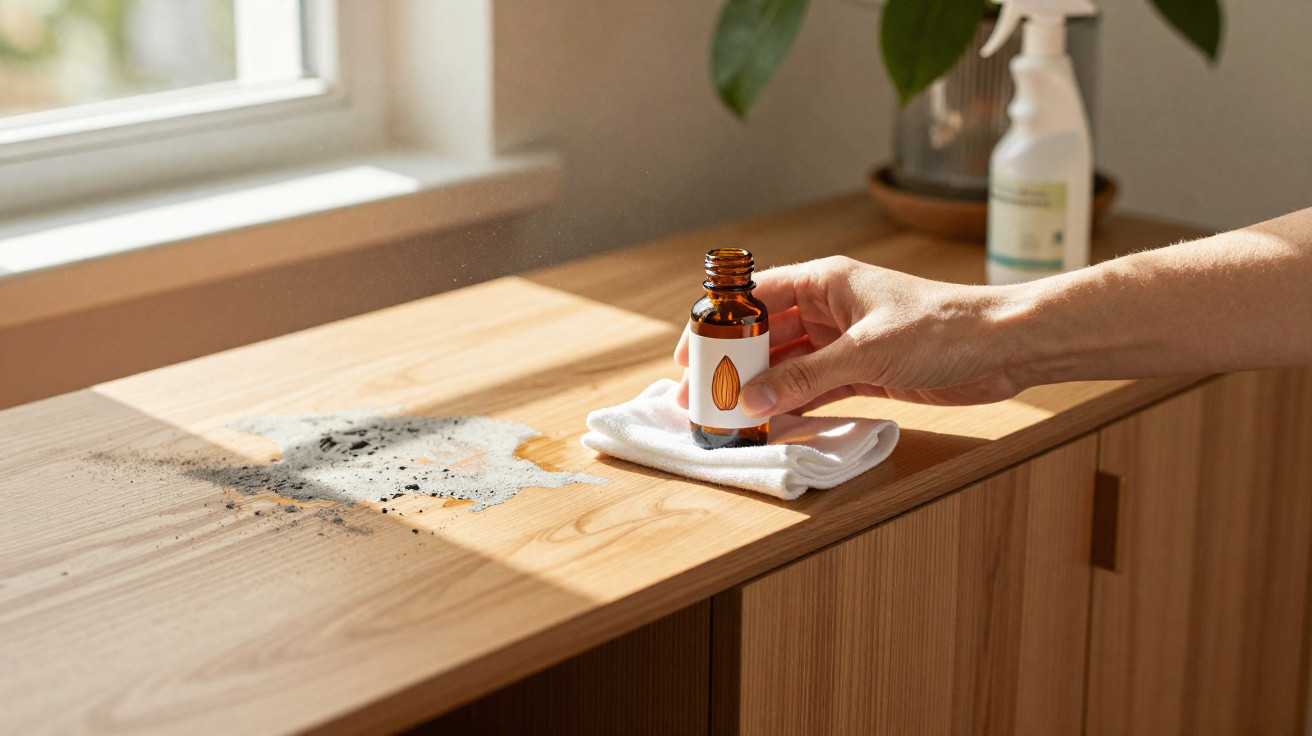
Many households turn to plant oils as a “natural” way to care for wooden furniture.
Yet this well-intentioned approach can quietly become a health hazard.
People aiming to use fewer chemicals often choose household remedies such as almond or sunflower oil for wooden surfaces. Furniture gains a sheen, smells pleasant and initially looks clean. However, indoor hygiene specialists are raising concerns: beneath an inconspicuous layer of oil, dust, pollutants and allergens can cling particularly stubbornly.
Household dust: what the grey layer really contains
Household dust is far more than a few bits of fluff. Research shows that it contains a varied blend of textile fibres, pollen, plastic abrasion, soot particles, residues from cleaning products and wood preservatives, as well as pollutants from agriculture and traffic. Even old pesticides that have been banned for years continue to appear repeatedly in samples.
The issue is that these fine particles do not simply end up in the vacuum cleaner bag. Some are disturbed whenever people move about, then inhaled or deposited on surfaces where children play and adults eat or work.
“Anyone who underestimates household dust is playing down one of the most important sources of indoor pollutants and allergens.”
These substances can build up more heavily in well-insulated homes where ventilation is limited. People with asthma, eczema or pollen allergies may then be more prone to irritated airways, itchy eyes or skin problems.
Plant oil on furniture: natural shine with a downside
Wood care oils are intended to provide protection: they penetrate the pores, revive the colour and stop the material from drying out. Many people deliberately opt for pure almond oil or other plant oils to avoid specialist chemicals.
When used in the correct amount, this can work: an extremely thin coating captures loose dust, which can then be lifted away with a slightly damp cloth rather than returning to the air. This is precisely why the method appeals to people who are sensitive to sprays and fragrances.
Cleaning professionals, however, point to a drawback. If too much oil remains on the surface, it creates a sticky film. Over time, this attracts:
- Very fine household dust
- Pollen and mould spores from the air
- Cleaning product residues
- Small plastic and rubber particles, for example from toys and shoe soles
This combination sticks more firmly than dry dust. Simply running a dry cloth quickly over a table will barely remove it. The result is a lasting layer of oil, dirt and allergens on the very surfaces everyone touches each day.
How to apply almond oil to wood correctly
There is no need to avoid plant oils altogether. What matters is how they are used and which areas they are used on.
Step-by-step application
- Dust first: Thoroughly clean the surface with a dry microfibre cloth before starting. This means less dirt becomes trapped in the oil film.
- Use only a few drops: Put a small number of drops of almond oil onto a lightly dampened microfibre cloth, rather than directly onto the furniture.
- Follow the grain: Gently wipe the wood in the direction of the grain without applying pressure. The aim is to “care for” it rather than “polish” it.
- Buff afterwards: Go over the surface with a second, dry cloth and remove surplus oil until it feels dry to the touch.
- Leave intervals: Do not repeat this process every week. Oiling once or twice per season is often enough.
“Thoroughly rubbing the surface with a dry cloth after oiling greatly reduces the risk of creating a sticky dust trap.”
Where plant oil should not be used
Not every surface can handle this “natural trick”. Cleaning professionals recommend avoiding plant oil on:
- Glass surfaces and mirrors
- Electronics, screens and keyboards
- Smooth sealed floors, due to slipping risks
- Very open-pored, untreated wood that absorbs the oil deeply
- Work surfaces on which food is regularly placed
Combining it with harsh cleaners is also problematic. Wiping later with products based on bleach or ammonia, for instance, can cause discolouration, sticky streaks or even permanent stains.
Allergy risk: almond oil is not suitable for every family
Almond oil is legally classed as a nut product. For people with nut allergies, even contact with residues can trigger symptoms. Caution is sensible in homes with sensitive children or adults with severe allergies.
Areas requiring particular care include:
- Children’s desks and chairs
- Wooden toys
- High chairs and changing units
- Handles and handrails that are touched frequently
Anyone who still uses almond oil should wash their hands thoroughly afterwards and ensure that no shiny, heavily oily residue remains visible. In sensitive households, neutral wood-care products without nut ingredients are an option.
Clean air at home: routines that genuinely help
Everyday habits remain the key factor in reducing pollutants and allergens. Cleaning professionals recommend combining straightforward practices that can fit easily into a busy routine.
Everyday tips for reducing dust and pollutants
- Ventilate regularly: Open all windows wide for a few minutes several times daily, rather than leaving them permanently on the tilt setting.
- Wipe damp rather than dry: Use lightly damp cloths or mops to pick up dust and prevent it from being stirred up.
- Cut down on sprays: Use room sprays, deodorants and aerosol perfumes sparingly, ideally not in small spaces with poor ventilation.
- Keep cardboard boxes outside: Where possible, unpack online deliveries in the hallway or outdoors instead of in the middle of the living room.
- Wash new clothing: Launder textiles before wearing them for the first time to remove finishing agents and dye residues.
- Use a filtered vacuum cleaner: Appliances with a HEPA filter retain fine dust more effectively, especially in homes with carpets.
| Measure | Main benefit | Recommended frequency |
|---|---|---|
| Airing rooms | Dilutes pollutants and lowers humidity | 2–4 times daily |
| Damp dusting | Captures dust and reduces allergens | 1–2 times per week |
| Vacuuming/mopping floors | Removes particles that could be stirred up | 1–3 times per week depending on use |
| Washing textiles | Reduces chemicals and pollen | As needed; bed linen every 1–2 weeks |
Why conscious product choices change indoor air over time
Anyone who brings fewer pollutants into their home will not have to laboriously remove them later. Many issues begin when products are bought: scented candles, room sprays, heavily perfumed cleaners and furniture of unknown origin introduce a wide range of substances that later turn up in household dust.
A practical approach is to use a small number of simple cleaning products with clearly stated ingredients. Neutral all-purpose cleaners, alcohol and soap solutions are sufficient in many cases. It is also worth looking critically at certifications and origin when buying carpets, furniture or mattresses.
In some residential neighbourhoods, community initiatives are already emerging in which residents share information about suitable products, sustainable cleaning routines and alternatives to harsh chemicals. Such networks can prevent poor purchases and pass on experience, including which oil methods work well on particular wood types and where they have caused problems.
How to balance the risks and benefits of plant oil
Plant oils remain an interesting choice for wood care as long as they are used thoughtfully. Those who avoid sensitive areas, apply them sparingly and consistently buff dry after application can temporarily capture dust more effectively and extend the life of furniture.
At the same time, users should remember that oil alone is not a hygiene strategy. Without fresh air, regular damp cleaning and a mindful approach to chemical products, exposure to dust and allergens will continue to rise, regardless of whether furniture shines.
If in doubt, test the product in an inconspicuous place: how does the surface react? Does it become greasy, and does dust accumulate more quickly? These practical observations at home are often more informative than any advertising message on the bottle.



Comments
No comments yet. Be the first to comment!
Leave a Comment