
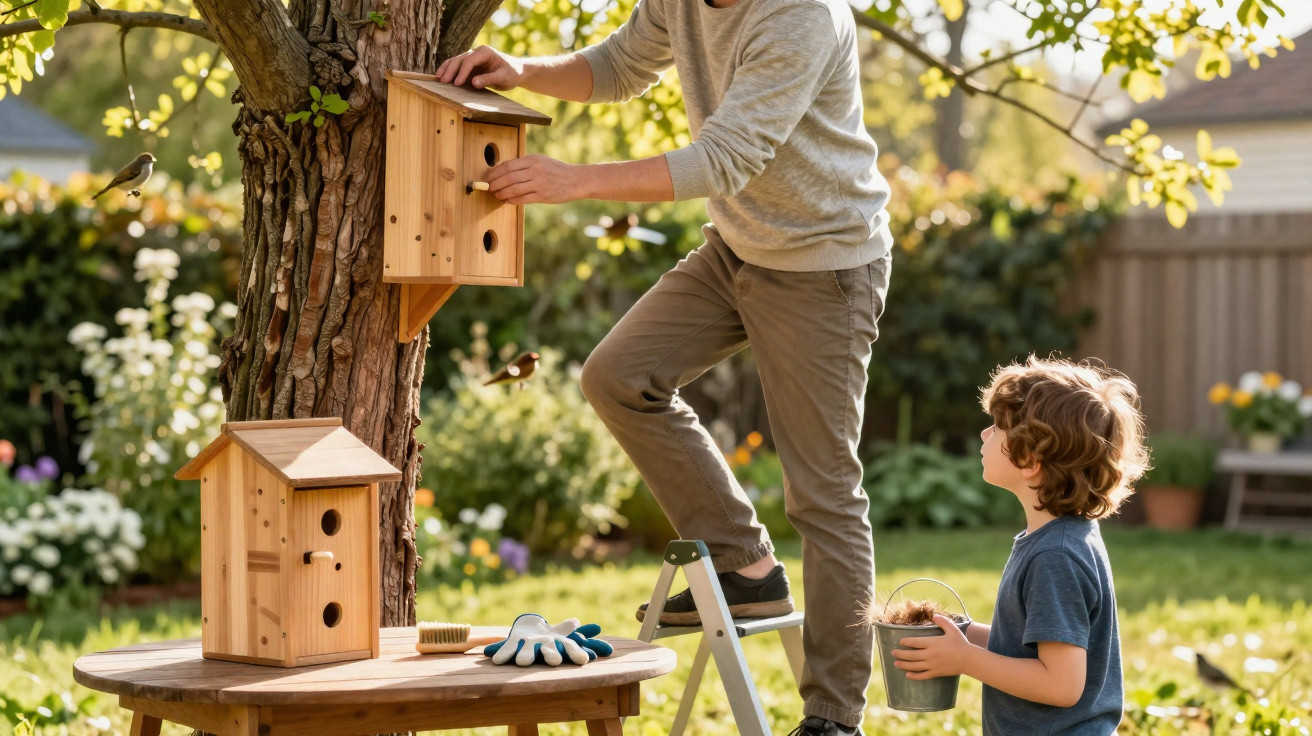
While many of us are still shivering and thinking about winter, tits, robins and sparrows are already entering the most intense part of their house-hunting year. Ornithologists have been warning for years: if you want to support the birds in your garden, you need to act now - with a simple, often overlooked job on the nest box.
Why the breeding season starts much earlier than many people expect
Many hobby gardeners assume the garden is effectively dormant in February: no sea of flowers, hardly any insects, and very little activity. For birds, it is a different story. From mid-February, many species begin their “property search”.
Hole-nesting birds in particular - such as blue tits and great tits, sparrows and redstarts - start inspecting every possible breeding cavity in trees, walls or nest boxes. If there is no suitable home available at this stage, it is usually too late by April.
"A clean nest box put up in February often determines whether young birds hatch in your own garden - or not."
The pressure is even greater in towns and suburbs. Old hollow trees get felled, façades are tightly insulated, and natural gaps disappear. Nest boxes can replace these lost quarters - but only if they are up in time and in good condition.
The most important task: clear out old nests and clean thoroughly
If you already have nest boxes in the garden, do not simply leave them alone at the start of the year. Inside, there is often an unseen threat to the next brood.
Parasites such as fleas, mites and other blood-suckers can overwinter in an old nest. As soon as new chicks hatch, those pests have an easy feast. Entire clutches can fail as a result, or the young can be left severely weakened.
How to clean nest boxes properly
- Open the box and remove all old nesting material
- Scrub the inside thoroughly with a stiff brush
- Then rinse with very hot or boiling water
- Leave the box to dry completely, ideally outdoors in the open air
- Reattach it in its usual position
Chemical cleaners, scented sprays and disinfectants should stay firmly in the cupboard. Residues can be toxic, irritate breathing, or damage feathers. In most cases, hot water and a brush are entirely sufficient.
"If you clean your nest box once a year with a brush and hot water, you often save several broods in a row."
New nest boxes: which size suits which species
If you do not yet have nest boxes up, now is an ideal time to install them. However, the range on sale can be confusing - and not every model is a sensible choice.
The key detail is the entrance-hole diameter. It determines which species can move in and helps keep out larger, more competitive birds or predators.
| Hole size / opening | Suitable species |
|---|---|
| approx. 26–28 mm | smaller tit species (e.g. blue tit, coal tit) |
| approx. 32–34 mm | great tit, house sparrow, nuthatch |
| Half-open front | robin, spotted flycatcher, in some cases black redstart |
If you are unsure, it is usually better to choose a slightly smaller hole rather than one that is too large. That way you reduce conflict with starlings or more aggressive species.
Materials and build: what birds actually need
A nest box does not need to win a design award. What matters to birds is very different from bright colours:
- Untreated, preferably thick timber (at least 1.5 cm)
- Weather-resistant woods such as larch, oak or cedar
- No metal boxes - they can heat up dramatically in spring
- A lid that opens so cleaning remains possible
- No vivid paints or strong solvents
Loud colours and shiny metal fittings may look appealing in a DIY shop, but in sunshine they can get very hot or deter birds. Subtle wood tones blend in better and look more natural.
The perfect spot: direction, height and safety
Even an excellent nest box is of limited use if it is sited badly. Many issues can be avoided by following a few straightforward rules.
The best direction to face
The entrance should not point straight into the direction of the worst weather. In much of Europe, wind and driving rain often come from the west. That is why ornithologists commonly recommend facing the box east or south-east.
This gives the box a little morning sun while keeping it cooler later in the day, reducing the risk of overheating. If you must place it on a south-facing side, a spot with partial shade helps - for example within a canopy where the foliage is not too dense.
Height and fixing - protection from cats and martens
In most gardens, a height of 2–3 metres works well. It is high enough to make access harder for cats, dogs and curious children, but still reachable for an annual check using a small ladder.
Fix the box securely to a tree or wall so it does not swing. A slight forward tilt helps rainwater run away from the entrance. There should be no branches directly in front of the hole that could act as a “launch pad” for cats or martens.
"If you hang your nest box securely with a slight forward tilt, you turn it from a potential trap into a genuine safe space."
Why you should act now - not when the first chicks start peeping
Many people only notice a nest box when, in April or May, they hear faint peeping from inside. For birds, the race for safe cavities starts weeks earlier.
If you clean the box in February and put it back up promptly, it has time to air out, smell less of humans, and visually settle back into the garden. Birds are wary; they do not tend to like timber that still smells like a workshop.
At the same time, a box that has been up for longer attracts less attention from magpies, crows or squirrels, which search for nests deliberately in spring.
How nest boxes can change the whole garden
A nest box that is in use is not only a lovely feature to watch. It can shift the whole balance of the garden - in a positive way. Over a breeding season, a tit family can consume thousands of insects and caterpillars. Many gardeners report that in years with active nest boxes, they have noticeably fewer problems with aphids and caterpillars.
If you put up several boxes, leave a bit of space between them. Two boxes aimed at the same species should not be hung right next to each other, otherwise territorial disputes can break out quickly. Using different entrance sizes in different locations allows multiple species to breed side by side.
Practical tips for beginners and curious children
Nest boxes are a brilliant way to help children connect with nature. A shared “inspection date” in late summer or autumn - long after the brood has fledged - can make peeking inside feel like a small adventure. If you want to learn more, keep a notebook: when was the box first visited, which species moved in, and how often did you see feeding flights?
One rule is essential: during breeding and chick-rearing, the box is off limits. No opening, no handling - stress can cause the adults to abandon the nest. The real help happens in winter and late winter: clean it out, check it over, and secure it properly.
Once you get the timing right, you can turn your garden into a small refuge for birds over just a few years. The reward arrives each spring at first light: more song, more life - and the satisfaction of knowing that one simple job in February genuinely made a difference.



Comments
No comments yet. Be the first to comment!
Leave a Comment