
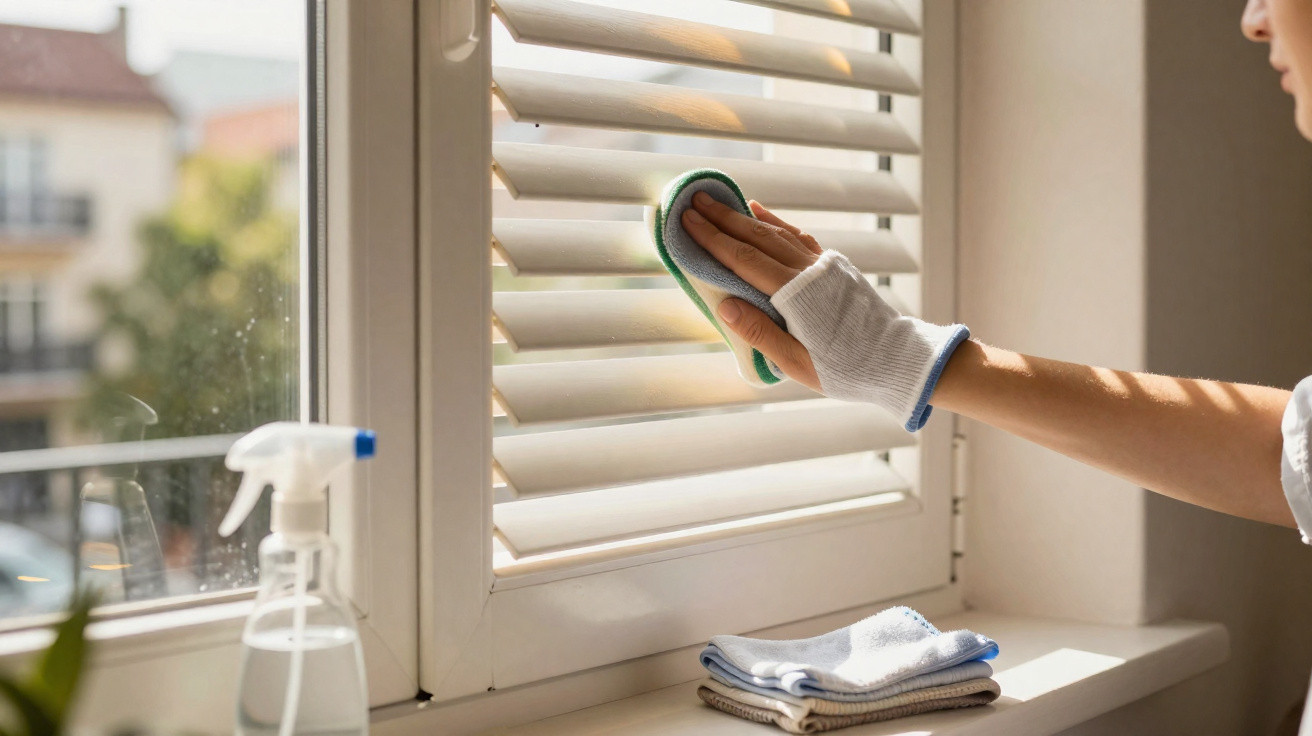
It is not the weather to blame, but those grey, dull roller shutters that used to be white. The façade has been freshly painted and the windows cleaned, yet the whole place still looks somehow tired – all because of those smeared slats.
We all know the situation: for months, we mean to clean the roller shutters “at some point”. Then rain, pollen, road dust and spider webs build up. Before long, they look as though someone has put a filter of gloom over them. It feels like a major job is needed: a ladder, specialist cleaner and half of Saturday gone. Then a neighbour casually mentions that she simply cleans her roller shutters with a sock. Just one sock. The idea sounds so ridiculously simple that it is hard to believe.
Why roller shutters quietly age – and what a sock has to do with it
Roller shutters are among those unobtrusive everyday things. They are there, they work, they occasionally creak – and, slowly and almost unnoticed, they turn grey. Rain leaves streaks, fine particulate dust settles into the grooves, and insect remains stick in the corners. You rarely notice it from indoors. From the street, though, you do. Anyone who looks at their house or flat from the outside in a phone photo may suddenly realise that the roller shutters tell a story of neglect.
The odd thing is that the dirt is usually not dramatically baked on. It collects along edges and in gaps where an ordinary cloth cannot properly reach. That is exactly where the sock comes in. It moulds itself to both your fingers and the slats, sensing every groove and edge. One movement of the hand along the closed slats can lift more grime than half a bucket of water and a conventional sponge. The sock becomes an extension of your fingers – and suddenly the idea makes perfect sense.
I first saw this trick in action on a terraced-house estate near Cologne. A father of two, living in a semi-detached house with little time and plenty on his to-do list, showed me his “special equipment” with a grin: a retired sports sock, a spray bottle of mild cleaner and an old tea towel. Nothing else. He pulls the sock over his hand as though bringing a puppet to life, gives the closed slats a light spray, then works slowly from top to bottom.
After three passes, the difference is obvious: on the left, the section he has cleaned looks almost new; beside it on the right is the grey, dull surface. His daughter calls from the garden: “Dad, there’s colour underneath!” It is a classic Saturday moment, with children laughing, birds chirping and someone mowing their lawn in the background. No cleaning battle and no chaos – just that small, almost meditative movement with the sock. And honestly, the result is more striking than any sales brochure could ever promise.
Anyone wondering why this particular trick works so well quickly arrives at a very simple truth: technique beats force. Fingers allow you to control pressure far more precisely than a rigid sponge or large wiper. The sock wraps around each finger like a second skin, absorbing moisture and dirt without harsh scrubbing. This helps reduce micro-scratches that can make roller shutters appear dull.
The method also almost automatically makes you work slowly, one strip at a time. Not because of perfectionism, but because the movement feels so natural. Let us be honest: nobody really cleans their roller shutters every day. Many people do not even do it every year. That is precisely why one gentle but thorough clean can make such a difference. You remove layers of dirt before they can properly settle in. A sock is not magical – it simply makes use of what our hands already do best: feel and control.
The sock trick step by step – and why “good enough” really is enough
The method is almost embarrassingly straightforward. Fully close the roller shutter so the slats form one continuous surface. Put a clean old sock over your hand – thicker cotton or sports socks work best. It should have no holes or rough seams. Fill a spray bottle with lukewarm water and a small amount of mild all-purpose cleaner; a little washing-up liquid will do if necessary. Lightly mist the slats rather than soaking them.
Next, move your sock-covered hand from top to bottom, one strip at a time. Slightly overlap each pass so that no streaks are left behind. Go over heavily soiled patches a little more, but do not scrub wildly. Every so often, tap the sock clean on an unused part of the fabric or turn it around. At the end, you can run over the surface once with a dry cloth to absorb any remaining moisture. That is all. No specialist equipment, no YouTube tutorial and no 27 products from the DIY shop.
There are, of course, some common pitfalls. Many people begin too ambitiously and want to tackle every roller shutter in the house on the same day. Two hours later, their arms ache and their enthusiasm has disappeared. A better approach is one window at a time. Perhaps clean one roller shutter each evening while dinner is in the oven. The other trap is using too much chemical cleaner. Harsh products can damage plastic and cause the surface to age more quickly. A mild cleaner is entirely sufficient.
Another classic mistake is working in full sunshine: the water dries too fast and leaves streaks behind. A dry, overcast day or early evening is better. And do not worry about minor imperfections. The one missed corner or faint streak is part of a lived-in home. Perfection belongs in show-home catalogues, not real family kitchens and living rooms.
The homeowner from Cologne said something to me as I left that stayed with me.
“I used to wait until the roller shutters annoyed me. Now, with the sock, I just clean them whenever I’m outside anyway. Five minutes here, five minutes there – and suddenly the whole house looks fresher.”
To make it practical, here is the essence of the sock trick once again:
- Put an old, clean sock over your hand (cotton, with no rough seams)
- Close the roller shutter and lightly spray it with a water-and-cleaner mixture
- Wipe from top to bottom, one strip at a time, using your “sock hand”
- Briefly work over heavier dirt without using force
- If needed, finish by wiping with a dry cloth
What a small trick like this changes about how we see home
It almost sounds trivial: a sock, some water and a few minutes of time. Yet such a small intervention can transform the entire impression from outside. Roller shutters are the eyelids of our homes. When they are grey and grimy, everything looks tired, even if there are fresh flowers on the table indoors. Once the slats look clear and bright again, you see the house differently. Some people say they only noticed after cleaning how welcoming their façade actually looked.
We often underestimate how much these supposedly minor details quietly irritate us in everyday life. That faint feeling of “I really ought to do that...” each morning as we raise the roller shutters. The sock trick reduces the task to a size that no longer feels daunting. It is not a major clean or an “everything once a year” job, but a series of small, manageable steps. Five minutes, one window, done. No drama, no guilt and no more excuses.
Perhaps that is the true value of this simple method: it reminds us that upkeep does not have to be heroic. No perfect house and no glossy lifestyle – just a home that is cared for with affection, step by step. Anyone who approaches their roller shutters this way may eventually look differently at other jobs that have been waiting “for ages”. Reach for a sock, focus briefly – and suddenly not only the roller shutter, but everyday life itself, feels a little easier.
| Key point | Detail | Benefit for the reader |
|---|---|---|
| Sock as a “tool” | An old cotton sock worn over the hand adapts to every slat and groove | Easy access to difficult-to-reach areas without expensive specialist brushes |
| Mild cleaner | Lukewarm water with a mild all-purpose cleaner or a little washing-up liquid | Gentle cleaning with less risk of dull or damaged surfaces |
| Small stages instead of one major task | One roller shutter at a time, 5–10 minutes each | Less overwhelm and a greater chance that the cleaning actually gets done |
FAQ:
- How often should roller shutters be cleaned using the sock method? Once or twice a year is perfectly adequate for normal dirt; on dusty or heavily trafficked roads, an additional quick clean may be worthwhile.
- Which sock works best? Thicker cotton or sports socks without rough seams or hard logos are ideal, as they absorb dirt more effectively and leave fewer micro-scratches.
- Does the trick also work on aluminium or wooden roller shutters? The method works very well on plastic and aluminium; on wood, use very little moisture and a suitable wood cleaner to avoid damaging the material.
- Do I definitely need cleaner, or is water enough? For light dust, clear lukewarm water is often sufficient, but a mild cleaner significantly improves the result with pollen, greasy film or older dirt.
- What should I do with stubborn marks or discolouration? Treat these areas separately: allow the product to work briefly and, if necessary, use a soft brush; if they remain, the cause is usually ageing of the material rather than dirt.


Comments
No comments yet. Be the first to comment!
Leave a Comment