
With windows closed and the heating turned up, living-room fabrics can gradually absorb the smells of everyday life. Before you notice it, the comfortable spot where you settle down to binge-watch a series may carry a blend of last week’s meal, wet dog and stale, damp air.
Why your sofa holds on to bad smells so stubbornly
In many households, the sofa is the hardest-working item of furniture in the living room. It is where people sleep, snack and watch television while pets climb all over it. Every use leaves behind tiny residues, including perspiration, food debris, cooking fumes, cigarette smoke, pet dander and moisture.
Fabric fibres work rather like miniature sponges. Dense materials, including velvet, chenille and heavy cotton, hold dust and humidity within the weave. This provides the perfect environment for stale odours to develop and linger.
When the air is rarely refreshed and heating runs for hours, the sofa becomes an invisible odour reservoir sitting at the centre of your home.
Cooking is one of the main sources. Frying oil, cheese-rich meals, stews and roasted meat release greasy particles into the air, which eventually settle into soft furnishings. Smoking indoors creates an additional problem, as tar and nicotine can remain attached to upholstery for months.
Pets contribute as well. A dog returning wet from a walk, or a cat repeatedly using its preferred cushion, leaves behind natural yet long-lasting animal smells. You may stop detecting them, but visitors often will not.
Why sprays don’t really fix the problem
For most people, the immediate solution is a fragranced spray. Such products claim to provide “fresh laundry” or “mountain air” almost instantly. However, they generally place a powerful synthetic scent over the odour that is already present.
The original smell has not gone away; it is merely concealed beneath perfume, until the two scents combine into something even less appealing. Many sprays also include volatile organic compounds (VOCs), which may aggravate sensitive airways and add to indoor air pollution.
The goal isn’t to perfume a smelly sofa, but to neutralise the molecules that cause the smell and remove them from the fabric.
That is why an uncomplicated kitchen-cupboard essential can be so useful: baking soda. Rather than simply providing a pleasant scent, it works on odour molecules and holds them in place.
The star ingredient: why baking soda works so well
Baking soda, also called sodium bicarbonate, is a fine powder with a mild alkalinity. Its porous composition resembles a microscopic sponge, giving it two particularly helpful functions when treating sofas:
- It draws out surplus moisture trapped in the upholstery.
- It neutralises many of the acidic and alkaline compounds that produce unpleasant smells.
Smells caused by sweat, food and pets commonly contain either acidic or alkaline elements. On contact with baking soda, a straightforward chemical reaction can make these compounds less volatile. Once neutralised, they are less able to rise into the air and reach your nose.
As it is non-toxic and biodegradable, baking soda is a suitable option for homes with children, pets and people who are sensitive to strong cleaning products.
Three steps, thirty minutes: the sofa-refresh ritual
This approach does not require a steam cleaner or a professional cleaning service. You only need a few everyday items and around half an hour.
What you need
| Item | Why you need it |
|---|---|
| 200–300 g baking soda | To absorb and neutralise odours |
| Fine sieve or kitchen strainer | For even, light distribution on the fabric |
| Soft-bristled brush (optional) | To work the powder slightly into thick textiles |
| Vacuum with upholstery attachment | To remove the powder and trapped particles |
Step 1: a generous dusting
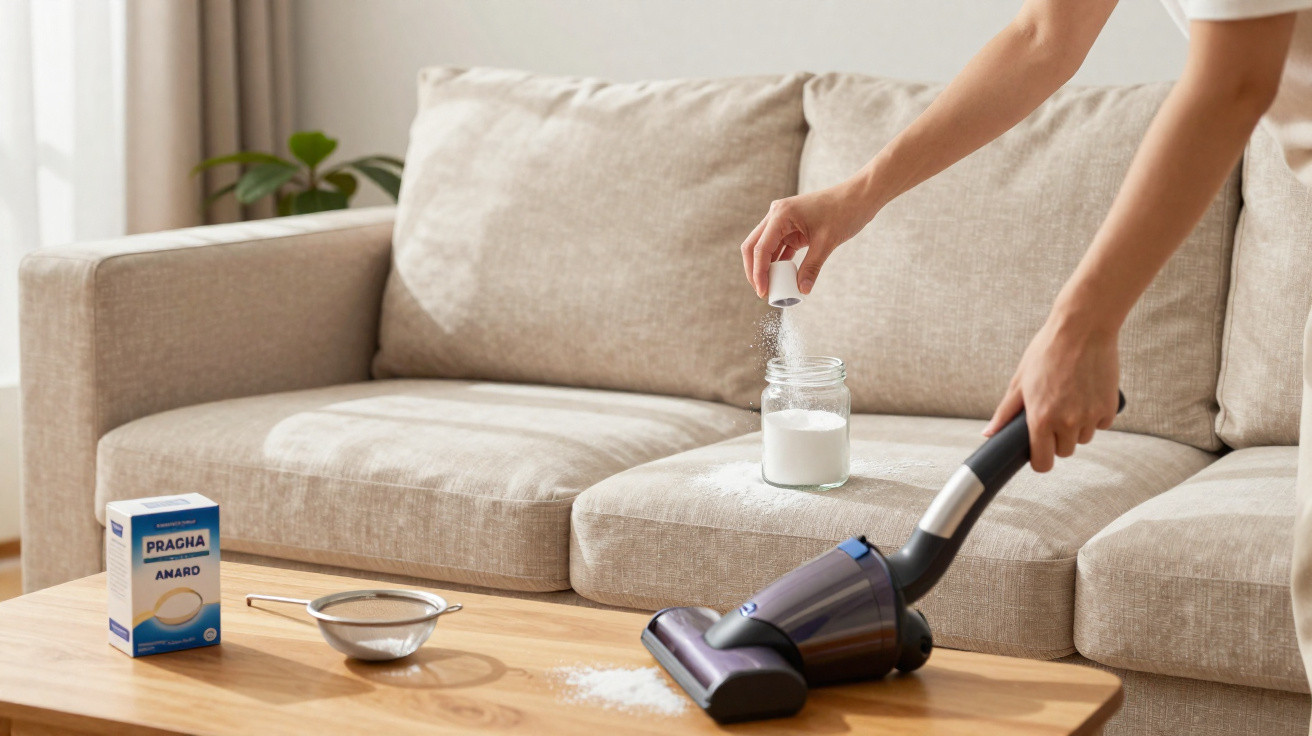
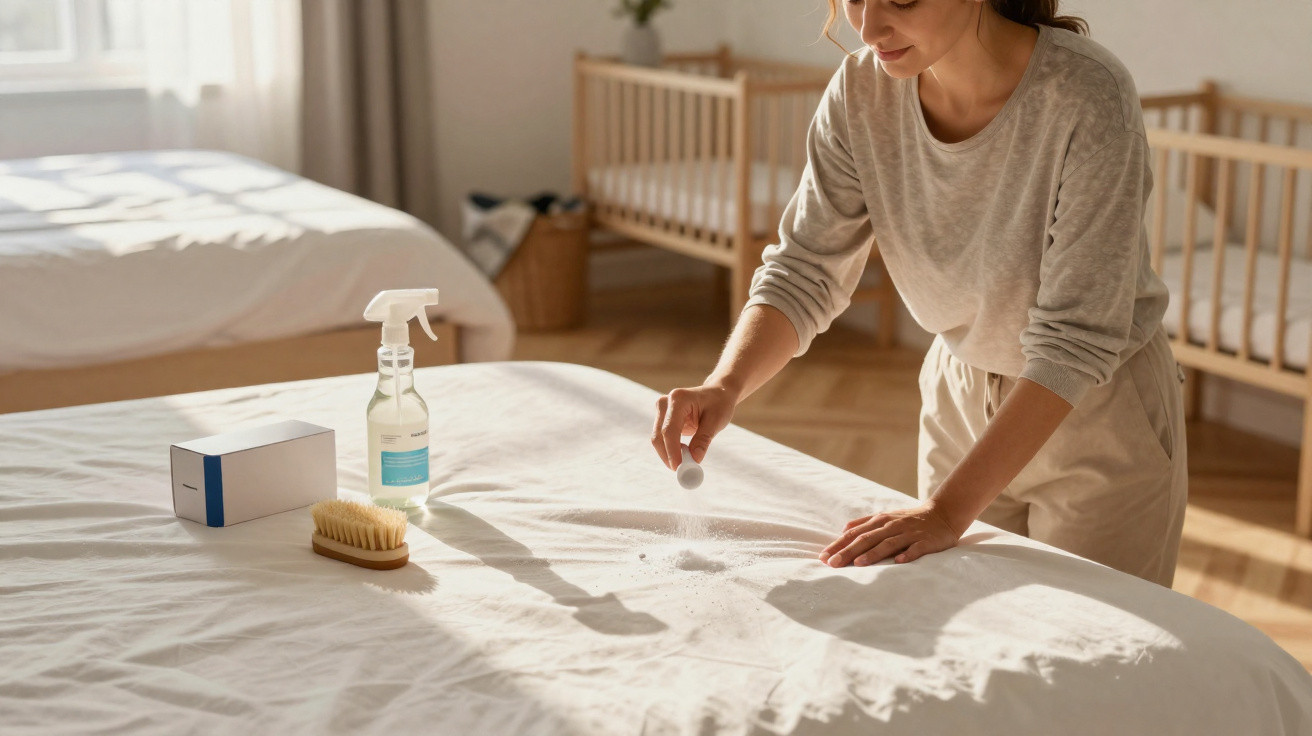
First, take off the cushions and throws to expose every area of the sofa. Put baking soda into the sieve, then gently shake it across the upholstery. Create a light, snow-like coating over the seats, backrest, arms and spaces between the cushions.
The more evenly you coat the fabric, the more contact the baking soda has with odour molecules hiding in the fibres.
For especially thick fabric or areas with stronger smells, use your hand or a soft brush to lightly work in the powder. Do not rub it deeply into the material; simply encourage it to settle just below the outer surface.
Step 2: let it sit and work
After the sofa has been “dusted”, leave it alone. Allow the baking soda to remain on the fabric for at least 15 to 30 minutes. Over this period, it absorbs moisture and attaches to the molecules responsible for odours.
Where smells are intense or have accumulated over several months, leave it in place for a few hours, or even overnight. If you do this, keep children and pets away from the sofa to prevent the powder being spread around the room.
Open a window during the waiting period if conditions allow. Fresh air helps remove particles still floating in the room and adds to the sense of a cleaner space.
Step 3: vacuum everything thoroughly
The last stage matters greatly. Attach the upholstery tool or brush head to your vacuum cleaner and move slowly over all sections of the sofa. Choose medium to high suction, making repeated passes from different directions.
As you vacuum the baking soda, you remove not just the powder itself, but the odour molecules and dust it has trapped.
Give extra attention to seams, buttons and crevices, where debris tends to build up. Once finished, the sofa should appear unchanged, while feeling a little fresher and, above all, smelling neutral rather than heavily scented.
Extending the trick beyond the sofa
After seeing the results on your sofa, you can apply this technique to other fabric-covered items that do not often go into a washing machine.
- Rugs and carpets: particularly good options, especially those in hallways and living rooms.
- Mattresses: can benefit from less moisture and fewer sweat-related smells.
- Fabric headboards: easily missed, despite spending hours close to your face.
- Decorative cushions: treat the covers, where they cannot be washed, as well as the inner pads.
- Car seats: especially practical if you eat in the car or carry pets.
Follow the same three stages, adjusting the amount of baking soda for the size of the item. For mattresses, allowing the product to sit for longer-ideally several hours-can noticeably improve how fresh the bedroom feels.
How often to refresh your sofa
It is never ideal to wait until guests mention a “funny smell”. A regular schedule is more effective. In a busy home with pets or lots of cooking, treating the sofa every two to three months will generally keep odours manageable.
If you smoke inside or have a particularly open-plan kitchen and living area, consider repeating the treatment every month on the seats and armrests, while doing the full sofa less frequently.
Think of it less as a deep clean and more as a quick reset that stops smells from becoming part of the furniture’s identity.
Practical tips and small precautions
Most upholstered items cope well with baking soda, though a few sensible precautions can prevent unexpected results:
- Try it on a concealed section first when the upholstery is dark or delicate.
- Apply only a very light coating to velvet or suede-effect materials to avoid residue.
- Empty the vacuum bag or replace it regularly, as baking soda and dust increase its weight.
- Do not combine baking soda and vinegar directly on upholstery, because the fizzing reaction may dampen and stain the fabric.
Anyone with a dust allergy may prefer to wear a basic mask while vacuuming, since moving the surface releases fine particles. It is also helpful to air the room for a few minutes once cleaning is complete.
Why neutral odour beats heavy fragrance
Many people expect a clean home to have a pronounced floral, citrus or laundry scent. Indoor air-quality professionals, however, tend to aim for a different result: virtually no smell at all.
A sofa that smells of nothing suggests that fewer particles remain in the air, there are fewer possible allergens and there is less exposure to synthetic fragrance chemicals. You can then use a candle or essential-oil diffuser occasionally for ambience, rather than depending on them to conceal an underlying problem.
This straightforward baking soda routine helps achieve that outcome. It does not attempt to fill the room with another fragrance; instead, it removes the built-up layers so that the space feels cleaner and more comfortable. Alongside basic practices such as airing rooms regularly and avoiding smoking on the sofa, it can keep the living room as pleasant for the nose as it is for the eyes.


Comments
No comments yet. Be the first to comment!
Leave a Comment