
I had the realisation one Tuesday morning while looking at a half-folded stack of washing and a sink containing precisely three dishes. My home looked… all right. It was not ready for a magazine shoot, but it was not chaotic either. It simply looked lived in, peaceful and rather pleasant. The odd thing was that I had not done my usual frantic routine of restoring everything to perfection for several days.
I had stopped monitoring the crumbs beneath the toaster. I was no longer repeating reminders about coasters. Without making a fuss, I had allowed a few of my treasured cleaning rules to fade away.
Yet the house somehow appeared tidier than it did when I hunted dust bunnies as though it were a full-time job.
That was when an uncomfortable thought landed.
Perhaps, I wondered, the rules themselves had been the real mess.
When fewer cleaning rules create a calmer, tidier home
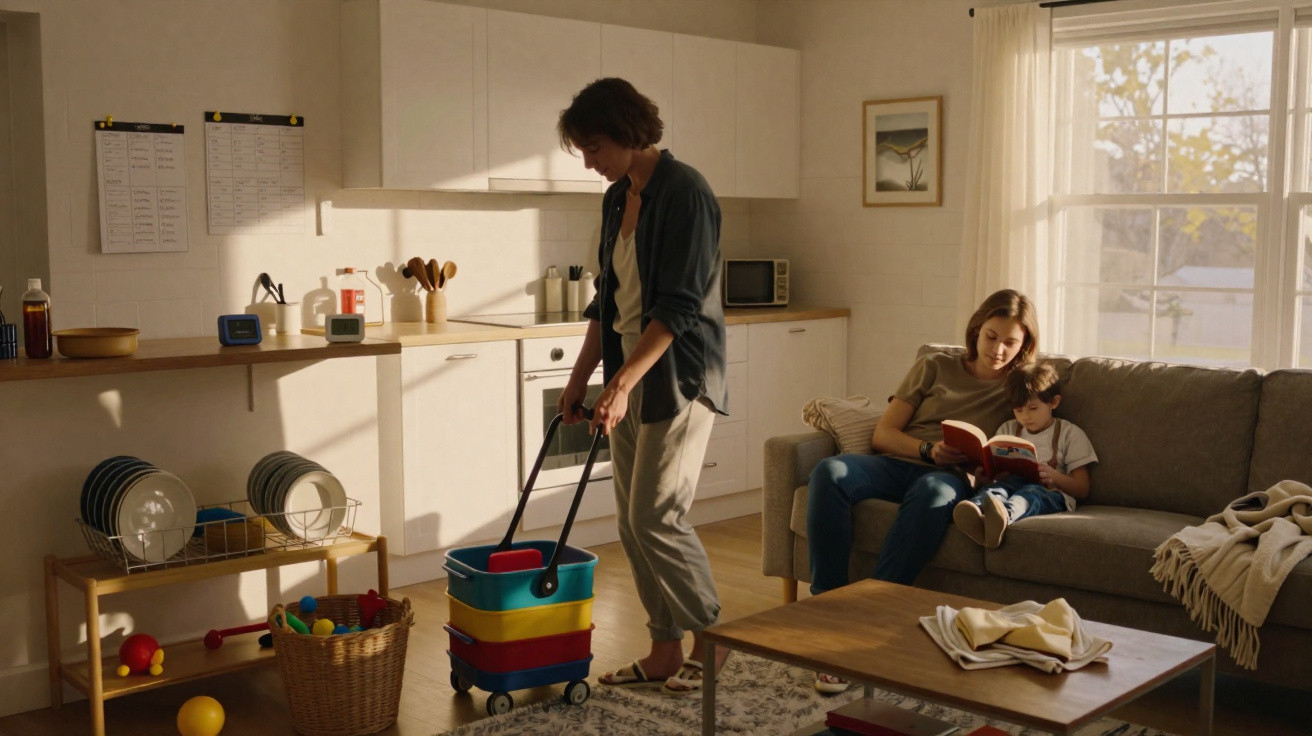
The first change I noticed after abandoning half my cleaning rules was the quiet. There were fewer sighs, fewer requests of “Can someone please pick this up?”, and fewer internal complaints about crumbs. The visual difference took longer to emerge. Rooms remained reasonably neat, surfaces were not covered by the evening, and I no longer felt a knot in my chest when walking past the living room.
It was not that we had suddenly become better at cleaning. What changed was that keeping things in order finally seemed possible. Previously, my standards were so precise that every small bit of mess felt like complete failure. When I loosened the script, little successes began to count, and those successes gradually accumulated.
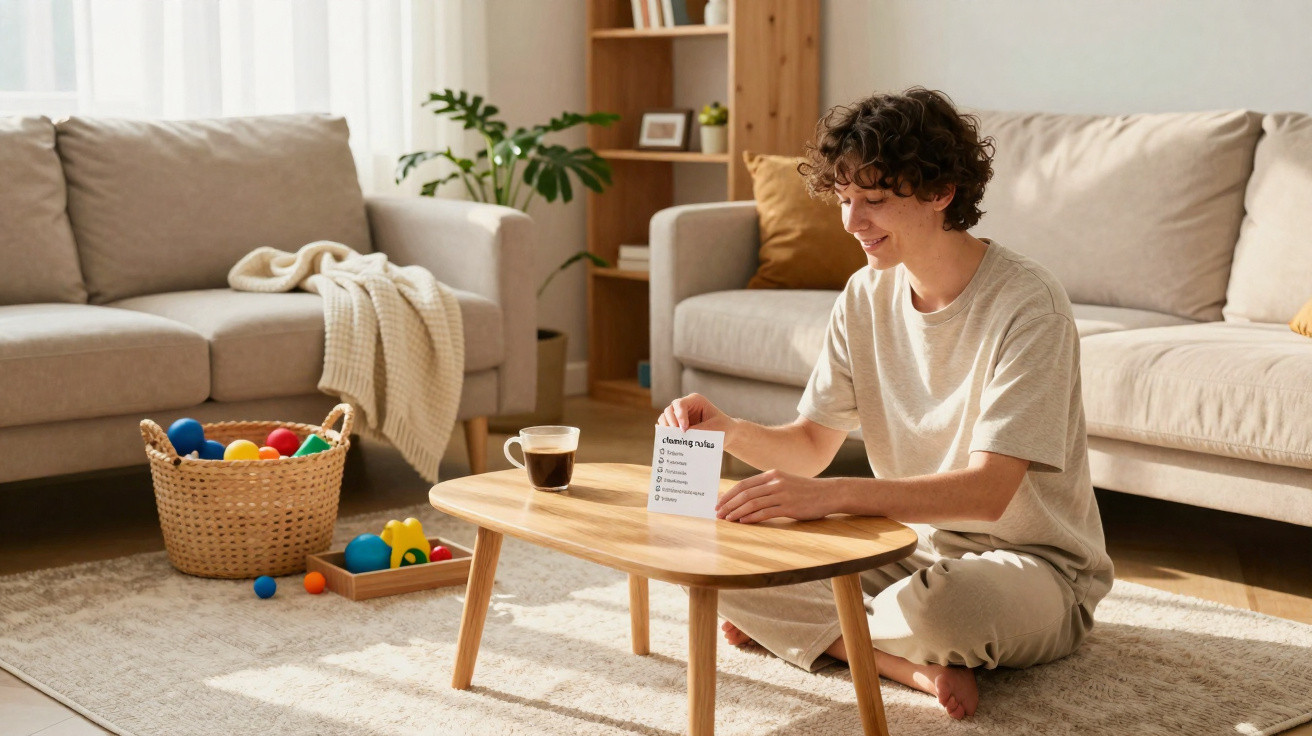
Consider the coffee table. It once came with a five-part rule: no drinks without coasters, no remotes left out, no books on it, no crumbs and candles always placed in the centre. I was the only person who could remember the entire list, so I was also the only one who spotted when it had been ignored.
One evening, I abandoned all of it and kept just one instruction: “Nothing sticky, nothing dirty, everything else is fine until night.” That week, the table never became the dreaded dumping ground. Everyone used it as normal, then at 9 p.m. we spent 60 seconds resetting it. One rule kept it neater than five rules ever had.
What was happening seemed almost the wrong way round. You might assume that extra rules bring greater control and better outcomes. Psychologically, though, too many rules can prompt a quiet form of rebellion. The brain sees “overly strict” as “impossible to achieve” and simply disengages.
With fewer rules, people’s minds can relax. A straightforward standard feels manageable, so they make an effort. Repeated every day, that modest effort keeps a home in better condition than a thousand tiny expectations that nobody can recall. The home didn’t change, the relationship to it did.
The “rules diet” that really keeps a home tidy
The experiment that made the difference was what I now call my “rules diet.” For one month, I reduced my cleaning rules to three non-negotiables for the entire home, with one additional rule for each room. That was all. There were no unspoken conditions and no “exceptions except when…” small print.
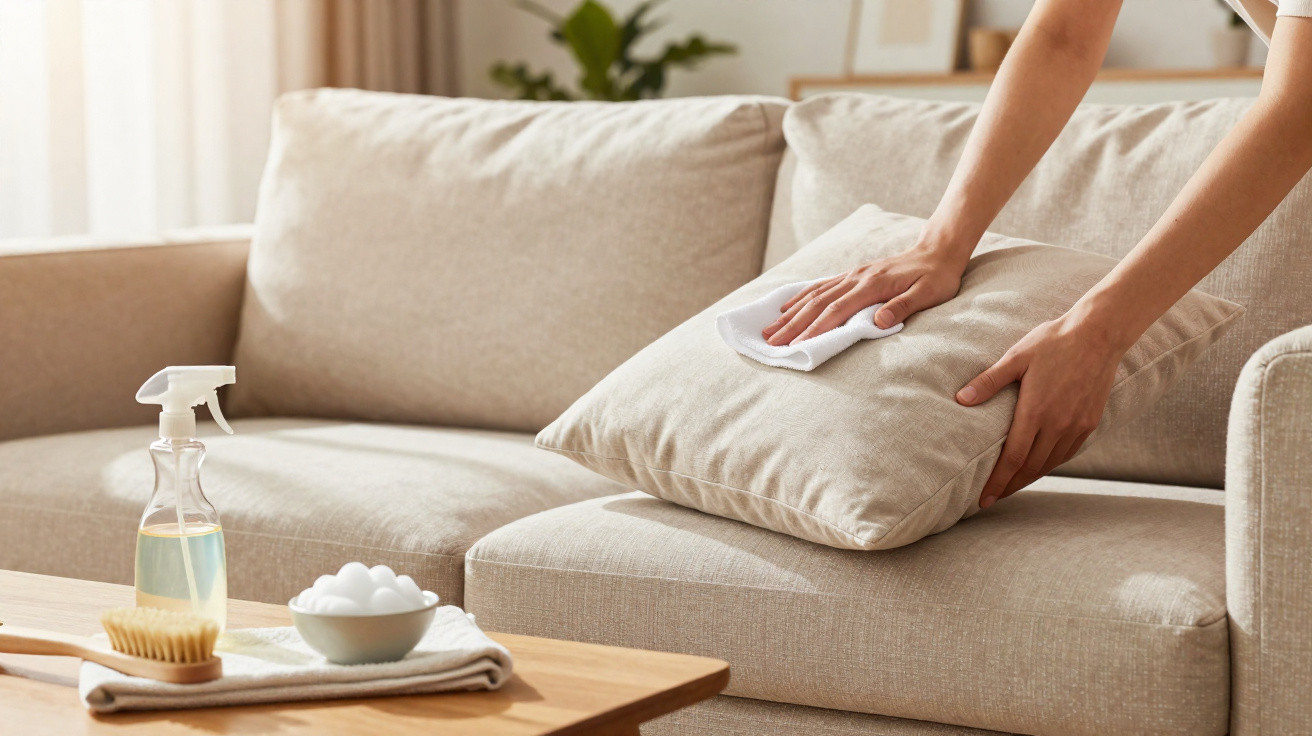
My three universal rules were uncomplicated: rubbish goes straight into the bin, dirty dishes do not stay in the sink overnight, and the floors remain clear enough to walk on. I then selected one small rule for every space. Bedroom: clothes stay off the floor. Bathroom: towels do not go on the ground. Living room: straighten the sofa cushions once daily. Kitchen: clear one main worktop at night. Everything else? Allowed.
The greatest surprise was how much more gentle the home felt. Rather than becoming irritated by shoes near the door or a stray toy in the hallway, I could mentally label them “permitted mess”. The emotional strain eased, making it simpler to deal with the few tasks that truly mattered.
There is a subtle strength in knowing that the standard is both low and clear. Rather than chasing dust along skirting boards, I focused my energy on that single worktop. Instead of requiring immaculate bedrooms, I only checked the floor. These small, targeted actions established a base level of order that did not disappear whenever life became busy.
Many of us fall into the trap of believing tidiness depends on heroic effort: strict cleaning schedules, colour-coded routines and Sunday deep cleans that consume the whole day. Honestly, no one keeps that up every single day.
When a system is too demanding, we abandon it at the first hint of tiredness. The mess then builds up, guilt grows alongside it, and next time we impose even harsher rules. That cycle is draining. A rules diet swaps perfection for consistency. Your home may never resemble a staged estate-agent photograph, but it can remain at the reassuring level of “I’m not embarrassed if someone drops by.”
How to ease your cleaning rules without feeling that you have given up
Begin with a sheet of paper and list your current cleaning “shoulds”. Include not only chores but rules too: “The bed must be made every morning,” “No shoes in the hallway,” “Worktops must always be clear,” and “Towels folded a certain way.” Seeing them written down is often startling. Most of us follow an invisible rulebook that we never deliberately chose.
Next comes the uncomfortable yet liberating step: circle only five rules that genuinely matter to you in this particular season of life. Do not choose in theory; choose for now. Have children under five? Work full time? Live with chronic fatigue? Your rules need to acknowledge that reality.
What can hurt is the sense that reducing rules means reducing standards or “letting yourself go”. That inner voice is not truly about dust or dishes. More often, it concerns self-worth, control or old family ideas about what a “good” adult should do. Be kind to that voice. You are not lazy because you no longer want to police water marks on the table. You are human.
One helpful question is: “If I relaxed this rule, what’s the worst that would reasonably happen?” Very often, the answer is “The house would look fine, just less perfect.” If perfection costs you stress, nagging and the inability to rest properly on your own sofa, it comes at too high a price.
Some rules can also become experiments instead of permanent choices. Test “no folding pyjamas, just placing them on a chair” for two weeks, or try “no deep-cleaning the children’s rooms, only floor cleared”. Pay attention to how the home genuinely feels, rather than only to its appearance.
“My home finally stayed neat when I stopped running it like a museum and started running it like a place real people live,” a friend told me recently, laughing. “Once I dropped half my rules, my kids stopped fighting me on the rest.”
- Keep 3–5 essential house rules, and no more
- Restrict each room to one small rule
- Permit designated “mess zones” without guilt
- Choose quick resets of 5–10 minutes rather than marathon cleaning sessions
- Reassess and adapt rules every season, rather than during every crisis
Living in a tidy home without the tension
Eventually, I understood that my old cleaning rules were not really about cleanliness. They were driven by fear: fear of judgement, fear of losing control and fear that life was coming undone. Once I recognised that, I was able to soften them. The house did not collapse into disorder. The relationships within it became more relaxed. Conversations took the place of reminders. “Good enough” replaced “Why is this not done yet?”
There is a quiet pleasure in moving through a home that is obviously lived in, slightly imperfect, but largely under control. A coffee mug on the table, a book left open on the sofa, a half-folded blanket: these are signs of life, not of failure. Perhaps that is the real aim: not a flawless home, but one where everybody living there feels welcome, including you.
Maybe the next tidiest version of your home will not come from trying harder. Perhaps it begins with removing one rule today and discovering what actually happens.
| Key point | Detail | Value for the reader |
|---|---|---|
| Focus on fewer rules | Retain only 3–5 core house rules, plus one for each room | Makes tidiness feel manageable and less overwhelming |
| Move from perfection to consistency | Use brief daily resets instead of large, infrequent deep cleans | Keeps the home consistently tidy without burnout |
| Match rules to real life | Adjust expectations to your current season and energy levels | Lessens guilt and supports a calmer, more liveable space |
FAQ:
- Question 1 Will my house become dirtier if I loosen my cleaning rules?
- Question 2 How many rules are achievable for a busy family?
- Question 3 What happens if I am the only person who values tidiness?
- Question 4 How can I decide which rules to retain and which to remove?
- Question 5 Can this method work in a very small home or flat?


Comments
No comments yet. Be the first to comment!
Leave a Comment