
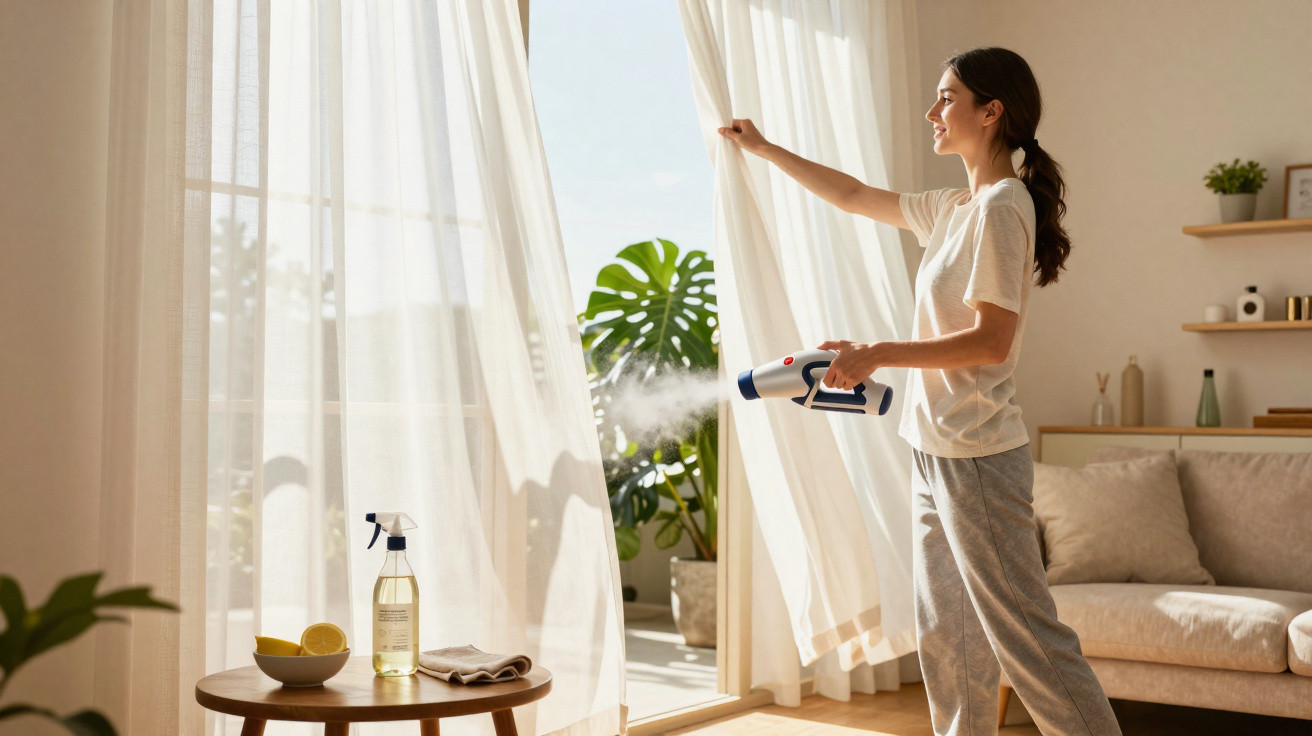
Dust, pollen and cooking smells: curtains often look clean when they are anything but.
A few straightforward steps can make them fresh again – without taking them down.
For many people, washing curtains is one of the most irritating household chores. Taking them down, laundering them, drying them and rehanging them takes time, patience and can also wear out the fabric. Yet fabric curtains can be cleaned surprisingly thoroughly while they remain on the rail as usual. The key is using the right sequence and a few useful tools.
Why curtains become dirty so quickly
Curtains work rather like an air filter in a room, catching everything that travels through the air – every single day.
- Household dust and dust mites
- Pollen coming in from outdoors
- Cooking fumes and grease particles
- Cigarette smoke or smoke from a fireplace
- Hair and skin flakes from people and pets
You will not always notice this straight away. Pale, sheer fabrics in particular can seem “somehow” acceptable even when they have long since developed a musty smell or begun to aggravate allergies. Anyone sensitive to dust or pollen may feel the effects clearly: more frequent sneezing, itchy eyes and a scratchy throat – especially in the living room and bedroom.
Regularly maintained curtains contribute to better air, less dust in the room and a noticeably fresher feeling at home.
Vacuuming curtains: the quick basic clean
The most straightforward step is also the one most often overlooked: vacuuming. Like carpets and upholstered furniture, curtains need regular attention from the vacuum cleaner too.
How to vacuum curtains properly
- Use an attachment with soft bristles so that the fabric does not tear.
- If your vacuum allows it, reduce the suction power slightly.
- Hold the fabric gently taut with one hand.
- Vacuum slowly from top to bottom in even passes.
- Do not overlook the curtain rail and fixings, as plenty of dust gathers there.
A quick weekly pass over the curtains stops dirt from becoming embedded in the weave. It also extends the time between occasions when the fabrics genuinely need washing.
Deep-cleaning curtains with steam – without taking them down
When dust is no longer the only issue, steam can help. A steam cleaner or garment steamer uses hot water vapour that reaches deep into the fibres.
Benefits of cleaning with steam
- Fibres are relaxed and creases disappear
- Dirt and bacteria are loosened without scrubbing
- No detergent residue is left in the fabric
- Smells fade more quickly
Move the nozzle slowly in vertical strokes from top to bottom over the whole surface. The curtain stays on its rail throughout. This works particularly well for heavier curtains in a living room or bedroom.
Take extra care with delicate materials such as raw linen, silk or very fine decorative fabrics. Test first in an inconspicuous area, and pay attention to the maximum temperature and steam output. If the material becomes rippled or changes colour, it is better to stick with conventional washing.
Removing stains with household remedies
A glass of red wine, a greasy mark from the radiator or children's chocolate on the edge can spoil the entire look. That does not mean the curtain has to go straight into the washing machine.
Stain spray made from vinegar and water
For many marks, a gentle vinegar-and-water solution is enough. It cuts through grease and neutralises odours.
Mix one part clear vinegar with two parts lukewarm water, pour the solution into a spray bottle and treat only the affected area.
Proceed as follows:
- Spray the solution onto the stain, but do not soak the fabric.
- Leave it to work for several minutes.
- Gently blot with a soft, clean cloth – do not rub.
- Repeat if necessary, then allow the area to dry thoroughly.
With richly coloured curtains, test in a hidden spot first to check whether the shade changes. For particularly delicate fabrics, it is better to use a specialist upholstery or curtain-cleaning product.
Getting rid of smells without switching on the washing machine
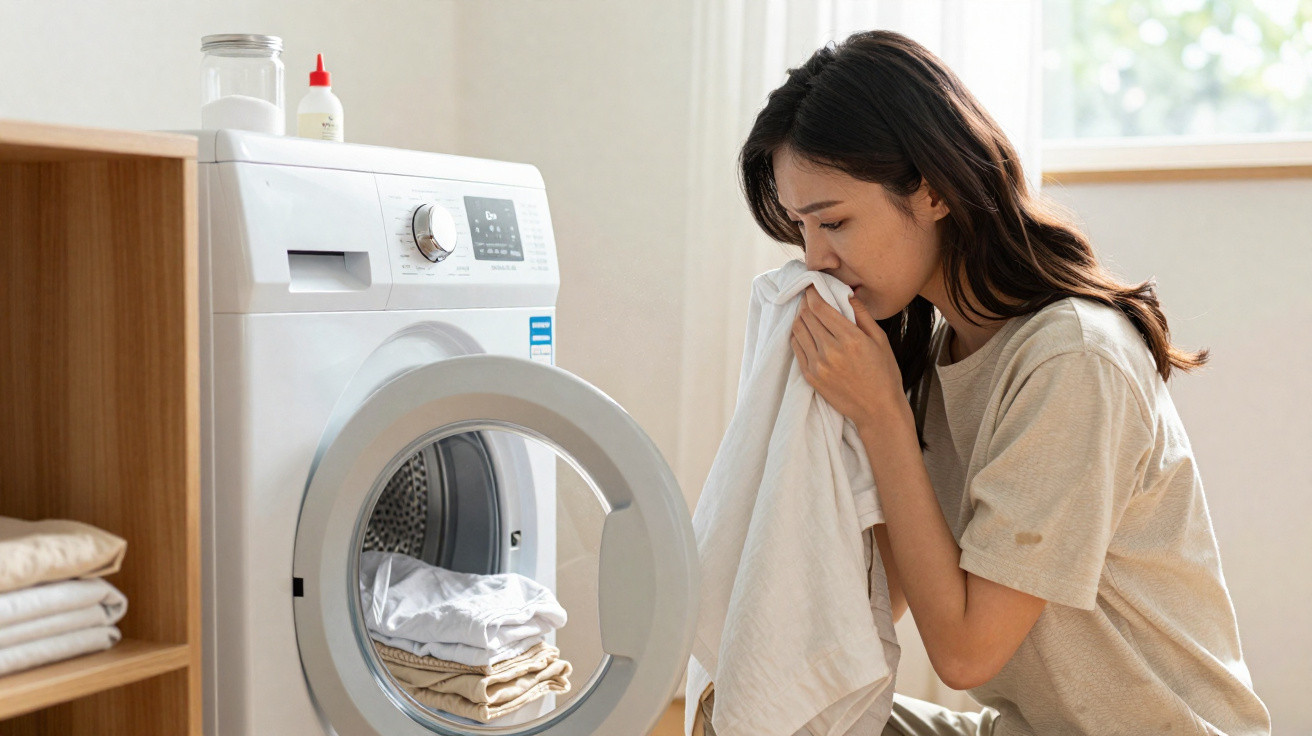
Sometimes curtains are technically clean but still smell of cooking, smoke or damp air. In that case, a fresh scent can help without a full wash cycle.
Make a simple room and curtain spray
A natural fragranced spray can be made using just a few drops of essential oil:
- Fill a spray bottle with water.
- Add a few drops of essential oil, for example:
- Lemon for a light, fresh note
- Lavender for bedrooms and restful spaces
- Eucalyptus when you want the air to feel clear and clean
- Shake the bottle well.
- From a short distance away, mist the curtain lightly with a fine spray.
The fabric should only become slightly damp. This allows it to dry quickly and prevents water marks from forming.
Binding odours over the long term with simple solutions
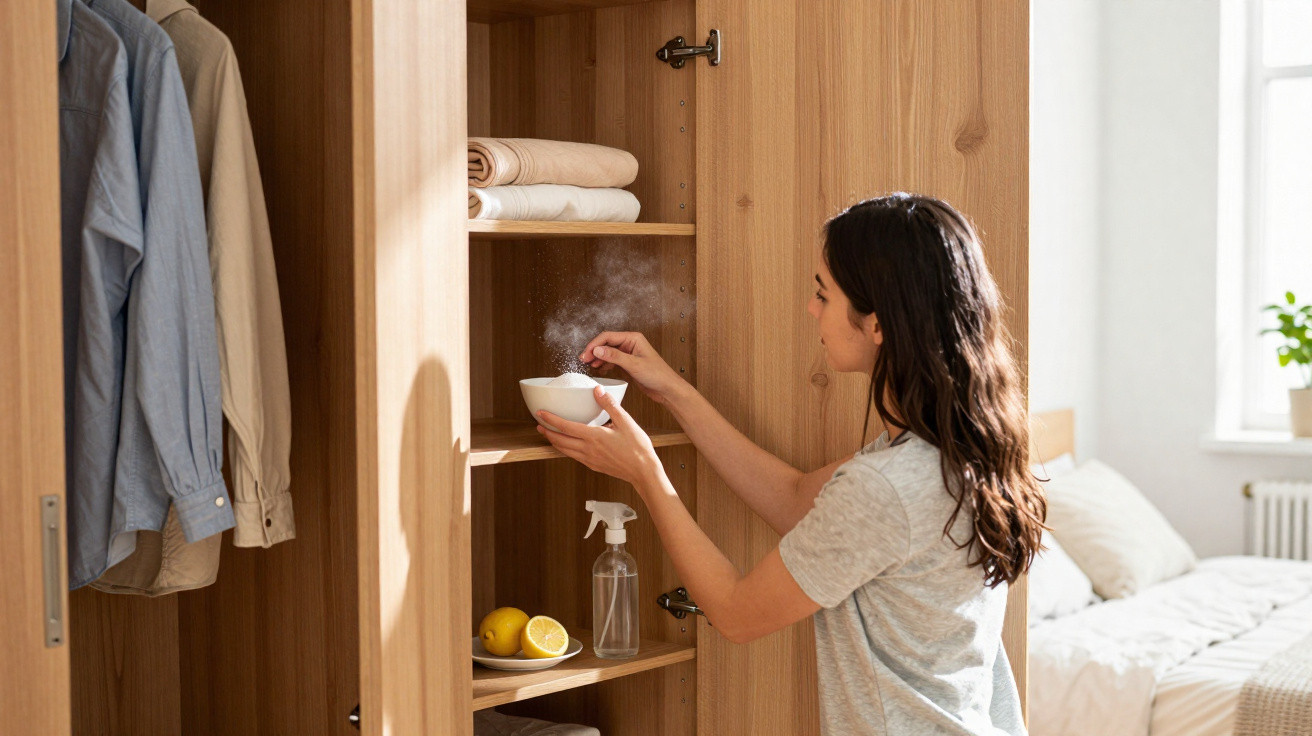
If there are ongoing sources of odour, such as an open-plan kitchen or a busy road outside the window, small sachets can provide extra help.
Fill fabric bags or old socks – clean ones, of course – with:
- Sodium bicarbonate (baking powder without additives will do in a pinch)
- Optionally, dried herbs such as lavender, rosemary or mint
Tie the bags closed and hang or place them near the curtains. The powder absorbs odours, while the herbs add an extra fragrance.
Making curtain care part of your routine
Looking after curtains regularly avoids major cleaning sessions involving a ladder, washing machine and drying chaos in the living room.
Three short routines per week are often enough to keep curtains fresh in the long term.
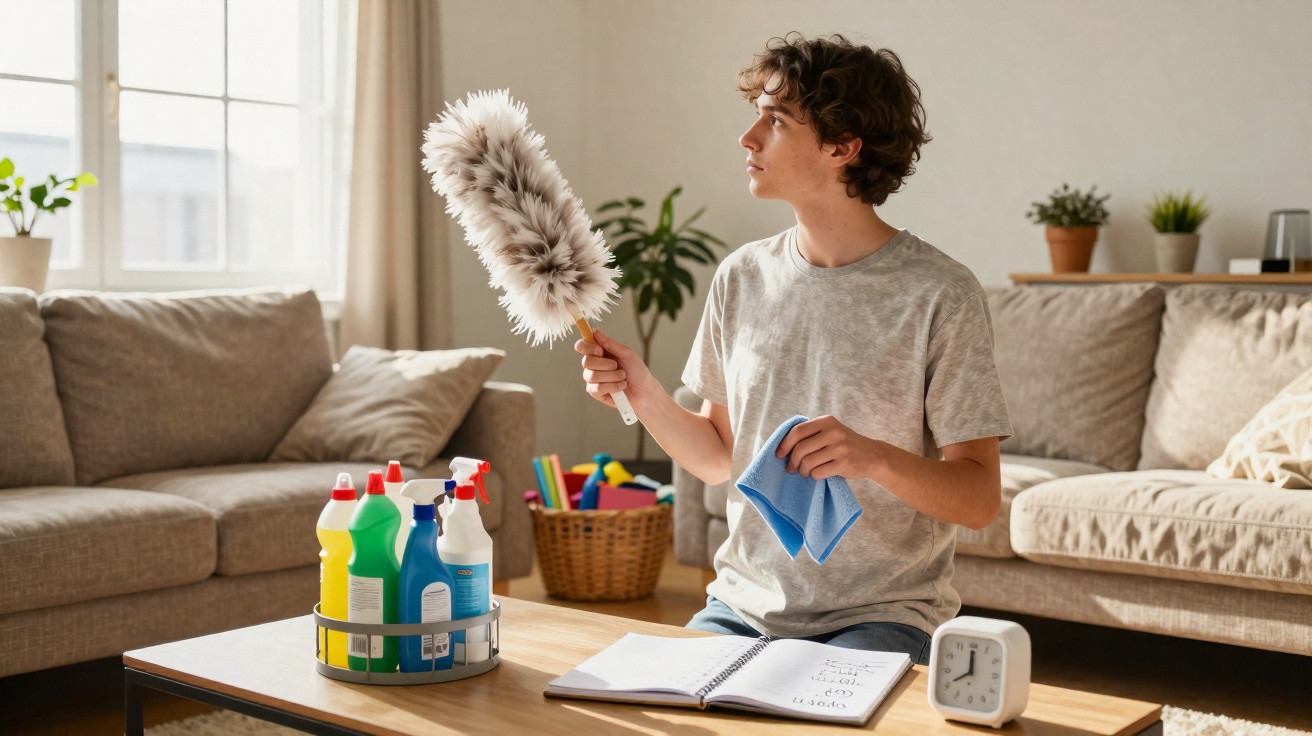
Practical curtain cleaning schedule
| Interval | Task |
|---|---|
| Daily | Air the room in the morning so that moisture and smells can dissipate |
| Weekly | Vacuum curtains with a soft attachment, and wipe the rail and brackets |
| Every 4–8 weeks | Use steam treatment or remove individual stains |
| 2–3 times per year | Carry out a full wash according to the care label, if necessary |
Reacting quickly to fresh stains prevents many problems. A small spray cleaner in the cleaning cupboard next to the vacuum cleaner is usually all that is needed to treat new marks immediately.
What to consider for sensitive people and children
In homes with allergy sufferers or young children, it is worth looking carefully at the products being used. Essential oils can be very intense and may cause headaches or irritation for some people.
If babies or toddlers sleep in the bedroom, use fragrances sparingly and choose only mild options, such as lavender in a low dose. Vinegar solutions smell quite strong initially, but the odour almost completely disappears after a short while.
Which fabrics suit which type of care
Not every curtain responds equally well to every method. A quick check of the care label can prevent unpleasant surprises.
- Synthetic fabrics (polyester, blended fabrics): generally tolerate vacuuming, steam and mild vinegar well.
- Cotton: hard-wearing, but does not like repeated very damp treatment in the same area.
- Linen: may shrink or become rippled when exposed to excessive steam, so work carefully.
- Silk: extremely delicate; it is best cleaned by a professional, or maintained only very gently with cold air and dust removal.
When buying new curtains, it is worth briefly considering how much care is realistic. Heavy velvet curtains look impressive, but require more effort than lightweight polyester sheers.
More than appearance: fresh curtains change the room
Clean curtains are not merely a visual improvement. Many people only realise after a thorough clean how much the air in a room changes. It feels clearer, the familiar “home smell” is reduced, and the view outside seems more open.
Particularly in small flats or rooms that are rarely completely empty, scents and atmosphere are strongly tied to textiles – curtains, sofas and carpets. Anyone who begins caring for curtains regularly will automatically gain a better sense of how air quality and wellbeing influence one another.



Comments
No comments yet. Be the first to comment!
Leave a Comment