
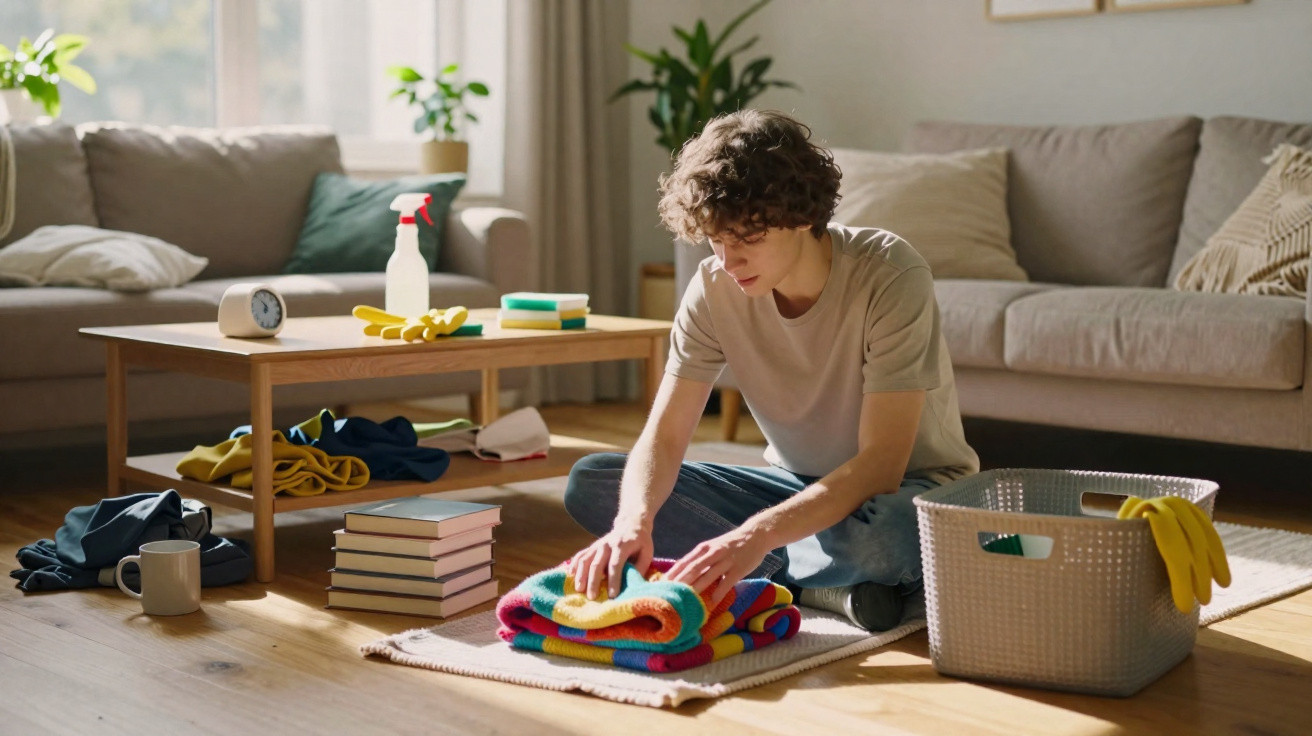
It is Saturday morning. One person puts their hair up, switches on a playlist and, an hour later, their flat could pass for a rental advert. Someone else sits on the bed’s edge, looking at the same pile of washing that has remained there all week, feeling more weighed down with every minute. The number of socks is identical. So is the number of plates. Yet they may as well be living on different planets.
You watch “Sunday reset” videos featuring colour-coded sponges and sparkling sinks, and experience a strange blend of envy and annoyance. How can they get through it so quickly when your mind feels as though it is wading through mud?
The clutter is easy to spot. The unseen system operating behind it is not.
Why some people seem wired for “quick clean mode”
Seeing someone clean quickly can resemble watching a choreographed routine. They rarely pause. Rather than lingering in a doorway to think, they pick up a bag, put items away, wipe a surface and carry on.
Their mind follows a straightforward sequence: notice an object, make a choice, take action. For them, there is barely any of the small pause in which others become trapped in a “Should I keep this?” spiral. They may be less emotionally attached to possessions and less worried about discarding the “wrong” item.
They also often divide disorder into tiny jobs without consciously meaning to. One song is for washing up. Part of a podcast is for the floors. Then they finish. The work happens in brief, focused bursts.
Consider Emma and Léa, colleagues living in comparable one-bedroom flats. Both arrive home at 7 pm. Emma puts down her bag, sets a 10-minute timer and gets on with it: shoes go into the wardrobe, post goes into a tray and worktops are cleared. At 7:15, she is on the sofa, scrolling through her phone.
Léa comes in, is hit by the thought, “Ugh, everything’s a mess”, and sits down for “five minutes” that gradually become 45. When she finally gets up, she is guilty and drained despite not having touched a sponge. By Saturday, the entire flat seems like one huge, unmanageable job.
The floor area is the same. The mental film running in the background is not.
People who clean fast have often grown up treating cleaning as a small, regular ritual instead of an occasional major undertaking. Repeating it creates a form of muscle memory that starts without an internal argument. The task feels ordinary rather than overwhelming.
People who cannot get started, by contrast, often associate cleaning with shame, stress or earlier criticism. Each unwashed plate can then feel like evidence that they are “bad at life”. That emotional burden makes every task slower. You are not merely picking up socks; you are pushing back against a severe inner voice.
Cleaning speed is rarely about laziness - it’s about mental load, emotional history, and how many decisions your brain is already carrying.
When clutter meets brain chemistry
Some people’s brains process their surroundings in a different way. For those with ADHD, depression, anxiety or chronic fatigue, a messy room may not simply look crowded; it can feel like a barrier. Their attention shifts rapidly between objects. Because the brain cannot identify what matters first, everything merges into one daunting “I don’t know where to start”.
That sense of being unable to move is very real. Physically, you may feel weighted down, as though you are walking through syrup. “Just pick one thing” may sound sensible in theory, but your nervous system is in freeze mode rather than ready for action.
Where one person sees “five quick things”, another sees a demand on energy that already feels precarious.
A 2023 survey by a home organisation app revealed something notable: respondents who described themselves as “messy” also reported greater stress and shame, no matter how large their home was. The number of square metres was irrelevant. What mattered was the narrative they had about themselves.
One respondent said cleaning was “like being asked to run a marathon at the end of the workday when I’ve already crawled through the week”. She was not overstating it. For a person balancing children, employment, mental health and financial concerns, dishes are not emotionally neutral. They can become visible evidence of everything that feels “too much”.
Meanwhile, a neighbour may arrive home carrying fewer unseen pressures, put in their earbuds and clean the very same dishes while humming along.
Dopamine also has a part to play. People who clean rapidly often receive a small burst of satisfaction from ticking off jobs. A shiny sink is rewarding in its own right. Their brain connects “action” with “tiny pleasure”.
Someone who feels immobilised may not experience that reward until the home is exceptionally clean, a result that could require hours they do not have. Why begin, then? There is no immediate benefit, only exertion. For an exhausted brain, that is an unwinnable negotiation.
To be realistic, nobody genuinely manages this every day. The real difference is how much builds up before you reach the point where moving feels impossible.
Practical shifts when you feel glued to the sofa
A small, useful approach now recommended by many therapists is the “one square metre rule”. Select one deliberately tiny area: the coffee table, bathroom sink or top of a chest of drawers. For 10 minutes, that is your entire world. Nothing beyond it matters.
Set a timer, sort only that one square metre and stop as soon as it goes off. Do not expand the job with a “since I’m at it” mindset. Do not aim to tackle the whole flat. You are teaching your brain something different: both starting and finishing can be manageable.
Eventually, that small area becomes a prompt. Your body recalls, “I can do 10 minutes. I’ve done it before.” Momentum comes from evidence, not motivational speeches.
Another helpful change is to let go of perfection. Many people who clean slowly are not truly untidy; they are perfectionists in disguise. If the job cannot be completed “properly”, it simply… does not happen. Clothes remain on a chair for days because the “real” answer would be a complete wardrobe clear-out, and there is obviously no time for that.
Allow yourself an “ugly clean”. Put items into one box marked “Sort later”. Pile clothes rather than folding them. Wipe the sink without scrubbing in between the tiles. During busy weeks, you are allowed to value usefulness over appearance.
When every cleaning session stops feeling like a home makeover programme, your mind can relax enough to begin.
Sometimes the bravest thing you can do for your future self is just pick one plate up, rinse it, and let that tiny victory count.
- Use sound as a container: One song equals one mini-task. Once the track finishes, you may stop without guilt. Short songs work particularly well.
- Lower the bar for “done”: Rather than deciding “the kitchen must sparkle”, aim for “no food left out that can go bad”. A smaller target helps you move more quickly.
- Prepare “default homes” for objects: Keep a basket by the door for miscellaneous items, a tray for post and a bowl for keys. Fewer everyday choices mean less mental friction.
- Clean with someone on video: Body doubling - even a call with a friend who is also tidying - can settle the mind and build momentum.
- Talk to yourself like you would to a tired friend: “Ten minutes is enough. You’re not failing; you’re tired.” How you speak to yourself affects how heavy the broom feels.
Living between spotless and stuck
It can be quietly freeing to understand that speed of cleaning is not a moral trait. This is not a contest between “organised people” and “disasters”. It reflects a combination of routines, personal history, health and how difficult life feels this month. The rapid cleaner may be avoiding their own thoughts. The slower person may be fighting more invisible battles than their hallway floor could ever reveal.
Recognising this creates different possibilities. You can seek help without embarrassment. You can pay for a cleaner once a month without believing you have “failed adulthood”. You can accept that some weeks are survival-mode weeks: deal with the dishes, put the rubbish out and leave the rest.
For some people, the real task is not cleaning the hob. It is breaking through the belief that says, “If I can’t keep up, I’m broken.” A sink full of dishes is not a personality trait. A cluttered bedroom may simply show that your energy was needed to keep yourself going.
Perhaps the aim is not to become the person who cleans in an hour, smiling to a playlist. Perhaps it is to establish a rhythm in which your home supports you sufficiently to let you breathe when you come through the door.
The pace will be your own. Not Instagram’s, not your mother’s and not your neighbour’s. Yours alone.
| Key point | Detail | Value for the reader |
|---|---|---|
| Break tasks into tiny zones | Use the “one square metre rule” and 10-minute sprints | Reduces overwhelm and makes starting realistically possible |
| Drop perfectionism | Allow “good enough” cleaning and temporary catch-all spots | Helps you move faster and avoid all-or-nothing paralysis |
| Respect your brain and energy | Recognise mental load, neurodivergence, and emotional history | Replaces shame with strategies tailored to how you actually function |
FAQ:
- Why do I feel exhausted just looking at a messy room? Your brain may be treating the room as a mass of decisions rather than a collection of objects. That mental load can bring on a stress or freeze response, particularly when you are already tired or anxious.
- Does being slow at cleaning mean I’m lazy? No. Cleaning speed relates to energy, routines, previous experiences and, in some cases, conditions such as ADHD or depression. “Laziness” is a harsh description that often conceals more significant causes.
- How can I start when everything feels like “too much”? Pick one extremely small job: clear only the sink, pick up only rubbish or gather only cups. Set a timer for 5–10 minutes and stop when it rings. Beginning on a tiny scale is still beginning.
- Is it cheating to pay for a cleaner or ask friends for help? Not at all. Sharing or outsourcing the workload is a legitimate answer, especially during demanding periods of life. Your value is not determined by the number of floors you mop on your own.
- How do fast cleaners keep the habit going? They commonly attach cleaning to routines: a brief reset after meals, five minutes before bed or music as a cue. Making it a series of small, regular rituals prevents mess from snowballing into a full-blown crisis.



Comments
No comments yet. Be the first to comment!
Leave a Comment