
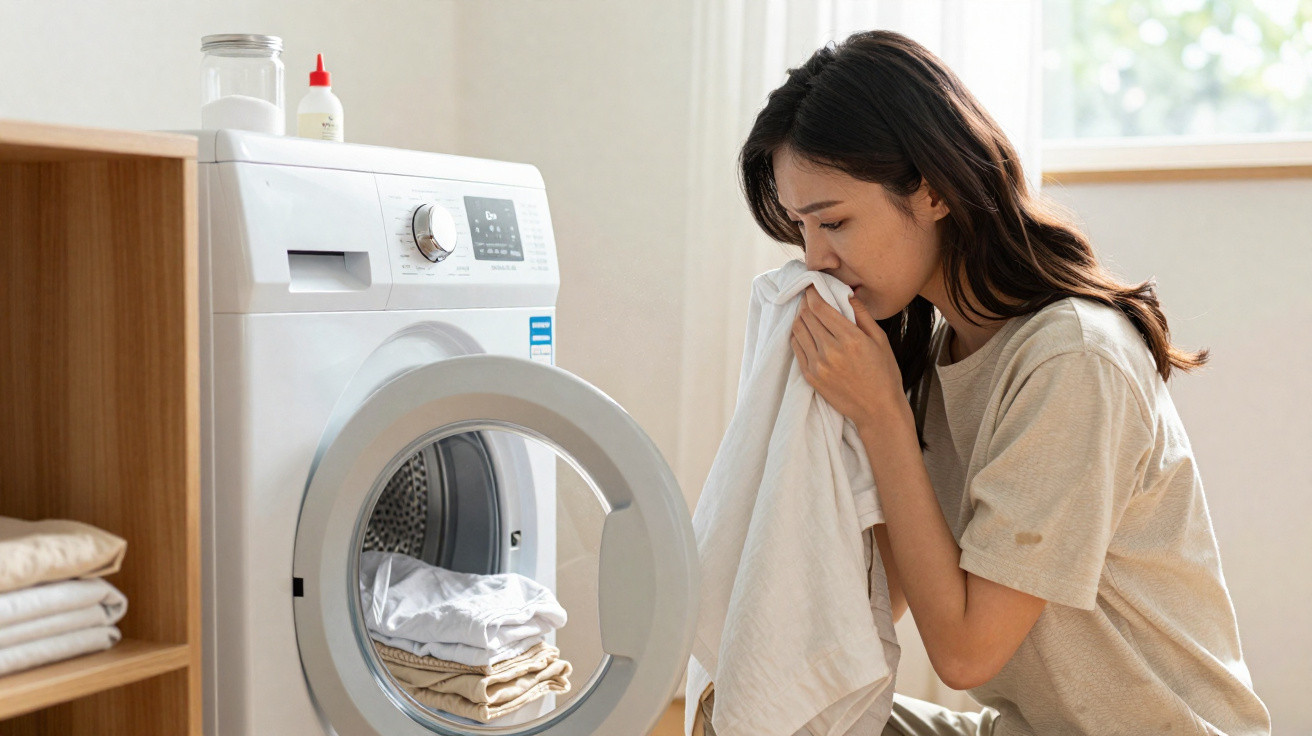
Well intentioned, but one particular wash setting can have an unpleasant side effect.
Lower energy use, less water, one press of a button and all the bed linen is washed: for many people, that is the ideal laundry day. Yet pairing the Eco programme with a drum packed to capacity can cause deposits to build up inside the washing machine - and potentially spoil pale sheets and linen duvet covers.
Why the Eco programme is less hygienic than many people assume
The Eco programme reduces electricity use by heating the water more gradually and to a lower temperature, generally only 40 to 50 degrees. It also uses less water and takes longer to run - which may reduce bills but can compromise hygiene.
“Eco programmes with low temperatures allow many bacteria, fungi and germs to survive - over time, they create a stubborn film inside the machine.”
Repair services increasingly identify this money-saving routine as a common reason for:
- unpleasant smells coming from the washing machine;
- more frequent faults;
- discoloured or stained bed linen.
Below around 60 degrees, many microorganisms simply are not killed. The warm, damp conditions inside a washing machine provide an ideal environment for them.
The biofilm that forms inside the washing machine
Anyone who washes almost exclusively on cold cycles or the Eco programme for weeks at a time can gradually create a type of “slime layer” within the appliance. Specialists call this a biofilm. It contains:
- bacteria;
- mould spores;
- detergent and fabric-softener residues;
- fibres and dirt particles from laundry.
This deposit coats the drum, hoses and, in particular, the rubber seal around the door. It often appears as a grey or brownish greasy film and can smell of rotten eggs, drains or a musty lakeshore.
Eventually, pieces of the film break away. These flakes enter the wash and cling particularly readily to absorbent fabrics, such as linen bed linen and pale cotton sheets. The result can be grey streaks, dark marks and an odour that does not fully disappear even after drying.
An overfilled drum turns bed linen into a heavy load
Many people make a second mistake at the same time: they put an entire bed set into the machine in one go - duvet cover, fitted sheet and several pillowcases. While this may seem manageable when dry, its weight multiplies once wet.
A few kilograms can quickly become a heavy mass of wet fabric. This has several consequences:
- The laundry bunches together into one dense bundle.
- Water and detergent barely reach the layers in the middle.
- The drum is more likely to become unbalanced.
- The bearing assembly, shock absorbers and motor are continually pushed to their limits.
For the laundry, this means poorly rinsed detergent residue, pale streaks, grey shadows and the familiar musty smell that remains even after ironing.
Why linen bed linen is particularly vulnerable
Linen absorbs a great deal of moisture and, thanks to its natural, slightly rough texture, is especially prone to collecting dirt particles. When loosened biofilm flakes combine with detergent residue, they readily settle in these fibres. The fabric can become patchily discoloured, feel dull and lose its characteristic fresh handle.
How to care for your washing machine and bed linen without giving up Eco
There is no need to stop using the Eco programme altogether. What matters is taking a few simple preventative measures and developing a better sense of the right load size.
The 70–80% drum rule
Technicians advise against filling the washing machine to its absolute limit. A useful rule of thumb is to:
- fill the drum to around three-quarters of its capacity;
- shake out and unfold every sheet and cover thoroughly beforehand;
- avoid adding very heavy items, such as large terry towels, to the bed linen.
There is also a straightforward check: after loading the laundry, there should still be enough space at the top of the drum for the width of a hand. If you cannot insert your hand easily, the machine is overloaded.
Regular hot washes as a “disinfection treatment”
To prevent biofilm from building up significantly in the first place, the machine needs an occasional hot cycle:
- After roughly three Eco washes, wash bed linen or towels once at 60 degrees.
- Once a month, run an empty cycle at 90 degrees - with no laundry inside.
- For this clean, add around one litre of household vinegar to the drum or detergent drawer.
“A monthly boil wash without laundry acts like a thorough internal clean for the washing machine and substantially reduces biofilm.”
After each wash, always leave the door and detergent drawer slightly open. This allows the rubber seal and dispenser compartment to dry more effectively, prevents moisture from becoming trapped and gives mould less opportunity to grow.
How to care for linen bed linen properly
Anyone investing in high-quality linen bed linen will want to keep it looking fresh and attractive for as long as possible. These care tips are particularly useful:
- Temperature: Linen generally tolerates 40 to 60 degrees, but checking the care label is worthwhile.
- Detergent: Choose a delicates or colour detergent without optical brighteners.
- Spin cycle: A medium spin speed is preferable to reduce creasing and stress on the fibres.
- Drying: Line drying is ideal; avoid relying on a hot tumble dryer all the time.
If grey haze or stains are already present, use a hot wash without Eco, possibly with a pre-wash. It can also help to wash the bed linen separately from heavily soiled everyday clothes, so that fewer dirt particles become embedded in the fabric.
How to spot odours, deposits and damage early
Many issues develop gradually. Paying attention to minor warning signs can prevent costly repairs:
- A musty smell even though the detergent smells fresh.
- A greasy or discoloured rubber door seal.
- Damp patches or mildew marks on the seal.
- Knocking noises and strong vibrations when spinning bed linen.
If any of these signs appear, inspect the drum, seal and detergent drawer - then run a hot cleaning cycle straight away. The sooner you act, the easier it is to remove the slimy film and return the washing machine to a hygienic condition.
Why saving energy and hygiene can go together
Eco programmes have a valid purpose. They save energy when laundry is only lightly soiled and high hygiene standards are unnecessary, for example with everyday T-shirts or jeans. They become problematic when used for nearly every load - especially bed linen, towels or baby clothes.
A sensible combination could look like this:
- Light everyday laundry: mainly the Eco programme.
- Bed linen and towels: a regular 60-degree programme without Eco.
- Once a month: an empty boil wash, using vinegar as a cleaning aid.
Following this approach limits electricity and water consumption while keeping the washing machine in a condition that controls odours and biofilm. Bed linen stays fresh for longer, linen retains its pleasant handle, and repair services are needed far less often.





Comments
No comments yet. Be the first to comment!
Leave a Comment