
You hang them up, cross your fingers, and by the third day they have started to smell a little off. Hotels use one straightforward change to prevent that decline - and it has nothing to do with filling the room with perfume.
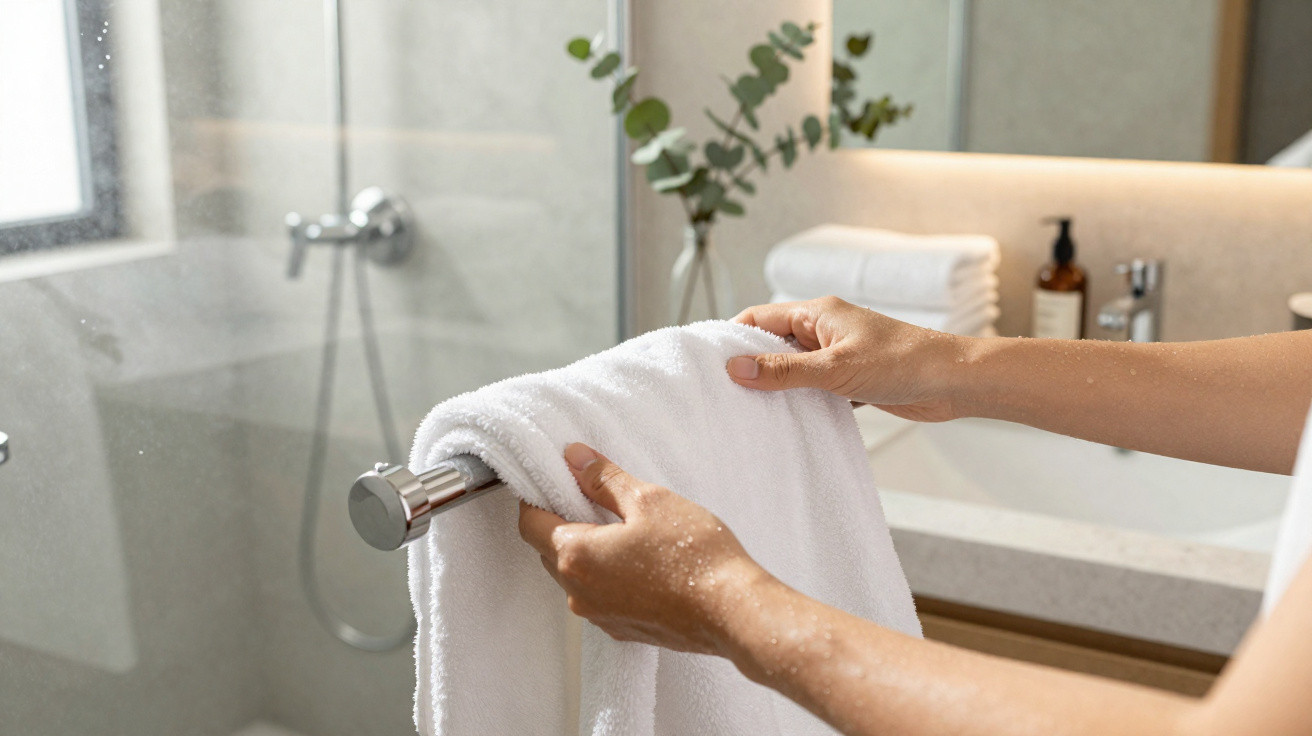
It was one of those early arrivals when the corridor still seemed half asleep. A housekeeper shook out a bath sheet like a sail, letting it catch the light, before laying it across a broad rail to create a tidy, breathable tent. There was no fuss and no expensive spray. I watched, equal parts envious and intrigued, while the bathroom took on that subtle, freshly clean smell found only in places with a proper routine. She gave the towel two brisk snaps, left a three-finger space between it and the wall, then moved on. The room immediately felt fresher, not because it had been fragranced. The trick was not scent but air: a small, almost imperceptible habit. Interesting, isn’t it?
Why towels become musty - and how hotels avoid it
At home, towels often fail through countless small errors. We wash them with excessive detergent, put them on hooks where their thick fabric bunches together, and leave them in a humid bathroom with the door closed. Dampness remains caught within the loops, while odour compounds settle into the residue. Hotels get three things right: spacing, warmth and genuinely clean fibres that dry fully between uses. When towel loops are not blocked by fabric conditioner, they shed water quickly rather than retaining yesterday’s shower.
I once saw a head housekeeper in Brighton prepare 18 rooms before midday. Each towel followed the same tiny routine: a snap, a tented position across the widest rail, then five minutes on a warmed rail as the extractor fan ran. She did not soak them in fragrance; she allowed physics to do its job. We have all pressed a towel to our face on day two and caught a faint wet-dog smell. In her rooms, that does not happen, simply because every towel has time to dry properly after each use.
The science is straightforward. Smells need three things to thrive: moisture, residue and time. Body oils and an overuse of detergent create films that hold water in the fibres. A warm bathroom maintains high humidity, meaning the towel never returns to a dry state. Microbes flourish in those conditions. One thorough reset wash clears the build-up, while daily air circulation prevents it coming back. Suspending a towel over a wide rail increases its exposed surface. Turning it over frees trapped dampness. Add gentle warmth or circulating air, and the loops stop acting like a swamp. That is the entire principle.
The Hotel Reset and Rail Rule you can use today
Try this two-step approach: the Hotel Reset + Rail Rule. Begin by reset-washing every bath towel. Put them through a hot 60°C cycle with 250 ml of white vinegar in the detergent drawer and no detergent. Follow with a second warm cycle using half your normal amount of detergent and 2 tablespoons of bicarbonate of soda scattered into the drum. Add an extra rinse. Tumble-dry until the towels are completely dry, preferably with wool dryer balls to separate and lift the loops. This removes the build-up and leaves clean fibres that release moisture quickly.
Then use the Rail Rule after every shower. Take the towel by two corners and snap it firmly twice. Place it over the widest rail to make a loose “tent” rather than a thick fold. Leave a gap of two to three fingers between the towel and wall so air can circulate. Turn it over in the morning and at night. For a very light hint of freshness, mist it sparingly with a 50/50 vodka-and-water solution, using two sprays on each side - it neutralises smells before disappearing. Realistically, no one will do that daily. Nevertheless, the snap-and-tent method by itself makes a remarkable difference.
Avoid the usual pitfalls: fabric conditioner, hooks and overcrowded cupboards. Never use fabric softener on towels - it smothers absorbency and locks in odour. Do not overfill the washing machine, as towels will not rinse properly. Keep vinegar well away from bleach. Don’t ever mix them. Where there is no extractor fan, leave the bathroom door slightly open and open a window for ten minutes. A small amount of moving air is more effective than any “ocean breeze” spray.
“Fresh towels aren’t about fragrance; they’re about freedom - free fibres, free air, free of residue.” - a housekeeper’s rule of thumb
- Reset once: vinegar cycle, followed by a bicarb cycle and complete drying
- After every use: snap, tent over a wide rail, and turn twice daily
- Optional mist: 50/50 vodka-water, with one drop of eucalyptus for a subtle clean note
- Ventilation: keep the door open and run the fan for 10 minutes after showering
- Storage: roll towels loosely rather than packing them tightly, and rotate them weekly
What happens when you put the method into practice
Once the fibres are clean and exposed to air, towels perform differently. They dry more quickly, feel less heavy, and leave the bathroom smelling more peaceful. Instead of masking odours with strong fragrances, you prevent them developing in the first place. Dry completely every time, and the “day three” funk never gets a foothold. Their colour and softness will also last longer, as product build-up is no longer wearing down the loops.
| Key point | Detail | Benefit for the reader |
|---|---|---|
| Hotel Reset | Two-stage wash: vinegar, then bicarb with a light dose of detergent | Clears residue that holds odour |
| Rail Rule | Snap, drape in a tent shape, turn twice a day | Ensures towels dry fully between uses |
| Air over aroma | Ventilate the bathroom, with an optional light vodka-water mist | Keeps towels fresh without overpowering fragrance |
FAQ:
- Can I use fabric softener on towels? No. It coats the fibres and reduces absorbency, trapping moisture and smells. Use a vinegar rinse instead if you want softness without residue.
- How much vinegar and bicarb should I use? Use around 250 ml of white vinegar in the detergent drawer for the first hot cycle. For the second cycle, add 2 tablespoons of bicarbonate of soda to the drum with half your usual detergent.
- What if I don’t own a tumble dryer? Dry towels in the air on a wide rack with moving air around them. Set them near a window, run a fan for 15 minutes, and finish them on a warm rail. The aim is bone-dry towels, not ones that are merely “almost” dry.
- Is the vodka-water spritz safe on coloured towels? Yes, when used lightly. First test an inconspicuous corner and choose plain, unflavoured vodka. It removes odours and evaporates quickly without leaving a sticky coating.
- What temperature should I wash towels at weekly? For most cotton towels, choose 60°C to reduce odour-causing microbes. Between reset washes, use a sensible amount of detergent and select an extra rinse.


Comments
No comments yet. Be the first to comment!
Leave a Comment