
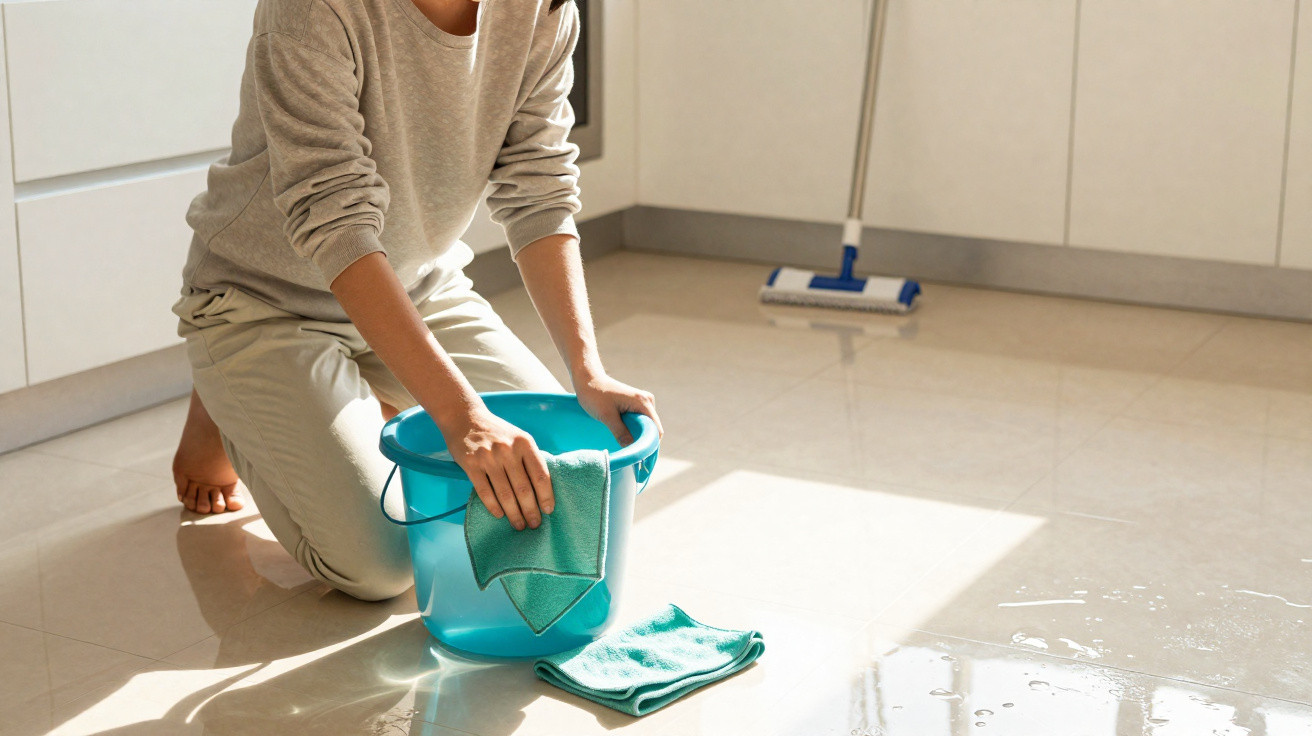
You tuck the mop away, stand back to look at your sparkling kitchen floor… then, less than an hour later, it seems to be attracting dust, crumbs and mysterious grey fluff from nowhere. Daylight through the window reveals every streak, footprint and stray pet hair. At that point, you may wonder why you mopped at all.
As you head towards the fridge, something crunches beneath your sock: a fresh grain of grit. Then another. The longer you look, the more imperfections appear. It can feel strangely personal, as though the floor is working against you.
Still, some people manage to keep their kitchen tiles looking clean for days.
So what is their secret?
Why freshly mopped kitchen floors attract dust like Velcro
Pay attention just after you have mopped. The surface is gleaming, slightly wet and oddly… tacky. Swipe a fingertip along the edge of a tile and it may almost squeak. This faintly sticky finish is a major reason dust returns so quickly. Traces of soap, multi-surface spray or excessive detergent remain on the surface, and dust readily sticks to that residue.
Drying also plays a part. As the final fine layer of moisture evaporates, it draws in tiny airborne particles. It is like a miniature storm indoors, quietly laying grit over your supposedly clean floor.
Imagine a Sunday morning when you have completed the whole reset: vacuuming, mopping and opening the windows for fresh air. Two hours afterwards, sunlight falls across the kitchen at an unforgiving angle, making every footprint stand out. There are children’s small feet, the dog’s paws and your own partly dried route to the coffee machine.
One reader said that she would mop in the evening, go to sleep feeling pleased with herself, then wake to tiles coated in a faint grey layer. She suspected either grimy mop water or faulty tiles. The real issue was her heavily fragranced floor cleaner, which left a shiny coating that worked like double-sided tape for dust. She was cleaning the floor… while also causing the issue.
It makes sense once you understand it. In most cases, floors do not become dustier more quickly after mopping; instead, they reveal dirt that was there already. Sleek, glossy surfaces bounce light differently, making each small speck more noticeable. Any cleaner left behind changes the surface tension too, attracting fibres from tea towels, paper, carpets and even clothing.
Certain floor types are especially susceptible to this problem. Vinyl and polished tiles, particularly in dark colours, expose every speck of dust. Matt or textured tiles disguise more of it, although residue can settle deep inside their pores. If you do not use the correct water-to-product ratio or remove loose debris beforehand, you are effectively applying a fresh sticky layer that dust cannot resist.
The cleaning sequence that prevents the dust “boomerang” effect
The answer frequently begins before the mop reaches the bucket: clean dry first, then clean wet. Start by vacuuming or sweeping thoroughly to remove crumbs, pet hair and loose dust. Do not simply skim over the room; properly cover the corners, beneath the table and along the plinths.
Next, use less cleaner than you may expect. Most products call for one capful in a full bucket, rather than several large pours. In many kitchens, warm water and a very small amount of neutral cleaner will cut through grease without leaving a tacky coating. Where the floor is particularly dirty, two quick mops using a weak solution work better than one heavily soapy effort.
A common belief is that extra foam means extra cleanliness. Watching bubbles glide over tiles can feel reassuring, as though you are defeating the dirt. Actually, that foam is what remains on the floor and later catches particles drifting through the air. Walking over it before it dries also pulls dust in from rugs and hallway floors, pressing it into the damp surface.
We have all experienced it: you tell everyone, “Nobody walk into the kitchen”, only for someone to forget and cross the room in socks half a minute later. Realistically, no one follows every rule every day. Perfection is not the aim; the aim is adopting a few small habits that prevent the floor turning into a dust trap after each clean.
“Once I switched to vacuum first, less soap, and a final rinse pass, the ‘instant dust’ problem basically disappeared,” says Claire, who cleans holiday rentals with high-traffic kitchens. “The tiles weren’t dirtier than before, they were just less sticky.”
- Vacuum or sweep slowly before mopping: give the mop room to work and create less mud and sludge.
- Use a light detergent solution: avoid thick foam and strongly perfumed products that leave films behind.
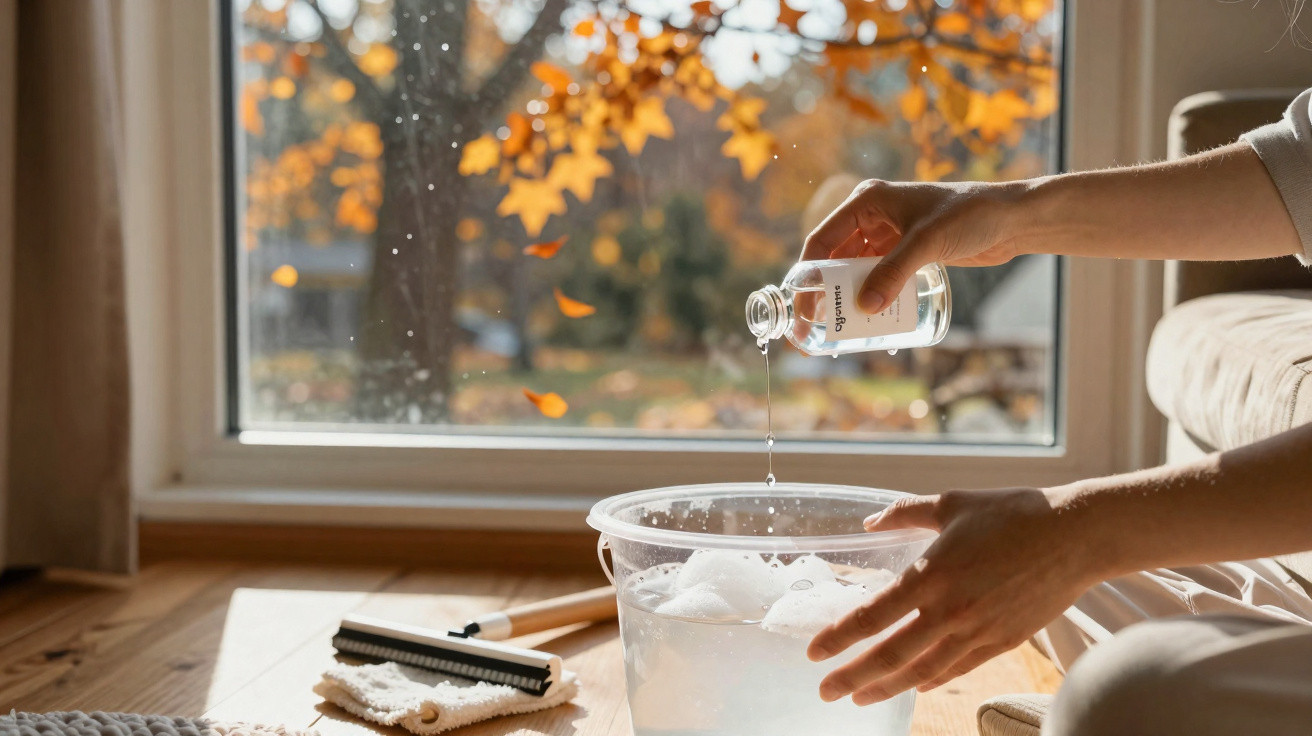
- End with a pass of clean water: this quick, often overlooked stage discreetly clears away residue.
- Open windows or run a fan to dry the floor faster: the less time it stays damp, the less dust it collects.
- Reserve one mop head for rinsing: keep the “wash” and “rinse” stages separate, as you would when washing your hair.
Kitchen floor routines that keep floors clean for longer (without living in the kitchen)
Once the deeper clean is complete, consistency matters. Small daily actions are more useful than intensive weekend scrubbing. Quickly sweep in front of the worktop where you prepare food each evening. Run the vacuum around the table after eating. Pull a dry microfibre mop across the kitchen while the kettle boils.
These small actions reduce the loose dust in the room, meaning that there is simply less to settle back on the wet floor the next time you mop. You are not working harder; you are interrupting the cycle that keeps supplying the dust magnet.
| Key point | Detail | Value for the reader |
|---|---|---|
| Dry clean first | Vacuum or sweep carefully before mopping at all | Clears loose dust so it cannot resettle on damp floors |
| Use less product | Dilute cleaning products properly and avoid heavy, perfumed formulas | Limits sticky residue that attracts dust and footprints |
| Speed up drying | Ensure good ventilation, use fans and do not walk on the floor too early | Makes the dust-attracting “magnet window” as brief as possible |
FAQ:
- Why does my floor feel sticky after mopping? This is normally caused by using too much product or too little clean water. Detergent accumulates in layers, especially on vinyl and tiles, and that mildly tacky film catches dust.
- Is just hot water enough to mop a kitchen floor? Yes, for floors that are only lightly soiled. Hot water and a microfibre mop can lift plenty of daily grime. In greasy cooking areas, use a little mild cleaner, followed by a clean-water rinse.
- How often should I mop to avoid constant dust? For many homes, mopping weekly is sufficient when you sweep or vacuum 3–4 times weekly. Homes with lots of foot traffic or pets may benefit from two light mops rather than one major cleaning session.
- What type of mop is best to reduce dust after mopping? Flat microfibre mops work well because they trap dirt rather than moving it about. Pick removable, washable pads, and dedicate one set to rinsing so dirty water is not spread back across the floor.
- Why does my dark tile show dust more than my old light floor? Dark, smooth finishes reflect light in a way that brings out every tiny particle. The floor is not necessarily dirtier; it is simply more revealing. Using less cleaner, rinsing thoroughly and regularly dry-dusting can make a noticeable visual difference.

Comments
No comments yet. Be the first to comment!
Leave a Comment