
The cleaning trick professionals return to time and again is not a spray. It is a straightforward soak-quiet, traditional and nearly overlooked-that loosens grease until it releases with very little effort.
The giveaway was the gleam. Early light caught the cupboard above the kettle, exposing a sticky ring around its handle. A friend had used a citrus degreaser; it smelled pleasant but did almost nothing to the mark. Then a professional cleaner arrived carrying a battered bucket, several soft cloths and a bag of washing soda. She added steaming water, stirred it, and immersed the cloths until they were soft and piping hot. There was no bubbling, froth or spectacle. She laid the cloths over the grease as though applying a hot compress, then watched the time with folded arms, as unhurried as a cup of tea. Ten minutes later, the stain came away as easily as condensation from glass. That single step transformed the room. She did not spray. She soaked.
The hot soak cleaners still talk about
Picture it this way: a hot cloth saturated with alkaline water resting against a tacky surface until the grime surrenders. Sprays land, run away and dry out. A soak remains in contact. Heat relaxes the oils, while sodium carbonate helps lift and break them down. Rather than pursuing the stain, you allow it to shift. Ten minutes of heat does what thirty minutes of scrubbing can’t. This is why professionals keep washing soda to hand-affordable, long-lasting and hidden away on a low shelf like a private trick.
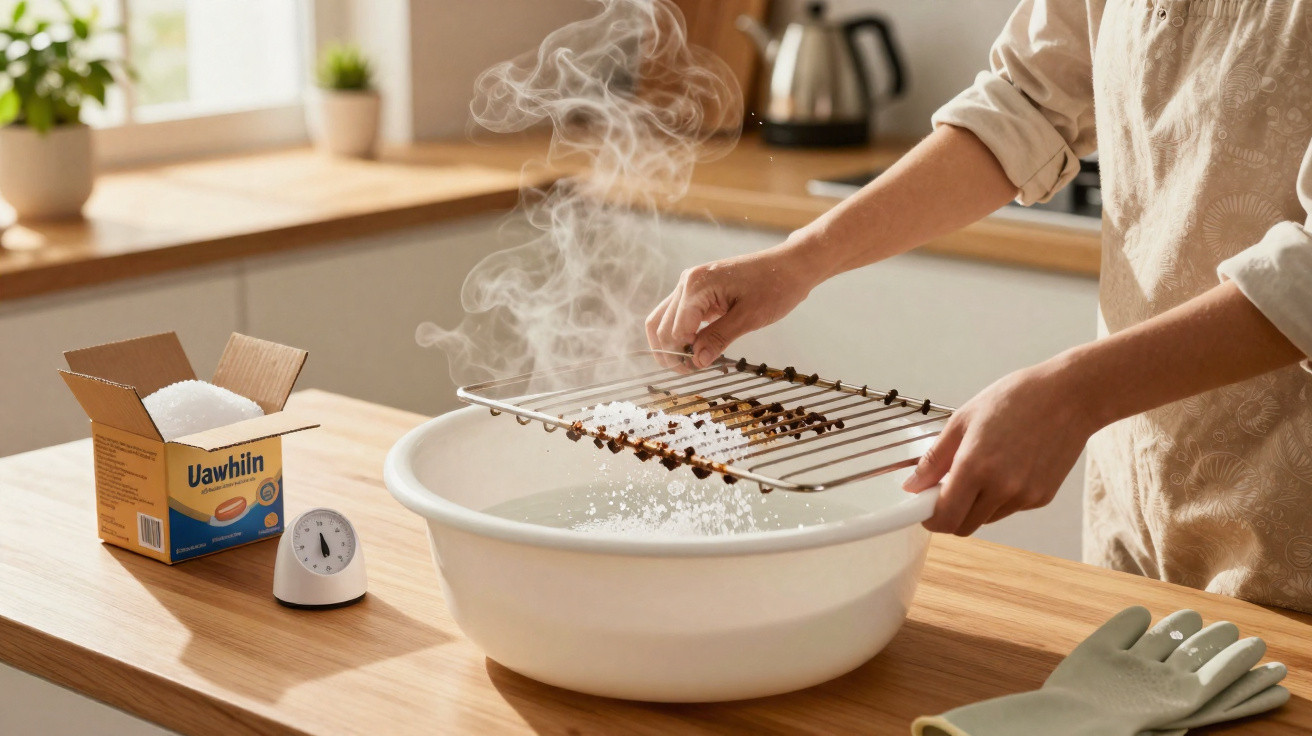
Consider hob grates or the metal mesh in an extractor fan. Put them in a sink of almost-boiling water, with a heaped spoonful of washing soda and a squeeze of washing-up liquid. Within minutes, brown ‘tea’ seeps out, the water turns cloudy, and the pieces begin to look renewed. Where an item cannot be submerged, the cloth compress delivers the same result. Everyone knows the feeling of a hob that remains sticky however often it is wiped. The soak does not battle it. It waits, then succeeds.
There is a straightforward explanation for its effectiveness. Grease combines fats, dust and microscopic kitchen residue, all of which cling eagerly to textured surfaces. Washing soda increases the pH, changing fatty smears into something more soap-like so they can transfer into the cloth. Hot water loosens the polymerised film that builds up over time, allowing the chemistry to work beneath it. It’s less elbow grease, more patience and physics. Instead of rubbing dirt into the finish, you let heat and time carry out the work people are always tempted to hurry.
How to use a hot washing-soda soak in your kitchen tonight
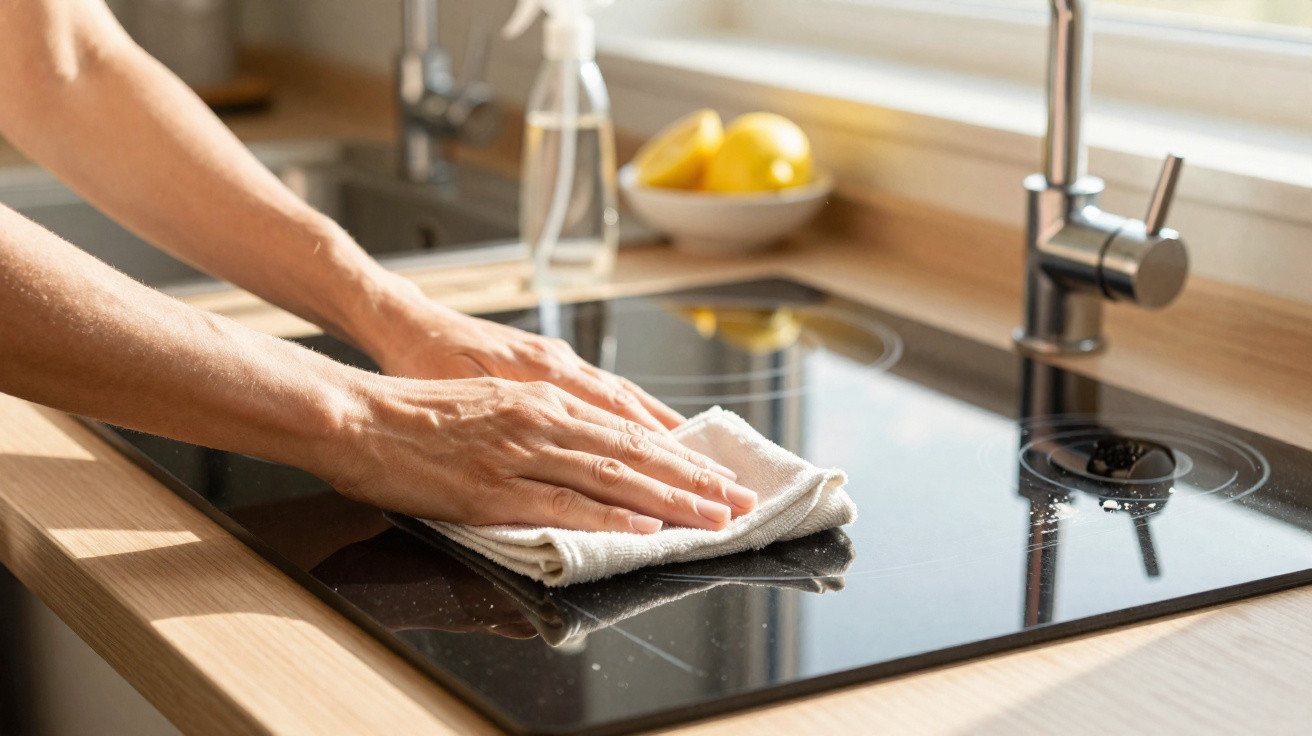
Fill a bowl or sink with very hot water-water heated in the kettle is suitable-then add 1 heaped tablespoon of washing soda and a small squirt of mild washing-up liquid for each litre. Stir until dissolved. Immerse two or three microfibre cloths, allow them to warm through, squeeze them out gently, and place them flat over the greasy area: cupboard rails, the hob fascia or the upper edge of the fridge. Leave them for 8–15 minutes. Remove the cloth, wipe in one direction, rinse the cloth, then make a final pass with clean water. Submerge removable pieces rather than using a compress. The secret is a hot washing-soda soak, not another spray.
A few precautions make the process trouble-free. Do not allow the cloths to dry on the surface. If you are working across a large area, keep the heat up by replacing them with freshly soaked cloths. Wear gloves if you have sensitive skin, as the solution is alkaline. Avoid natural stone, including marble, limestone and certain quartz composites; choose a pH-neutral approach for those materials. Test painted or lacquered surfaces in an inconspicuous area behind a door. Realistically, this is not a daily task. One 10-minute compress each week keeps surfaces genuinely shiny without a laborious Saturday clean.
Professionals have their own shorthand for the technique, reaching for it when they are short on time.
“If I can’t soak the part, I soak the cloth,” a veteran cleaner told me. “Heat and a high pH do the heavy lifting while I tidy the sink.”
- Suitable targets: stainless steel, enamel, ceramic tiles, laminate, sealed wood, extractor filters and hob grates.
- Use caution or avoid: natural stone, unsealed wood, aluminium trim and delicate painted details.
- Recipe reminder: 1 tbsp washing soda + hot water + a little washing-up liquid, for 8–15 minutes.
- Never combine it with bleach or acids; use vinegar for limescale separately at a later stage.
- Wipe with plain water at the end, then buff dry for that crisp, clean feel beneath your fingertips.
A modest ritual that changes the feel of a kitchen
There is a distinct change in atmosphere when surfaces feel clean rather than merely appearing clean. Your fingertips slide across cupboard doors instead of squeaking over them. Handles no longer leave a film on your hands. Preparing meals begins more peacefully because the room is not pushing back at you. The forgotten soak is modest and unobtrusive, yet it restores time once spent scrubbing and avoids the escalating world of new foams, gels and fragrances. Pass it on to a neighbour, or test it before your next large cook. Notice how the room reacts.
| Key point | Detail | Benefit for the reader |
|---|---|---|
| Hot alkaline soaking beats scrubbing | Washing soda + almost-boiling water softens and saponifies grease | Quicker results with less effort and physical strain |
| Compress method for fixed surfaces | Soak cloths, place for 8–15 minutes, then wipe and rinse | Works on cupboards, splashbacks and fascia without harsh abrasion |
| Know where not to use it | Avoid natural stone and delicate finishes; never mix with bleach or acids | Protects surfaces, health and indoor air while cleaning more intelligently |
FAQ:
- What exactly is the “forgotten soak”? It is a hot washing-soda soak made with sodium carbonate, water just below boiling point and a touch of washing-up liquid. Removable parts are submerged, while soaked cloths can be draped as a hot compress over greasy surfaces.
- Is it safe on stone worktops? No, not on natural stones such as marble, travertine and some quartz composites. Instead, use a pH-neutral cleaner or a mild washing-up liquid solution with warm water, then dry the surface. Keep both alkaline and acidic products away from stone.
- Can I use bicarbonate of soda instead? Yes, but it works more slowly. Bicarbonate of soda (sodium bicarbonate) is gentler. Washing soda is more alkaline and more effective at breaking down polymerised kitchen grease within minutes.
- Can I combine this with vinegar for extra power? Keep the two separate. Vinegar is acidic, so it neutralises the alkaline soak. Use the hot soak first for grease, then use a light vinegar treatment at another time for limescale on taps or glass-never in the same bucket.
- How often should I do the soak? Light weekly maintenance on frequently touched areas is enough for most households. For significant build-up, complete one longer session, followed by quick 5–10 minute compresses every couple of weeks. If unsure, carry out a patch test.

Comments
No comments yet. Be the first to comment!
Leave a Comment