
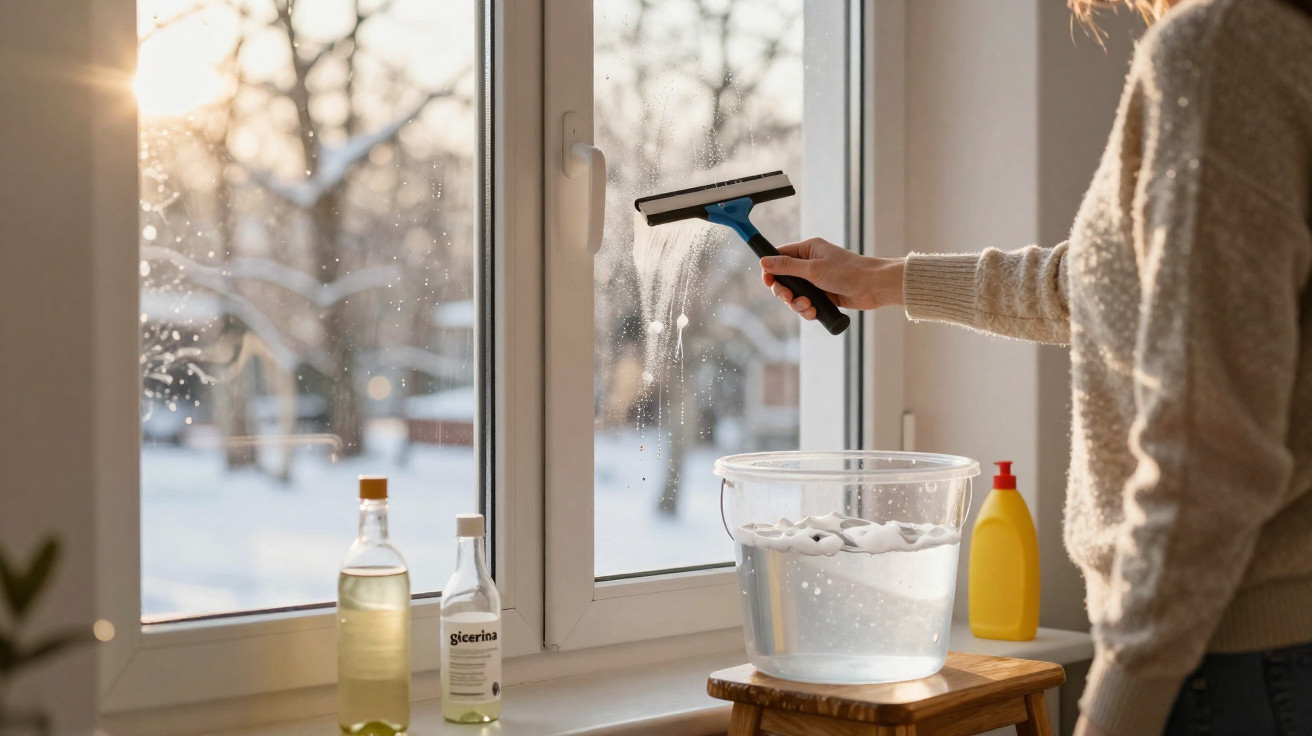
A minor change to your cleaning bucket can help every window clean last for weeks, with hardly any extra work.
Winter windows attract condensation, road grime and clingy dust. Adding one straightforward ingredient to your usual solution can help glass resist dirt, water marks and fingerprints long after the squeegee has been put away.
Why this small tweak keeps glass clearer
Most window-cleaning routines end once the pane looks clean. Grease is removed, the glass is dried, and the job is considered finished. The issue appears afterwards: static attracts dust again, hard water creates light rings, and condensation runs down the glass before drying as streaks. Before the week is over, the same cycle begins again.
A small amount of glycerin can alter this pattern. Also called glycerol, glycerin attracts a trace of moisture and reduces static on the glass. Its subtle, invisible coating makes it harder for fine particles to adhere, while helping water avoid forming large droplets that leave drying trails.
One spoonful of glycerin in your wash water can slow dust build-up and cut fresh streaks for weeks, not days.
How the glycerin window-cleaning mix works
Glycerin is hygroscopic, meaning it retains a small amount of water at the surface. This encourages tiny beads of water to spread into a light film rather than running in rivulets. As a result, there are fewer drips and marks as the glass dries. It also limits static, allowing airborne fluff to pass by instead of sticking to the pane.
Combine it with white vinegar to deal with mineral deposits, then add a few drops of washing-up liquid to loosen traffic film. Together, these three ingredients target the usual winter problems: grease, limescale and fine dust.
What to put in the bucket
- Water: 1 litre (about 4 cups), warm but not hot
- Glycerin: 1 tablespoon (about 15 ml)
- White vinegar: 1 tablespoon (about 15 ml)
- Washing-up liquid: 2–3 drops, rather than a full squeeze
Stick to the spoonful. More glycerin can leave a soft film you’ll feel on frames and edges.
Step-by-step cleaning routine
- Start by removing dust. Wipe the frames and sills so grit is not transferred to the glass.
- Clean the pane using a soft cloth or sponge soaked in the mixture, working from top to bottom.
- Draw a squeegee down the glass in straight strokes, wiping its blade after every pass. If you do not have a squeegee, dry and buff the glass with a clean microfibre cloth.
- Finish by polishing the edges and corners with dry microfibre to clear away any remaining residue.
Does it actually last longer?
Home trials show a noticeable contrast. Glass cleaned with only soap and water looks good on the first day, but becomes dull as dust settles. A pane washed with the glycerin mixture retains its crisp, clear appearance for longer. It will still need cleaning, simply less quickly. In high-traffic rooms or on windows facing a road, the interval between cleans can often increase from one week to two or more.
| Method | Day-one shine | Dust resistance | Water spot control | Notes |
|---|---|---|---|---|
| Soap + water | Good | Low | Low | Quick, although dust comes back fast |
| Vinegar + water | Good | Medium | Medium | Excellent for hard water marks |
| Glycerin mix | Good | Higher | Higher | Delays re-soiling between cleans |
Where it works and where to be careful
- Standard window glass: Suitable for indoor and outdoor use.
- Mirrors and shower screens: Can help limit new spotting after steam.
- Car windows: Use on side windows and interior glass only. Avoid front windscreens if it causes wiper chatter.
- Frames: When used lightly, it is safe for painted wood, vinyl and aluminium. Dry the frames afterwards to avoid a soft feel.
- Tinted or coated glass: Test the mixture in a corner first. Although many coatings accept it, consult the care instructions.
Test on a small area before doing a full set of panes, especially on specialty glass or films.
Why glycerin works well in winter
Cold air contains less moisture, while indoor heating dries the air in rooms. This increases static and makes dust stick more readily. Glycerin reduces this effect on the glass surface. At the same time, vinegar helps remove the chalky rings caused by hard water and condensation. The combination helps panes remain sharp-looking as temperatures fall and windows mist up more frequently.
Cost, sourcing and storage
A small bottle of glycerin bought from a pharmacy or craft section will last for months when used at one tablespoon per bucket. Keep it sealed in a cool cupboard. Vegetable-derived glycerin is widely available and is generally biodegradable, making it appropriate for a low-impact cleaning routine. White vinegar and basic washing-up liquid are already found in many cupboards, so each clean costs only pennies.
Common mistakes to avoid
- Adding too much glycerin: Using a heavy hand may leave a tacky film around the edges.
- Applying excessive washing-up liquid: Too many suds cause haze and take longer to dry.
- Missing the final dry buff: The edges and corners require one last pass to remain streak-free.
- Cleaning in strong sunshine: Fast drying can set streaks before you have time to squeegee them away.
Simple tweaks for even better results
Hard water areas
If chalky spots appear, increase the vinegar to 2 tablespoons per litre (about 8 cups per gallon). Rinse the cloth regularly to prevent minerals from being deposited back onto the glass.
Allergy season and dusty roads
After ten minutes, give the glass a second dry buff using a fresh microfibre cloth. This additional pass removes particles that may have landed while the pane was drying.
Cold-weather car care
When cleaning vehicle glass, keep the mixture mild and avoid the area swept by front wipers if you notice smearing or noisy blades. A dedicated automotive glass cleaner remains a sensible option for windscreens.
How often to clean and what to expect
Busy kitchens and bathrooms benefit from a weekly wipe-down. With the glycerin mixture, bedrooms and upper-floor windows may last two to four weeks between full cleans. Expect panes to stay clear-looking for longer and to require less effort during the next clean.
Extra context that helps you choose
If you favour an alcohol-only spray, bear in mind that it evaporates quickly and removes grease effectively, but offers no antistatic advantage. The glycerin approach leaves a light protective finish that is useful during winter. Both methods can be used together: use alcohol for a quick fingerprint wipe, then carry out a periodic wash with the glycerin mixture for longer-lasting results.
Where condensation creates puddles on window sills, consider ventilation and humidity too. A small dehumidifier, running a kitchen extractor for longer after cooking, or slightly warmer glass from improved glazing can reduce the fogging that leads to repeated streaks. The mixture deals with what reaches the pane, while moisture control helps address the cause.




Comments
No comments yet. Be the first to comment!
Leave a Comment