
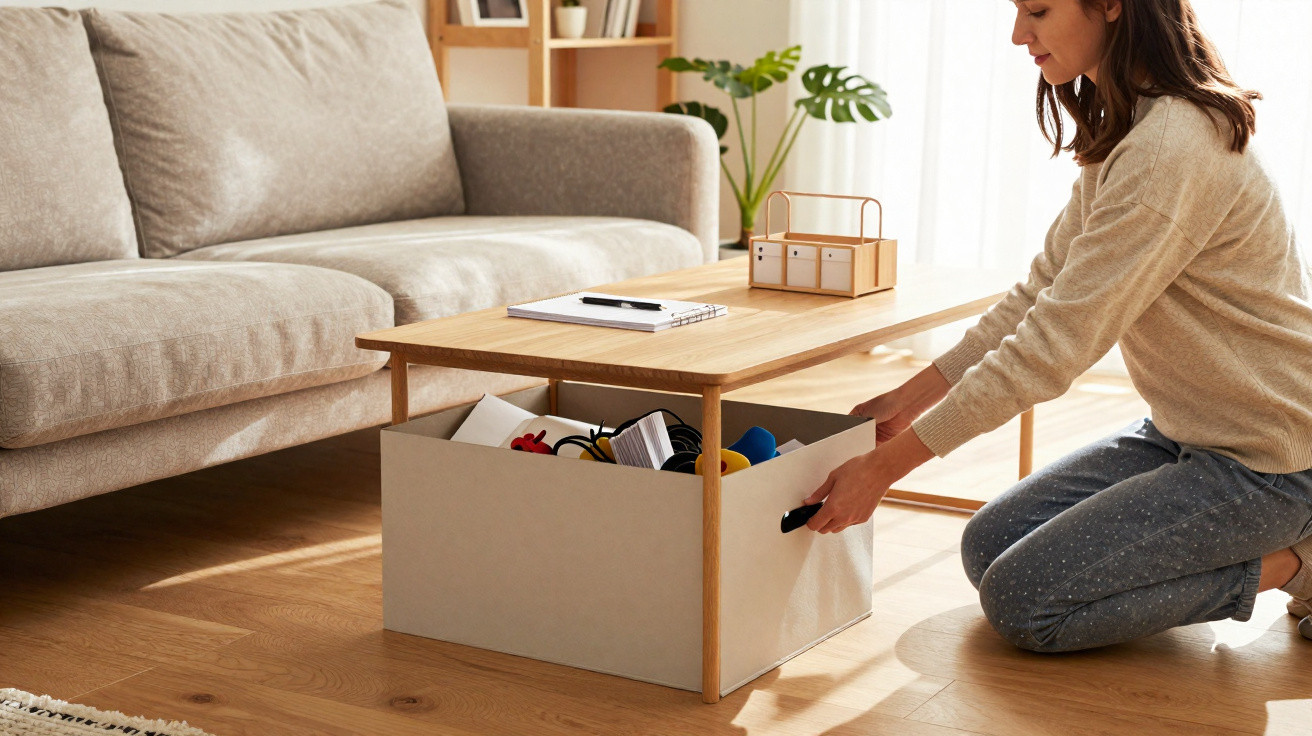
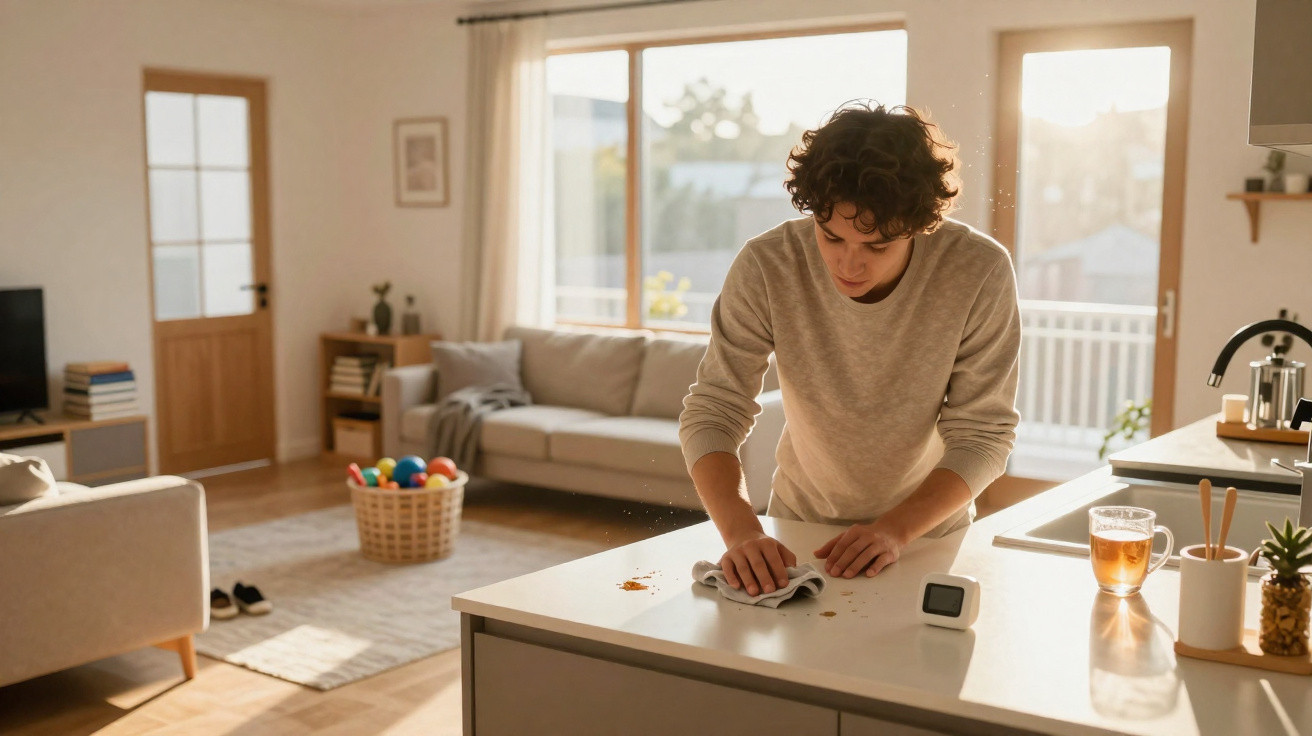
The living room appears presentable at first. The cushions are fluffed, the coffee table has been cleaned, and the toys have been confined to one rather optimistic basket by the wall. You take a photograph, partly for yourself, and briefly it could almost belong in a magazine. Then you notice the space behind the sofa, where dust bunnies have built a little colony. The hallway “misc” drawer is overflowing once more. Meanwhile, the washing pile you moved into the bedroom waits quietly, almost accusingly.
The room feels peaceful, but you do not.
You have dealt with the mess on display, yet the heaviness remains.
Somehow, this scene still does not make sense.
Why surface-only cleaning keeps failing on you
A familiar pattern plays out in many homes. You dedicate an entire Saturday to attacking the obvious clutter: worktops, the sofa, washing-up, and everything scattered across the floor. For a short while, the satisfaction is wonderful. Yet scarcely a day later, the house looks as though you never cleaned at all. It is rather like placing a blanket over clutter and declaring it “done”.
In reality, you have soothed your anxiety rather than cleaned your surroundings.
The disorder beneath the bed, at the rear of the wardrobe, inside the overloaded inbox, and in those miscellaneous baskets remains exactly where it was. It is simply waiting to reappear.
Imagine you are having guests over at 7 p.m. By 6:15, you are rushing around the house in a frantic, slightly sweaty panic. Out come the “good” plates. You wipe down surfaces at a pace that could impress a Formula 1 team. Everything without a clear home gets swept into bags, baskets, and drawers. Doors are closed on rooms that do not pass the vibe check.
At 6:58, the hallway is uncluttered, the table is inviting, and the bathroom is nearly unrecognisable. Your guests remark on how tidy the place is. You smile and mutter something about “trying to keep on top of it”.
But two days afterwards, you open that crammed drawer and all the items you concealed spill straight back out.
This is because cleaning only what can be seen tackles the symptoms rather than the causes. The real issue is not the dust on the TV unit; it is owning 14 old remote controls, three of which no longer belong to any current device. The problem is not the clothes piled on the chair; it is that the wardrobe is already packed, leaving clean washing with nowhere to go.
Our minds are drawn to rapid rewards. Wiping a worktop takes moments, whereas sorting through ten years of paperwork does not. As a result, we clean what visitors might notice and delay what only we know is there. That’s why your home can look “tidy” and still feel like a mental minefield.
The clutter returns because it never really went anywhere.
How to clean in a way that actually lasts
A clean that lasts often begins somewhere no one will ever compliment you on. Rather than starting with the gleaming kitchen island, tackle the junk drawer, the bathroom cupboard, or the precarious stack of “important papers” on top of the fridge. Choose one small, highly defined hidden area and decide to clear it properly.
Handle each item. Choose whether to keep, bin, donate, or relocate it. Anything you retain should have an obvious, sensible home that your future self can locate without effort. This is not about achieving perfection or buying matching Instagram storage containers. It is about reducing the choices you will need to make tomorrow.
Visible calm lives on invisible systems.
Many people slip into the same understated trap. They assume cleaning means “putting things away fast”, so clutter is transferred from public spaces into private ones. Bedroom chairs become storage furniture. Wardrobes become archaeological digs. The basement turns into an exhibition of abandoned plans.
Here is the simple reality: piling things in new places is not cleaning, it’s rescheduling the stress.
If that sounds familiar, there is nothing wrong with you. You are not lazy; you are overwhelmed. Begin reducing the clutter by limiting what enters your home. Decline free items, take online shopping more slowly, and unsubscribe from brands that keep tempting you. Fewer new things coming in means less to conceal later.
We’ve all been there, that moment when you’re standing in a “tidy” room knowing full well the real mess is just out of sight, and you wonder why you still feel so heavy.
- Start small, but go deep: Choose one drawer, shelf, or box, and complete it fully before beginning another.
- Create a “not today” bin: Put uncertain items here, then return to them in a month with a clearer perspective.
- Set a 15-minute timer: Brief, concentrated sessions of behind-the-scenes work are more effective than occasional cleaning marathons.
- Label homes for things: Basic handwritten labels reduce the exhaustion of asking, “Where does this go?”
- Protect one clear surface:
Treat it as a daily reset point: a space that reminds you how “done” can feel.
Living in a home that isn’t pretending
There is another kind of clean that may not demand attention in photographs, yet you can feel it in your shoulders. It is opening the cupboard below the sink without facing a booby trap. It is opening your wardrobe without a minor crisis about all your former selves. It is knowing precisely where the spare batteries are kept, instead of spending 20 minutes searching through old Christmas decorations for them.
That sense of ease does not come from polishing the coffee table every day. It grows from slow, mildly unexciting choices about which possessions genuinely deserve room in your home. It is not glamorous, and most of it will never appear on Instagram. Still, it quietly transforms the way your mornings start and your evenings finish.
When the hidden spaces begin to reflect the visible ones, something changes. The prospect of unexpected visitors no longer makes you tense. You no longer feel fraudulent in your own supposedly clean home. The desire for massive, dramatic cleaning sessions fades because nothing is allowed to become quite so unmanageable.
Honestly, no one manages this every single day. Life becomes noisy, children grow up, jobs shift, and each season brings clutter of its own. Yet after experiencing a home that does not conceal chaos behind closed doors, it is difficult to return to the old way. You begin to see how much energy you once spent looking for lost things, apologising for clutter, or negotiating with yourself about those mystery boxes in the loft.
That is the unseen reward of cleaning more than the visible mess. It is not about becoming a minimalist saint or folding socks into immaculate little clouds. It is about coming through your front door without feeling that your home is another task awaiting you. If any of this feels painful or uncomfortably accurate, it is often a sign that you are ready to live differently with your belongings.
Perhaps you begin with one drawer tonight. Perhaps you simply open the cupboard you avoid and look at it for a moment rather than turning away. Small honest actions beat big performative cleans every time.
The question is no longer “How can I clean faster?” Instead, it is “What could my life feel like if my house wasn’t hiding anything from me?”
| Key point | Detail | Value for the reader |
|---|---|---|
| Surface cleaning is temporary | It addresses only what can be seen, leaving the root causes unresolved | Explains why clutter repeatedly returns and helps reduce guilt |
| Systems beat speed | Giving items a home and reducing incoming possessions matter more than quick bursts of cleaning | Provides a realistic route to a home that remains calmer for longer |
| Start small, go deep | Work on one hidden space at a time rather than attempting an entire-house overhaul | Makes change feel manageable and less overwhelming in everyday life |
FAQ:
- Question 1 Why does my house look messy again just days after a big clean?
- Question 2 Where should I start if my hidden clutter feels overwhelming?
- Question 3 How do I stop shoving things into drawers and closets before guests arrive?
- Question 4 Can I get lasting results if I only have 10–15 minutes a day?
- Question 5 What if other people in my home don’t care about systems or decluttering?

Comments
No comments yet. Be the first to comment!
Leave a Comment