
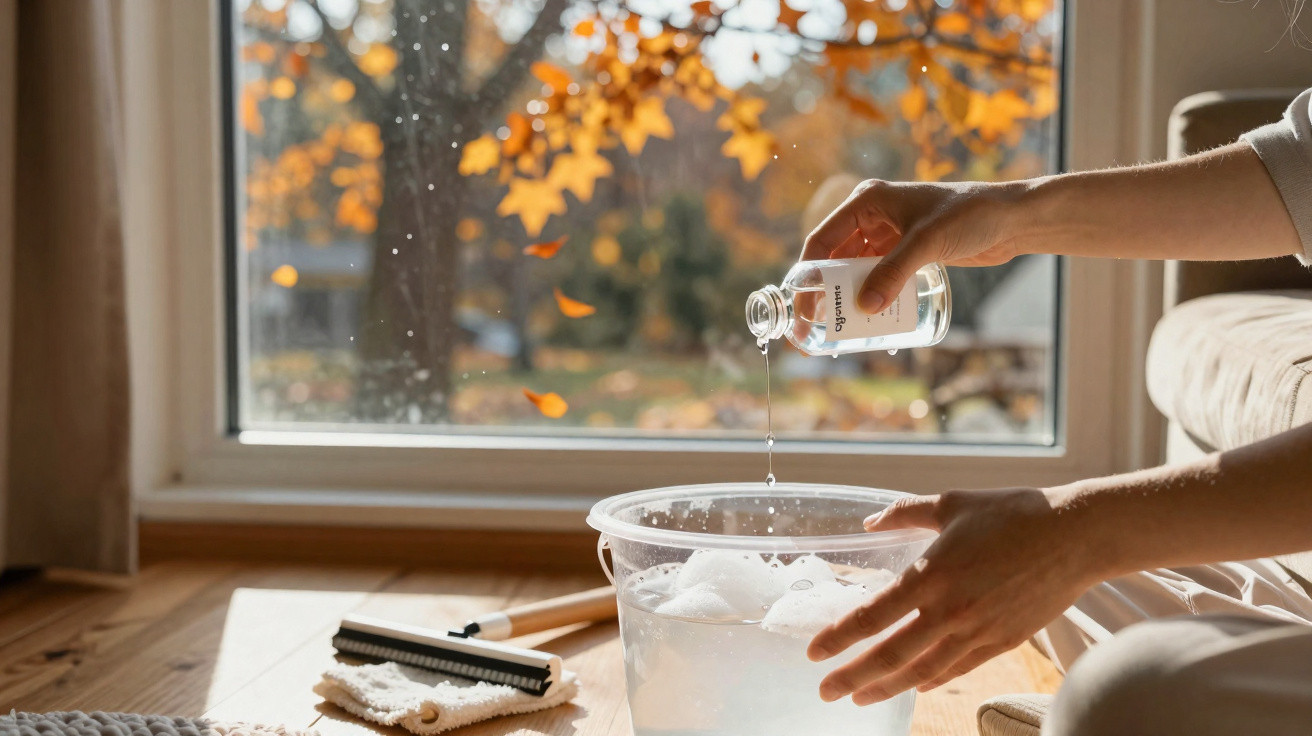
Overcast autumn light, chilly air outdoors, and a warm mug in your hands.
A small adjustment to your window-cleaning water can make all the difference.
Rather than choosing a scorching summer afternoon, the ideal time to deal with dirty windows is a calm grey day between September and November. Add a few drops of a pharmacy cupboard essential to your bucket and, even if cleaning is not your favourite job, your glass can remain clear for weeks rather than days.
Why autumn is the hidden best season for cleaning windows
Many of us hold off until the first proper spring sunshine before washing the windows. Yet that is precisely when streaks are most likely to appear. In bright, warm conditions, water and cleaning solutions dry on the pane too quickly, leaving marks, halos and run lines before you have even completed one window.
Grey autumn weather, particularly during October and November, works differently. The daylight is gentler, the air is cooler, and the glass itself does not become so warm.
On a cool, overcast day without rain, cleaning products dry more slowly, giving you time to wipe them off cleanly.
The forecast is the one important consideration. You need a few rain-free hours - a literal window of opportunity. Ideally, it should stay dry while you clean and for a little while afterwards, allowing the new film on the glass to settle.
The professional secret: a cosmetic ingredient that works on glass
The tip currently circulating among cleaning professionals does not require an expensive spray or clever gadget. It relies on glycerine, an unassuming liquid more commonly associated with hand cream and pharmacy shelves.
What glycerine really does to glass
Glycerine is a transparent, thick liquid made from plant or animal fats. Plant-derived versions are often sold as “vegetable glycerine”. Well known in cosmetics for its moisturising and softening qualities, it also has a useful effect when applied to glass.
A microscopic, invisible film of glycerine on the pane makes dust cling less and water leave fewer marks.
Some professionals call it a “natural sponge”. Used in the correct quantity, it will not leave the pane sticky. Instead, it creates an almost imperceptibly smoother surface. The glass’s tiny imperfections hold on to less grime and pollution, while water droplets run away more evenly instead of drying into streaks.
The result is easy to see: windows retain their freshly washed appearance for longer, including after rain, and are much quicker to refresh when they do eventually lose their shine.
The lazy cleaner’s recipe: three drops, no more
This approach is inexpensive and uncomplicated. Specialist products and a bespoke kit are unnecessary; avoiding too much glycerine is what matters.
- 1 litre of lukewarm water
- 2 to 3 drops of vegetable glycerine
- 2 clean microfibre cloths
- 1 spray bottle for large windows or patio doors (optional, but useful)
Step by step: from bucket to gleaming glass
Start by assessing how dirty the windows really are. If there is mud, insect residue or greasy traffic pollution on them, give them a quick conventional clean first using your normal cleaner, or warm water with a little washing-up liquid. The glycerine method is intended for glass that is already reasonably clean.
Then follow these steps:
- Put 1 litre of lukewarm water into a bucket or jug.
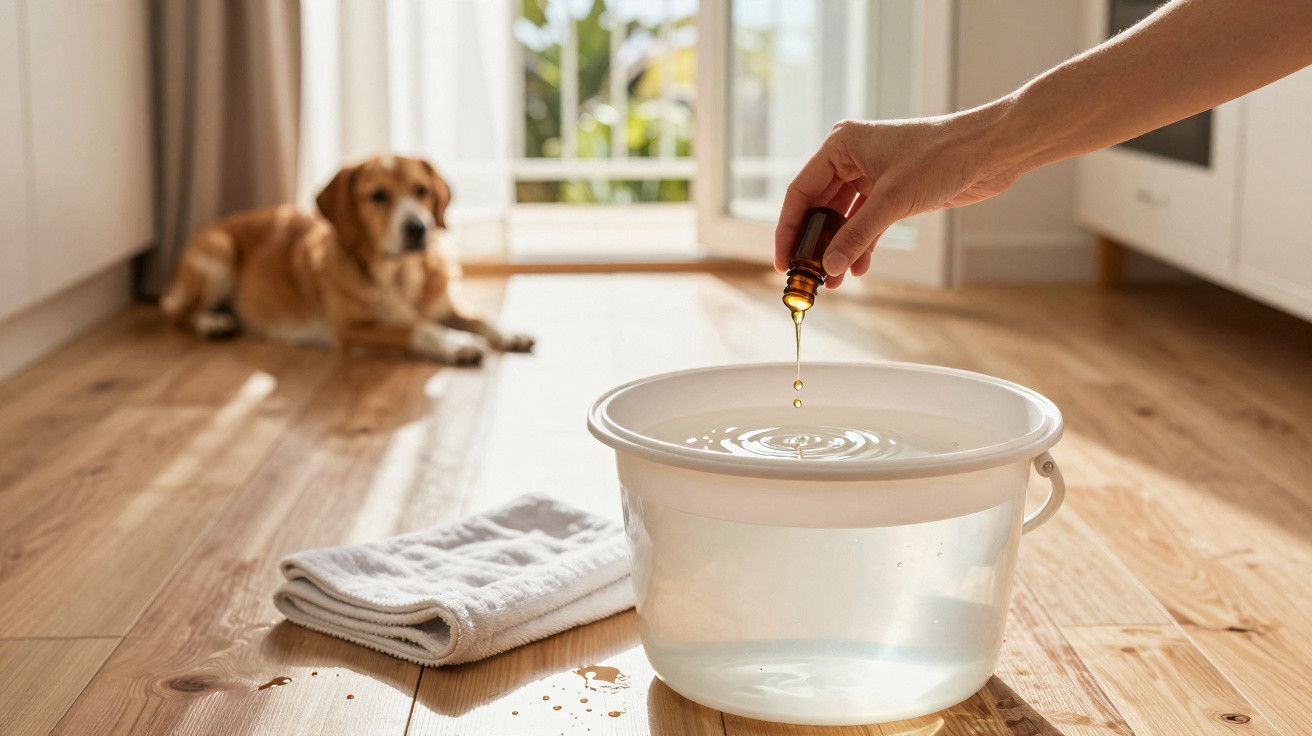
- Add 2 to 3 drops of glycerine, then stir thoroughly to distribute it evenly.
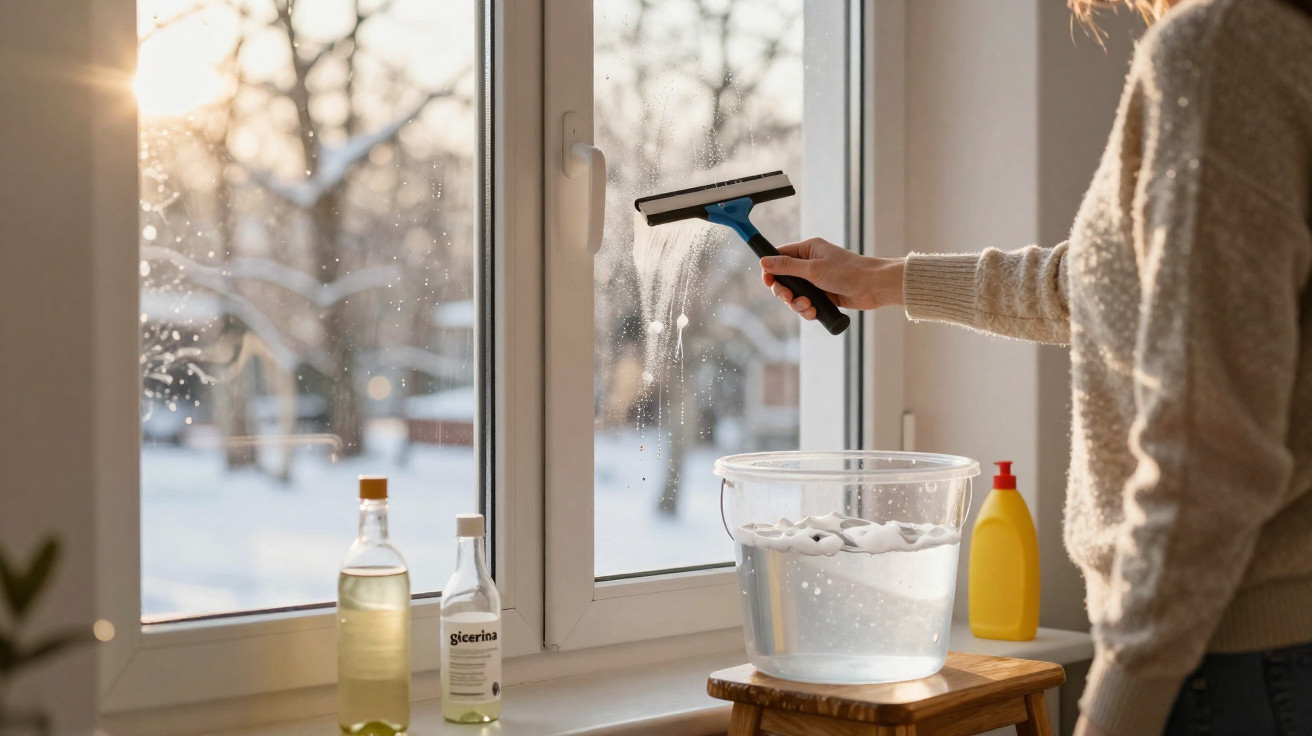
- Transfer the mixture to a spray bottle, or immerse one microfibre cloth in it and wring it out until it is just lightly damp.
- Mist the pane sparingly, or wipe it from top to bottom with the damp cloth, using overlapping strokes.
- Leave it for no longer than 30 seconds. The aim is a fine film, not a sticky coating.
- Using the second microfibre cloth, which must be completely dry, polish the glass from top to bottom once more.
The difference shows not only right after cleaning, but especially two, four or eight weeks later, when the glass still looks surprisingly clear.
The diluted glycerine film usually remains effective for several weeks. In ordinary conditions, many users say their windows stay suitably clean for as long as two months, requiring just a light wipe rather than another complete wash.
How long can windows realistically remain clean?
No homemade solution can permanently overcome a nearby construction site, dense traffic or salt carried in from the coast. However, the glycerine coating can alter how often maintenance is needed.
| Environment | Usual cleaning frequency | With glycerine trick |
|---|---|---|
| Quiet residential street | Every 4–6 weeks | Every 8–10 weeks |
| Busy urban road | Every 3–4 weeks | Every 6–8 weeks |
| Coastal or very windy area | Every 2–3 weeks | Every 4–6 weeks |
These timings are only broad estimates. Local weather, nearby trees and personal routines - such as smoking by an open window or burning candles close by - can all affect the outcome. Even so, for anyone who dislikes spending a Saturday using a squeegee, adding several weeks between two “proper cleans” can feel like a modest win.
Is glycerine genuinely safe and economical?
Glycerine has long been used in cosmetic and pharmacy products. It is generally regarded as skin-safe, so brief contact during cleaning should not trouble most people. Those with highly sensitive or allergy-prone skin should nevertheless wear gloves, as they would when using any cleaning product.
The cost is also notably low. A 250 ml bottle from a pharmacy, hardware shop or supermarket will generally cost only a few pounds. At 2 to 3 drops per litre, one bottle can last for months, even in a large flat with plenty of windows.
A small pharmacy bottle can outlast multiple branded sprays, for a fraction of the cost per use.
It can also reduce the collection of chemical-heavy cleaners beneath the sink. Glycerine is not an all-purpose cleaning product, but adding it to plain water means less dependence on strongly fragranced, harsh household sprays, which are often supplied in non-recyclable packaging.
Common mistakes: when the method does not work
The technique is straightforward, although a handful of mistakes can undermine it or leave the glass with a slight smear.
- Using too much product: Adding extra drops will not create extra shine. Too much glycerine may leave a greasy layer.
- Missing out the dry cloth: Buffing with a dry microfibre cloth at the end removes any excess mixture and produces a clear finish.
- Cleaning in direct sunshine: The mixture dries too rapidly, causing marks and cancelling out the benefits of the film.
- Using it on very dirty windows: Mud, pollen and grease become trapped beneath the film and remain visible.
In areas with very hard water, one further measure can help: use distilled water instead of tap water in the glycerine mixture. With no minerals to create limescale, there is even less chance of pale deposits appearing on the glass.
Beyond windows: suitable and unsuitable uses
Glycerine’s protective layer can also be effective on other glass and smooth surfaces. Many people try it on shower screens, bathroom mirrors and glass-topped tables with positive results. It can slow mirror fogging and encourage water droplets to run more evenly from shower glass.
It should be used carefully on floors, steps and any other surface that is walked on. A glycerine coating may make these areas slightly slippery, particularly when wet. Keep it away from touchscreens and coated lenses too, as their surface treatments may be delicate.
Car windscreens and side windows are another sensible boundary. Although some people test it as a rain-repellent coating, anything that changes windscreen-wiper performance or reduces night-time visibility presents a safety concern. Dedicated vehicle treatments are the safer option for cars.
Practical examples for people who hate cleaning
Picture a compact city flat with three large windows and a balcony door. Using conventional products, its tenant may spend an hour every month battling smears, especially if the property overlooks a busy road. With the glycerine method, that person could set aside ninety minutes at the beginning of autumn, then simply carry out quick touch-ups before visitors arrive in December and again in February.
For families, the method can make window cleaning a brief, achievable task rather than an intimidating yearly “big job”. An adult can tackle the higher sections while a child wipes the lower areas with a slightly damp cloth. As the mixture is chiefly water with only a few cosmetic-grade drops, the home is exposed to fewer harsh substances than when many commercial sprays are used.
For the genuinely “lazy cleaner” who would rather stream a series than scrub, the attraction is clear: if a small pharmacy bottle and three drops of water can delay the next deep clean until spring, picking up that cloth suddenly offers a much better cost–benefit ratio.



Comments
No comments yet. Be the first to comment!
Leave a Comment