
You step out of a hot shower and take a towel from the pile. At first, it seems perfectly normal: it has that fresh detergent scent, with a trace of a just-cleaned-home smell. But the moment it touches your skin, you notice the problem. Instead of feeling soft, it is rigid and nearly crisp, as though it had been left outside in a blustery January. Rather than wrapping comfortably around you, it feels abrasive. You may wash your towels regularly and use a good detergent, so why do they feel like cotton pretending to be sandpaper?
The explanation is generally not inside the washing machine.
It lies in the part of the routine that happens immediately afterwards.
Why “clean” towels can feel like cardboard
When towels become rough, most people point to the detergent or blame poor-quality fabric. More often, however, the cause is an overlooked point in the laundry process: the interval between washing and drying. Leaving laundry in a crumpled pile while you go off to do something else is when towels lose their fluffiness. Even if they sit compressed for only an hour, their fibres cool down, become creased and begin to stiffen. Before they even enter the dryer, they are already on their way to becoming crunchy.
The overlooked solution is remarkably straightforward: shake out and separate towels as soon as the wash cycle has ended.
Imagine a Sunday morning. You hear the washing machine beep in the background and tell yourself, “I’ll switch that in a minute.” Then that “minute” becomes coffee-making, replying to a message and a little scrolling. By the time it comes back to you, your towels have spent 45 minutes sitting in lukewarm moisture. They are wound into rope-like twists, with hoodie sleeves caught between them and edges flattened underneath. You gather it all up, throw it into the dryer, press start and leave, trusting the appliance to sort everything out.
When you return, the towels may still smell pleasant-fresh, even. Yet they have dried in the same crushed formation in which they were left, and fragrance cannot disguise the rough sensation against your skin.
Textile experts explain that towel softness depends not only on detergent and water, but also on the volume of air moving through the fabric loops. Wet towels trapped together in dense bundles prevent air from reaching the inner parts of the material. Moisture cannot evaporate consistently, so the fibres are pressed flat and then effectively set in that position by the dryer. The outcome is a towel that may be chemically clean but feels more like a gym floor mat. This missed laundry task effectively resets the towel while it remains wet, allowing every loop to open up, take in air and become softer.
The towel shake step that makes the difference
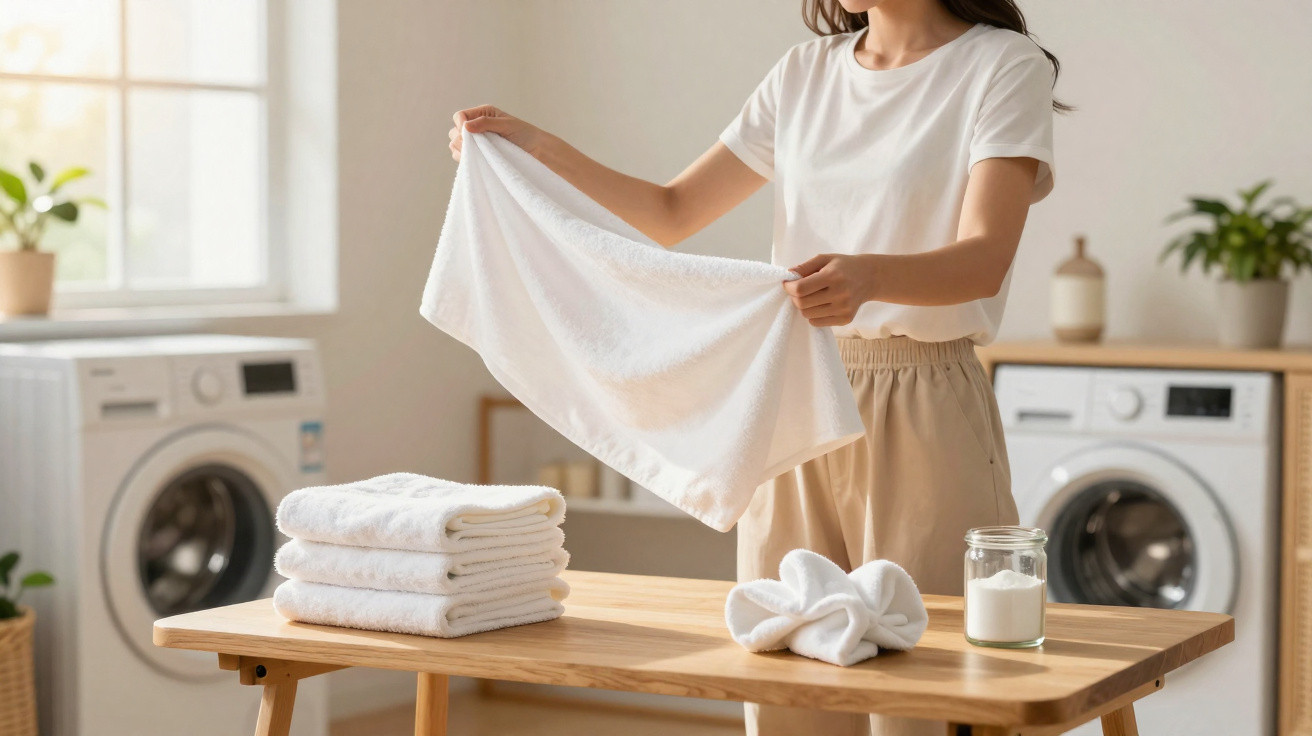
Once the washing machine has finished, resist pulling the entire load out in a single bundle. Open the door, take out each towel individually and give it a decisive shake in the air. Allow it to open completely, freeing the corners and loosening the loops. Place it gently in the dryer or over a drying rack instead of stuffing it into a compact mass. This takes only a few seconds for each towel, but it disrupts stiffness before it can take hold.
That small action can mean the difference between a towel that embraces you and one that scratches you.
Without noticing, many of us do precisely the reverse. We cram the drum too full “just this once”, pour in an additional splash of detergent “because they’re really dirty”, and then leave the wet laundry while another job takes over. When we remember it, the load is knotted, weighty and beginning to have a slightly stale smell. We hurriedly move it across, shut the door, hit the drying setting and hope intense heat will put things right. Realistically, nobody manages the ideal routine every single day.
High temperatures can then lock in the rigidity, particularly when the quick shake-and-separate stage was missed. The towel itself may endure, but its softness will not.
Laundry specialist and textile consultant Marta L., who works with hotel linens, told me: “If people only added one step to their home laundry, I’d ask them to do this. Remove towels quickly after the wash, shake them out individually, and avoid crushing them in the dryer. That’s what keeps five-star towels feeling five-star.”
- Shake immediately: Take the towels out within 10–15 minutes of the wash cycle ending.
- One by one:
- Give every towel one or two firm shakes to release the fibres and open out the corners.
- Don’t overcrowd:
- Fill the dryer so that towels can tumble freely, rather than being carried around in one large clump.
- Medium heat, longer time: A lower heat level helps fibres stay flexible rather than “cooking” them.
- Add air, not products:
- Two wool dryer balls or clean tennis balls can help work air into the loops.
Soft towels depend on habits, not products
After becoming aware of this missed stage, it is easy to spot it in everyday laundry: wash cycles left unattended, dryers packed too tightly and towels moved from machine to basket to shelf while still faintly damp at their centre. Fortunately, there is no need for a different detergent, costly fabric softener or a social-media laundry mixture. What you need is 5 extra minutes of attention at the right time. Shake, separate, let them breathe, and dry them. Nothing more is required.
For some, it even becomes a brief ritual. When the machine signals that it has finished, they use it as a small pause during the day. They open the door, feel the warm, damp towels, snap them open and place them in a loose stack, perhaps opening a window briefly to let in fresh air. Soft towels no longer feel like a luxury; they become the understated outcome of an easy, almost traditional routine.
| Key point | Detail | Value for the reader |
|---|---|---|
| Shake after washing | Open out and snap each towel before it is dried | Brings back fluffiness and limits stiffness |
| Avoid clumping | Do not overfill the dryer; leave space for air circulation | Improves drying performance and creates a softer feel |
| Heat and timing | Use medium heat and transfer promptly from the washer | Safeguards fibres and prevents “cardboard” towels |
FAQ:
- Question 1 Why do my towels feel stiff even though they smell fresh?
- Question 2 Does fabric softener actually help with towel softness?
- Question 3 How often should I wash towels to keep them soft?
- Question 4 What if I air-dry my towels instead of using a dryer?
- Question 5 Can hard water be part of the problem with stiff towels?




Comments
No comments yet. Be the first to comment!
Leave a Comment