
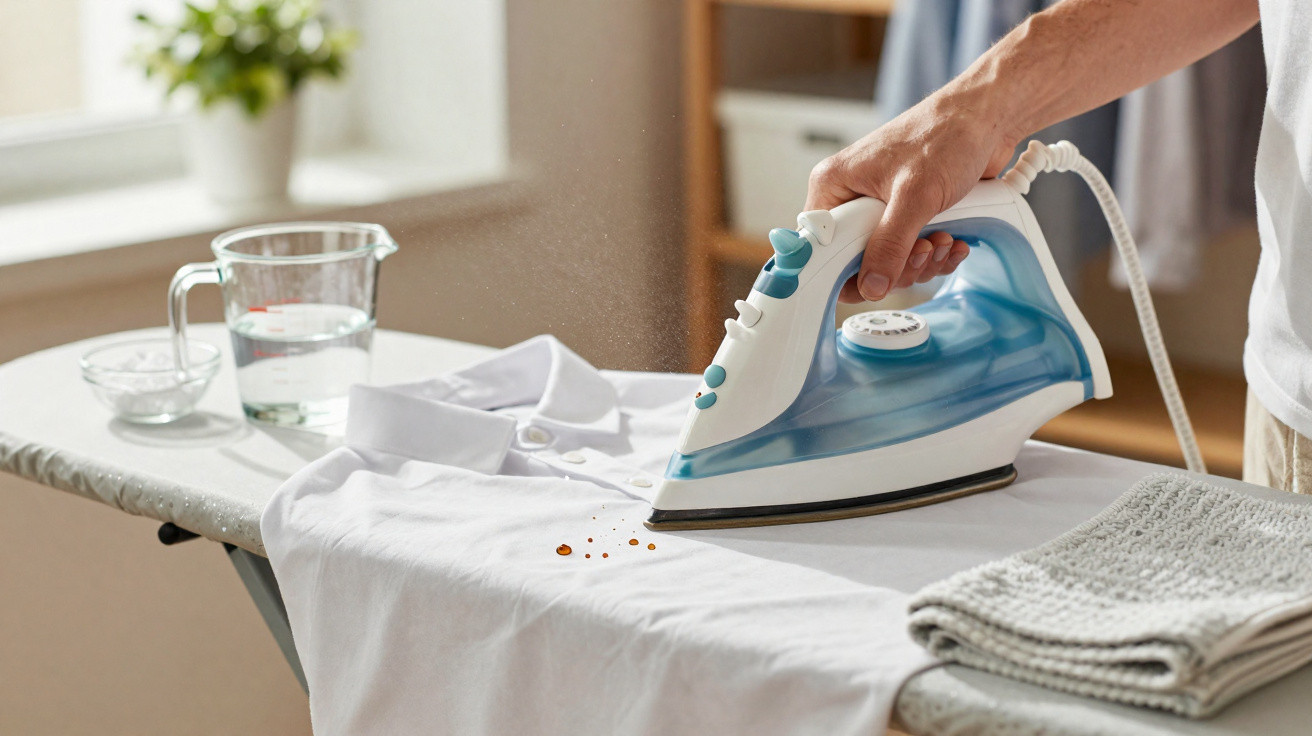
The sound may seem exactly as it always has, and the shirt may be neatly laid out on the ironing board, yet something unusual starts dripping from the hot soleplate.
Yellow marks, brown splashes and weak steam are often blamed on an old iron that is ready for the bin. In most cases, however, the cause is neither age nor a manufacturing fault: it is the water used every day, combined with a few minor oversights, that damages the reservoir long before the iron officially fails.
Signs your iron is close to failing that many people overlook
Before it stops working altogether, an iron usually gives clues that it is struggling. These warnings develop gradually and are very often dismissed as the appliance simply being poor quality.
- Steam that becomes steadily weaker, meaning you need more passes over the same area
- Water droplets escaping through the soleplate even when using the steam setting
- White or brown particles coming out through the steam holes
- Unusual sounds, including clicking or internal bubbling
- Yellowish or rusty-looking stains on pale fabrics
Behind this erratic performance, there is nearly always one familiar culprit: limescale, the mineral build-up from tap water containing calcium and magnesium.
An iron has not suddenly gone mad. It is clogged on the inside, and marks on fabric are its most obvious plea for help.
Whenever water repeatedly travels through the heating system, its minerals crystallise. They create hard layers that cling to the reservoir walls, internal channels and soleplate holes. The passages through which water should flow and turn into steam gradually become narrower, until they are almost blocked.
As a result, some of the water cannot heat up quickly enough and comes out as liquid, splashing and carrying tiny pieces of limescale with it. These fragments burn on the hot surface, turn brown and soil freshly washed clothes. The heating element is affected too: it has to work harder, uses more electricity and may burn out prematurely.
Water mistakes that ruin the iron reservoir without you noticing
Relying entirely on tap water because “that is how it has always been done”
In areas with very hard water, filling the reservoir only with tap water is almost an invitation to an early blockage. Every heating cycle leaves behind a small amount of limescale inside the iron. Without a regular cleaning routine, those remnants build up layer by layer.
Emptying the reservoir after use can help prevent unpleasant smells, but it does not remove deposits that have already attached themselves. Minerals that have dried onto the walls and inside the channels remain firmly in place.
Waiting for the first major stain before acting
Many people only take notice once a pale dress comes out stained or the iron literally spits water at them. By then, the limescale is already hard as stone. Removing the blockage becomes slower and less effective and, in some situations, impossible.
Ignoring weaker steam, minor splashes and strange noises is much like driving with the oil warning light on and pretending you have not seen it.
Forcing a clean with harsh products
Another frequent mistake is trying to undo years of neglect with an improvised “deep clean”. Certain methods can dramatically shorten an iron's life:
- Pouring neat vinegar into the reservoir and switching the appliance on
- Using powerful descalers intended for toilets or tiles
- Mixing several products in the hope of making them work better
Hot, undiluted vinegar can attack internal rubber seals and joints, causing persistent leaks. Highly concentrated chemical products, meanwhile, may leave residues that come loose during the next ironing session, stain fabric and damage metal components.
Cleaning an iron is not a case of “the stronger, the better”; it depends on the right dosage, contact time and repetition.
How to unblock an iron that stains clothes and spits water with gentler methods
Vinegar and citric acid: useful when applied correctly
For anyone already dealing with brown marks and splashing, there is a relatively straightforward solution, provided it is carried out carefully. Two products stand out: white cleaning vinegar and powdered citric acid.
| Product | Proportion | Benefit |
|---|---|---|
| White vinegar (around 14%) | 50% water + 50% vinegar | Easy to find, inexpensive |
| Powdered citric acid | 1 tablespoon per 250 ml of water | Almost odourless, effective descaling action |
The process generally follows the same principle:
- With the iron unplugged and cold, fill the reservoir with the chosen mixture
- Leave the appliance upright in a sink for around 30 minutes
- Empty the reservoir and rinse it with clean water two or three times
- Switch on the iron with clean water inside and direct the steam into the sink until the flow is even
Repeating this routine every month or two in homes with hard water can greatly reduce limescale build-up. With older appliances, the improvement may not be complete, but it is often enough to extend their useful life considerably without further staining.
Using water to extend the life of your iron
Mix water types rather than relying only on one extreme
Another widespread myth is that an iron should operate exclusively with distilled water. In fact, many manufacturers advise against using 100% distilled water because the complete absence of minerals can affect steam production and water-level detection in some models.
A middle-ground approach often works better in households with very hard water:
- Use half tap water and half demineralised water
- Keep fully distilled water for an occasional final internal rinse only
- Follow the manual's guidance on the water type recommended for that particular model
This combination considerably lowers the amount of minerals circulating through the appliance without working against its original design.
Use anti-limescale features that almost nobody uses
Many modern irons include a self-clean function or a limescale collector rod that must be washed periodically. The issue is that a large number of owners overlook these features, either because they do not read the manual or because they put it off.
Using the self-clean function with the reservoir full of clean water, allowing the steam jet to expel debris into the sink, and cleaning the anti-limescale rod from time to time can make a genuine difference to the product's lifespan.
A well-maintained iron will usually last several more years. The saving shows up both on the electricity bill and in avoiding an impulse purchase.
Hidden risks and warning signs: when an iron is beyond recovery
There are situations in which an iron has gone beyond the point of repair. If it has constant leaks through the soleplate, smells of burning, repeatedly trips the circuit breaker or has warped parts, the situation is different. The risk of electric shock, a short circuit or burns outweighs any potential saving.
In these circumstances, trying to revive the appliance with makeshift repairs and homemade mixtures can prove expensive. The effort required to unblock a system that is completely clogged with limescale and has a compromised heating element will often exceed the price of a new iron with more up-to-date anti-limescale technology.
Small daily habits that make a difference
A few straightforward everyday actions directly affect the condition of the reservoir and internal channels:
- Avoid leaving the reservoir full for days when the iron is not being used
- Do not store the iron horizontally while it is still hot
- Wait a few seconds after filling the reservoir before activating the steam, allowing it to settle
- Release one or two bursts of steam into the sink before using the iron on the most delicate garment
These precautions lower the risk of initial splashes on clothes and make it easier to spot any change in the appliance's behaviour early.
When taking care with water is even more worthwhile
Households that wash a large number of pale formal items, including shirts, lab coats or uniforms, feel the impact of an irregular iron directly. A single brown water stain on a delicate fabric can mean washing it again, applying stain remover and, in extreme cases, losing the garment altogether.
In these settings, combining partly demineralised water, regular descaling and a steam test in the sink before every use works almost like household insurance against greater losses. In regions with very hard water, this routine becomes part of the wider strategy for protecting a wardrobe.


Comments
No comments yet. Be the first to comment!
Leave a Comment