
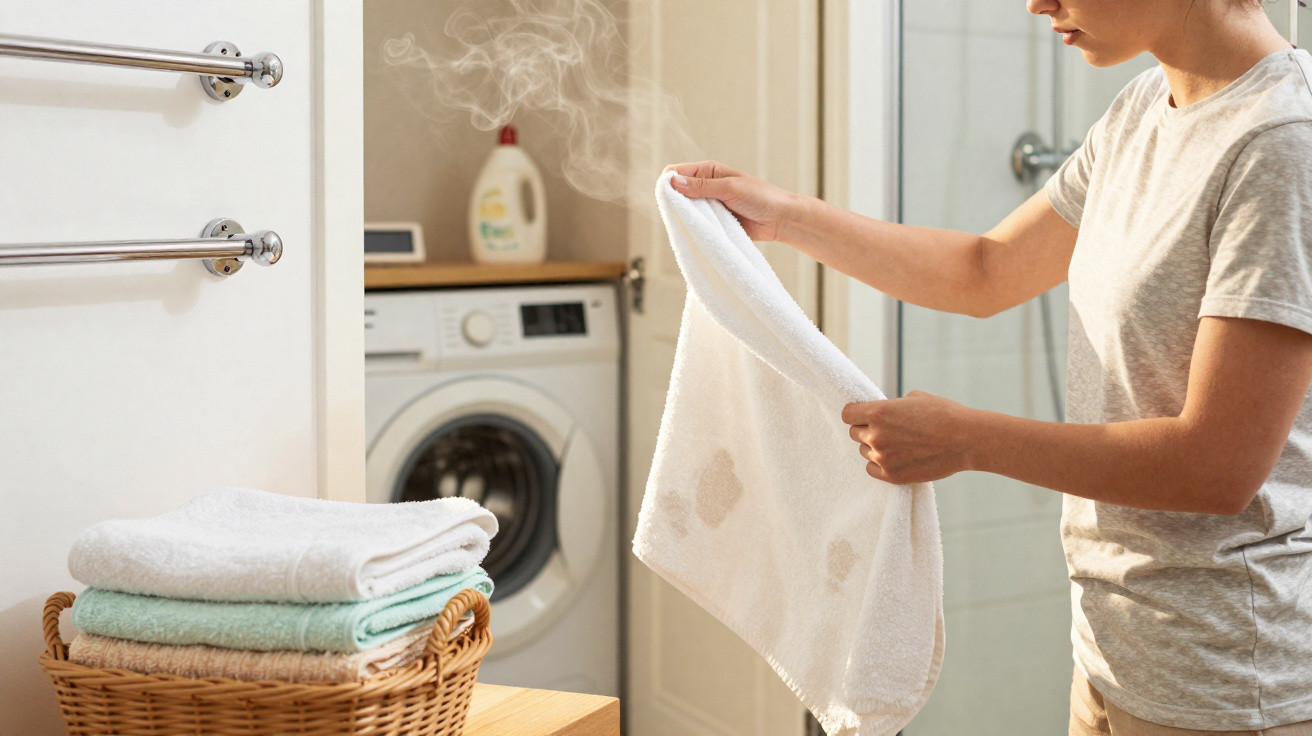
Towels are often considered clean because, after a shower, they only touch freshly washed skin. Yet this very assumption means that textiles in many homes stay in use for weeks, turning into genuine breeding grounds for germs. Current guidance from hygiene experts makes one thing clear: most people wash them far too late.
Why towels become contaminated faster than we realise
A towel absorbs far more than water. Every time you dry yourself, it also collects tiny traces from daily life:
- dead skin cells
- skin oils and sweat
- residues of shower gel, shampoo, make-up or cream
This combination of moisture, warmth and “food” for microorganisms makes a towel an ideal environment for bacteria and fungi. If it is then left in a poorly ventilated bathroom, it stays damp for a long time – creating perfect conditions for germs to multiply rapidly.
“After only two or three uses, a towel can be densely colonised with bacteria – long before it develops its first unpleasant smell.”
Hygiene researchers point out that germ numbers can double quickly on damp textiles. Laboratory studies have shown that the number of bacteria on a still-wet towel rises noticeably within minutes. Anyone who uses the same shower or face towel for days repeatedly rubs this invisible layer onto their skin, pores and mucous membranes.
Who should pay particular attention to clean towels
For healthy people with resilient skin, a lightly contaminated towel is usually not a major issue. It becomes more concerning when the skin’s protective barrier is compromised or existing problems are present. Some groups should take much greater care over their laundry routine:
- people with acne or blemish-prone skin
- people with eczema, psoriasis or other forms of dermatitis
- people with allergies and sensitive skin
- babies, toddlers and very elderly people
- people with weakened immune systems
For example, someone who dries their face with a towel already used on their back, underarms or feet transfers the germs found there across their pores. Particularly for people prone to spots, this seemingly harmless bathroom habit can continually irritate the skin and fuel inflammation.
How often should different towels be washed?
The widely followed schedule of “once a week” is usually too infrequent, according to experts. In many cases, a towel should go into the washing machine after only a few days.
| Type of towel | Recommended washing frequency |
|---|---|
| Bath towel / shower towel | after 3–4 uses |
| Hand towel by the basin | every 1–2 days |
| Sports or sauna towel | after every use |
| Face towel / flannel | daily |
So, if you shower once a day and use the same bath towel, you should replace it after no more than three to four days. If you shower twice daily, that period should be reduced accordingly.
“The rule of thumb: a bath towel needs washing after three to four uses at the latest – regardless of whether it smells musty yet or not.”
During warm summer months, or in very damp bathrooms without a window, an even more frequent cycle may be sensible. If the towel barely dries through, the germ load rises more quickly.
Proper towel care starts with hanging them up
The route to hygienic towels begins well before the washing machine. Allowing textiles to dry incorrectly makes life unnecessarily easy for germs. A few straightforward habits make the difference:
- Hang them openly: Do not throw the towel crumpled over a radiator or leave it in a heap. Instead, spread it out on a hook or rail.
- Ventilate the bathroom: Air the room thoroughly after showering so that moisture can escape quickly.
- Avoid layering towels: Several towels on the same row of hooks often sit on top of one another. It is better to give every towel its own space.
- Dry them outside where possible: If you can, hang towels on a balcony or in the garden between washes.
The faster a towel dries completely, the less opportunity germs have to grow. A towel that remains slightly damp for several hours indicates that conditions are still ideal for microorganisms.
Washing towels correctly: temperature, detergent and fabric conditioner
How clean a towel truly becomes also depends on the wash itself. Many households now wash mainly at 30 or 40 degrees to save energy. That may often be enough for outer clothing, but heavily used textiles are a different matter.
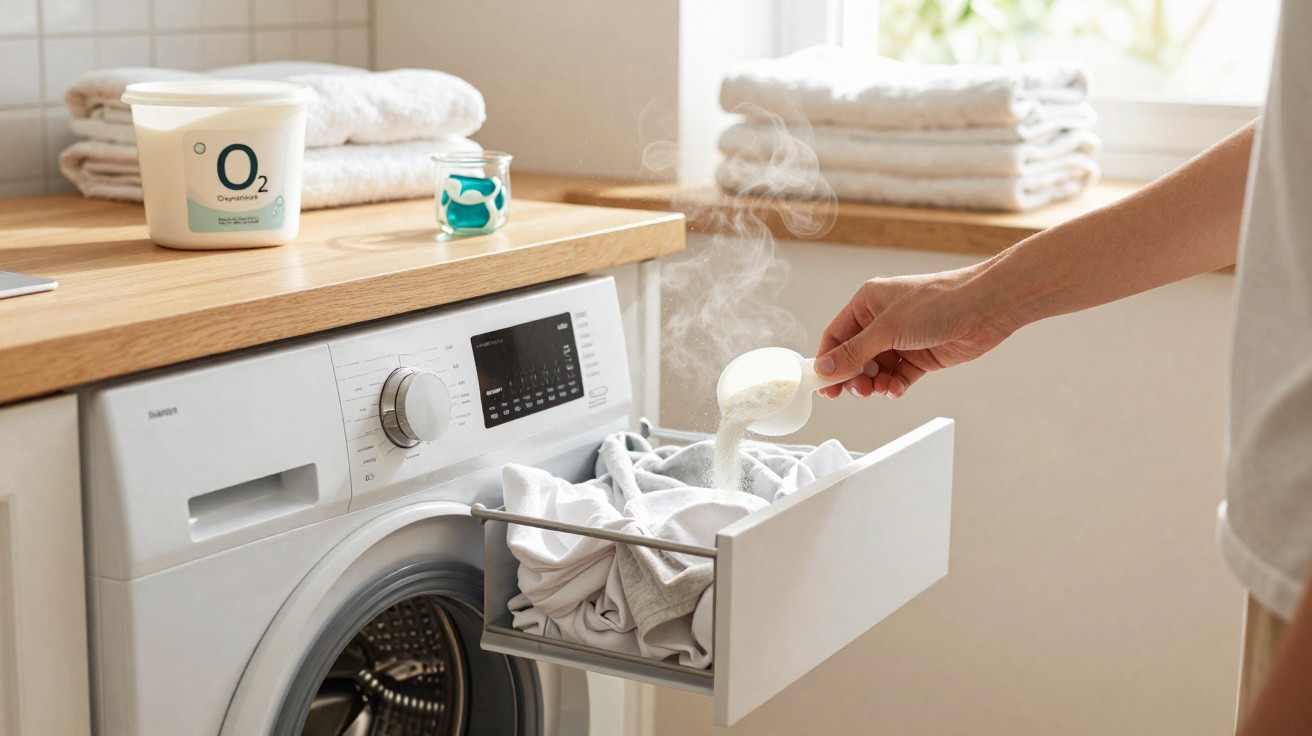
- Temperature: Wash towels regularly at 60 degrees. This temperature reduces germs far more effectively than a gentle 30 or 40-degree cycle.
- Use biological detergent: Powder detergent containing bleaching agents is more hygienic than colour detergent alone and can help remove odours.
- Use fabric conditioner sparingly: Although it can make fibres feel soft, it coats them like a film and reduces absorbency.
- Vinegar as an alternative: A splash of clear distilled vinegar in the fabric-conditioner compartment can neutralise odours and loosen the fibres slightly.
- Do not overfill the machine: Towels need enough room for water and detergent to reach every part of the fabric.
“A 60-degree programme with biological detergent is the most reliable everyday standard for bath towels and hand towels.”
Anyone wishing to wash at lower temperatures permanently for environmental reasons should still schedule a hotter programme from time to time – for instance, after illness in the household or especially heavy use.
How long can a towel remain in use?
Even with perfect care, every towel has a limited lifespan. Over time, its fibres lose their structure, becoming hard, thin and less absorbent. At the same time, detergent residues settle deeper into the material and can scarcely be rinsed out completely.
Signs that it is time for a replacement include:
- The terry loops are badly worn or flattened.
- The towel absorbs noticeably less well than it used to.
- A faint “old” smell remains even after washing.
- Grey or yellowish marks appear and can no longer be removed.
People who use towels daily and wash them regularly will generally need to replace them every one to two years. Higher-quality towels may last longer when cared for properly. For sensitive uses such as face towels or flannels, replacing them sooner is worthwhile.
Why sharing towels is not a good idea
In many families, everyone quickly grabs whichever towel is hanging in the bathroom. It may be convenient, but it is problematic: bacteria and fungi can then pass from one person to another. For instance, someone with athlete’s foot may unknowingly spread it through a shared towel.
“Every member of the family should have their own shower towel and hand towel – ideally easy to identify by colour or pattern.”
A clear system is especially useful for guests: provide separate towels for the guest toilet and separate shower towels, then put them straight into the wash after the visit. That is not overly fussy; it is hygienically fair to everyone involved.
Greater comfort with a simple everyday habit
People who try changing towels much more often for a few weeks frequently notice differences quickly: their skin becomes less irritated, spots on the back or shoulders reduce, and the bathroom smells fresher. Many then realise just how “musty” their former laundry routine actually was.
A practical tip is to keep a small supply of all regularly used towels. Three to four bath towels per person are usually enough to change them comfortably every two to three days without having to wash a load immediately each time. This makes it possible to improve bathroom hygiene noticeably with minimal effort – without any new high-tech products, simply through water, detergent and a better schedule.

Comments
No comments yet. Be the first to comment!
Leave a Comment