
You put the kitchen towel in the wash as you always do: a hot programme, a decent detergent capsule and perhaps even a dash of fabric softener “to help a bit”. An hour later, you take it out… and it is still a disappointing grey-beige. The old tomato sauce ring is still just visible, as is the coffee mark. It is clean, certainly, but white? Not remotely.
That is when a small panic sets in: is the washing machine on its way out, or are you simply hopeless at laundry? You search online and find people praising baking soda, vinegar, lemon and grandmother’s remedies. You may have already tested several of them, with uneven results and a faint aroma of salad dressing.
There is, however, a less obvious and more precise solution that laundry professionals use for kitchen towels and tea towels.
Once you know about it, baking soda begins to seem like a supporting player.
Why kitchen towels go grey - and refuse to brighten
The issue starts long before the washing machine. It begins at the worktop, the moment we reach for a towel to wipe up “just this little thing”. A little olive oil, a splash of tomato sauce or butter from a frying pan can all leave tiny stains. They penetrate the cotton fibres and attach themselves to them. As they build up, they form a dull, mildly greasy layer that an ordinary wash often cannot shift.
It is especially noticeable under strong kitchen lighting. The towel does not look obviously filthy; it simply appears worn out, as though it has survived a hundred evening meals and retained a trace of every one.
Consider the tea towel kept beside the hob. On its first day, it is brilliant white and neatly folded. Two weeks later, it has faint yellow corners, a light patch where you repeatedly dry your hands and an unexplained darker strip along the bottom. At the end of the month, it becomes the one you instinctively select for the messiest tasks because it already looks beyond saving.
You wash it with the rest of the load on a standard 40°C cycle. It smells pleasant afterwards, yet the grey cast remains. You try extra detergent, a higher temperature or a scoop of baking soda. Nothing changes. Fabric softener only coats the fibres, disguises the issue and, on top of that, makes the towel less absorbent.
The reason is straightforward chemistry. Kitchen marks are commonly fat- or protein-based: oil, egg, meat juices, dairy products and sauces. Detergent by itself cannot always dissolve these deposits, particularly during shorter washes at lower temperatures. As time passes, these microscopic layers oxidise, become darker and embed themselves deep within the cotton.
This is why a towel may be technically “clean” without ever looking bright. The grey tone is not simply surface dirt; it is old residue that has become fixed in place. Restoring whiteness does not require more suds or fragrance. It needs a product capable of lifting stubborn stains and literally breaking their bonds.
Oxygen-based stain remover: the kitchen towel trick that replaces baking soda
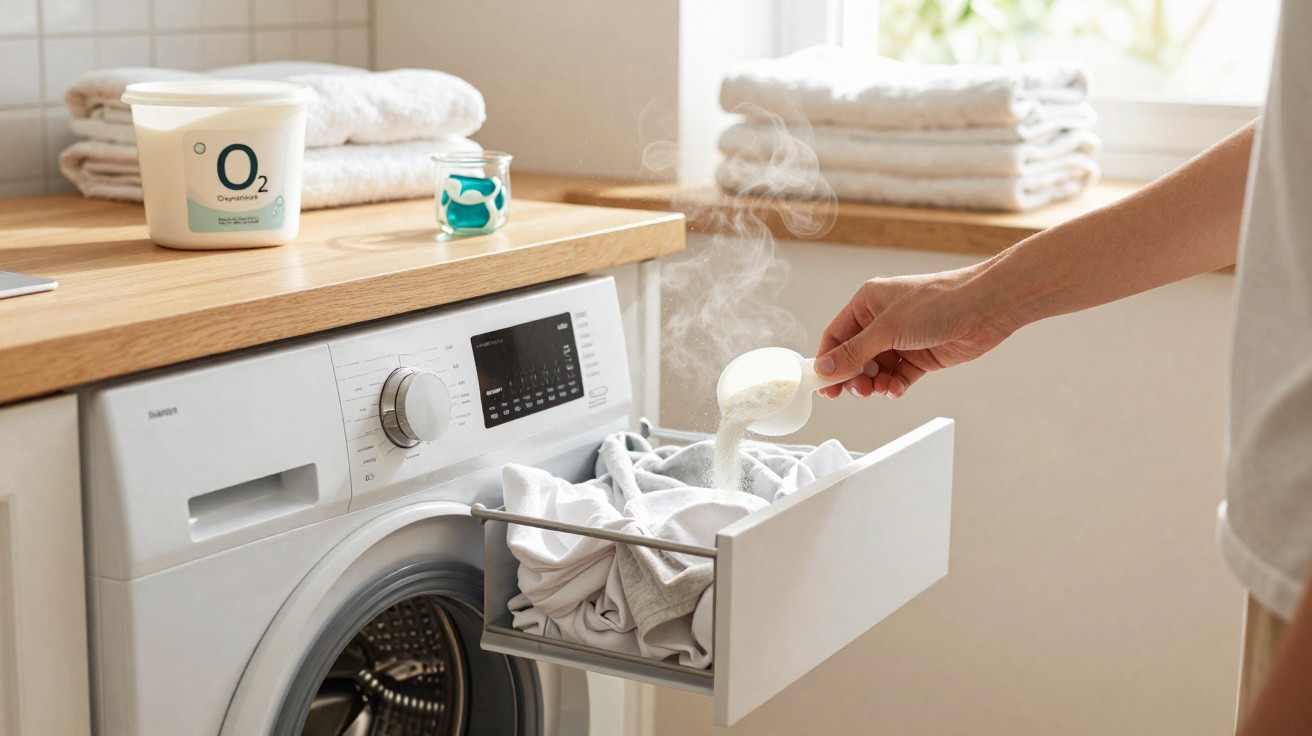
The understated star here is an oxygen-based stain remover: the type that releases active oxygen in hot water. This is not chlorine bleach or baking soda, but a powdered or liquid percarbonate-style stain remover available in most supermarkets. When used correctly, it works like a reset button for kitchen towels.
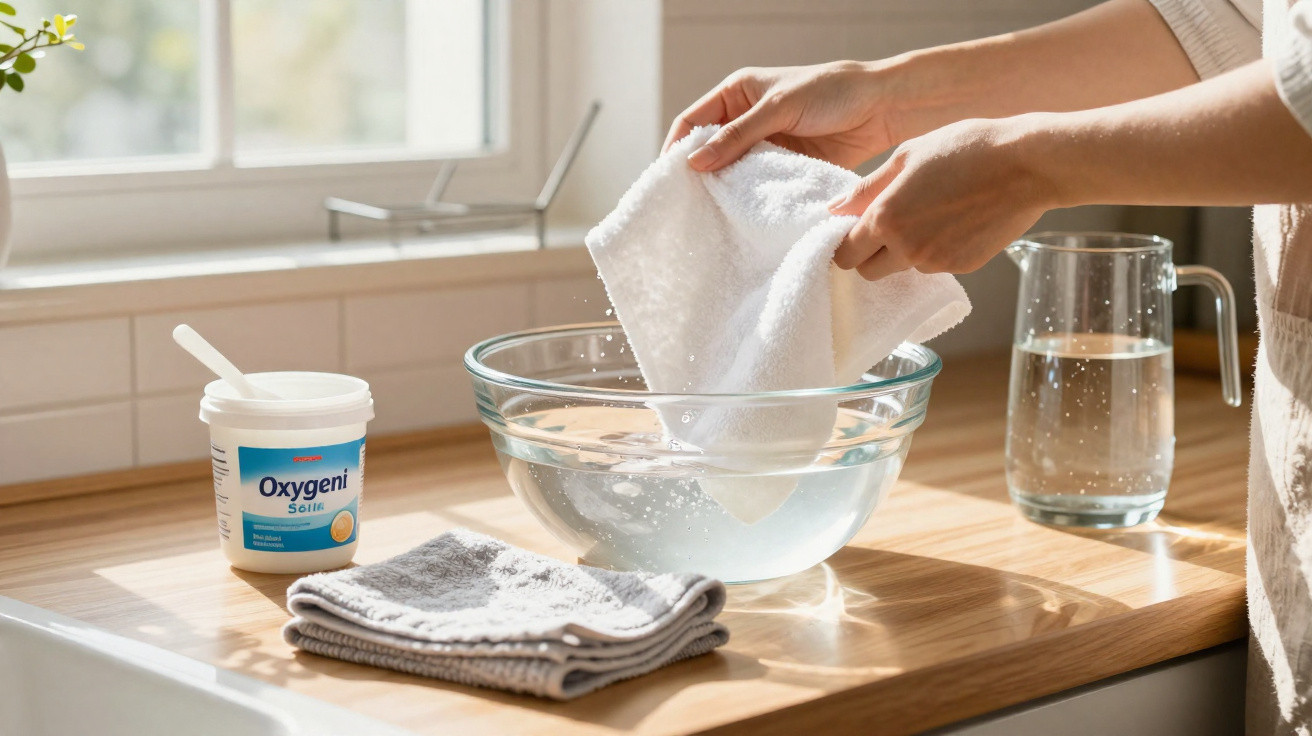
In practical terms, fill a bucket or washing-up bowl with very hot water - around 60°C, provided the fabric care label permits it. Add your usual detergent along with a generous scoop of oxygen-based stain remover. Mix well, then submerge the kitchen towels and tea towels. Leave them to soak for a minimum of two hours, or overnight if possible. Afterwards, put them through an ordinary machine wash. With white cotton, the improvement is often apparent after the first treatment.
Most of us throw towels directly into the machine, choose the cotton setting and trust the appliance to handle everything else. Realistically, hardly anyone follows a soaking routine every day. We are tired and balancing children, work and cooking, so a small pre-soak can feel like another task from a picture-perfect lifestyle blog.
Even so, one realistic trial may be enough to alter your routine. Many people find that their apparent lost causes - tea towels yellowed by years of use, marked napkins and old dishcloths - look two shades lighter after one active-oxygen soak. The fibres can feel less rigid, the long-standing grease rings begin to disappear, and those awkward corners become fit for use again rather than being reserved for mopping the floor.
There are several mistakes to avoid if you want this method to become your preferred alternative to baking soda. Firstly, do not use too much product. Excess powder may leave deposits, irritate skin and make the material stiff. Follow the dosing guidance on the scoop; if you are uncertain, begin with a slightly smaller amount and increase it if necessary.
Secondly, avoid fabric softener on kitchen towels. It creates a coating that reduces absorbency and can trap fresh grease. For a softer feel, a small splash of white vinegar in the rinse compartment will do. Finally, keep white cloths separate from coloured ones. Oxygen products are relatively gentle, but repeated use may still fade certain dyes, leaving a red-striped tea towel looking rather pink.
Sometimes the best “grandma trick” is actually a smart use of modern chemistry, applied with patience and a bit of common sense.
- Use hot water for soaking, allowing the active oxygen to work effectively.
- Always pre-rinse very greasy towels with a drop of washing-up liquid before soaking them.
- Keep soaking sessions to once every few weeks to preserve fibres and elastic edging.
- Whenever possible, dry towels fully in sunlight for an added natural brightening effect.
- Use this approach only for cotton or linen cloths, rather than delicate or printed synthetic fabrics.
Turn old rags into kitchen linen you are happy to display
There is a quiet satisfaction in opening a drawer filled only with fresh, truly white towels. It transforms the feel of a kitchen more than a new gadget or an unusual spice ever could. You no longer think twice about placing a tea towel beneath a bread basket on the table, or handing one to a guest helping to wash up. The fabric seems refreshed, and the everyday rituals around it do too.
This type of care can also reduce how frequently you need to replace household linen. Rather than relegating unattractive towels to the cleaning pile, you can prolong their presentable life by months and sometimes years. Your laundry habits become more deliberate: routine washing for day-to-day upkeep, with an occasional active-oxygen soak as a reset. Instead of constantly battling greyness, you begin to make the most of what fibres can do once they are thoroughly cleaned at their core.
| Key point | Detail | Value for the reader |
|---|---|---|
| Target set-in kitchen stains | Soak with an oxygen-based stain remover before washing | Brings back genuine whiteness rather than merely concealing dullness |
| Protect absorbency | Avoid fabric softener and add a little vinegar to the rinse | Towels dry dishes more quickly and remain fresh for longer |
| Adopt a simple routine | Deep-soak every few weeks and wash normally the rest of the time | Saves time and money while extending the life of kitchen linen |
FAQ:
- Question 1 Can I use this oxygen-based soak on coloured kitchen towels?
- Answer 1 Yes, for most colourfast towels, although you should first test a small concealed area. Some vivid or poor-quality dyes may fade slightly after repeated soaking, so reserve intensive treatments mainly for whites and pale shades you wish to brighten.
- Question 2 Isn’t chlorine bleach faster to make towels white again?
- Answer 2 Chlorine bleach works quickly, but it is more aggressive on fibres and may weaken cotton, cause yellowing and irritate skin. Oxygen-based removers act more gently and are more appropriate for regular treatment of towels used on hands, dishes and food-preparation surfaces.
- Question 3 What temperature should I use for the soak and the wash?
- Answer 3 For cotton or linen, use water at roughly 60°C for the soak if permitted by the care label, followed by a 40–60°C machine wash. For blended fabrics, or when you are unsure, choose cooler water and allow a longer soaking period rather than forcing a very hot cycle.
- Question 4 How often should I do this deep-clean treatment?
- Answer 4 Every 3–4 weeks is generally sufficient for normal family use. Adjust the frequency as needed: do it more often if you frequently cook with oils and sauces, and less often if the towels are mostly used for drying hands and light jobs.
- Question 5 Can I skip detergent and use only the oxygen stain remover?
- Answer 5 Results will be better if you use both. Detergent deals with ordinary dirt and daily grime, while active oxygen tackles ingrained stains and greyness. They work as a team rather than replacing one another.

Comments
No comments yet. Be the first to comment!
Leave a Comment