
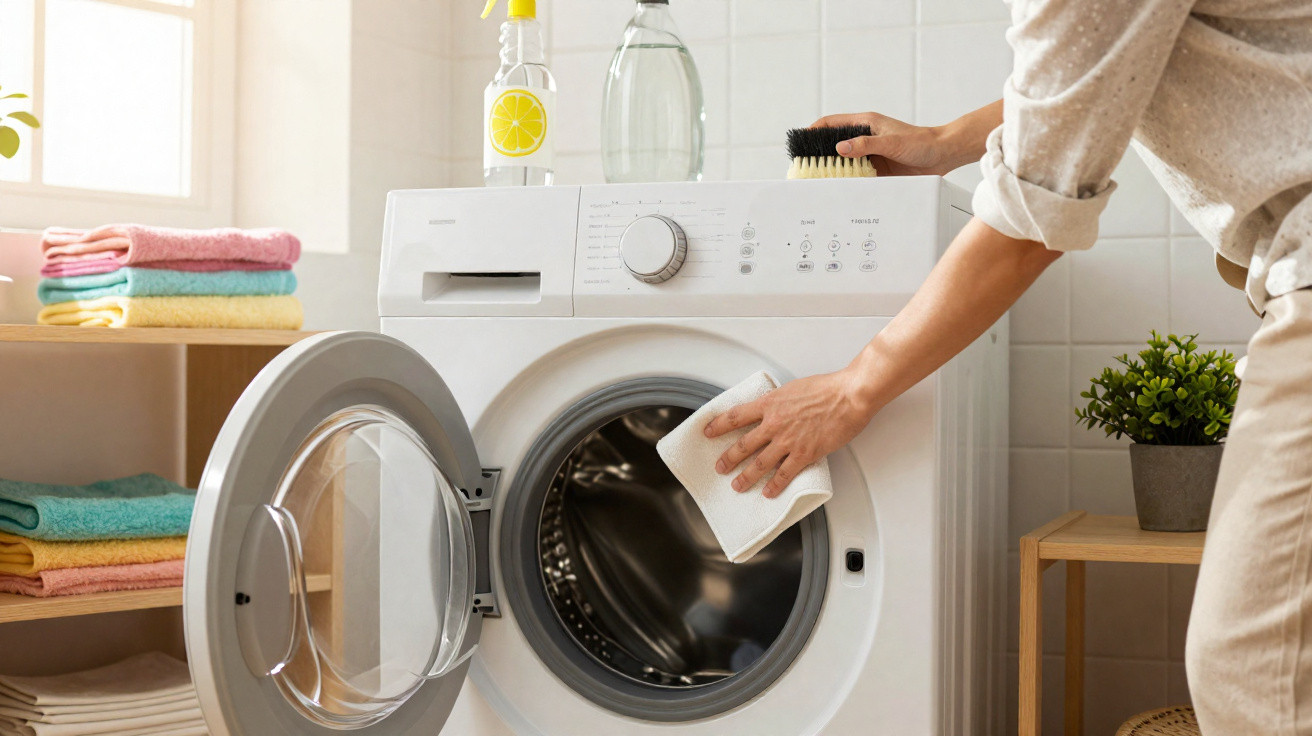
The washing machine hums, the drum turns, and you think: “At least that is still running smoothly.” Then you open the door – and a musty, slightly rotten smell hits you, completely at odds with freshly washed bed linen. A little water is sitting in the rubber seal, while dark specks lurk in its folds. It is something between mould and a limescale crust, between disgust and guilt. We wrinkle our noses, give it a half-hearted wipe with a cloth and promise ourselves we will clean it properly next time. Naturally, that “next time” usually arrives far later than intended. Meanwhile, the machine keeps working away faithfully – with an interior we would rather not inspect too closely.
Why our washing machines quietly become grimy
Our washing machines are like silent housemates: they take everything in but never say a word. They run at night, when nobody is watching. They accept smelly sports socks, baby clothes and towels from the bathroom floor – then return a pile labelled “clean”. We press Start and turn our attention elsewhere. Yet that box in the bathroom or kitchen is really a small chemical laboratory, filled with hot water, detergent, textile fibres and hard tap water. Over time, this combination creates limescale deposits and slimy biofilms. We simply fail to notice for a long while because the machine does not complain.
Until, suddenly, it does. There may be a black line around the rubber seal, a grey cast on white shirts, or a smell that whispers “old sink” as soon as you open the door. Many people then tell the same small story: they buy expensive scent beads, change detergent and try to overpower the problem with ultra-fragranced fabric conditioner, even though the issue is not the detergent at all but deep inside the washing machine. According to a consumer survey, most people clean their washing machine themselves only every few months – if they do it at all. And this is the appliance that washes our underwear.
It feels almost contradictory: the washing machine is expected to make everything clean, yet its interior can become the ideal breeding ground for mould spores and layers of limescale. Lukewarm water, detergent residue, damp rubber lips and a closed porthole door create something like a wellness spa for micro-organisms. Limescale from hard tap water settles on the heating element and drum, insulating heat, extending programmes and quietly consuming electricity. The organic layer of detergent and grease residue clings to folds and hoses, giving mould an ideal home. What we cannot see, we forget – until our nose objects.
The big reset: how to properly remove limescale and mould from a washing machine
When a washing machine smells musty, a fragranced patch on the door will not fix it; it needs a genuine internal reset. The basic approach is simple: descale it thoroughly once, then disinfect it thoroughly once. Begin with the drum: empty the machine completely, pour around 200–250 ml of household vinegar or a standard washing machine descaler into the main detergent compartment and directly into the drum. Next, select the hottest programme your machine offers – usually 90 or 95 degrees – and run it empty. The hot acid breaks down the limescale film on the heating element and drum, flushing out dead mould residue as well. It is rather like having a firm reset conversation with your quiet housemate.
However, the real mould nightmare is often found in the door seal. Carefully pull the rubber gasket forwards and look inside the folds. You will often find a mixture of grey-black spots, streaky detergent residue and standing water. Use a cloth and a blend of vinegar with a little washing-up liquid to wipe away the slime, then tackle stubborn areas with an old toothbrush. Some people swear by a paste made from bicarbonate of soda and water, left on briefly before being rubbed off. Let us be honest: nobody truly does this every day. But doing it every few weeks can, quite literally, save your breath.
The detergent drawer and the area behind it are where things become particularly interesting. The drawer can usually be removed completely, revealing a surprisingly thick layer of sticky, partly clumped powder and a film of mould. Rinse the drawer under hot water, clear the corners with a wooden stick, then use the toothbrush or a small brush again. Wipe the drawer housing itself with a cloth soaked in vinegar. Some technicians put it very plainly:
“Most washing machines do not die of old age, but of neglect – limescale eats energy, mould eats joy in life.”
A simple reset plan can help prevent this:
- Once a month, run an empty 60-degree programme with a little vinegar or descaler.
- Leave the door slightly open after every wash so moisture can escape.
- Regularly wipe the door seal and detergent drawer with a cloth.
Between everyday life and expectations: how clean does “clean” really need to be?
There is an odd contradiction here: we expect the washing machine to deliver spotless, fresh laundry, yet we are often unwilling to give it more than two minutes of attention. Everyday life is busy, the children are shouting, the dog has got at the carpet, the laundry is piling up – and “cleaning the washing machine” can seem like a luxury wellness ritual for people with too much time. Yet there is an emotional side to it: fresh-smelling towels can feel like a small piece of control on an otherwise chaotic day. A T-shirt with even a faint musty smell, on the other hand, chips away at our self-image.
That is precisely the real benefit of an appliance free from limescale and mould. It is not just about the mechanics or the electricity bill, but about the subtle sense that your home is not working against you. Anyone who has had a washing machine that was genuinely clean inside will recognise that slightly surprising moment when laundry suddenly smells “neutral-fresh” – not overly perfumed, not artificial. Energy efficiency matters too, of course: a heating element coated in limescale takes noticeably longer to reach temperature, programmes drag on and electricity costs rise. A machine that can breathe freely washes faster, more efficiently and more quietly.
Perhaps that is the practical point behind all the discussions about household remedies: A clean washing machine is not a nice-to-have, but a quiet everyday ally. Over the years, it saves real money, protects textiles and reduces the frustration of laundry that is “not properly clean again”. It also removes one issue we have long dismissed mentally with an irritated groan: that mix of technical embarrassment and disgust when guests happen to open the door and see a mouldy rubber seal. Once you have carried out the reset, you realise how liberating such an unassuming appliance can be – and how much lighter everyday life feels when “freshly washed” really does smell fresh again.
| Key point | Detail | Benefit for the reader |
|---|---|---|
| Regular descaling | Run an empty hot programme monthly with vinegar or descaler | Protects the heating element, reduces electricity use and extends the machine’s lifespan |
| Targeted mould removal | Clean the door seal, detergent drawer and folds using vinegar, bicarbonate of soda and a brush | Visible mould disappears and laundry smells neutral-fresh again |
| Everyday routine after washing | Leave the door open, wipe seals occasionally and avoid washing exclusively at 30 degrees | Prevention rather than a major clean, fewer odours and fewer unpleasant moments in daily life |
FAQ:
- How often should I clean my washing machine thoroughly? For most households, a thorough internal clean every 1–2 months is sufficient. If you do lots of 30-degree washes, have pets or wash baby clothes, it is better to clean it monthly so mould and biofilm do not become established.
- Is vinegar genuinely good for a washing machine, or does it damage the seals? Household vinegar in normal quantities, and not used every day, is generally unproblematic. If you want to be completely safe, use a dedicated washing machine descaler that has been tested for material compatibility.
- Why does my laundry smell musty despite using expensive detergent? Expensive detergent does not remove mould from the rubber seal or biofilm in the hoses. If the inside of the machine is dirty, laundry absorbs that odour – so a thorough clean, rather than more fragrance, is the only solution.
- Can mould in a washing machine be harmful to health? Yes, mould spores can irritate the airways in sensitive people and worsen allergies. It is especially worthwhile checking the seal, drawer and drum carefully when washing baby clothes or for people with asthma.
- Is a 90-degree programme alone enough for hygiene? A hot programme works against many germs, but it does not automatically remove old limescale and firmly attached biofilm. Combining the hot wash with vinegar, descaler or bicarbonate of soda turns it into a genuine cleaning cycle for the washing machine.





Comments
No comments yet. Be the first to comment!
Leave a Comment