
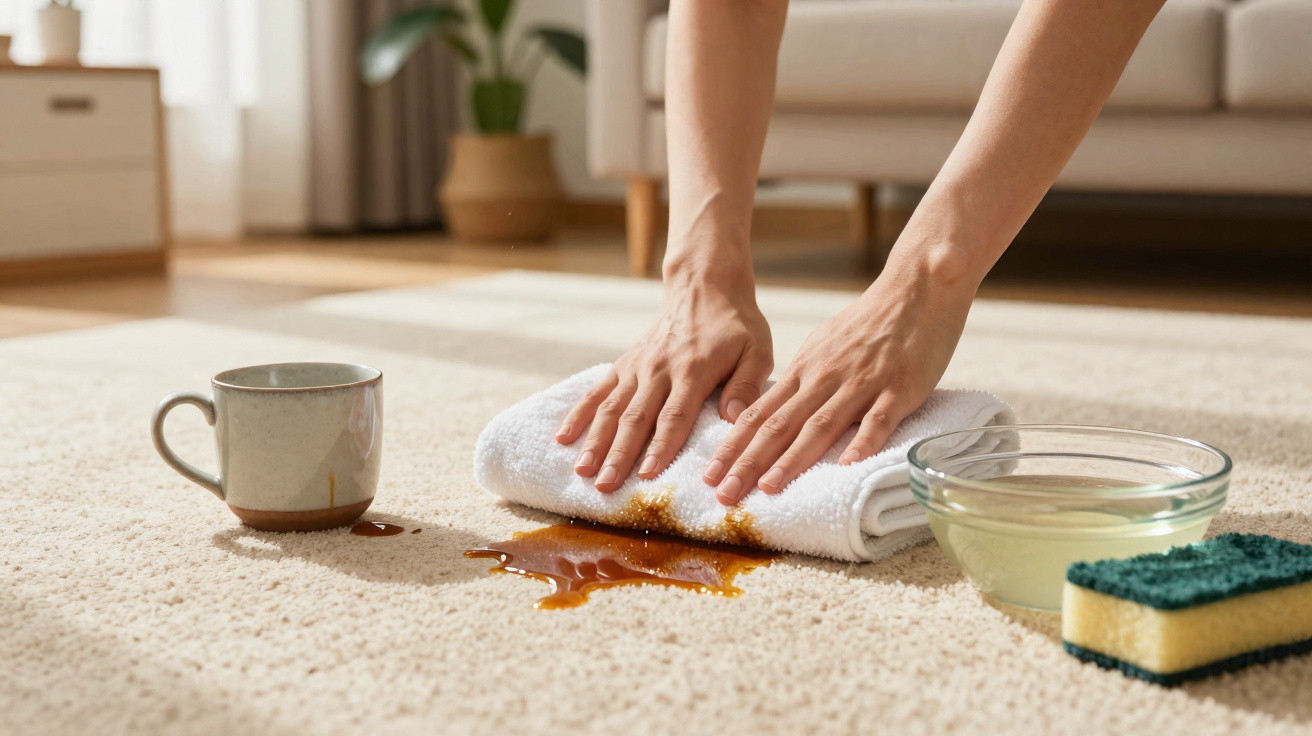
A bag strap caught the cup, and a brown bloom spread wider by the second. Your pulse rises, your meeting starts in ten minutes, and there is no time for theatrics. We have all had a morning go wrong before 9 a.m. The answer needs to be fast, discreet and safe for the carpet.
The mug toppled just as the kettle clicked off, and I watched it hit the floor in slow motion. Dark roast flew through the air, speckling the hallway like a comic-strip panel. Two steps, one sigh, then the automatic reach for kitchen roll. Halfway between blotting and panicking, a neighbour sent a photo of her toddler wearing a Weetabix crown. Life was having a laugh. I looked at the stain and started negotiating. Then the carpet did something I had not anticipated.
Why coffee marks carpet more fiercely than you think
Fresh coffee may look shiny and harmless, but it contains tannins that cling to fibres like a grudge. Heat opens the weave, colour sinks in, and a neat splash turns into a pale ring. That ring marks out where the stain is settling. Prevent the ring and you prevent the rest of the tale.
On an ordinary weekday, two or three people in your office will spill a caffeinated drink before lunchtime. Ask them. There is always a quiet admission and a fuzzy patch beneath someone’s desk. One reader told me she leaves a “stain towel” over the radiator during winter because she ran out of kitchen roll in lockdown. Little shortcuts can become household legend.
Coffee causes problems beyond its colour. It is also about chemistry. Its tannins quickly attach to natural fibres, particularly wool, while synthetic carpets retain the oily element of the drink. Hot water may drive it further in by tightening the fibres. This is why a cool, mildly acidic solution releases that hold and helps lift the stain without scrubbing the life out of the pile.
The instant White-Towel Lift for coffee stains on carpet
This is the rapid method I use and now rely on. Combine 250 ml of cold water with 1 teaspoon of white vinegar and a very small drop of washing-up liquid. First blot the spill using plain kitchen roll. Lightly spray the solution over the stain, then place a clean white towel on top. Push down with your palm, or stand on it. You will see the brown coffee transfer into the towel. Repeat using a clean area of the towel until the mark fades.
To finish, scatter a light dusting of bicarbonate of soda over the damp patch. Allow it to dry, then hoover it up. The bicarb absorbs remaining moisture and odour while helping the fibres spring back. Honestly, no one does this every day. Yet on the morning when you need a miracle, this small process feels like one. It is the household equivalent of a plot twist.
Only use white towels. Coloured fabric can run and create an entirely new issue. Do not scrub; apply firm pressure instead. In my notes, this technique now has a name: the White-Towel Lift.
“Tannin stains are time-sensitive,” says a London carpet cleaner I rang at 8:14 a.m. “Cool water, mild acid, and patience do more than fancy sprays. Pressure transfers. Rubbing stretches.”
- Begin with cold water, never hot.
- Work from the outer edge towards the middle.
- Change to a fresh section of towel with every press.
- Dry with bicarbonate of soda, then hoover.
Common mistakes, gentler remedies and when to seek help
Hurrying can make a stain worse. Pouring water over it feels logical, until the underlay becomes soaked and draws the coffee back to the surface. If the spill contains milk, start with the same approach, then use an enzyme-based cleaner later for the dairy element. Stay calm. Several small repeated actions work better than one dramatic scrub.
Wool carpets need a softer approach. Reduce the vinegar in your mix to half a teaspoon and test it in a concealed area. Synthetic fibres can handle the standard mixture. For a stain that is a week old, lightly dampen it with the solution, put down the towel and apply warm pressure with your hand for 60 seconds. Never use an iron on wool. Never steam polypropylene. Heat is a lever, not a hammer.
If a light halo remains, you have still disrupted the bond. That counts as progress. Let the area dry, then check it again in daylight. Sunlight shows what night forgives. A sticky feel indicates soap residue. A second round using plain water and the towel method will remove it.
There is a quiet pleasure in making a stain into a story worth sharing. The White-Towel Lift is neat, uncomplicated and surprisingly successful. It fits real life: frantic mornings, pets at your feet, school runs and the kettle boiling once more. Try it once and it will stay with you. Small, careful pressure beats frantic scrubbing every time.
| Key point | Detail | Benefit for the reader |
|---|---|---|
| Act fast, stay cool | Blot at once and use a cool, mild vinegar mixture | Prevents rings from forming and keeps fibres relaxed |
| White-Towel Lift | Press a white towel onto the carpet to draw out coffee, section by section | Creates visible progress that feels immediate and manageable |
| Dry and revive | Finish with bicarbonate of soda, then hoover | Removes odour and moisture while restoring texture |
FAQ:
- Can I use sparkling water instead of the vinegar mix? Yes, for a fresh spill. Soda water helps release tannins. Follow with the white towel, then bicarbonate of soda and hoover.
- What if the coffee had milk or syrup? Use the vinegar mixture first. Once the area is dry, apply a gentle enzyme cleaner to break down dairy or sugar residue.
- Is it safe on wool? Yes, with a weaker mixture: half a teaspoon of vinegar to 250 ml of water. Test a hidden area and avoid heat.
- Will hot water work faster? No. Heat may set tannins and tighten fibres. Keep everything cool until the colour has lifted.
- When should I call a professional? If the stain is old, large or the carpet is expensive. Also call one if a halo returns after a day - wicking may require professional extraction.



Comments
No comments yet. Be the first to comment!
Leave a Comment