
There is a very specific sort of disappointment that follows cleaning your windows. You step back with damp rubber gloves and slightly sore shoulders, pleased with the work you have done. For one bright, glorious instant, the panes appear almost invisible, the room feels lighter and the outside seems a little less grey. Then, within a day or two, sunlight catches the glass at precisely the wrong angle and exposes the streaks, smears and peculiar dusty coating that appears to have come from nowhere. It is easy to wonder whether the fault is yours: the wrong product, cloth or technique.
We have all reached the point of promising ourselves that we will not tackle the windows again for at least a month.
That is why the suggestion that one spoonful of an ingredient in your cleaning water can keep windows cleaner for longer can sound like the sort of advice an aunt posts on Facebook. In this case, though, there is a genuine reason it works.
The surprisingly effective spoonful
I first came across the “one spoonful” method through a quietly capable neighbour. She was the sort of person who never made a fuss, yet whose home somehow always looked fresh without suggesting she spent every spare hour cleaning. One breezy Saturday, she was polishing her patio doors, their glass gleaming almost suspiciously in the light. When I asked which spray she used, expecting an expensive product from a specialist website, she merely shrugged, dipped her cloth and said, “Bit of this in the water. Makes it stay clean longer.”
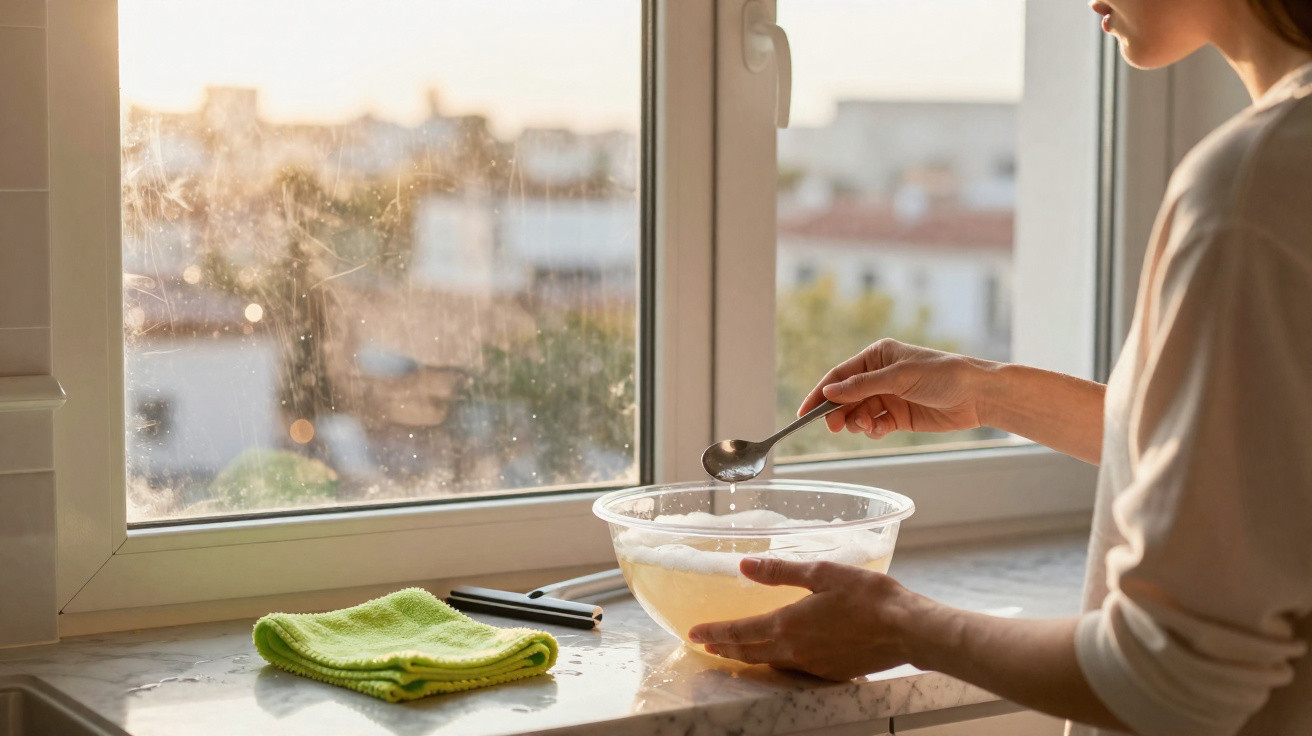
The mysterious ingredient was already in nearly every UK kitchen: everyday washing-up liquid. You do not need a cupful or a generous pour, only one small spoonful in a bucket of warm water. There are no vinegar vapours, harsh blue chemical smells or anything that makes the task seem to require a mask and rubber gloves. Initially, it seemed too easy, perhaps like a tip that only succeeds on windows that are spotless already. Yet the way the water formed beads and ran from the glass was quietly persuasive.
You may feel that using washing-up liquid on windows is hardly revolutionary. The important part, however, is not simply that it cleans: it actually helps your windows stay cleaner for longer. A little science sits behind that gentle foam.
Why a small amount of soap works so well
Invisible grime and the reason it returns
Most of us view dirty windows as a visible issue: fingerprints, rain marks and the occasional bird with no respect for your hard work. In reality, the problem is more frustrating. Glass accumulates microscopic grease from cooking vapours, traffic pollution, candles and even air fresheners used indoors. This unseen coating gives dust and grime a surface to attach to, explaining why clean windows rarely remain that way for as long as you would like.
Water alone can remove obvious marks, but it often flows over oily deposits instead of lifting them away. The fine layer remains in place, quietly drawing in fresh dirt like a magnet. Realistically, few people wash windows with the same determination they would use to degrease a frying pan. We give them a quick wipe, remove the clearly visible marks and consider the task finished. Two days later, sunlight reveals each shortcut.
Washing-up liquid has been made to do one thing particularly well: break down grease. Even a very small quantity changes how water works across the pane. Soap molecules bind to oil and dirt, release them from the glass and enable the water to rinse them away effectively. Once the greasy base layer is gone, dust finds it much more difficult to stick to the surface again immediately.
Surface tension and fewer streaks on windows
There is another, rather elegant, explanation involving surface tension. On its own, water gathers into droplets and rivulets, particularly on a smooth surface such as glass. When those droplets dry, they leave tide lines and streaks behind. A spoonful of washing-up liquid alters the water’s surface tension. Rather than creating persistent beads, the water spreads more consistently and rinses away more cleanly.
Because the water covers the pane evenly, you can lift the dirt in one pass instead of pushing streaks around the glass. Less vigorous scrubbing is needed, and the final wipe with a microfibre cloth or squeegee becomes far more rewarding. The glass also dries more uniformly, avoiding the pale arcs and fingerprints that seem to emerge as soon as the light shifts. It is not magic, although it can feel that way when you no longer have to redo the same area three times.
Getting the washing-up liquid mix right
More soap does not mean cleaner glass
There is one important detail: the spoonful really does matter. It is tempting to think, “If one spoon is good, three must be amazing.” That is usually the point at which windows begin to look worse rather than better. Excess washing-up liquid leaves a faint, almost undetectable residue that dries with a sticky feel. That coating has precisely the effect you are trying to prevent, catching dust, pollen and airborne pollution like velcro.
Around one teaspoon in a bucket of warm water is generally the ideal amount, allowing for a little variation. It is enough to reduce surface tension and cut through grease without producing bubble-bath levels of foam. The water should feel silky, not heavily sudsy. If dense foam is sticking to the glass, you have used too much. Adding some plain water will usually put things right.
The overlooked value of microfibre and good timing
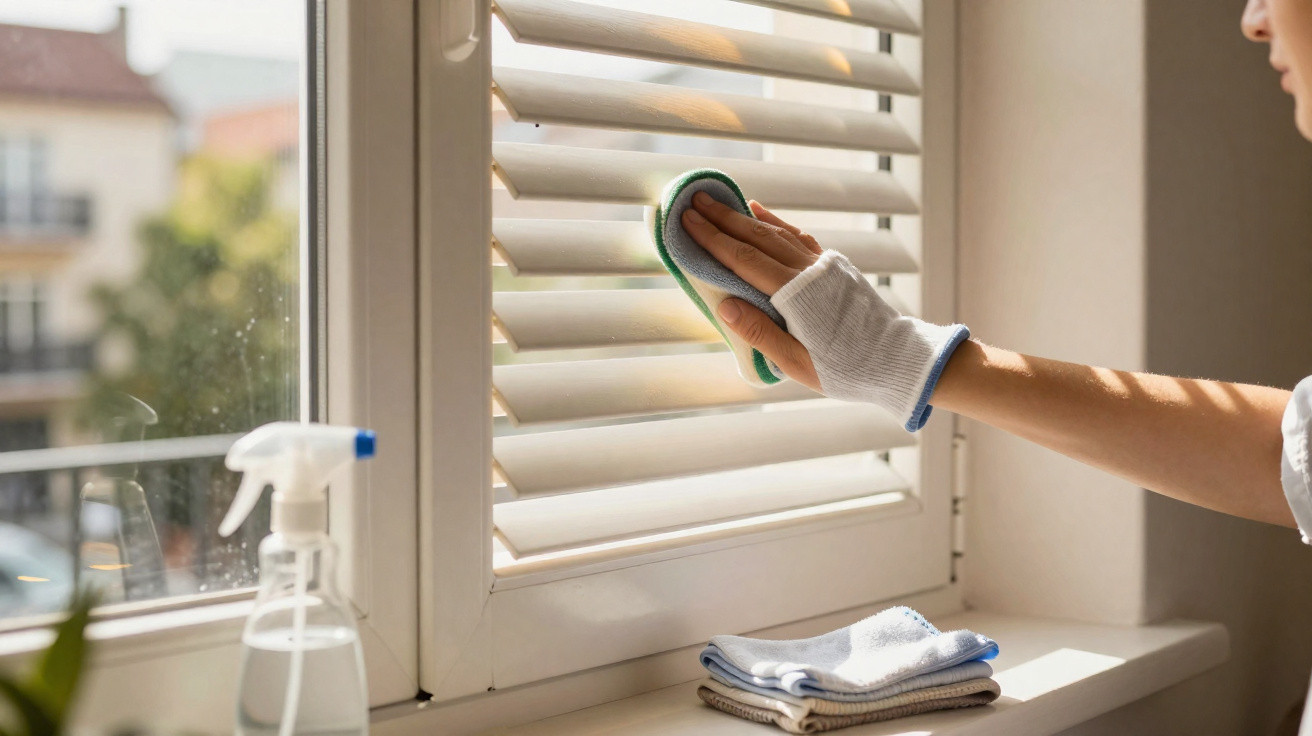
The other part of this method is considerably less glamorous than “life-changing hacks”: the cloths you use and the time you clean. Microfibre cloths hold onto dirt and surplus soap more effectively than old T-shirts or kitchen paper, both of which are more likely to spread it around. Use one cloth to wash and another, dry one to buff, and you will suddenly seem as though you know exactly what you are doing. There is a quiet satisfaction in that final pass when the window changes from “clean-ish” to properly clear.
Timing matters more than many people acknowledge. Strong direct sunshine dries the pane so fast that it can set streaks before you have completed one window. Working in late afternoon or on an overcast day gives you time to apply the soapy water, rinse if desired and buff before marks become fixed. Perfect weather is unnecessary; simply avoid the intense midday glare that makes you rush and squint.
Why windows stay cleaner for longer
After you have thoroughly removed the accumulated grease and old detergent residue, something notable happens. Light travels through the glass more clearly, so minor dust is less noticeable. Rainwater runs off a little more freely instead of collecting in dirty trails that dry on the pane. Pollution from the road outside also does not adhere so fiercely, as there is less residue on the glass for it to cling to.
The difference isn’t that your windows become dirt-proof, it’s that they stop attracting dirt so quickly. They will still require cleaning, simply less frequently. If you tend to wait until you could write your name in the dust, that may not matter to you. But for anyone irritated by glass changing from sparkling to cloudy within a few days, a spoonful of soap creates a more peaceful interval between those mildly despairing moments with the spray bottle.
There is a psychological benefit, too. If a surface remains clean a little longer, you are more inclined to maintain it. The task seems more manageable: a quick refresh rather than an all-day struggle against smears. That change in mindset is worth more than any elaborate label on a cleaning product.
Vinegar, alcohol and other traditional alternatives
People often have firm views on what should go into window-cleaning water. White vinegar has devoted supporters, particularly in hard-water regions where limescale leaves cloudy rings. It unquestionably works, but its sharp odour can linger indoors, and not everybody wants their home to smell faintly of a chip shop. Rubbing alcohol can leave a swift, streak-free finish, although it evaporates so fast that it can be unforgiving unless you move quickly with the cloth.
The appeal of the washing-up liquid approach lies in its balance: it is mild, familiar and probably already in your cupboard. There is no special shopping trip, additional bottle or complicated three-stage process. If mineral deposits on exterior panes are a problem, you can add a dash of vinegar to the spoonful of soap. For most everyday UK windows, though, one spoonful in warm water does the work effectively and without fuss.
There is comfort in using something familiar as well. The light clean fragrance of your usual washing-up liquid, warm water on your hands and the simple motion of stirring a spoon through the bucket all feel domestic and pleasantly old-fashioned. The task becomes less about following a hack and more like a small, achievable ritual.
The emotional impact of clean windows
It would be easy to dismiss this as ordinary cleaning talk about streaks, spoons and surface tension. But standing before freshly cleaned windows can bring a genuine emotional change. A room appears brighter and less cluttered, even if there is still an overflowing laundry basket in the corner. The world outdoors feels closer, no longer separated by a dull grey film. On a sunny day, light lands differently across the table, picking out a mug, a plant leaf or the edge of a picture frame. They are small details, but they can quietly alter your mood.
There is a reason people describe “letting the light in” as though it were therapeutic. When the news is bleak and your phone keeps pinging, the modest task of moving a soapy cloth across the glass can be surprisingly grounding. You are completing something finite, with a clear before and after. The outcome is immediate and visible rather than a vague promise that things might improve eventually.
When the windows remain clear for another week or two because you added that one spoonful, it can feel as if you have slightly outsmarted the system. It is a discreet victory, a small household rebellion against the constant drift towards chaos.
Try the one-spoonful window-cleaning method today
If you would like to try it, there is no need to turn it into a full-house deep-clean. Choose one window you see regularly: the kitchen window above the sink, the patio doors or the front window that displays the Christmas decorations each year. Fill a bucket or washing-up bowl with warm water, then stir in one teaspoon of your normal washing-up liquid until it disperses through the water rather than remaining as blobs on top.
Put a clean cloth or sponge into the water, wring it until damp rather than dripping, then wipe the glass from top to bottom. Particularly grimy windows may benefit from another wipe using fresh water, although that will often be unnecessary. Next, take a dry microfibre cloth or squeegee and finish from top to bottom again. Stand back, allow the pane to dry and resist repeatedly fussing over every tiny speck.
Afterwards, give it a few days. Observe how the light comes through and whether the glass continues to look reasonably clear rather than returning to a dull, uneven appearance by the second day. That is when the reason behind the spoonful becomes apparent.
The quiet household tip you share with others
There is real pleasure in having a useful method that does not feel like a trick. It requires no branded miracle spray or elaborate five-step system that you will stop using within a week. All you need is a spoon, warm water and the same liquid used for washing the dishes. It is the kind of advice passed quietly among friends, neighbours and office colleagues by the kitchen sink. “Try a bit of washing-up liquid in the bucket, just a teaspoon. Makes them stay cleaner for ages.”
You’re not chasing perfection, just aiming for windows that don’t betray you after 48 hours. When so much in life demands continual attention, there is something unexpectedly reassuring about one small part of your home remaining pleasant for longer than anticipated. The view outside stays the same, but how you see it changes. Sometimes that is enough.


Comments
No comments yet. Be the first to comment!
Leave a Comment