
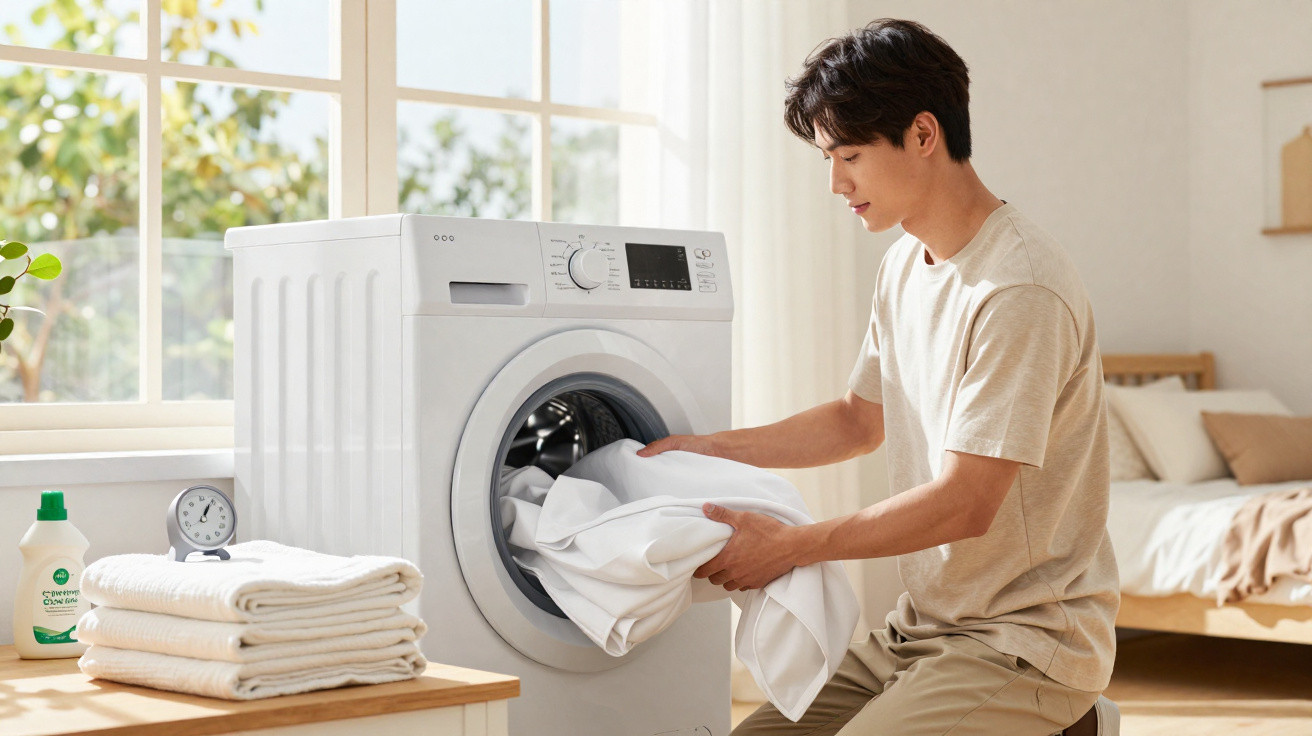
When you climb into bed at night, rest is probably on your mind rather than bacteria. Yet even after a single night, the fabric collects a surprising combination of moisture, skin particles and sebum. This turns the bed into an ideal breeding ground for microorganisms. The question then becomes: how hot should bed sheets be washed to make them genuinely hygienic without unnecessarily increasing electricity costs or putting fabrics under strain?
What builds up in bed sheets over a week
While sleeping, the body can lose up to half a litre of fluid. Some of it evaporates, but the remainder is absorbed by the fabric. There are also flakes of skin, sebum, and traces of creams, make-up, hair gel or deodorant. A sheet may still appear clean to the naked eye, but to germs it is a feast.
After only a few nights, bed sheets contain sweat, skin debris, bacteria, fungi and mites – even when they look freshly washed.
Anyone who washes sheets only every three or four weeks may still feel comfortable visually, but is already in a hygiene grey area. Many experts advise adults to wash bedding at least every 14 days, or weekly where there is heavy sweating, allergies or pets.
Why 40°C is often enough – but not always
For a long time, the rule was simple: the hotter the wash, the cleaner it would be. Modern detergents and washing machines have made that belief outdated. A standard 40°C coloureds or easy-care cycle with a good all-purpose or colour detergent already removes most soiling and a large proportion of germs.
Higher temperatures, however, also use more electricity. Comparisons indicate that a 60°C programme requires roughly half as much energy again as a 40°C wash of the same length. At 90°C, consumption rises significantly further. Over a year, that can make a noticeable difference to household bills.
For bedding that is changed regularly in a healthy household, 40°C is generally a good standard.
So, if bedding is changed with reasonable consistency and nobody in the home has health issues, 40°C will usually do the job well. It is gentler on fibres, colours and your budget.
When washing bed sheets at 60°C makes sense
There are nevertheless circumstances in which a hotter cycle is advisable. A 60°C wash is considerably more effective against germs, fungi and mites than a 40°C one. It is particularly worthwhile where health or hygiene risks are involved.
Typical situations for 60°C
- someone using the bed has a cold or flu
- infections in the household, such as stomach bugs
- a severe house dust mite allergy
- very heavy sweating during the night
- bedding used by babies or people requiring care
- a clearly musty smell or visible stains
In these situations, a 60°C programme can reduce pathogens and mites more effectively. For allergy sufferers in particular, this may reduce irritation to the airways. Using a full-strength detergent as well achieves a substantially higher level of hygiene than lukewarm short cycles.
One simple additional tip: a small splash of clear household vinegar in the fabric conditioner drawer can neutralise odours and further lower the germ count. It is not a substitute for detergent, but it can complement its effect.
Why 90°C is almost never necessary
A boil wash can seem like a safety net: run one 90°C cycle and everything is “clinically clean”. For bed sheets, however, this is not the case in most homes. This temperature damages fabric far more quickly, can shrink cotton or flannel, dull colours and place considerable strain on the washing machine.
90°C belongs in the category of exceptions rather than routine – and usually not for bed sheets.
Such a cycle is mainly useful in two situations:
- very stubborn marks on durable white cotton fabrics, such as old blood or urine stains
- a cleaning cycle for the washing machine itself, with little or no laundry in the drum
A boil wash is not suitable for the weekly pile of bedding. A reliable routine using moderate temperatures is the better approach.
Which temperature suits which fabric
Not every fibre responds well to heat. The care label provides the best guidance. Following it can substantially extend the life of your sheets.
| Material | Recommended everyday temperature | In exceptional circumstances |
|---|---|---|
| Cotton / Renforcé | 40°C | 60°C in case of illness or heavy soiling |
| Percale, cotton sateen | 40°C | max. 60°C, as rarely as possible |
| Jersey, blended fabrics | 30–40°C | occasional 60°C, if the label permits it |
| Linen (fine) | 30–40°C, gentle cycle | only according to the label, usually not 60°C |
| Silk | max. 30°C, special programme | no hot wash cycle |
As a rule of thumb, it is better to wash regularly at 40°C than infrequently at extreme temperatures. Consistency beats temperature spikes.
How often bedding should go in the washing machine in different situations
The best washing frequency depends greatly on everyday habits. A single person who usually showers before bed produces less dirt than someone who is physically active and often goes to sleep sweaty.
Practical everyday guidelines
- Healthy adults, normal sweating: every 1–2 weeks, 40°C
- Heavy sweating or pets in the bed: weekly, 40–60°C
- People allergic to house dust mites: weekly, 60°C is often worthwhile
- Colds or infections in the household: one 60°C wash after the illness has passed
- Babies and young children: rather more frequently, ideally 60°C for suitable fabrics
People who do physical work, eat late or often go to bed with hair-styling or skincare products on will naturally transfer more dirt and oil to the fabric. This too supports shorter washing intervals.
Saving energy without compromising hygiene
Temperature is not the only factor that determines cleanliness. Several elements work together:
- Programme length: A slightly longer 40°C cycle can clean more thoroughly than a short, hot sprint.
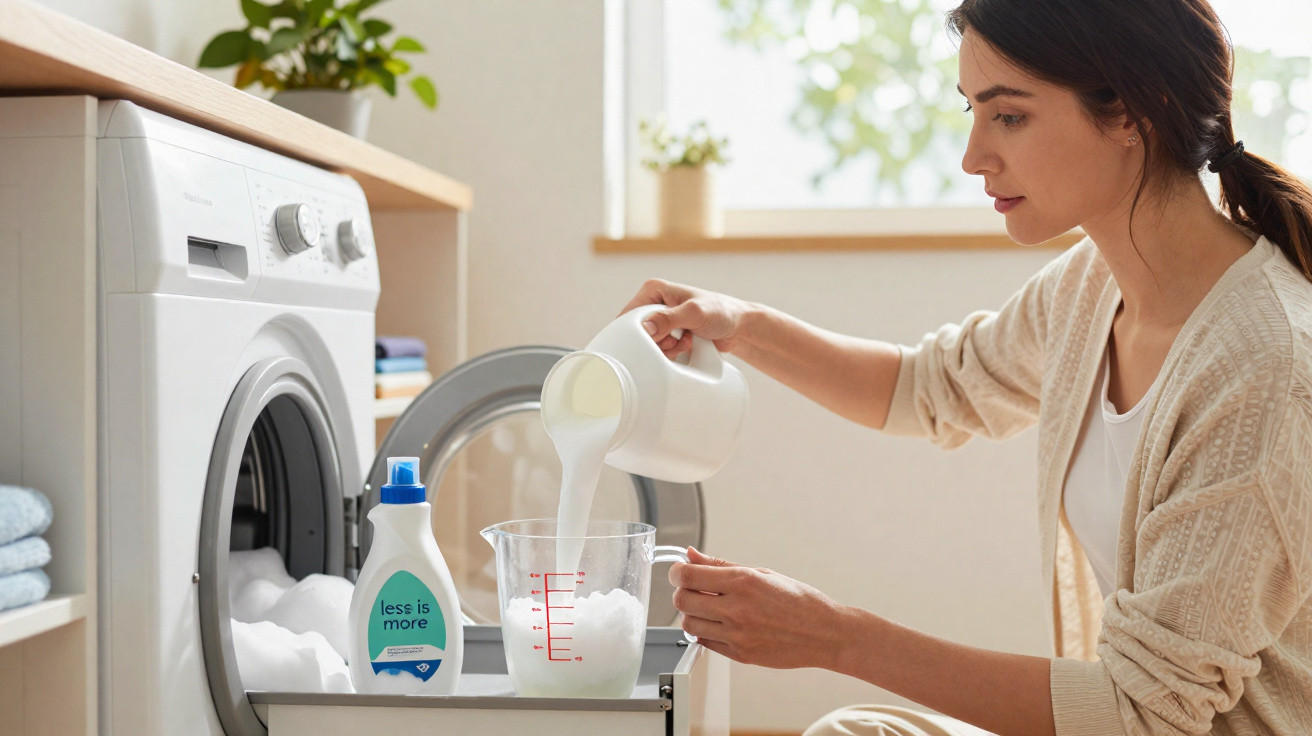
- Amount of detergent: Too little detergent cleans poorly; too much leaves residue and puts unnecessary pressure on the environment and machine.
- Do not overload the machine: Sheets need room to move around and release dirt.
- Dry correctly: Letting bedding dry completely prevents musty odours and mould growth.
With these adjustments, very good results are possible even at 40°C. High temperatures then become a tool for exceptional cases rather than the standard solution.
Practical tips for a hygienic bed without excessive temperatures
A few straightforward habits are often enough to keep the bed noticeably fresher. Air the mattress briefly in the morning, fold back the duvet and allow moisture to escape before making the bed again. A washable mattress protector also absorbs some of the load and is easier to clean than the mattress itself.
If you sweat heavily, consider a thin fitted sheet or a molton protector that can go in the washing machine more often than the bedding itself. Allergy sufferers may benefit from mite-proof covers, which can noticeably reduce everyday exposure – making a 60°C cycle even more effective.
For many households, one straightforward principle provides a sensible balance: change bedding regularly, use 40°C as the standard, choose 60°C selectively and reserve 90°C for exceptional situations. That keeps the bed, skin and electricity bill in good shape.




Comments
No comments yet. Be the first to comment!
Leave a Comment