
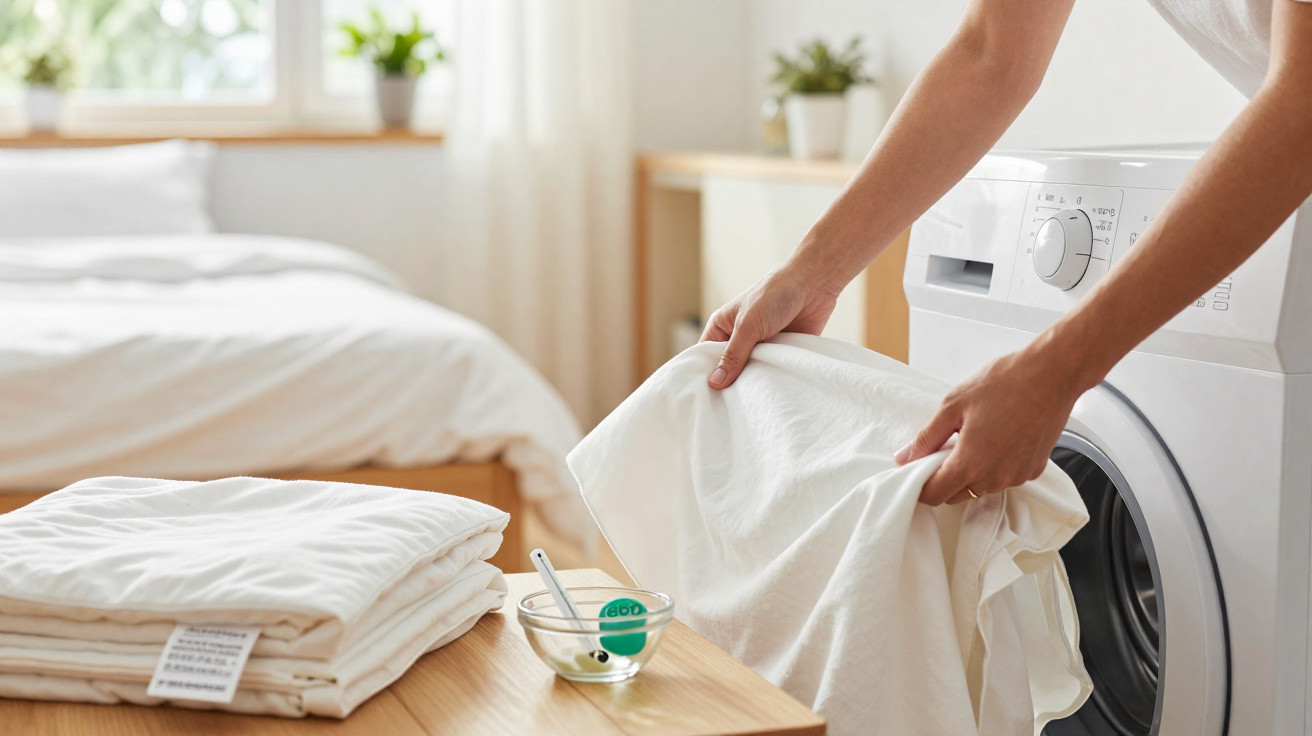
The right washing temperature affects both hygiene and your electricity bill.
Many people enjoy getting into bed at night when the sheets smell of laundry detergent. Yet there is a far less appealing reality behind that feeling. During a single night, a person can lose up to half a litre of sweat, alongside dead skin cells, sebum and traces of cream or make-up. It all ends up in the bedding, creating an ideal breeding ground for bacteria, fungi and house dust mites. This raises the question: how hot should the washing machine be set to get bedding genuinely clean without putting unnecessary strain on the fabric or your budget?
Why bedding becomes “dirty” sooner than it looks
Sheets can appear clean for quite some time, but the real soiling is invisible. It builds up afresh every evening, almost without notice.
- Sweat leaves moisture and salts in the fabric.
- Dead skin cells and sebum provide food for bacteria and mites.
- Make-up, body lotion and hair gel add further residues.
- Eating in bed introduces crumbs and leftover food.
Mites particularly thrive in these conditions. They multiply quickly in warm, damp mattresses and sheets. Their droppings can trigger severe allergies in sensitive people, causing symptoms such as a blocked nose, stinging eyes or asthma attacks.
Specialists advise washing bedding at least every 14 days, or every week if you sweat heavily or have allergies.
Even so, many people leave their sheets on the bed for three or four weeks. This directly affects hygiene, sleep quality and often the skin as well: spots on the back or décolletage may partly be caused by unwashed bedding.
Is 40°C enough? When the standard temperature makes sense
Most coloured-wash cycles are set to 40°C as standard. This temperature is now regarded as a sound balance between hygiene, fabric care and energy use.
For a healthy household with no particular risks and normally soiled cotton or blended-fabric sheets, the following applies:
- Change bedding: weekly or every two weeks
- Washing temperature: 40°C
- Detergent: detergent for whites or colours, used at the recommended dose
- Cycle: avoid the shortest programme so that mechanical cleaning can do its job
This combination reliably removes most bacteria, skin particles and odours. At the same time, colours remain more stable, fibres age more slowly and energy consumption stays reasonable.
By comparison, a 60°C programme can use roughly half as much electricity again as a 40°C wash. At 90°C, consumption approximately doubles once more. Anyone who routinely selects the highest temperature will therefore pay noticeably more month after month, with no real benefit if the bedding is washed regularly anyway.
When 60°C is the better choice for bedding
There are circumstances in which 40°C is insufficient. In these cases, choosing a 60°C programme is worthwhile.
Typical reasons to wash at 60°C
- Illness in the household: flu, stomach bugs, COVID or other contagious illnesses in bed.
- Strong odours: very heavy sweating, for instance during heatwaves or puberty.
- A known house dust mite allergy: regular hotter washes reduce exposure.
- Bedding for babies or people requiring care: where hygiene is the highest priority.
- Stubborn stains: blood, urine or heavily discoloured areas.
At 60°C, substantially more bacteria, mites and fungal spores are killed. For people with allergies in particular, this can make the difference between breathing freely at night and lying awake with itchy eyes.
For people who are ill, allergic or highly sensitive, 60°C is often the most sensible temperature for bedding.
To boost the hygienic effect further, you can add a splash of clear household vinegar to the fabric-softener compartment. It neutralises odours and supports disinfection, without extra fragrances that can irritate some people.
90°C: an option only in exceptional cases
Many washing machines still offer a 90°C or “boil wash” cycle. For most bedding, this is no longer necessary and can even cause damage over time.
When a very hot wash may be useful
- Heavily soiled white cotton bedding in hotels, hospitals or care facilities.
- Individual sheets with persistent blood or urine stains, provided the fabric is particularly hard-wearing.
- A “cleaning wash” for the washing machine itself, for example using towels or old sheets to loosen germs and detergent residues from the appliance.
In everyday home use, washing bedding at 90°C rarely offers any noticeable added benefit, but it can cause considerable harm:
- Cotton may shrink or lose its shape.
- Colours fade, while white fabrics turn grey more quickly.
- Fibres become brittle, significantly shortening the lifespan of the bedding.
- Electricity costs rise sharply.
The rule of thumb followed by many textile-care experts is simple: wash more often at 40°C rather than infrequently at 90°C.
Regular washing beats extreme temperatures: clean bedding is achieved more through frequent washing than maximum heat.
The right temperature for each material
Not all bedding can withstand the same level of heat. It is worth checking the care label, even if you do not know every symbol by heart.
| Material | Recommended routine temperature | Occasionally possible |
|---|---|---|
| Cotton / Renforcé | 40°C | 60°C for heavy soiling |
| Jersey, percale, satin (cotton) | 40°C | 60°C in exceptional cases |
| Polyester blends | 40°C | 60°C only if stated |
| Linen, fine linen blends | 30–40°C, gentle cycle | Higher only if the manufacturer states it |
| Silk | 30°C, delicates or hand-wash cycle | No 60°C wash |
Delicate fabrics such as silk and fine satin can quickly lose their sheen or become misshapen when washed too hot. If you want to enjoy premium bedding for as long as possible, choose a setting one level below the maximum stated temperature when in doubt and use a gentle cycle.
Energy, hygiene and comfort: finding your personal rule
When it comes to bedding, three priorities ultimately meet: cleanliness, electricity costs and the longevity of the textiles. A few straightforward principles can keep them in balance.
- Healthy adults without allergies: change bedding weekly or every 14 days, usually wash at 40°C, and temporarily increase to 60°C during illness.
- Heavy sweaters and athletes: wash weekly or more often, and switch to 60°C according to odour and personal preference.
- People with allergies and asthma: wash weekly, often at 60°C, and also consider mite-proof covers for the mattress and pillows.
- Baby bedding: change it more frequently, often wash at 60°C, and use detergents that are as fragrance-free as possible.
A sensible basic rule is: 40°C as standard, increase to 60°C for illness, strong odours or allergies – and use 90°C only in an emergency.
Further practical tips for truly fresh bedding
Temperature alone does not determine the result. A few everyday habits can improve hygiene considerably:
- Air the bedroom: briefly ventilating in the morning lowers humidity, making conditions less comfortable for mites.
- Pull back the duvet: do not make the bed airtight immediately after getting up; allow it to dry first.
- Vacuum the mattress: use a vacuum cleaner with an upholstery attachment from time to time.
- Plump up pillows and duvets: this loosens dust and helps them dry more effectively.
- Maintain the washing machine: regularly run a hot cycle with no laundry inside, then leave the door and detergent drawer open to dry.
Another point that many people underestimate is this: going to bed after showering, with clean skin and no make-up, automatically leaves less dirt on the sheets. This protects the bedding, benefits the skin and reduces the need for very hot wash cycles.
Anyone who follows these basic rules will rarely need extreme temperatures and can still climb into a clean, hygienically fresh bed with confidence. The choice between 40°C, 60°C and 90°C then stops being a matter of principle and becomes a considered decision based on your circumstances and the type of fabric.


Comments
No comments yet. Be the first to comment!
Leave a Comment