
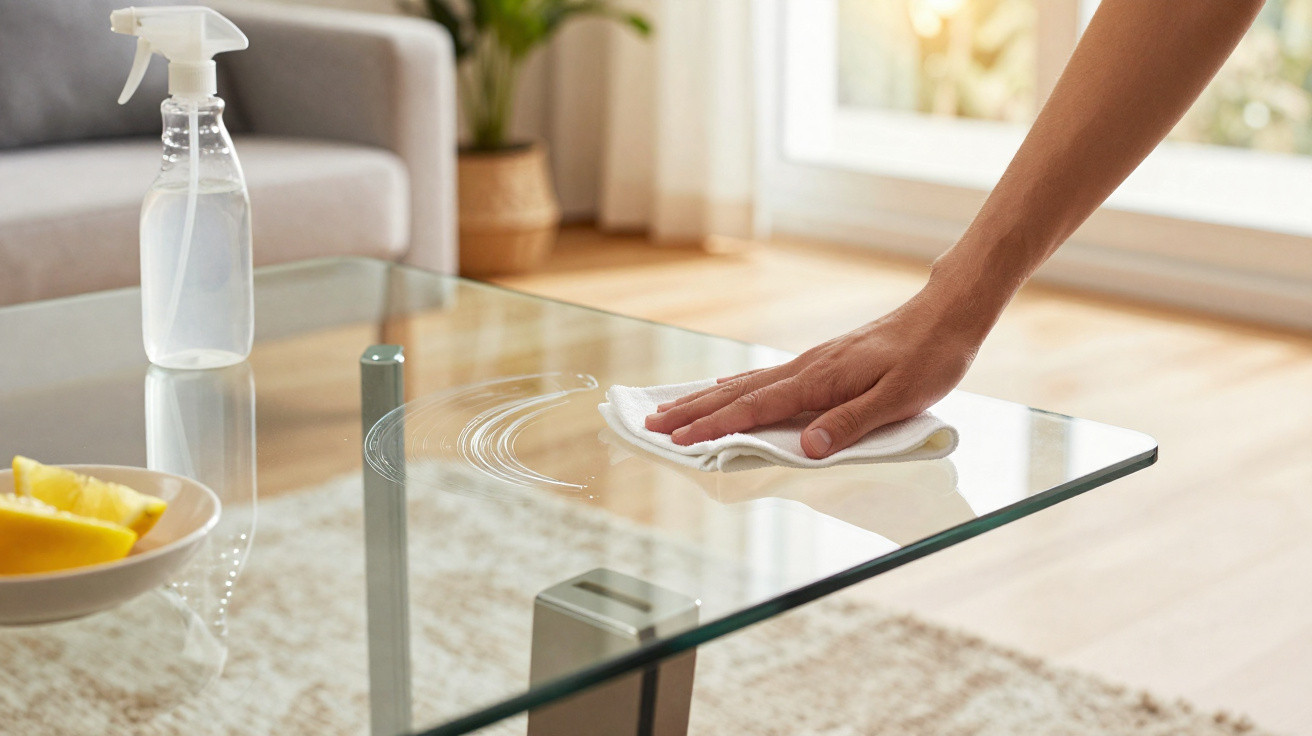
Fingerprints have a habit of appearing just before visitors turn up. You clean the glass table, stand back rather pleased with yourself, and then a beam of late-afternoon sunshine catches it: streaks, smears and faint handprints that seemingly did not exist half a minute earlier. You try again with another cloth, work from a different direction and breathe on the surface like an excessively qualified window cleaner. Still, the table looks... not quite right. Then somebody places a drink down behind you, creating a flawless condensation ring. Your eye starts to twitch.
There is a reason glass tables look irresistible in interior photographs yet prove so maddening in everyday life: they reveal every sign of normal living.
Fortunately, the table itself is not the issue. The difference lies in the cleaning method.
Why glass tables seem to attract fingerprints
First, it helps to understand that a glass table is not usually truly “dirty”. It is simply ruthlessly revealing. Glass conceals nothing: natural skin oils, hand cream, breakfast crumbs and even the pale outline left by a mug resting there for two seconds. The nearest window displays it all like a spotlight at a crime scene.
That is why you may clean obsessively but still think the table looks marked again within an hour. You are not imagining it. Glass is inherently unforgiving.
Imagine a Saturday morning. You have wiped down the entire living room, lit a candle and pulled back the curtains. For perhaps three minutes, the glass coffee table is immaculate. Then your child puts a toy on it. Your partner sets down their phone and picks it up again, leaving behind an oily rectangular shadow. Next come a snack and a laptop. Before long, the tabletop becomes an exhibition of everybody’s fingerprints, as though you are living in a forensic documentary.
This is the understated truth of a shared room: every contact mark settles on the glass, waiting for the next strip of sunlight to reveal it.
There is a straightforward explanation for why fingerprints appear so clearly on glass. Our skin naturally produces sebum, an oil that transfers whenever we touch a surface. On textured, matt wood, the oil disperses and blends in. On glass, it remains on the surface. Light reflects from the smooth finish and makes every mark stand out. The more often the table is touched, the more obvious those marks become.
So, people whose glass tables appear “always perfect” are not necessarily cleaning them more frequently. They tend to use products and routines that limit how readily oils adhere in the first place.
The cleaning routine that stops constant fingerprints
Begin with a single aim: give the glass one thorough clean, then rely on small, almost effortless touch-ups for the rest of the week. You need two essentials: an effective degreasing cleaner and a suitable cloth. A spray bottle containing roughly equal parts white vinegar and water works remarkably well. If the table is heavily smeared with food residue or lotion, add one drop of washing-up liquid.
Mist the surface lightly rather than soaking it. Using a flat-folded microfibre cloth, wipe in overlapping straight lines across the table. Turn the cloth to a dry section, then make a second pass. This final dry wipe creates the crisp, squeaky-clean finish.
This is the point at which many people undermine the result without realising. They reach for lint-shedding kitchen roll or an old T-shirt that has seen much better wash days. Then they scrub in hurried circles, spreading the cleaner around and creating halos. The glass dries unevenly, and the first touch produces a striking oily-looking mark. Does that sound familiar?
Honestly, hardly anyone follows a full routine every day. The target is not “perfect glass always”; it is “smart glass most of the time, with minimum effort”. Invest in two or three good microfibre cloths reserved solely for glass, and get into the habit of wiping with calm, straight movements rather than frantic circles.
When the surface is genuinely clean, one overlooked step can make it more fingerprint-resistant. After cleaning, gently buff the glass with a fresh, dry microfibre cloth carrying a minute amount of glass-safe polish, or even a drop of lemon-scented washing-up liquid that has already dried into the cloth. The intention is not to “coat” the glass, but to leave an almost invisible layer that skin oils do not cling to as easily.
“The trick isn’t cleaning more. It’s making the surface a little less friendly to fingerprints, so they don’t cling so eagerly.”
Then store a small “glass survival kit” nearby:
- A folded microfibre cloth in a drawer or basket close to the table
- A small spray bottle of diluted vinegar or ready-made glass cleaner
- A set of coasters attractive enough that people will genuinely use them
You are not trying to win a cleaning competition; you simply want the glass to stop demanding attention all the time.
Living with glass without losing your mind
Once you have mastered the technique, the biggest change comes from adjusting how you live with the table. A glass item placed in the centre of a busy family room will not remain spotless for long, and that is perfectly fine. The aim is to replace a “constant battle” with a “small, casual reset”. Clean it properly once or twice each week. At other times, give it a 10-second wipe as you pass by with your coffee.
This may involve tolerating a few fingerprints between deeper cleans while subtly changing the household rules around the table. Keep coasters within easy reach. Do not put feet on the glass, however Netflix-heavy the evening becomes. You could also place a tray in the middle to “catch” much of the everyday clutter and smudging.
| Key point | Detail | Value for the reader |
|---|---|---|
| Use the right tools | Microfibre cloth + light vinegar mix, straight-line wiping | A cleaner finish, fewer streaks and less repeat cleaning |
| Protect the surface | Light invisible film, coasters, central tray zone | Fewer noticeable fingerprints during the day |
| Shift habits, not just products | Quick touch-ups, simple rules for family and guests | Less stress and a table that looks cared for without obsession |
FAQ:
- How often should I really clean a glass table? In a busy home, one or two proper cleans each week are sufficient, alongside quick touch-ups when clear marks or drink rings appear.
- Can I use just water and a cloth? You can, although it will not remove skin oils as effectively. Fingerprints will return sooner, and the finish can often look cloudy.
- Is vinegar safe for all glass tables? Vinegar is effective on plain glass, but keep it away from a natural-stone or delicate-metal frame or base; spray the cloth rather than the table itself.
- Do commercial “anti-fingerprint” sprays work? Some do, particularly products designed for screens or glass, but the results differ. Apply lightly first and test a small corner.
- What if my glass table always looks streaky? Streaks commonly result from too much product, unclean cloths or circular scrubbing. Use clean microfibre, less spray and straight-line wiping instead.

Comments
No comments yet. Be the first to comment!
Leave a Comment