
Many people throw out their old white sheets as soon as they develop a yellowish cast. Sweat, detergent residue and poor storage can all be responsible. Yet these textiles – especially older linen, linen-cotton and hemp qualities – are ideal for creative home ideas and durable upcycling projects.
Why yellowed bed sheets are far too good for the textile recycling bag
In most homes, the same thing happens: you tidy the cupboard, pick up an old sheet with a yellow tint and think, “It’s finished – throw it out.” But in reality, its colour often tells only part of the story.
“Yellowing usually means oxidation on the surface – not necessarily damaged fibres.”
Sheets made before the 1990s, in particular, are often constructed from hard-wearing linen, hemp or tightly woven blended fabrics. These materials tend to be substantially heavier, stronger and more breathable than many inexpensive modern bed sheets. They withstand high temperatures and years of use, making them perfect for a second life around the home.
Before an entire pile of bedding goes into a donation or rubbish bag, inspect it closely. Does the fabric feel weighty, cool and tightly woven? If it does, it is very likely to be quality material that can continue serving as decoration or everyday household fabric for decades.
What causes yellow marks in the first place
Yellowing is generally caused by a combination of everyday use and laundry habits. Common triggers include:
- Sweat: Salts, acids and oils penetrate the fibres and alter their colour.
- Detergent and fabric conditioner: Using too much leaves a coating on the fibres, which oxidises over time.
- Damp storage: Bacteria and slight mould growth can cause a grey film and yellow discolouration.
- Temperatures that are too low: Soap residue and body oils remain trapped in the fabric.
- Light and air: UV rays affect fibres, particularly when sheets have spent years in a cupboard close to a window.
The encouraging news is that many of these discolourations are limited to the surface. With suitable treatments, it is possible to restore a surprising amount of their original freshness.
How to make yellowed sheets noticeably whiter again
Anyone wishing to continue using old sheets or turn them into decorative material should begin with a thorough treatment. A few everyday methods work particularly well.
A washing-machine vinegar boost
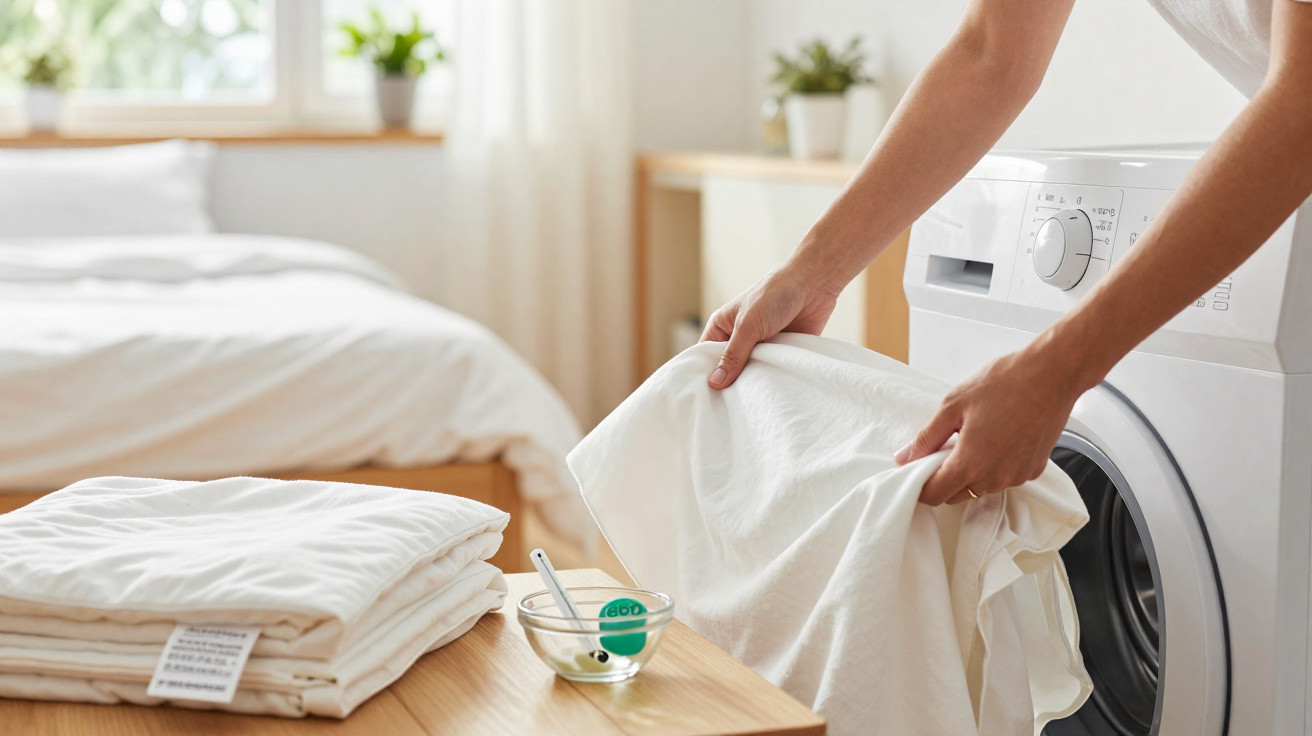
Add 250 ml of white household vinegar to a standard wash, either in the detergent drawer or straight into the drum. It helps release detergent deposits, neutralises odours and reduces grey dullness. Once dry, the sheets will not smell of vinegar; they will simply smell neutral.
A powerful brightener: oxygen bleach
Powdered oxygen bleach, often sold as “percarbonate”, is suitable for thicker, robust cotton or linen sheets:
- Fill a tub or large container with very hot water.
- Add the recommended amount of powder and dissolve it thoroughly.
- Soak the sheets for several hours, preferably overnight.
- Wash them in the machine the following day at 40 to 60°C.
Important: do not use this method on delicate, thin fabrics, and always check the care label first.
Better habits to prevent fresh yellowing
To stop newly brightened sheets from turning yellow again soon afterwards, it helps to review your routine:
- Wash bedding at least every two weeks, or weekly if you sweat heavily.
- Use detergent sparingly; never add extra “just to be safe”.
- Avoid fabric conditioner and use a little vinegar or bicarbonate of soda as a gentler alternative instead.
- Dry outdoors in sunlight whenever possible, as sunlight has a mild bleaching effect.
- Put sheets away only when completely dry, rather than packing them into damp corners.
Why old linen and linen-cotton sheets are genuinely premium material
Finding bedding made from linen, hemp or linen-cotton in a grandparent’s cupboard or at a flea market means you are holding a small rarity. These fabrics offer several benefits:
- High-quality fibres: Tightly woven and often noticeably heavier than today’s standard products.
- Durability: Linen is less likely to fray quickly and withstands many washing cycles.
- Comfortable temperature regulation: Linen can absorb around one fifth of its own weight in moisture without feeling clammy.
- Sustainability: Every additional use reduces the need for new textile production.
Many old sheets were carefully kept for decades, used only occasionally and then stored incorrectly. The fibres themselves are often remarkably well preserved. That makes them suitable for projects for which buying new fabric by the metre would be considerably more expensive.
“Anyone with an old linen sheet has a raw material rather than ‘old baggage’.”
A trending technique: cloud dyeing instead of throwing sheets away
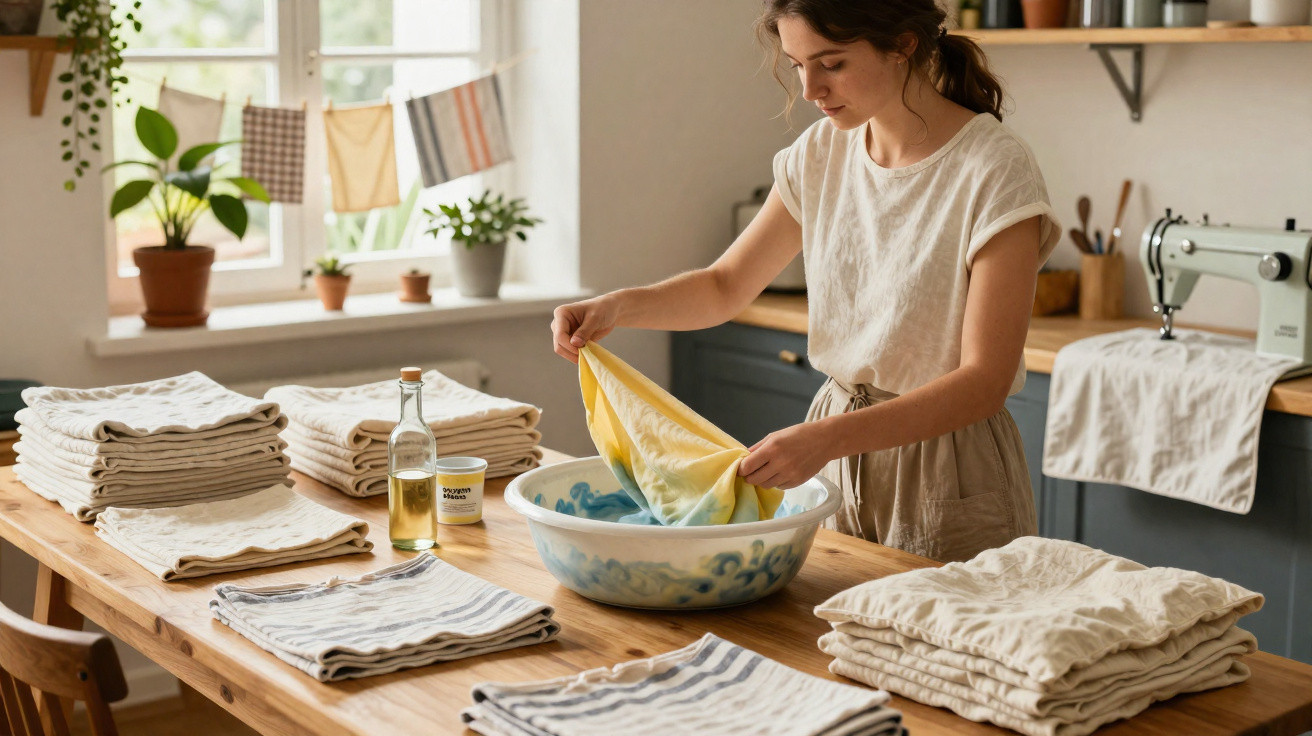
Cloud dyeing is an especially appealing way to disguise yellowed areas visually. Rather than trying to return a sheet to perfect white, this technique turns the yellow tinge into a lively pattern.
Cloud dyeing step by step
- First wash the sheet at 60°C with a little soda crystals or washing soda to remove old finishing treatments and fabric-conditioner residue.
- Gather the still-damp sheet loosely into a large ball.
- Secure it with elastic bands or cord to create folds and creases.
- Mix a high-quality fabric dye, preferably certified and suitable for natural fibres, according to the instructions.
- Either place the fabric ball fully into the dye bath or apply dye to selected areas using a pipette or bottle.
- Follow the processing time stated in the instructions, often around 45 minutes.
- Rinse thoroughly until the water runs clear, then wash as normal.
Because the fabric is gathered, it absorbs the dye unevenly. The finished effect resembles soft clouds, marbling or drifting mist – far more elegant than the classic 1970s tie-dye look.
Practical ideas for old sheets
Once the material has been prepared, it opens up a wide range of projects for the kitchen, dining room and living room. Here are a few ways old sheets can shine.
Rustic table linen with a history
One large sheet from the 1950s or 1960s is often enough to make a tablecloth for a family table. A useful size for many dining tables is around 240 by 140 centimetres. A subtle cloud-dyed finish in grey, beige or a soft red can create a style somewhere between country-house charm and a modern bistro feel.
The offcuts can be sewn into substantial cloth napkins, for example measuring 40 by 40 centimetres. They are nothing like thin paper napkins: the fabric feels high quality, absorbs moisture well and can be hot-washed without difficulty.
Quality tea towels and glass-polishing cloths
Linen makes an excellent material for tea towels and glass cloths. It produces very little lint, dries quickly and leaves no fluff on glass. Sewing several rectangles from an old sheet provides sustainable kitchen supplies for a long time.
Individual cushion covers and home textiles
The effect is particularly attractive when table linen, napkins and cushions share a colour scheme. The remaining parts of the sheet can become covers for sofa cushions, bench pads or chair cushions. Cloud dyeing ensures that no two pieces look exactly alike, creating a lively, handmade appearance.
What to check before starting upcycling projects
Before cutting up old sheets for decorative or practical items, examine a few key points:
- Hold the fabric up to the light: can you see tears, thin areas or badly stretched sections?
- Cut out small holes rather than sewing over them, otherwise they may continue to tear.
- With very old pieces, pull firmly on one corner once: if the fabric tears immediately, it is no longer suitable for everyday use.
- Always use fabric dye and additives according to the instructions, and do not let children use them unsupervised.
If you have sensitive skin, wash dyed fabric two or three times before using it regularly as napkins or cushions. This removes remaining excess dye and potential irritants.
Why the effort pays off in the long run
From a financial perspective, rescuing old sheets quickly makes sense. A large linen tablecloth, new cloth napkins and two matching cushion covers can easily cost a three-figure sum in shops. Using existing sheets, a little dye and some time can produce similar results for a fraction of the cost.
There is also an environmental benefit: every metre of fabric that does not need to be made anew saves water, energy and chemicals. This is especially worthwhile with linen, which is already regarded as relatively resource-efficient, so extending its usable life makes particular sense.
Anyone who has seen a seemingly “finished” sheet turn into a heavy country-house tablecloth or a stack of elegant napkins will automatically sort differently during the next cupboard clear-out: inspect first, clean next, then get creative – and only what is genuinely unusable ends up in the bag.
Comments
No comments yet. Be the first to comment!
Leave a Comment