
Many homes continue to use bleach as a fast answer to laundry that has lost its brightness, yet the truth is less straightforward. Applied incorrectly, it may turn textiles yellow, damage their fibres and produce powerful chemical vapours. When used carefully, it can revive some whiteness and tackle demanding hygiene concerns. However, there is little room for mistakes, and manufacturers are increasingly promoting milder options.
Bleach and white laundry: what really happens
In its usual domestic form, bleach is chlorine-based. It functions by disrupting the chemical bonds in coloured stains. While this can make fabric seem whiter initially, it also affects the textile material itself.
Bleach does not only target stains; it also interacts with the fibres, especially cotton and elastane blends.
For plain white cotton towels and bed linen, a tightly managed bleach wash may lift dull grey tones and destroy microbes. The likelihood of harm increases considerably with blended materials, delicate garments and synthetics.
There is also an optical effect to consider. Numerous modern detergents include “optical brighteners”, which bounce back light to make textiles look whiter. Bleach removes some of these molecules. As a result, clothes can appear cleaner following a bleach wash, while gradually losing their crisp, freshly bright appearance.
Can you safely bleach laundry at home?
The brief answer is: occasionally, provided there are firm limits and a careful process. Rather than asking “can I?”, it is better to ask “should I use it on this particular item?”
Read the care label like a pro
Most garment labels feature standard symbols that effectively indicate whether bleach is permitted. Overlooking these instructions is the starting point for many laundry mishaps.
- An unmarked triangle: bleach is theoretically permitted.
- A triangle with two diagonal lines: only oxygen-based (non-chlorine) bleach is suitable.
- A crossed-out triangle: do not use any type of bleach.
Where the label is missing, assume the garment is delicate. A gentler approach is preferable to a costly error.
The right way to dilute bleach
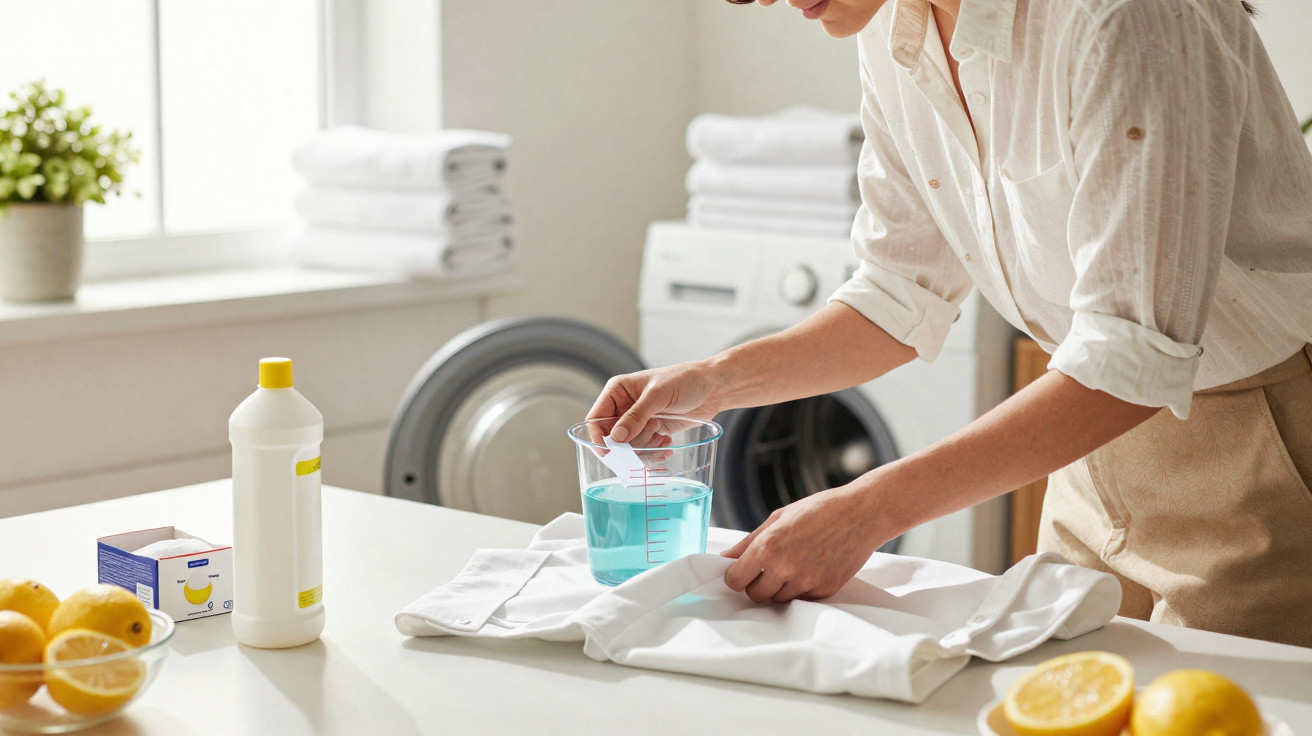
Undiluted bleach must never come into direct contact with clothing. It requires a substantial amount of water. For disinfecting tasks, a typical household mixture is around one part bleach to 10 parts water. When brightening laundry in a washing machine, many textile specialists recommend an even more diluted solution.
Always add bleach to plenty of water first, then introduce the laundry, never the other way around.
Use cold or lukewarm water. Heat speeds up chlorine release and may increase harm to fibres and elastic materials.
| Use | Type of fabric | Bleach advice |
|---|---|---|
| White cotton towels | Thick, 100% cotton | Occasional diluted use possible, if label allows |
| White T-shirts | Cotton with elastane | High risk of yellowing and weakening seams |
| Baby clothes | Soft cotton, delicate | Generally avoid chlorine; prefer oxygen-based products |
| Coloured garments | Any | Do not use chlorine bleach; colour loss is likely |
When bleach turns white laundry yellow
A stubborn misconception is that yellowing means you should add more bleach. In most cases, this worsens the issue. Different chemical reactions can cause once-white materials to become cream, beige or noticeably yellow.
With synthetic materials including polyester, chlorine may react with the fibre itself and alter the way it reflects light. Repeated or heavy bleaching of cotton makes its surface rougher, allowing detergent residue, limescale and body oils to collect. In some circumstances, those deposits develop a yellow tint.
Hard water makes the problem more pronounced. Calcium and magnesium minerals in tap water can react with both bleach and detergent, creating deposits that do not fully wash out.
Health and safety: more than just a strong smell
Bleach vapours clearly indicate that you are handling a harsh chemical. In a cramped laundry space with limited ventilation, they may irritate the eyes, nose and lungs.
Never mix bleach with other household cleaners, especially anything containing acids or ammonia.
Combining bleach with toilet cleaner, vinegar or some descaling products may produce toxic gases. Even tiny quantities present a risk in enclosed areas. Keep laundry routines uncomplicated: use detergent and no more than one additional product that is explicitly labelled as compatible.
Alternatives that actually whiten laundry
Households do not have to choose between grey, dull sheets and aggressive chlorine. A range of alternatives can brighten laundry with fewer unwanted effects.
Oxygen-based bleaches and brightening agents
A large number of stain removers and “whitening boosters” use sodium percarbonate or comparable ingredients. When exposed to water, they release oxygen instead of chlorine. Their effect takes longer, but they are generally gentler on fabrics and colours.
They can often be used on white items and pale colours, provided both the product instructions and garment label permit it. Their results build gradually, with repeated washing delivering the strongest outcome.
Everyday methods that make a visible difference
Before using a powerful additive, modest adjustments to washing habits can improve worn-looking whites:
- Keep white loads separate from dark items to prevent colour transfer.
- Avoid cramming the drum, allowing water and detergent to move freely.
- Measure detergent correctly for the hardness of your water.
- Select a warmer wash from time to time for cotton sheets and towels.
- When practical, dry white washing in sunlight, as UV light provides a mild bleaching action.
These measures can often bring back brightness after several washes, particularly where greying results from detergent deposits or mixed-colour loads.
Typical real-life scenarios with bleach
Consider a household whose white cotton bath towels have developed a musty smell after many months of low-temperature washing. A single wash using a small, label-approved amount of bleach, then rinsed thoroughly, may help tackle odours and reduce some greyness. It should not become a weekly routine, however, as the fibres can become thinner and fray sooner.
Alternatively, consider a much-loved white T-shirt with a logo that is mildly stretchy and worn against the skin. Perspiration, deodorant and frequent washing have made it look dull. In this case, bleach carries risks. The elastic fibres can weaken, while a printed motif may crack or fade. An oxygen-based treatment with a slightly warmer wash offers a safer option.
Key terms that often confuse shoppers
Cleaning-product labels seldom use plain language. Several descriptions refer to very different effects:
- Disinfectant: intended to destroy microbes rather than brighten textiles.
- Whitener: generally designed to improve visible brightness and may include optical agents.
- Stain remover: aimed at noticeable marks, rather than the fabric’s overall colour.
- Non-chlorine bleach: frequently oxygen-based and usually kinder to textiles.
Knowing what these terms mean makes it easier to choose a product for your actual objective: hygiene, appearance or both.
Environmental and long-term fabric impacts
Using chlorine regularly has effects beyond one laundry load. Wastewater treatment facilities can process low levels, but frequent and heavy use increases chemical pollution in rivers and coastal waters. For this reason, many manufacturers recommend keeping bleach for infrequent, targeted uses, such as sanitising cloths after illness.
Textiles also suffer. Reduced fibre lifespan means sheets, towels and garments need replacing earlier, creating additional textile waste and increasing household spending. A more measured method, combining heat, oxygen-based products and effective load separation, will usually provide cleanliness while extending the life of clothing.



Comments
No comments yet. Be the first to comment!
Leave a Comment