
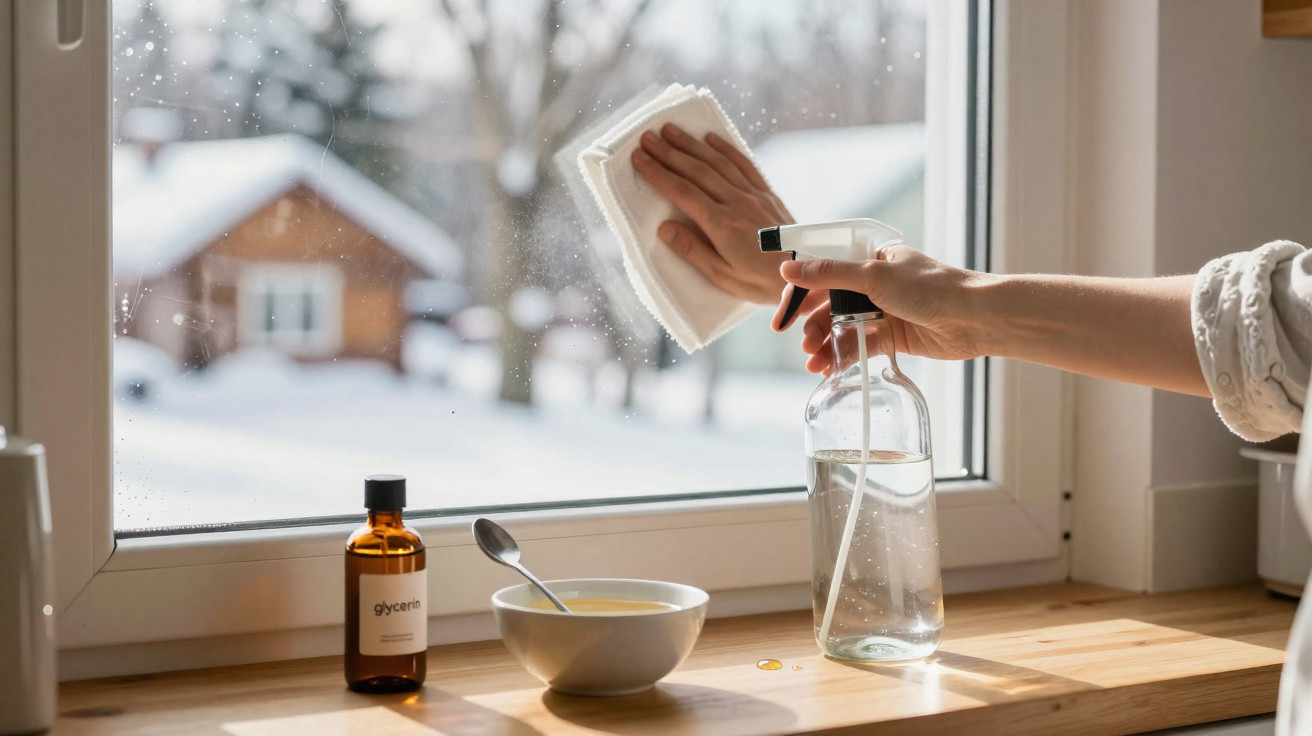
Many people may be surprised by the solution they end up using.
In colder parts of the country, homeowners and building managers are increasingly turning to an inexpensive addition to ordinary cleaning water. It helps glass remain clean for longer, reducing the need for weekly wiping. The approach relies on the way moisture reacts on chilled glass.
Why glycerin is gaining ground this winter
Stirring a spoonful of glycerin into warm cleaning water leaves an ultra-thin coating on the glass. This layer alters the way water droplets spread and run off. With less beading, there are fewer streaks, fewer mineral outlines left by rain and less dust adhering to the surface. As a result, windows can stay clearer between cleans, including when temperatures fall and indoor moisture levels increase.
Use 1 tablespoon of glycerin per 1 liter of warm water to leave glass bright, slick and less prone to condensation marks.
Those using the mixture say they see fewer shower-related streaks and less early-morning misting. One facilities manager who trialled it in several buildings observed that the shine lasted longer, even during wet and windy weather. This is notably different from the familiar pattern of wiping, waiting for the next shower, then wiping again.
The science in plain words
Glycerin is a humectant, meaning it retains moisture and helps water spread more evenly. On glass, it forms a fine, consistent film. Water therefore does not collect into large beads that later dry into rings. Condensation will still develop on cold days, but it forms a more even sheet and leaves fewer traces as it dries. The glass consequently appears clean rather than unevenly marked.
How to mix it, step by step
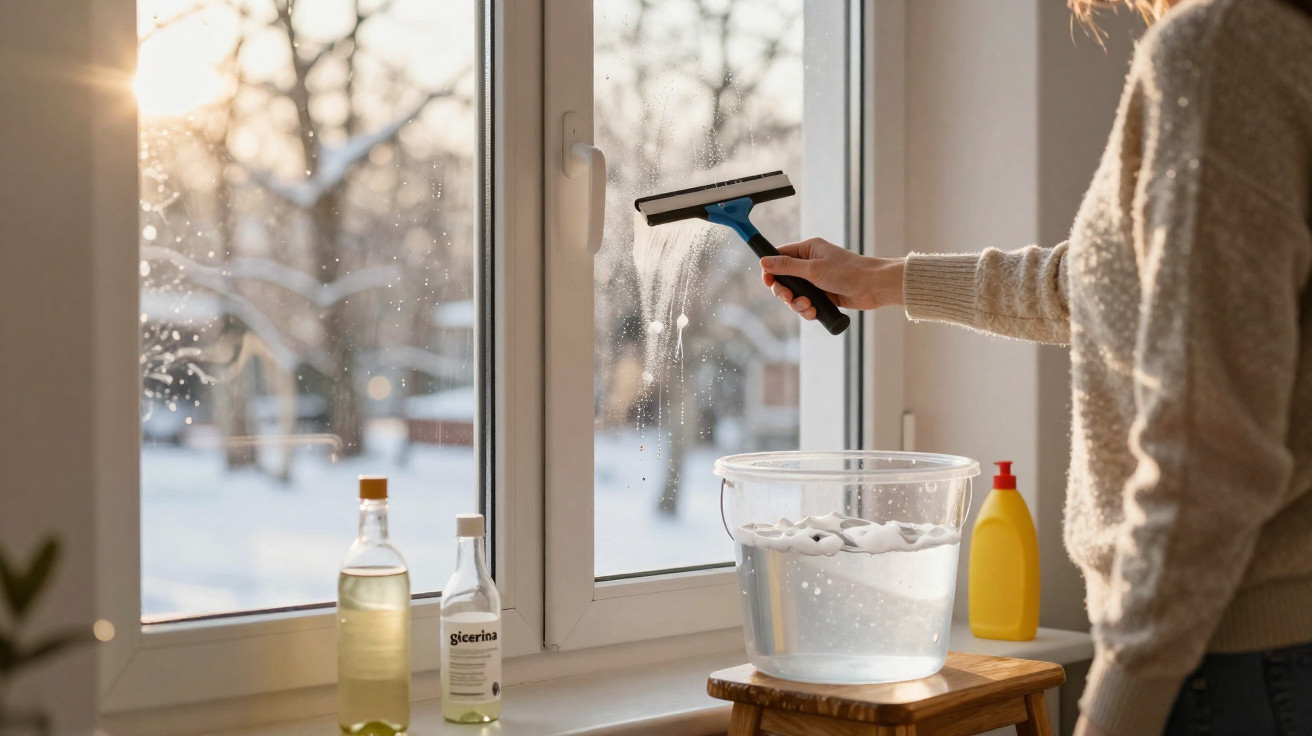
Keep the process straightforward: no specialist window cleaner or expensive equipment is required. All you need is a bucket, a soft cloth and a squeegee.
Refresh the treatment every 4–6 weeks to maintain the protective film through the season.
Ratio, tools, timing
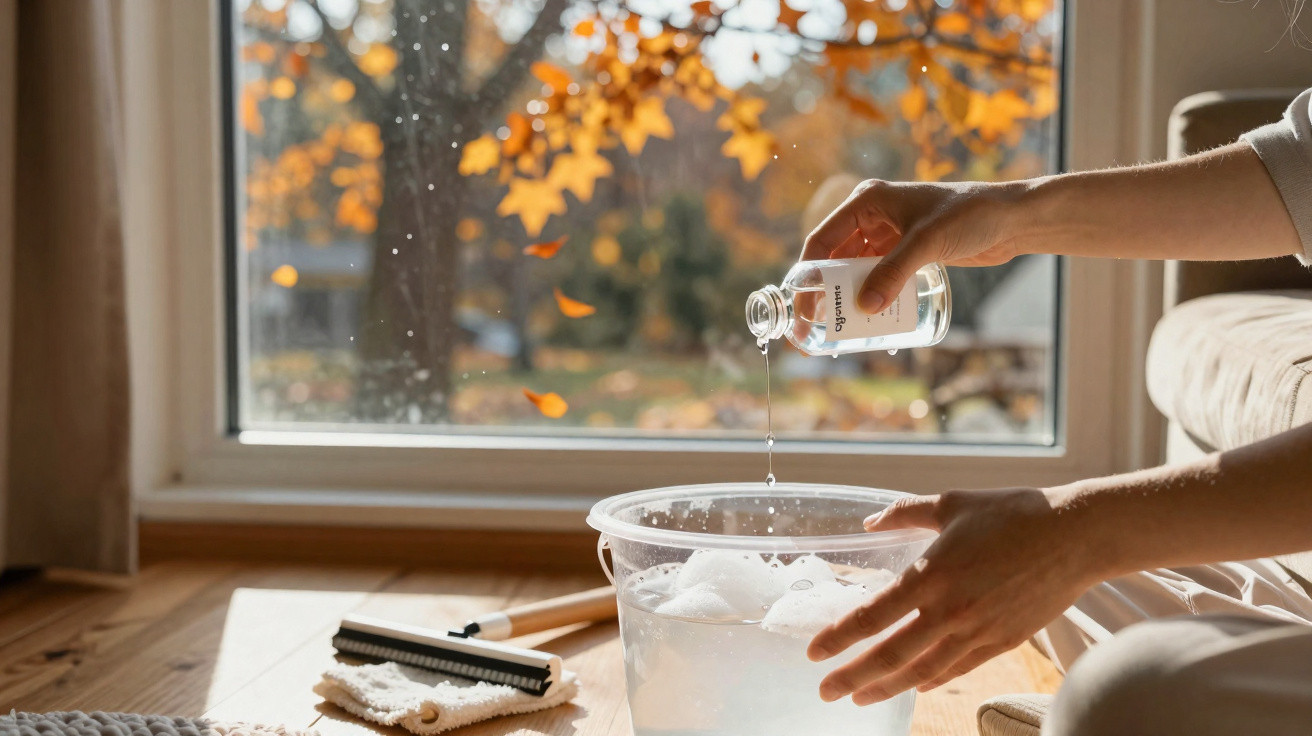
- Fill a bucket with 1 litre of warm water, add 1 tablespoon of glycerin and stir gently.
- To tackle limescale marks, include 3–5 drops of white vinegar. For oily fingerprints, add a pea-sized amount of mild washing-up liquid.
- Wash the pane with a microfibre cloth, then use a good squeegee from top to bottom to remove the water.
- Dry the edges and corners using a clean microfibre cloth to prevent any final drips.
- Reapply roughly once a month. During particularly stormy weeks, a quick top-up helps keep the film consistent.
Choose a dry day with cloud cover if possible. Strong sunlight can dry the mixture too rapidly, leaving subtle curved marks behind. When working indoors, open a window slightly to lower humidity.
Does it beat vinegar or soap?
Vinegar removes mineral deposits, while soap breaks down grease. Glycerin instead affects what happens after the clean: how long the glass retains a polished appearance and how many condensation smears appear the following morning.
| Method | Streak control | Longevity | Condensation resistance | Typical cost | Eco profile |
|---|---|---|---|---|---|
| Glycerin in water | High | 4–6 weeks | Good | Low per litre | Biodegradable |
| Vinegar in water | Medium | 1–2 weeks | Limited | Very low | Biodegradable |
| Dish soap mix | Medium to high | 1–2 weeks | Low | Low | Varies by brand |
| Commercial spray | High | 2–3 weeks | Low to medium | Medium | Varies; read label |
Home testing indicates that glycerin can remain effective longer than plain vinegar or soap mixtures. Powerful cleaners may leave glass looking excellent initially, but can then draw in dust or create haze when they leave residue. The glycerin solution is intended to provide a clean result without that tacky finish.
Practical tips that stop streaks before they start
Several simple practices can avoid most streaks and mineral halos.
- Keep two buckets: one containing the glycerin solution and another filled with clean water for rinsing the cloth or squeegee.
- Change cloths regularly, as a soaked cloth can spread dirt back over the glass.
- Use straight squeegee strokes and wipe its blade with a dry cloth after every pass.
- Clean from top to bottom, followed by the side frames and sills. Dirt from the frames readily causes streaking.
- Do not use excess glycerin, as too much may create a light film. Keep to 1 tablespoon per litre.
Cost, safety and environmental angles
One small bottle of glycerin can last a considerable time. For many households, a 250 ml bottle is enough for the entire winter. Cleaning less often also means using less water and sending less detergent down the drain. Glycerin is biodegradable and mild on most materials.
A few precautions still matter. Any spills on the floor can be slippery, so clean them immediately. Store the bottle out of reach of children and pets. There is no need to combine it with strong chemical products, and it should not be mixed with them.
What to test first
Try the mixture on an inconspicuous area first if you have specialist glazing, such as tinted films, anti-reflective coatings or older leaded windows. Before treating the full pane, look for smearing or rainbow effects. On vehicle glass, avoid applying it inside windscreens that have sensor areas or coatings; a light treatment on exterior side windows is suitable, but always follow the vehicle manufacturer's guidance.
This winter routine fits into a once‑a‑month calendar: mix, wash, squeegee, buff edges. The rest of the time, glass mostly takes care of itself.
What real-world use looks like
Users in damp coastal areas say treated glass copes better with salt spray, leaving fewer pale, chalky curves after rain. In cold inland properties, morning mist on bedroom windows reportedly dries as an even layer rather than into patchy rings. Office managers have also reported fewer complaints about rain-smeared views. The recurring benefit is saved time: fewer wipe-downs and quicker cleaning rounds.
Extra ideas for colder months
Overnight condensation develops when warm indoor air comes into contact with cold glass. Pair the glycerin mixture with a few adjustments: avoid placing drying racks close to windows, leave blinds slightly open to improve airflow and keep the bathroom extractor fan running longer after showers. During exceptionally damp weeks, a compact dehumidifier beside troublesome panes can help.
For the figures, a standard bucket holds around 3 litres, requiring 3 tablespoons of glycerin for each batch. A 250 ml bottle provides approximately 16 tablespoons, enough for five full winter buckets. If you clean once a month between November and March, there should probably still be some remaining for spring.
If you enjoy testing methods, use two neighbouring panes to compare results: clean one with the glycerin solution and the other with your normal spray. Observe their appearance after rain and count how many days pass before each needs another wipe. This simple comparison provides a personal reference point for your local climate and type of glazing.


Comments
No comments yet. Be the first to comment!
Leave a Comment