
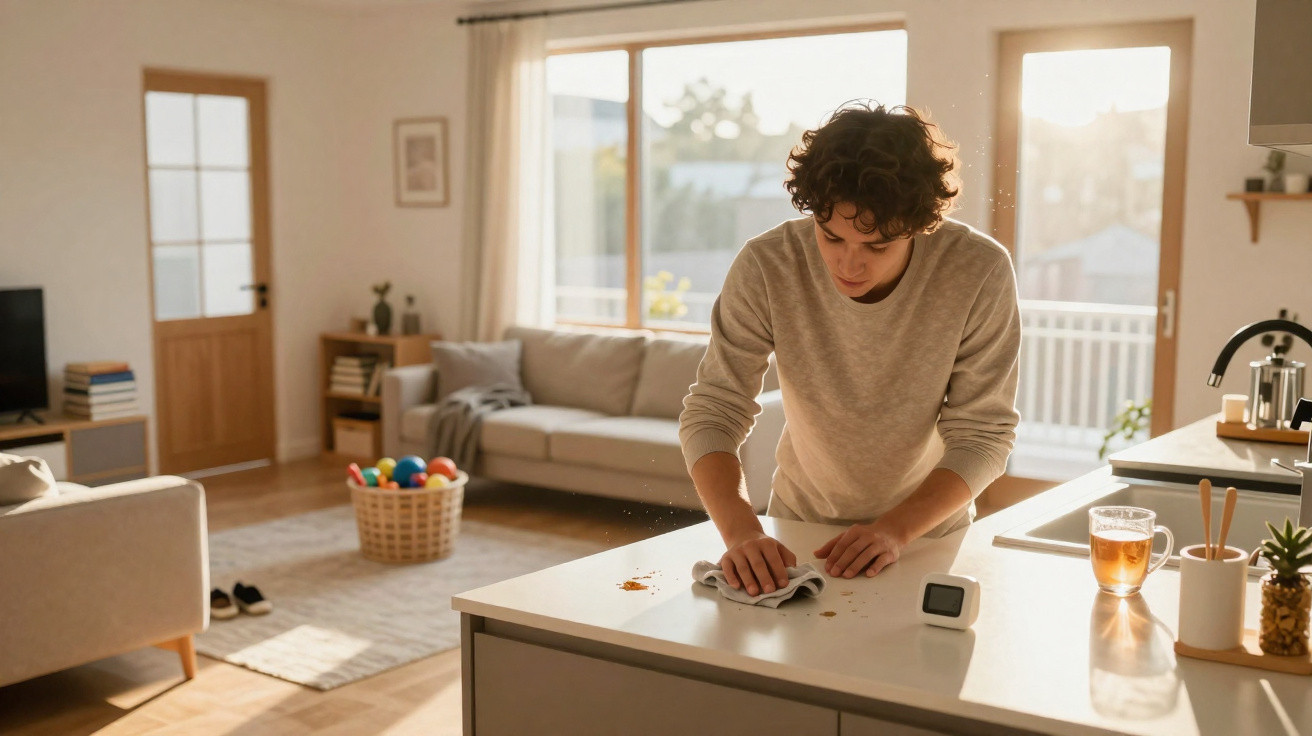
It is Sunday evening, and your living room could pass for an advert for fragranced cleaning products. The floors gleam, the cushions are plumped up, and a light lemon scent still lingers in the air. You are exhausted but quietly pleased, sitting on the sofa and scrolling through your phone while admiring the results like a miniature rented showroom.
You blink, head to bed and get on with the week... then, by Wednesday night, the very same room feels sticky, cluttered and a little chaotic once more. The coffee table has collected assorted bits and pieces, dust has settled again on the TV unit, and the hallway resembles a shoe museum.
Nothing major occurred. No one wrecked the room. And yet, your “big clean” has disappeared.
So where did all that effort go?
Why your big cleaning days disappear within hours
There is an odd disconnect between the effort we put into cleaning and how briefly the results tend to last. You scrub, organise and fold, and everything looks brilliant for a while... before everyday life gradually reverses it.
One reason is that we approach cleaning as a rescue operation. We wait until the visual clutter becomes unbearable, then attack it with bin bags, sprays and a playlist. It feels dramatic, productive and rewarding.
The room changes fast.
The habits that caused the mess, however, stay exactly the same.
Take a woman I interviewed - we will call her Emma. She said that she spends nearly every Saturday morning “resetting” her flat. It takes at least two to three hours. She changes the bedding, vacuums, cleans the mirrors and clears clutter from surfaces.
By Saturday afternoon, the place is ready for Instagram. By Thursday night, she is apologising to people as they arrive. “Sorry for the mess, I’ve been busy.” The pattern happens so regularly that she has begun to question whether she is simply bad at adulting.
She is not.
She is doing what most of us do: concentrating on the visible mess rather than the gradual daily build-up behind it.
What usually ruins the long-term impact of cleaning is not grime. It is systems - or, more accurately, the absence of them. When every item in your home lacks a clear, sensible “home”, it starts to drift. Post travels from bag to table to chair. Keys shift from bowl to worktop to pockets. Clothes circle between the bed, chair and laundry basket, seldom ending up where they should.
Cleaning deals with the symptom - items spread around the room - but only temporarily. Unless you establish new default behaviours, the mess returns through the same familiar patterns.
The room is not fighting back. It is simply responding to your routines.
Small daily habits that keep your home calm
If deep cleans are marathons, short daily bursts are what you need. Keep them to five to fifteen minutes at most. Nothing ambitious. No candles, special gloves or designated “cleaning day” mindset needed.
Choose small anchor points already built into your day: after breakfast, before heading out, when you return home or just before bed. Connect one micro-task to each moment. Clear the kitchen worktop after coffee. Empty your bag and sort paperwork when you arrive. Fold the throw and clear the sofa before sleeping.
The aim is not perfection; it is to slow the drift towards chaos.
Many people get caught in an “all or nothing” trap. If they cannot complete a full tidy-up, they do nothing. If the sink is already full, they decide to “deal with it later”, which often means “when it becomes unbearable”.
That is when resentment starts to grow. The home begins to feel like evidence of personal failure rather than a place to live. People then binge-clean while feeling angry and guilty. Afterwards, they burn out... and the disorder builds again.
Here is the honest reality: lasting order depends far more on dull consistency than on epic cleaning days. Of course, no one truly manages this every day. Even so, doing it three days out of seven can transform the overall baseline.
“I stopped trying to ‘clean the house’ and started focusing on leaving each room 10% better than I found it,” a reader told me. “That’s when things finally started to stay calm.”
To put this into practice, make a straightforward visual “maintenance list” that suits your own life rather than an idealised home influencer’s version of it:
- 1–2 minute morning tasks (bed, dishes, one clear surface)
- 1–2 minute evening tasks (sofa, entrance hall, kitchen sink)
- One 10-minute reset slot each day (pick whichever room is bothering you)
These small actions may not impress anyone individually.
But together, they quietly safeguard the effort you have already put in.
Stop fighting mess and create a livable rhythm
There is a particular sense of relief in no longer expecting your home to appear “freshly cleaned” at all times. Properly lived-in homes breathe, change and gather small signs of life around their edges.
The real change comes when you stop waiting for mess to become painful and instead create a rhythm that keeps it gentle and manageable. Notice your friction points - the areas that fill up first and the habits that repeatedly catch you out - then adjust them gradually, one by one.
Some people describe this as routines; others call it flow. Fundamentally, it means choosing to let your energy produce results that last longer than 48 hours.
| Key point | Detail | Value for the reader |
|---|---|---|
| Move from “big cleans” to micro-routines | Link 5–15 minute tasks to moments that already happen in your day (morning, arriving home, bedtime) | Cuts the effort required while making spaces consistently calmer |
| Improve systems, not only surfaces | Give every regularly used item a clear, logical home (post, keys, bags, shoes) | Speeds up tidying and stops the same clutter from returning |
| Choose “good enough” over perfection | Prioritise small daily resets rather than magazine-standard results | Reduces guilt, creates sustainable habits and makes cleaning feel easier |
FAQ:
- Why does my house look messy again so quickly? Because the habits and systems underneath have not changed. You cleared the visible clutter, but everyday routines continued to feed it back into the same areas.
- How much time should I spend on daily cleaning? For most people, 10–20 minutes broken into small chunks is enough to maintain a basic level of order after the first deep clean.
- Where should I start if everything feels overwhelming? Pick one “power zone”: the entrance hall, kitchen worktop or sofa area. Keep that single zone tidy for a week. It can serve as a visual anchor while everything else improves gradually.
- Do I really need routines, or can I just clean when things get bad? You can, but it will cost you more time and stress. Routines make cleaning lighter and more predictable instead of turning it into exhausting emergency missions.
- How do I get other people in the house to help? Give each person 1–2 small, specific responsibilities linked to a moment in the day (“after dinner, you clear the table”). Defined roles work better than vague speeches about how they “should help more”.
Comments
No comments yet. Be the first to comment!
Leave a Comment