
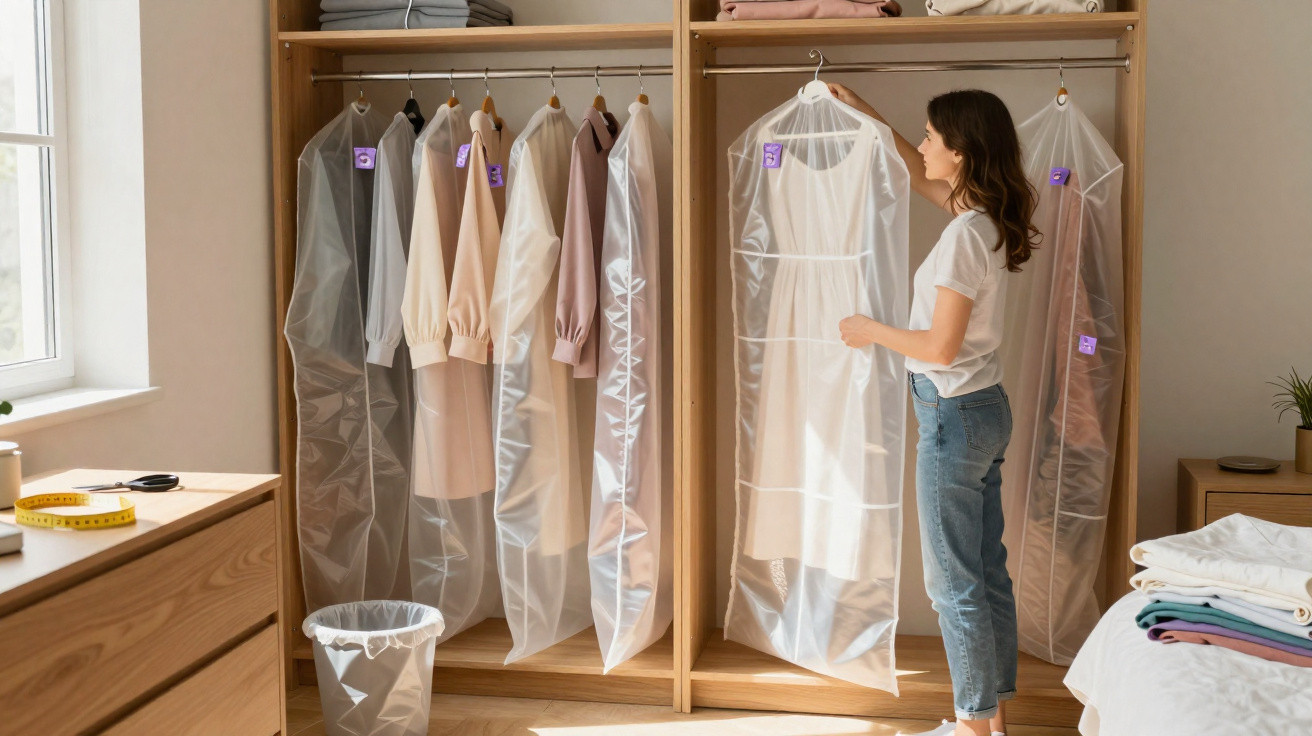
An old bedsheet and a few minutes of your time can protect your winter coats, suits and favourite dresses better than any plastic cover.
When reorganising the wardrobe for spring, it is easy to reach automatically for shop-bought plastic garment covers. They are quick to buy and slip on, but they are not particularly kind to fabrics over the long term. A much more practical alternative is probably already in your cupboard: old bedding. Although it may sound like a makeshift solution, it provides remarkably effective clothing protection while saving both money and waste.
Why plastic does more harm than good in the wardrobe
Moisture, mould and odours: the hidden issue
Clear plastic covers appear convenient: you can immediately see what is hanging inside, and everything seems safely wrapped up. Yet behind that film, problems can develop that often only become obvious when it is too late.
“Plastic seals clothing in airtight conditions – turning the wardrobe into a mini greenhouse for moisture and odours.”
This is what happens in practice:
- Residual moisture from wear or washing cannot escape.
- Condensation can form, particularly when room temperatures fluctuate.
- Mould and mildew marks find ideal conditions, especially around collars and shoulders.
- Blocked fibres: fabrics can no longer “breathe”, leaving materials dull and brittle.
There is another effect that is often overlooked: synthetic covers quickly become statically charged through friction. This attracts dust and tiny particles – precisely what they are meant to keep away. Fine knits and lightweight fabrics can gradually take on a noticeably roughened appearance.
How natural fabrics improve airflow in the wardrobe
Old cotton or linen sheets behave very differently. Their fibres are porous, allowing them to absorb moisture and release it again. Air can circulate while dust does not have unrestricted access.
The key benefits are:
- Breathable: clothing stays protected without being sealed airtight.
- Moisture-regulating: cotton and linen help buffer changes in the room climate.
- Gentle on delicate fabrics: there is no rigid, seemingly rough plastic surface creating friction.
- No plastic smell that can cling to clothing.
“A simple sheet prevents exactly what plastic causes: trapped heat, condensation and musty, ‘imprisoned’ clothing.”
Turn an old bedsheet into a clothes protection cover
Materials most households already have
This trick requires neither a sewing studio, specialist supplies nor a shopping trip. In most cases, everything you need is already at home:
- A standard bedsheet or old duvet cover made from cotton or linen
- Sharp fabric scissors
- A needle and thread, or a sewing machine if you have one
- Sturdy wooden hangers or good-quality clothes hangers
Sheets with small marks or thin patches, which no longer look smart enough for the bed, are ideal. They are perfect for protecting clothes in the wardrobe.
Step-by-step: from bedsheet to protective cover
A few simple steps turn old fabric into a cover that can easily replace expensive garment covers.
- Decide on the size: Allow a rectangle of around 100 x 60 cm for a coat or dress. Use extra length for particularly long coats.
- Cut the fabric: Lay the sheet flat and cut out the rectangles you need.
- Fold it: Fold each piece in half lengthways to create a kind of “pocket”.
- Sew it: Stitch together both long sides and the bottom edge. Machine or hand sewing will both work – it does not need to look perfect.
- Make an opening for the hook: Cut a small slit in the centre at the top, only large enough for the hanger hook to pass through.
- Put it on: Hang the item on its hanger, feed the hanger through the slit from inside, then slide the cover over the garment.
“One double bedsheet can often be transformed into several covers – for jackets, dresses, suits or costumes.”
Noticeable changes in your wardrobe
Less yellowing, less mustiness, more freshness
Anyone with expensive shirts or blouses will know that lighter fabrics can soon develop yellowish marks when stored incorrectly, particularly on shoulders or collars. These traces are often caused by moisture that has been unable to escape.
A breathable fabric cover has the opposite effect:
- Damp air no longer builds up around the textiles.
- Odours from a cellar, loft or poorly ventilated wardrobe are far less likely to settle into the fabric.
- After months in the wardrobe, clothes feel surprisingly “fresh” rather than heavy or clammy.
This makes a significant difference at seasonal changes, when winter coats are left unused for several months. Opening the wardrobe door brings no stale smell, only normally scented clothes that are ready to wear.
A tidier look and less plastic waste
There is a further benefit that many people come to appreciate: the wardrobe looks calmer. Rather than a jumble of plastic covers, you have matching, soft fabric covers in muted shades. The contents are less visible, but the overall result appears tidier and more refined.
“Every homemade protective cover replaces a bought plastic cover – saving money, waste and the hassle of disposal later on.”
If you have several sheets in different tones, you can even use colour coding: light fabric for summer pieces, for example, and darker material for winter wardrobes. The system remains practical even though the contents are not transparent.
Extra practical tips for even better textile protection
Small effort, major results
A few additional habits can increase the lifespan of your clothing even further:
- Let clothes dry completely before putting them in the wardrobe, including after ironing.
- Choose wooden hangers rather than wire hangers to protect the shoulders of garments.
- Allow gentle airflow in the wardrobe, for instance by leaving the doors open from time to time.
- Place natural scented sachets containing lavender or cedarwood near the covers to deter moths.
Those who own delicate fabrics such as silk or cashmere benefit especially from fabric covers. These materials react sensitively to temperature changes and moisture, and retain their shape much better in cotton or linen covers.
Other ways to use this method
This idea is not limited to a conventional wardrobe. Leftover sheet fabric is also suitable for:
- Protective covers for handbags and rucksacks
- Covers for hat boxes or stacks of blankets and cushions
- Fabric bags for spare bedding or tablecloths on a shelf
Anyone who enjoys sewing can use the offcuts to make small bags for scarves, sportswear or travel clothes. This keeps the wardrobe organised in the long term without needing to buy new plastic storage boxes.
This simple idea shows that specialist products are not necessary for storing clothes well. An old bedsheet and a few stitches with needle and thread create breathable protection that keeps winter coats, business suits and favourite dresses in much better condition between seasons.



Comments
No comments yet. Be the first to comment!
Leave a Comment