
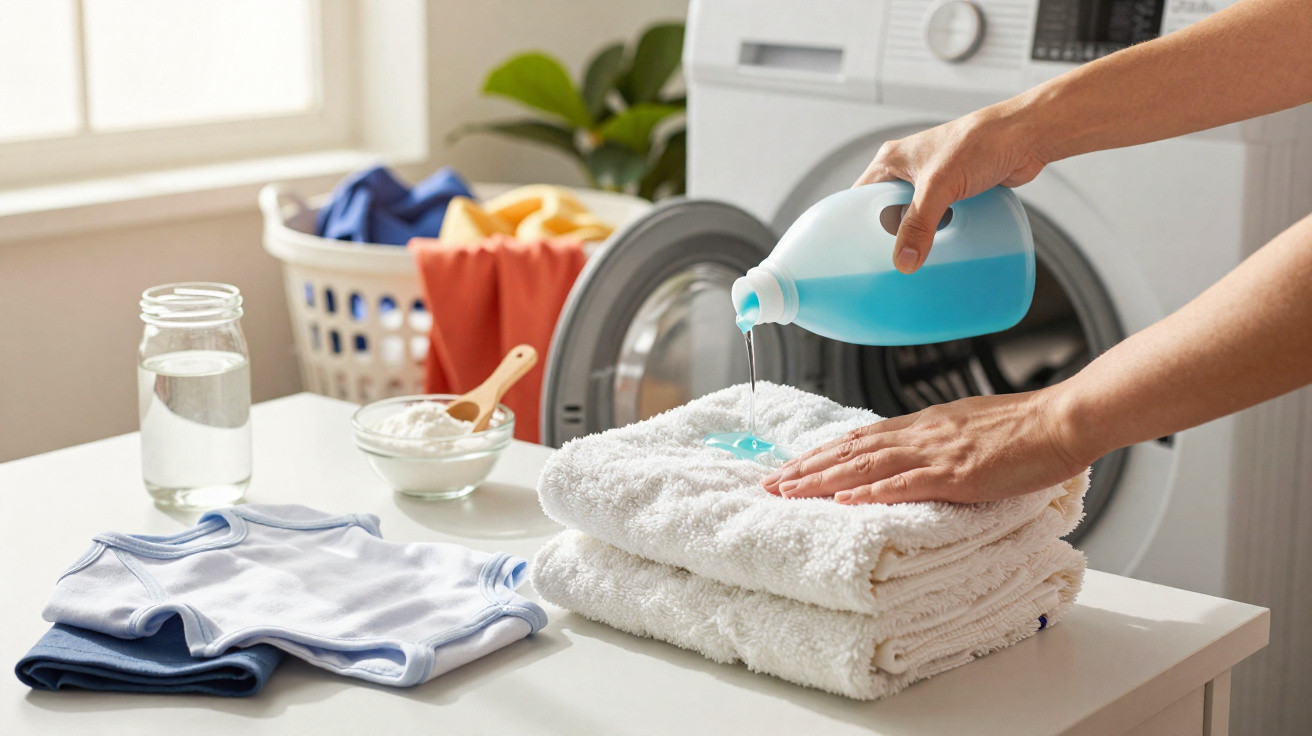
The bottle is nearly finished, yet you still turn it upside down and wait for the final blue drops of fabric softener to run into the dispenser drawer. Its scent is familiar and comforting, almost evocative of childhood. You shut the door, press start and feel as though you have taken good care of your clothes. They will be softer, more pleasant and cleaner. Won’t they?
Forty minutes later, as you hang up your T-shirts, you notice that your favourite black one looks slightly… worn out. It seems less substantial and somewhat limp. You blame the washing machine, the water supply or a budget clothing label. You do not blame the fragranced liquid you have used for years. It feels like an indulgence rather than a possible culprit.
But some specialists are beginning to voice something few people want to hear.
That silky softness conceals gradual, invisible damage
There is an odd contradiction in our bathrooms. We spend more than ever on “quality” clothing: better tailoring, more appealing fabrics and that jumper you promised yourself would last for years. Yet we soak it all in a product designed to cover those same fibres in a chemical coating. Softness on the first day, disappointment by day 200.
At first glance, fabric softener appears to be an obvious friend. It has a spa-like fragrance and promises cloud-soft laundry. However, textile engineers and laboratory technicians repeatedly make the same finding: regular use gradually compresses, weighs down and degrades fibres. It does not cause a dramatic rip, but rather a near-imperceptible form of wear.
You will not notice it straight away. Eventually, though, colours fade more quickly, towels no longer absorb as they should, and sportswear develops a dull, greasy feel that never quite disappears. You assume that your clothes are “getting old”. The real explanation may be much closer to the product you pour into the drawer on every wash day.
From fluffy to flat: what really happens inside your washing machine
Imagine your favourite T-shirt viewed through a microscope. Instead of the smooth surface visible to the naked eye, there is a landscape of minute fibres: tiny strands that hold air, moisture and movement. With every wash, fabric softener applies a fine oily layer of cationic surfactants to these fibres. These compounds make fabrics glide and feel smooth, much like lotion on skin.
But fabric is not skin. The coating remains in place. Over repeated washes, it builds up and fills the small gaps between fibres, preventing them from moving naturally. Towels become less absorbent, technical underwear loses its ability to “breathe”, and yoga leggings can feel stifling during exercise. Soft to the touch doesn’t always mean healthy for the fabric.
One textile specialist compared it to “putting wax on your clothes every week”. Initially, the sheen can look impressive. In time, the coating cracks, traps dirt and compromises the material it was intended to protect. This is when people begin blaming the label, the cost, the tumble dryer or anything else but the blue liquid that has quietly been doing its job a little too effectively.
When softness turns against you: towels, sportswear, baby clothes
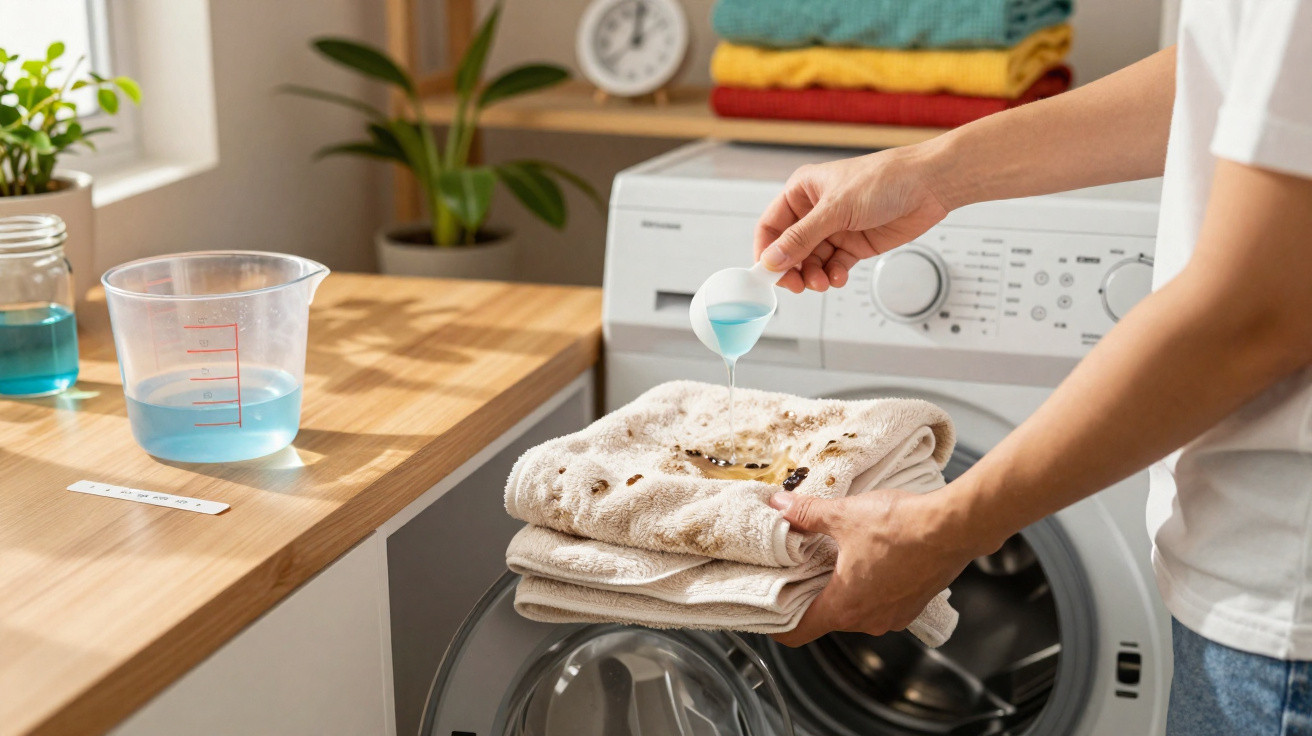
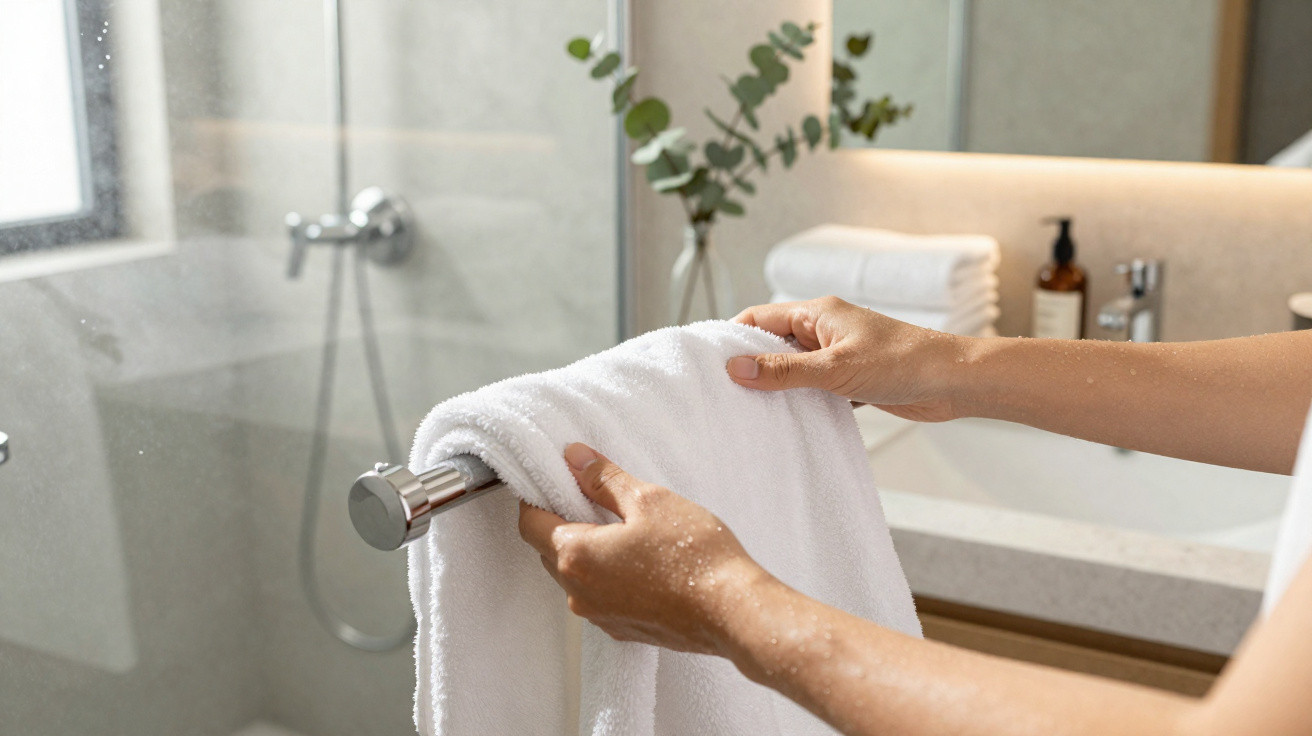
Consider towels. When they are new, they are thick, plush and highly absorbent. After several months of liberal fabric softener use, they may start moving water over your skin instead of soaking it up. They dry less effectively, develop a damp smell more quickly and need washing more often. That means further washing, more friction and more damaged fibres. It is a cycle.
Sportswear presents another issue. Synthetic fabrics are designed to draw sweat away from the body and allow heat to escape. The technical phrase for this is “moisture management”. Now picture every microscopic channel being filled with a waxy coating. The garment can no longer fulfil its function. You get hot sooner, feel sticky and find that synthetic odours cling ten times more strongly.
The issue is even more unsettling for baby clothes and for those with sensitive skin. Perfume molecules and fabric softener residue remain next to the skin all day and are worked in by every movement. Dermatologists recognise the pattern: redness, itching and small bumps that parents attribute to “allergies” without considering their laundry habits. Without much notice, fabric softener becomes a daily irritant that nobody asked for.
How to stop using fabric softener without cardboard-like clothes
The positive news is that you can give up fabric softener without resigning your washing to a sandpaper-like feel. The key is to improve the washing process itself rather than mask its shortcomings with fragrance. Begin with detergent quantities. Most people use far too much detergent, and excess detergent leaves residue on fibres, making them feel stiff. Try adding slightly less than the amount shown on the cap. Your clothes and washing machine will manage perfectly well.
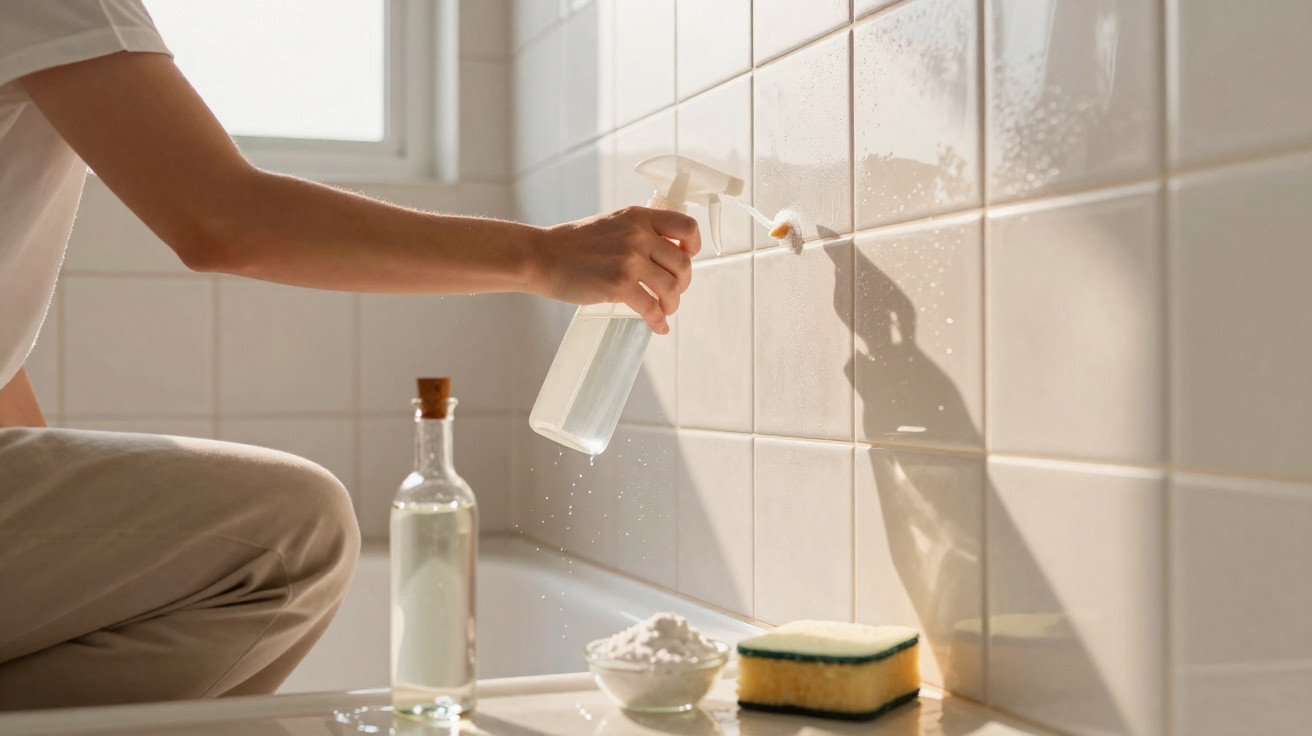
There is also the well-known white vinegar method. A modest splash, around half a cup, placed in the fabric softener compartment works as a natural rinse aid. It can help lift detergent residue and limescale, both of which leave fabrics feeling crunchy. Your laundry will not smell of salad: the scent vanishes as it dries. Fabrics emerge cleaner and lighter rather than “coated”.
Lastly, consider movement. Laundry packed too tightly into the drum cannot rinse or spin efficiently. Garments rub against one another poorly, crease more and feel rough once washed. Choose smaller loads, shake each item before hanging it up and let air handle some of the drying. Sometimes we expect a miracle product to solve an issue that is really about routine and timing rather than chemistry.
Easy habits that extend the life of your favourite clothes
Laundry specialists often return to one straightforward principle: treat fibres gently and they will treat you gently in return. Where possible, wash at cooler temperatures, turn garments inside out and select delicate cycles for materials that need them. The less aggressive the mechanical action, the less likely you are to feel the need for fabric softener to “repair” the resulting damage.
Drying is equally important. A tumble dryer creates that fluffy hotel-towel effect, but it also wears away fibres at a remarkable pace. Switch between tumble drying and line drying. For jeans, jumpers and T-shirts you particularly value, consider drying them flat or on hangers. Smoothing them by hand as you hang them can replace some of the artificial softness you are accustomed to buying in a bottle. Honestly, hardly anyone does that every single day.
If fragrance is what you miss, opt for gentler alternatives. Fragrance-free detergent combined with a few drops of essential oil on a reusable dryer ball, or on a clean washcloth in the tumble dryer, provides a light scent without saturating the fabric. Your washing smells pleasant, while the fibres remain able to move, breathe and endure.
What specialists quietly repeat behind the lab doors
Away from the polished marketing, laboratories carry out decidedly unglamorous tests. Machines wash identical samples dozens of times, both with and without fabric softener. Technicians then stretch, weigh and photograph the fibres. The same conclusion continues to emerge: clothes exposed to fabric softener lose strength more quickly, absorb less and retain more residues of every kind. The effect may not be alarming after one wash, but it can shorten a garment’s life by months or even years.
A textile engineer working with sportswear brands told me that they regularly encounter customers complaining about “bad quality” leggings that have lost their performance within a season. Testing often shows that the fabric itself is sound. It is the fabric softener coating that has obstructed the performance properties the brand invested in developing. At a commercial scale, this is expensive. At home, it is simply frustrating and costly for your wardrobe.
“Fabric softeners were invented for a time when textiles were rougher, washing machines harsher, and people didn’t own as many clothes,” explains one specialist. “Today, they do more harm than good for a lot of modern fabrics, especially synthetics and technical garments.”
- Natural fibres (cotton, linen, wool): respond well to less detergent, cooler water and gentle spinning.
- Technical fabrics (sportswear, outdoor gear): last longer without fabric softener when washed with mild detergent and air dried.
- Towels and microfibres: can regain absorbency after one or two washes without fabric softener, sometimes with a little white vinegar.
A new way to think about “clean” and “soft” at home
Once you understand fabric softener as a layer sitting on your clothes, rather than as a care product that nourishes them, your perspective changes. You begin to notice texture again: the weight of a T-shirt fresh from the washing line, the honest coarseness of a well-used towel and the way a cotton sheet creases beneath you. Clean is not a fragrance. It is the absence of residue.
We have all had that moment of opening the washing machine and burying our face in the laundry to breathe in the scent. It is comforting. Part of leaving fabric softener behind is recognising that comfort can come from elsewhere: clothes that survive longer, skin that reacts less and a laundry shelf with fewer plastic bottles. It can even come from a slightly more “raw” texture that shows your fabrics are no longer being suffocated.
Some people will stop altogether, while others may retain a bottle for bed linen or special occasions. There are no laundry police waiting in your bathroom. What specialists are really proposing is not a rule, but a question: what are you willing to exchange for that artificial softness? And what could you gain by allowing your clothes to simply be themselves again?
| Key point | Detail | Value for the reader |
|---|---|---|
| Fabric softener coats fibres | Cationic surfactants create a waxy film on textiles | Explains why clothes lose absorbency and breathability |
| Towels and sportswear suffer most | Absorbent and technical fabrics become “blocked” over time | Helps prevent damage to the most useful and expensive items |
| Simple alternatives exist | Less detergent, white vinegar, gentler cycles and thoughtful drying | Preserves softness while extending garment life and saving money |
FAQ:
- Question 1 Is fabric softener always bad for clothes?
- Answer 1 Not after a single wash, but regular use slowly damages many fabrics, particularly towels, sportswear and microfibres.
- Question 2 Can I use fabric softener on baby clothes?
- Answer 2 Specialists advise against it because fragrances and residue may irritate sensitive skin and reduce the breathability of small garments.
- Question 3 What can I use instead of fabric softener?
- Answer 3 Use a little less detergent, put white vinegar in the fabric softener compartment, wash smaller loads and air dry where possible.
- Question 4 Why do my towels feel rough without fabric softener?
- Answer 4 They often contain detergent and limescale residue; a few washes without fabric softener, using vinegar and shaking them well before drying, generally restores softness.
- Question 5 Should I stop using fabric softener on all clothes immediately?
- Answer 5 You can, although many people begin with towels and sportswear, assess the difference and then slowly reduce use or save fabric softener for occasional use.
Comments
No comments yet. Be the first to comment!
Leave a Comment