
It often begins in the middle of the night: a quiet call, small shuffling footsteps, the click of the hallway light switch. Then comes that moment when you open the bedroom door and immediately smell it – the sharp odour of urine that has already seeped into the mattress cover. You pull back the duvet and try to stay calm, while your half-asleep mind can think only: “Not again, please.”
We all know that mix of stress, disgust and guilt. Whether it is a toddler, a school-aged child, an unwell dog or a cat, urine on the bed happens more quietly, more often and closer to everyday life than many of us would care to admit. At some point, you realise that washing alone no longer removes the smell. There is more going on.
That is exactly when an unassuming household staple, sitting in many cupboards, can quietly become the solution.
Why urine odour is so persistent – and what actually works
Anyone who has noticed a slightly acidic, pungent urine smell on a freshly washed mattress cover knows that this is not an ordinary stain. You take the cover from the washing machine; it looks clean and smells of detergent. Yet as it dries, the odour starts creeping back. It is like a bad joke that becomes even less pleasant the second time around.
Let us be honest: nobody washes everything at 60°C and dries it perfectly after every small mishap. A stain often goes unnoticed for several hours, sometimes even overnight. That is when bacteria have time to turn urea and uric acid into the pungent urine odour we recognise. Water and detergent alone often do not reach these molecules deeply enough.
The scene is familiar in many family kitchens: a half-used carpet cleaner, an air freshener and an opened bottle of laundry sanitiser are standing randomly together on the worktop. Among them is a small, unremarkable packet: bicarbonate of soda. In one Berlin family I spoke to, it was this modest packet that made the difference. The mother had already worn out three mattress protectors, run countless wash cycles and even briefly considered professional cleaning.
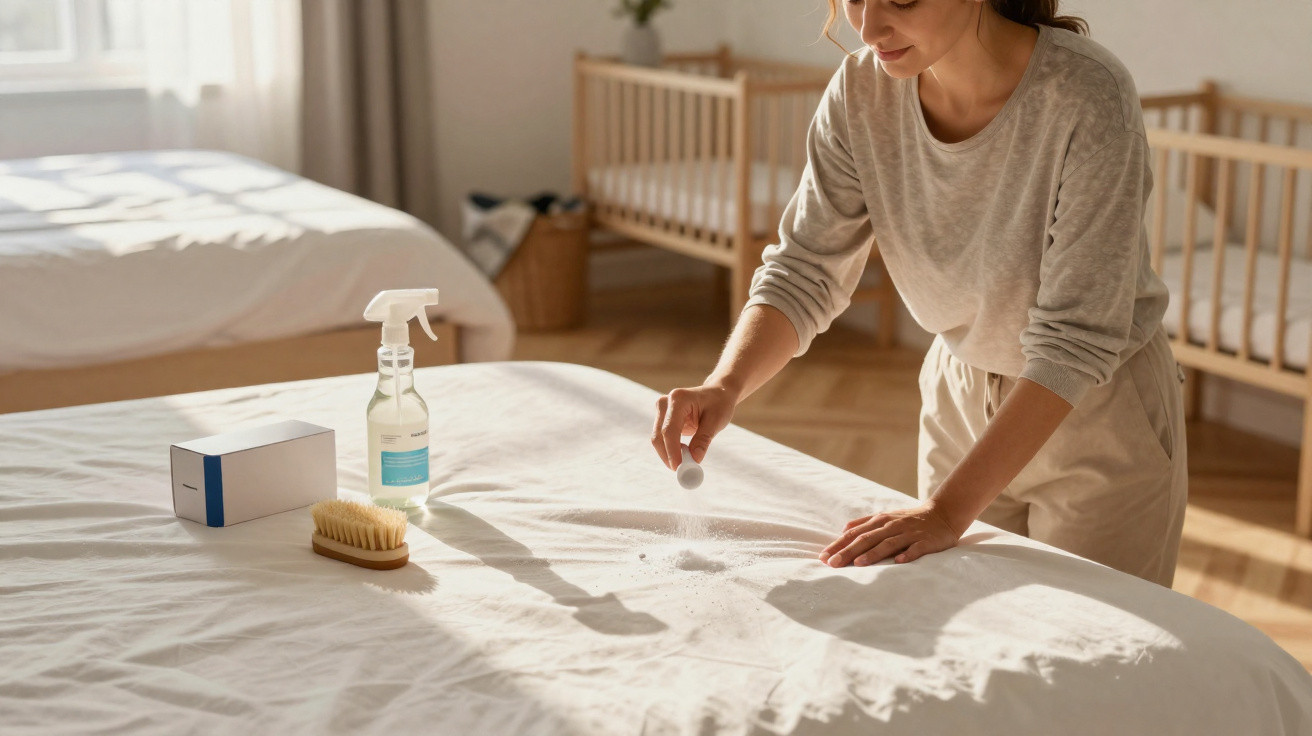
Only when a nurse friend suggested trying pure bicarbonate of soda did things change. She mixed one tablespoon of bicarbonate of soda with a little warm water, spread the paste directly over the affected area of the dry mattress cover and left it to work for several hours. After washing, the spot smelled neutral. Not perfumed, but simply of nothing. The family used the same approach after the next “accident” – with exactly the same result.
The matter-of-fact part of this story is simple chemistry. Urine contains substances that break down as they dry, releasing strongly smelling ammonia compounds. Many cleaners merely place a cloud of fragrance over the top. Bicarbonate of soda, by contrast, acts like a sponge for odours. It binds acids, balances pH levels and stops odours where they form. Ultimately, odour is simply made up of volatile molecules in the air – and those molecules need something to counter them.
Vinegar, which many people automatically reach for, may mask the issue at first but can itself leave a stubborn smell if used in the wrong amount. Bicarbonate of soda is subtler. It has no strong scent of its own, but delivers an almost unspectacular result: the smell is gone and the problem is dealt with. That is precisely why it appears as a “game-changer” in so many family stories.
The bicarbonate of soda method: how to make a mattress cover genuinely odour-free
The route to a neutral-smelling mattress cover starts earlier than most people expect: the moment the stain is found. First, remove the cover and blot up excess liquid with an absorbent cloth, without vigorous rubbing. Then bring in the bicarbonate of soda. For a fresh stain, sprinkle plenty of bicarbonate of soda powder directly onto the damp area. The crystals should form a visible layer.
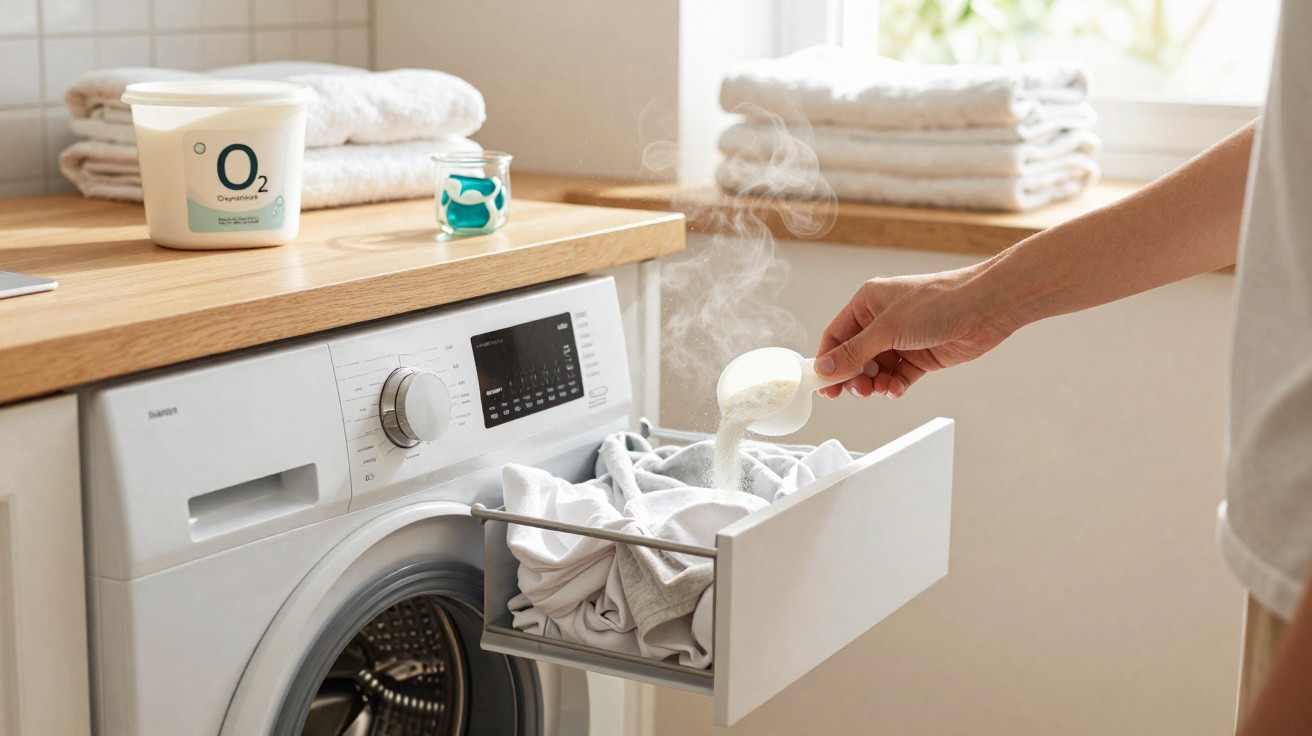
Leave that layer in place for at least two hours, or preferably overnight. During this time, the bicarbonate of soda absorbs moisture and binds odour molecules. Then vacuum it up thoroughly or shake it out. Only after that should the cover go into the washing machine – ideally at 40 to 60°C, with ordinary laundry detergent. Many people who try this method notice while hanging it up that the familiar urine smell has gone even before the fabric is dry.
There are several mistakes that almost everyone makes at first. Many turn to heavily fragranced fabric softeners and room sprays, hoping to overpower the smell. This may work briefly, but eventually two layers of scent combine: artificial sweetness over old ammonia. The result is more like a poorly ventilated changing room. Another common error is water that is too hot for delicate covers, as this can damage fibres and set stains.
Perhaps the most frequent trap is putting it off. “I’ll deal with it properly tomorrow,” you tell yourself when the day has already been too long. In practice, this means the stain dries in, while bacteria are given time to multiply at their leisure. The longer urine remains in the fibres, the more courage it takes later to open the cover’s zip again. However you look at it, acting early saves stress afterwards.
“Once I stopped merely covering up the smell and started neutralising it chemically, my stress level changed too,” a single mother told me. “Suddenly, it was no longer such a drama when something went wrong during the night. It was simply a process.”
To make that process practical, this short everyday checklist helps:
- Blot a fresh stain dry straight away; do not rub it in.
- Apply bicarbonate of soda generously, either sprinkled on or made into a paste.
- Leave it to work for at least two hours, preferably overnight.
- Vacuum up or shake out the powder thoroughly.
- Wash the mattress cover as usual and allow it to dry completely.
Anyone who uses a diluted vinegar solution during the final rinse as well as bicarbonate of soda can increase the effect. The acetic acid helps break down any remaining alkaline residues. For many households, the winning combination remains: bicarbonate of soda before washing, gentle vinegar in the rinse cycle and patience while drying.
How this small routine changes everyday life
The search for the right household remedy for urine odour is never purely technical. It touches everyday life, our sense of embarrassment and our desire for home to feel “clean”. A neutral-smelling mattress cover is, in reality, a quiet ally for more peaceful nights. Parents say their tone becomes gentler when they know the smell can be removed reliably, even for the third time in one week.
Once you have seen a single inexpensive household item from the cupboard take the edge off a recurring problem, you begin to view these situations differently. A mishap is no longer a mini-disaster every time, but a task with a familiar routine. Children notice that. Pets do too. Stress reduces and routines take shape. The odour disappears not only from the fabric, but to some extent from your mind as well.
In the end, one quiet but powerful realisation remains: not every unpleasant smell needs an expensive specialist product. Sometimes, a packet of bicarbonate of soda, a little time and the willingness to tackle the issue rather than mask it are enough. People who have tried this approach often pass on the tip casually in family groups, chats or conversations outside nursery. In this way, an old household remedy travels discreetly from one home to another, ensuring awkward moments do not become lasting odours.
| Key point | Detail | Benefit for the reader |
|---|---|---|
| Bicarbonate of soda as an odour neutraliser | Binds odour molecules and neutralises urine components | Explains why the smell genuinely disappears instead of merely being masked |
| Acting early | Blot immediately, let bicarbonate of soda work, then wash | Reduces deeply set odours and saves repeated wash cycles |
| A straightforward everyday routine | Clear step-by-step method using inexpensive products | Greater calm around “accidents” and less stress at night |
FAQ
- How much bicarbonate of soda should I use for each stain? For a stain about the size of your palm, roughly one tablespoon of bicarbonate of soda is enough. The area should be visibly covered, so there is sufficient powder to absorb moisture and odour.
- Does this method work on old urine stains too? Yes, but it often requires several rounds. First leave the bicarbonate of soda to work, then wash and dry it, repeating if necessary until the smell noticeably fades.
- Can I use baking powder instead of bicarbonate of soda? In an emergency, yes, but pure bicarbonate of soda works more effectively. Baking powder contains additional ingredients that slightly dilute its cleaning power.
- Is bicarbonate of soda suitable for every fabric? It is suitable for most cotton and blended fabrics. For very delicate materials, test it first on an inconspicuous area to check for discolouration or roughness.
- What if the smell remains despite using bicarbonate of soda? The urine may have penetrated more deeply into the mattress. In that case, treat the mattress itself with a layer of bicarbonate of soda as well, or consider professional deep cleaning.


Comments
No comments yet. Be the first to comment!
Leave a Comment