
Then your phone vibrates, and the knot in your stomach pulls tight once more. Compulsive cleaning may resemble self-discipline or even something to be proud of, but beneath the gleaming surfaces there can be a nervous system desperate for relief.
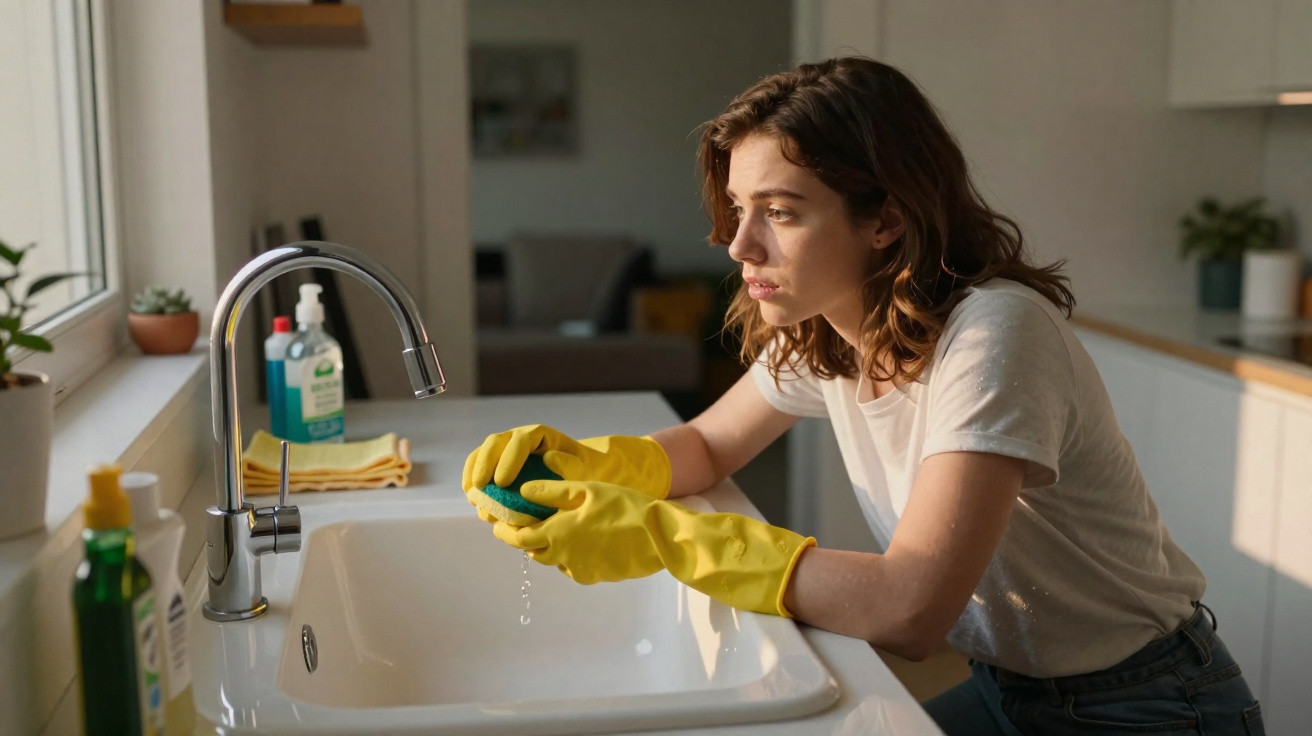
In the compact kitchen, the spray bottle clicked in time like a metronome. A woman in a grey hoodie buffed the same patch of worktop long after it had ceased to reflect her face. Her hands moved faster than her thoughts. She was not getting ready for visitors, nor was she trying to remove dust. She had simply read a message she did not want to answer. Instead, the cloth replied for her, moving in neat, repeated strokes: a ritual against an emotion she could not put into words. I watched the soapy water change from cloudy to clear as her shoulders lowered by half an inch. The kitchen became cleaner, but the worry remained. What was she truly trying to scrub away?
The strange comfort of a spotless sink
There is a reason a newly made bed can feel like taking a deep breath. Order signals safety. Rows, straight lines and shine tell the body that everything is in its proper place, even if the rest of the day feels chaotic. Cleaning also fills the senses: the scent of lemon, a vacuum cleaner's hum, the heft of a damp towel clenched in your hand. Cleaning settles the body before it settles the mind. That order is important. When your chest feels constricted, your hands reach for the quickest source of movement: a sponge, a wipe, a bin bag or a job with firm boundaries and a visible endpoint.
Take Mira, who mops following every difficult telephone call with her manager. By the second bucket, she says her mind “goes quiet”. The dirty water becomes persuasive evidence that her stress is circling down the drain. There is a broader indicator, too. Searches for “deep clean checklist” rose sharply in the first weeks of lockdown, precisely as uncertainty increased. People were not merely sanitising their homes; they were trying to sanitise their dread. That is understandable. Scrubbing has a beginning, a middle and an end. Grief, fear and anger do not.
A psychologist might explain that compulsive behaviour flourishes through predictability. When the nervous system is overwhelmed, the brain seeks activities with clear rules. Cleaning provides rules you can physically grasp. You may not be able to control a difficult relationship, a performance review or a diagnosis, but you can control marks on a mirror. The mind makes the connection: “I mop, I feel better”, then subtly turns that behaviour into a required coping tool. The relief is genuine, although it is not the full story. What appears to be commitment may instead be someone trying to steady an internal storm with a sponge.
How to separate compulsive cleaning from the feeling
When you are upset, experiment with a three-minute pause before you begin cleaning. Set a timer, then say the emotion aloud in a single word: angry, lonely or scared. Next, notice three bodily sensations: your jaw, chest and hands. Finally, ask yourself: “Do I want to clean for care or to escape?” If you still want to tidy up, choose a small, deliberate task: one drawer, one worktop or one sink. Keep it purposeful rather than automatic, then finish with a glass of water and two slow breaths. It is a small adjustment, but it gives your brain valuable information.
Common pitfalls can appear quickly. A brief tidy can turn into an overnight clear-out. You may criticise yourself for returning to familiar habits. Or you may call the routine “just efficiency”, despite it intensifying after every challenging conversation. Be kind to yourself. At times, try another cue to regulate yourself instead: splash cold water on your wrists, take a brisk walk to the postbox or do a five-minute body scan. Honestly, no one manages that every day. Perfection is not the aim. The point is to notice whether you are seeking relief or trying to erase something.
When the urge feels overwhelming, use a ready-made sentence and structure. Then choose what suits the day rather than what fear dictates.
“Relief is not the enemy. It’s the signal,” says Dr. Lena V., a clinical psychologist who works with anxiety and compulsive patterns. “We’re not taking cleaning away. We’re widening the menu of regulation.”
- Say: “I want relief.” Then follow it with, “From what?”
- Choose either a 3-minute tidy or a 3-minute feel: complete one small cleaning task or sit briefly with the sensation.
- Find a physical anchor: hold ice, step outdoors or press both feet firmly into the floor for 20 seconds.
- Finish with a check-in: “Do I feel steadier, or just emptier?”
- If cleaning is taking over your day, consider speaking with a therapist trained in anxiety or OCD approaches.
Beyond the shine: what a clean room cannot fix
Most of us have experienced a moment when wiping a worktop feels safer than answering a text message. That is human. An immaculate studio flat cannot process grief for you, teach you to disagree with kindness or help you sleep after receiving that email. A spotless room can still contain a storm. The goal is not to discard the mop. It is to create a broader bridge, where cleaning remains a choice rather than an obligation. On some days, that bridge is breathing and a short walk. On others, it means calling a friend before folding the laundry. Both are forms of care.
| Key point | Detail | Benefit for the reader |
|---|---|---|
| Cleaning is regulation | It provides sensory predictability and a clear finishing point | Helps explain why the urge can feel so persuasive |
| Pause protocol | Name the feeling, scan the body and select an intentional action | Offers practical steps to interrupt automatic scrubbing |
| Widen the menu | Include non-cleaning sources of relief: cold water, movement and contact | Retains relief while reducing the hold of compulsion |
FAQ
- Is compulsive cleaning the same as OCD? Not always. Some people clean to handle stress or uncertainty without meeting the criteria for OCD. If the behaviour feels inflexible, upsetting or takes up hours of your time, a clinician can help establish what is happening.
- Why does cleaning calm me so fast? It supplies immediate sensory input, clear rules and visible results. Your brain interprets these as control and safety, which can reduce emotional intensity.
- Should I stop cleaning when I’m upset? Not necessarily. Try making the shift from automatic to intentional: select one small job and combine it with a check-in about the feeling you may be avoiding.
- What if I live with others who trigger my urge to clean? Agree shared expectations for communal spaces and identify your own calming routines. Boundaries and additional coping skills are better than secretly scrubbing out of resentment.
- When is it time to seek professional help? Reach out if cleaning disrupts work, relationships or sleep, or if you feel confined by rituals. Treatments such as CBT and exposure-based approaches are effective and collaborative.





Comments
No comments yet. Be the first to comment!
Leave a Comment