
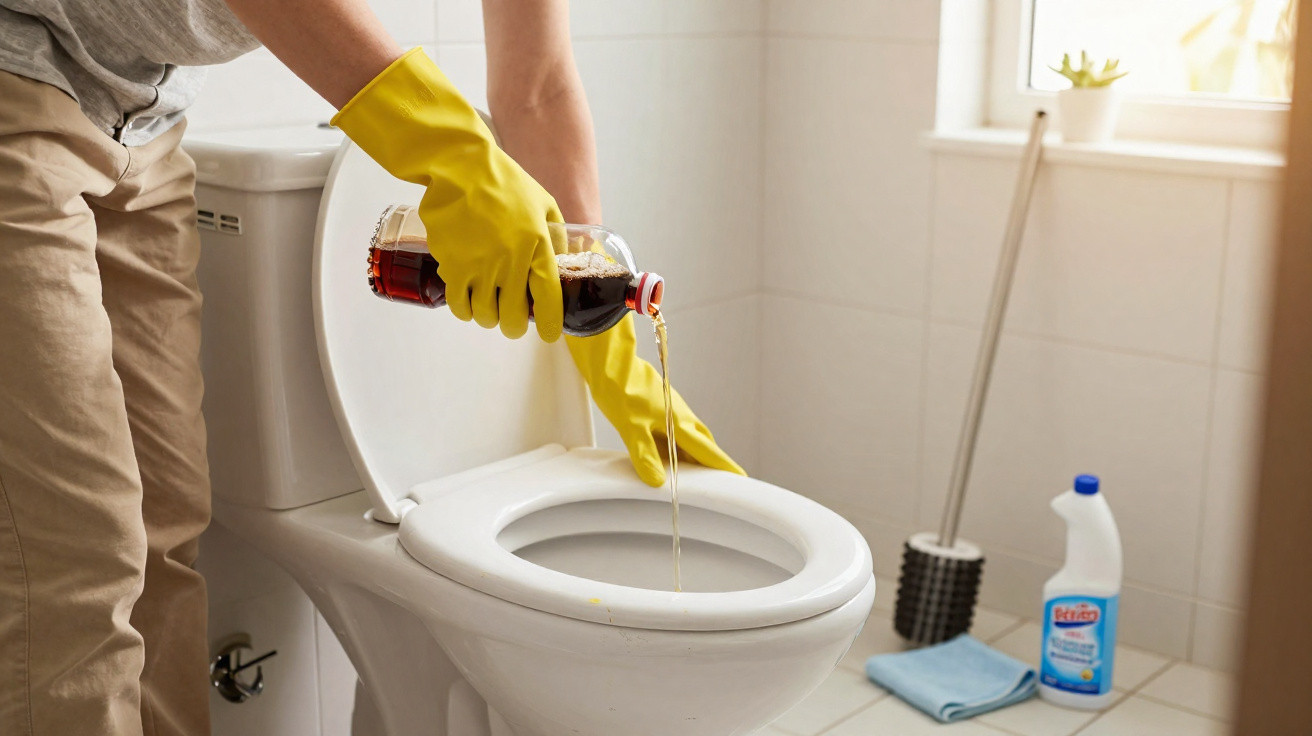
Many households end up dealing with yellowish crusts in the bathroom and start looking for homemade ways to clean them. Using a soft drink can be an affordable option for loosening stubborn grime, helping to keep the toilet bowl looking good without demanding excessive effort in everyday cleaning.
How does soft drink work on stains in the toilet bowl?
The drink contains ingredients that react with mineral deposits stuck to the ceramic. This is where phosphoric acid helps: it breaks down tough residue, making dark marks far easier to lift from the toilet’s porcelain surface.
As the liquid seeps into the mineral layers, it softens the dirt that has built up over time. As a result, the build-up of yellowed marks releases more readily, so cleaning can be done without having to scrub aggressively.
What happens when you use soft drink on tiles?
The reaction of acidic compounds on bathroom walls softens grease and dissolves crusts through… Read more
What is the correct procedure for applying the drink?
To use this method effectively, pour the drink straight onto the stained areas of the bowl. Keeping the soft drink in contact with the bottom of the toilet is essential for softening the mineral crust that has formed on the inner walls.
It is recommended to leave it to work for at least forty minutes, or overnight. This resting time allows the acids to do the heavy lifting, making the final rinse as simple as flushing as normal.
Below, a video from the SOS Mum and Co YouTube channel shows a practical demonstration of this homemade method:
When is it worth using this homemade trick?
The soft-drink approach is especially useful when yellow stains do not shift with standard products. This homemade solution works well as an occasional fix, helping restore the look of the toilet bowl without relying on harsh compounds.
It is also a handy way to use up leftover drinks that have gone flat. This reuse reduces household waste and offers a practical alternative for dealing with residue stuck to the inner porcelain surfaces of the toilet.
Application guide
Steps for correct use
Key recommendations for applying cola soft drink in the toilet bowl:
- Pour cola soft drink directly over the stains in the bowl.
- Wait for the working period so the acidity can soften the minerals.
- Gently scrub with a toilet brush before flushing.
Why doesn’t the drink replace traditional disinfection?
Even though acidity can help loosen mineral grime, the drink does not have antibacterial properties that eliminate germs. Proper disinfection of the toilet requires specific products to ensure bacteria and other harmful microorganisms are effectively neutralised around the home.
Using bleach and purpose-made disinfectants remains essential for protecting residents’ health. The soft drink acts only as a mechanical brightening/loosening agent, while a conventional disinfectant delivers the hygiene protection required in the bathroom.
Key differences between using the drink and conventional cleaning:
- Soft drink works by dissolving mineral deposits that have accumulated on the toilet bowl.
- Bleach removes bacteria and viruses that contaminate the toilet surface.
- A balanced combination of methods provides both a brighter finish and biological safety.
How can you keep the toilet bowl clean for longer?
Building a consistent maintenance routine helps stop mineral particles from bonding to the bowl. Weekly cleaning prevents thick crusts from forming, preserving the porcelain’s shine without requiring heavy intervention with abrasive chemical products.
Pairing homemade tricks for removing marks with regular disinfection helps keep the bathroom pleasant and hygienic. This practical strategy supports a clean environment, maintains the preservation of the sanitaryware, and makes day-to-day home care easier.
Comments
No comments yet. Be the first to comment!
Leave a Comment