
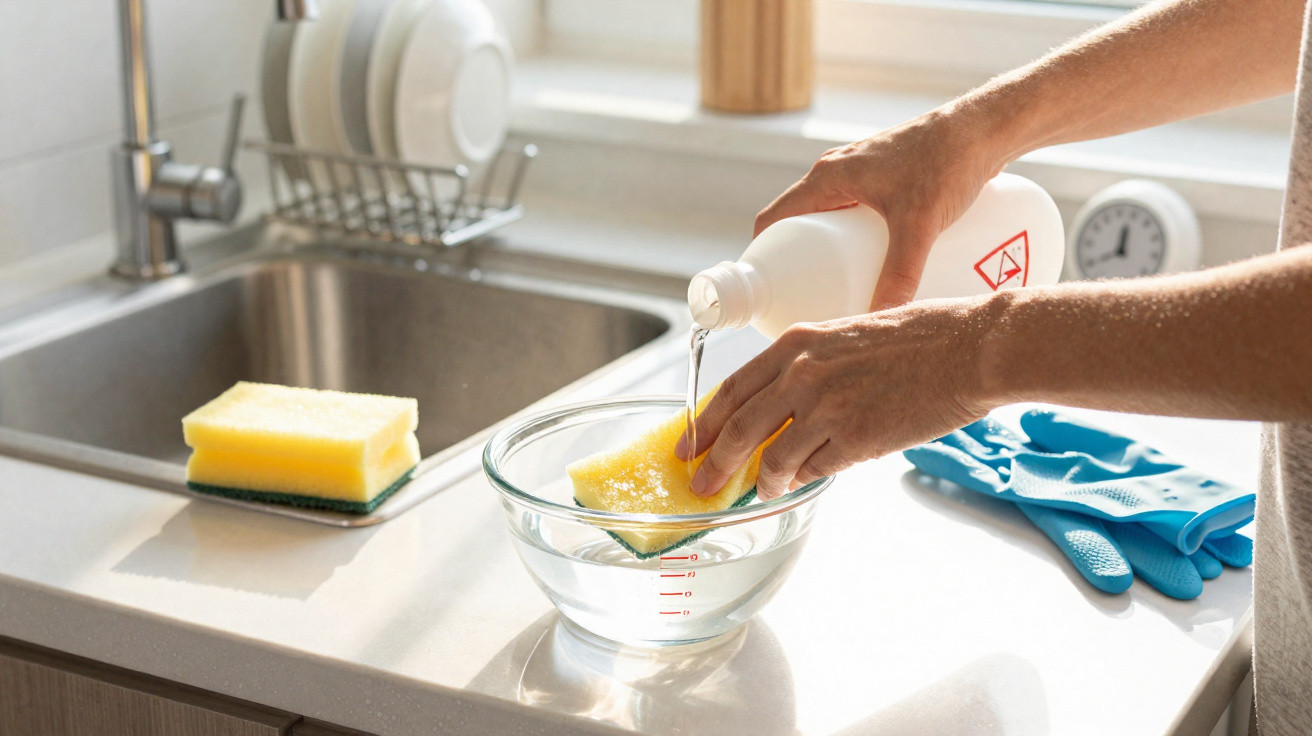
A kitchen sponge is often left damp and comes into contact with food residues, which makes it an item that can harbour micro-organisms. Because of this, some people use diluted chlorine bleach in an attempt to clean it. This approach is supported by disinfection research, but getting the concentration right, allowing enough contact time and rinsing properly are essential - and replacing the sponge regularly remains an important step.
Why does a kitchen sponge build up micro-organisms?
Moisture, food particles and a porous structure together create ideal conditions for bacteria, yeasts and other micro-organisms to persist. The issue is not just how the sponge looks: it can also transfer contamination to hands, utensils, worktops and food.
The USDA considers kitchen sponges difficult to fully sanitise and advises buying new sponges frequently, rather than relying only on home methods to extend their lifespan.
Can chlorine bleach really reduce bacteria?
Yes. When used at the correct concentration and for the appropriate length of time, sodium hypochlorite has antimicrobial activity. USDA research looked at soaking sponges in a bleach solution and found a reduction in micro-organisms, although other methods tested in that study produced better results.
That does not mean it is safe to pour neat household bleach directly onto a sponge. The CDC advises following the label directions, using the specified dilution and never mixing bleach with other cleaning products.
How do you avoid the most dangerous mistake?
The key precaution is not to mix chlorine bleach with vinegar, acids, ammonia or other cleaning products. These combinations can create hazardous fumes. The CDC also recommends adequate ventilation when using hypochlorite-based products.
It is also unwise to guess a bleach concentration without checking the product label. Different household bleaches can have different strengths and instructions. If the packaging does not state that the product is suitable for a specific purpose, you should not assume that any dilution will be safe.
Is it worth disinfecting the sponge, or is it better to replace it?
If a sponge is old, smells unpleasant, feels slimy, shows mould or is visibly worn, replacing it is the simplest option. The USDA highlights how hard it is to be confident a sponge has been properly sanitised once it has been contaminated. To reduce day-to-day contamination, it also helps to remove food debris from the sponge, rinse it thoroughly and let it dry completely between uses.
In other words, diluted chlorine bleach can disinfect when correctly prepared, but the topic should not encourage the habit of pouring neat bleach straight onto a sponge. In the kitchen, a safer approach is to follow the label, avoid dangerous mixtures and replace the sponge regularly.

Comments
No comments yet. Be the first to comment!
Leave a Comment