
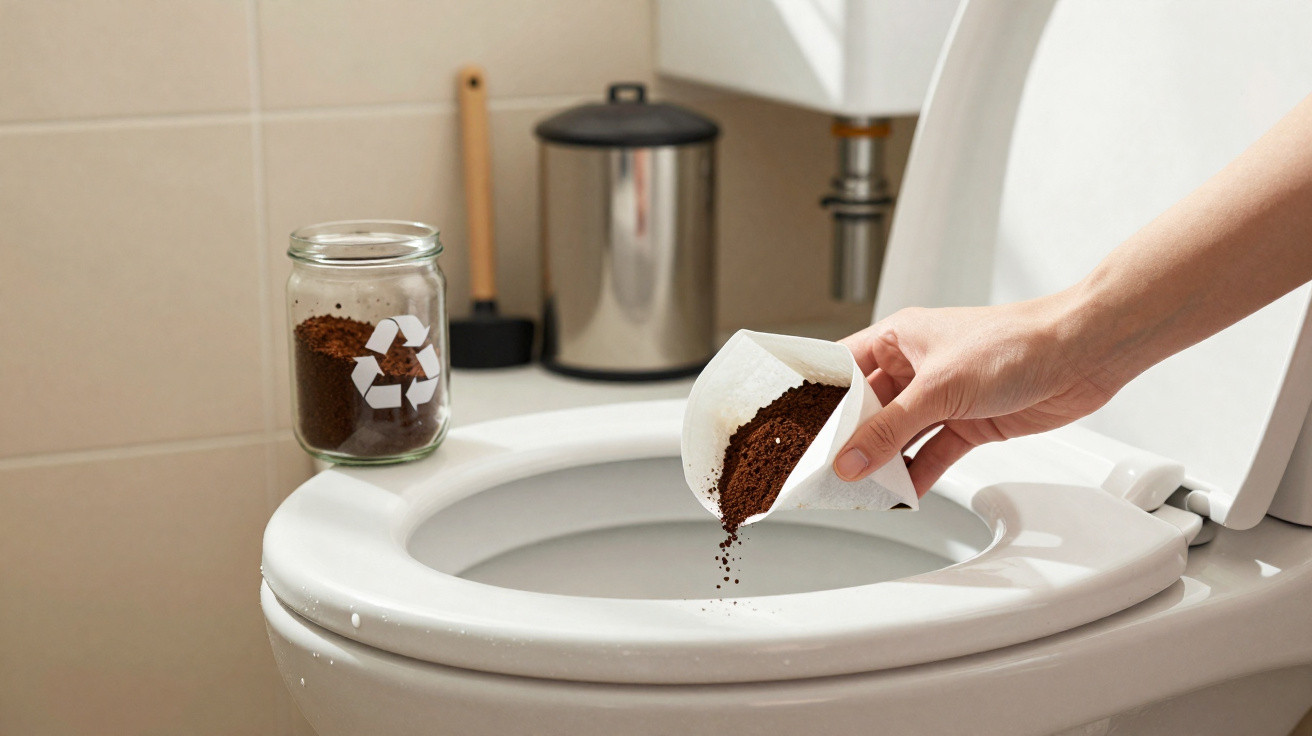
Putting coffee grounds in the toilet often shows up in home tips as a way to cut down smells and “clean” the bowl, but this advice needs caution. The safest way to use grounds is only as a short, temporary marker to help spot a leak without flushing, because frequent disposal can leave residue building up in the pipework.
What is putting coffee grounds in the toilet for?
Some water-supply and plumbing guidance suggests coffee grounds as part of a simple check for leaks in the flush valve or cistern. When the water is completely still, the grounds tend to settle on the bottom; if they start to drift or disappear without anyone flushing, there may be a continuous flow of water.
That is not the same as the popular hack of leaving grounds in the toilet overnight to “freshen” the bathroom and then flushing in the morning. The technical use is limited to watching for water movement:
- Grounds sitting still on the bottom suggest there is no noticeable flow.
- Grounds that shift position may point to an ongoing leak.
- The check should be done without using the toilet while you wait.
- A suspicious result should be confirmed by a professional.
- If possible, remove the grounds after the test.
Do coffee grounds actually neutralise odours in the bowl?
Dry grounds can absorb some odours when left in an open container, but once they are in toilet water they lose much of that effect. Also, bad smells coming from the pipework can indicate a trap with too little water, a faulty seal, built-up grime, or an issue in the drainage system-problems that coffee does not fix.
How to do the coffee leak test
Ideally, the toilet should not have been used in the minutes beforehand. Sprinkle a small amount of used grounds or coffee powder into the water and wait about 10 minutes, without flushing. If the material stays settled, there is no obvious sign of movement; if it is carried away, there may be a leak at the flush valve or within the close-coupled cistern.
Before deciding something is faulty, also check whether the water is rippling, whether there is a constant sound of running water, and whether the cistern refills even when no one has used it. You can structure the check like this:
- Wait until the water in the bowl is completely still.
- Add only a small amount of coffee grounds/powder.
- Do not flush or use the toilet during the test.
- Leave it for roughly 10 minutes.
- See whether the grounds remain in the same place.
- Arrange a repair if there is continuous movement in the water.
Why flushing coffee grounds is not recommended
Coffee grounds do not dissolve in water, despite what the common tip claims. The particles remain solid and can combine with grease, paper and other debris already present in the pipes. Guidance on proper use of the drainage system warns against putting coffee powder, food scraps and other waste into sinks, drains or toilets, because doing so increases the risk of blockages and sewage backflow.
What is the correct place for used coffee?
Composting is a more suitable option for used grounds, as long as they are mixed with dry leaves, sawdust or other materials so they do not form dense, compacted layers. They can also go into the food-waste collection (where provided locally) or the general household bin, depending on what is available in your area. Used coffee grounds are recognised as compostable in waste-management guidance.
For cleaning the toilet, the safest approach remains using a brush and a cleaner that is suitable for sanitaryware. If your goal is to check for a leak, coffee grounds can work as a brief marker for a few minutes-but they should not become something you routinely flush away.



Comments
No comments yet. Be the first to comment!
Leave a Comment