
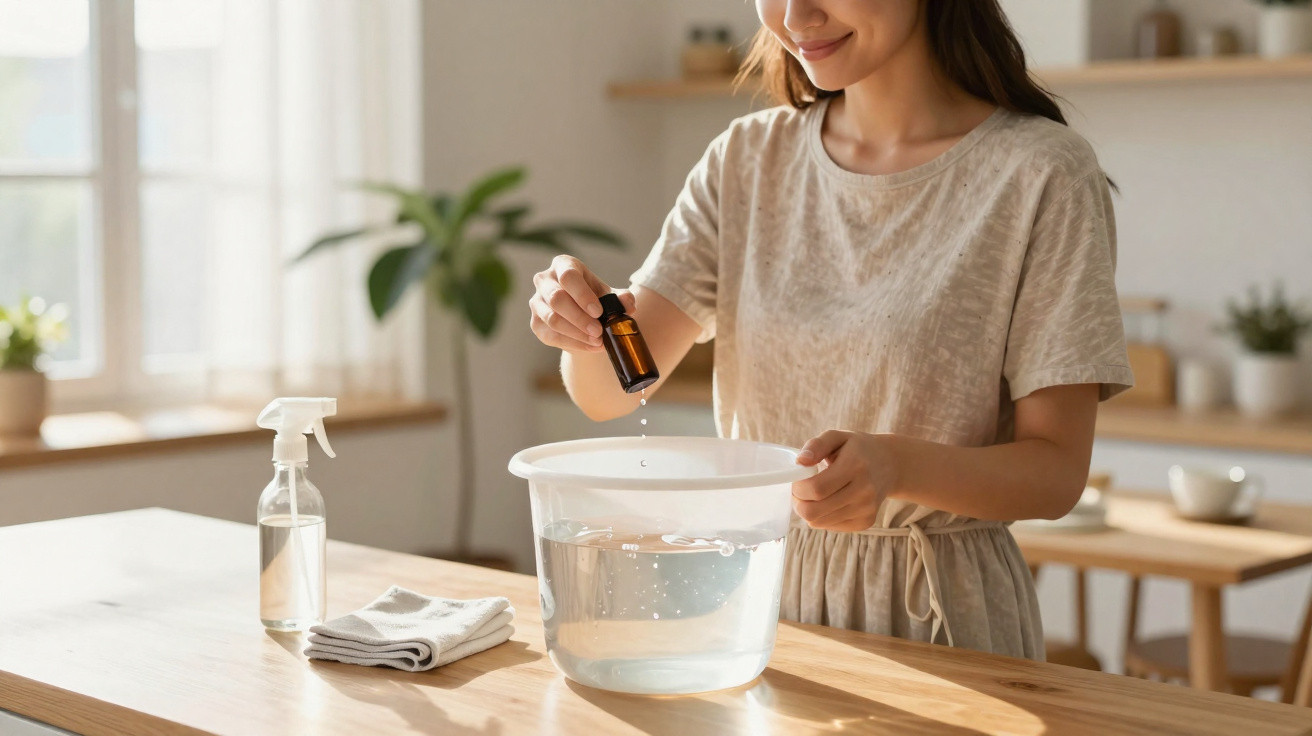
The bucket is parked right in the middle of the kitchen, half-filled with lukewarm water, with a little splash of cleaner floating on top. In other words: a perfectly ordinary Saturday morning. The kind where you promise yourself you’ll do a “proper deep clean” - only to lose the will halfway through. Let’s be honest: nobody mops the floor out of pure passion.
Then your eyes land on a tiny bottle sitting on the windowsill. An essential oil, a gift from a friend, and never really used. One drop, you think. What could possibly happen? You twist off the lid, let a single drop fall into the water - and suddenly the whole flat smells as if someone’s thrown open every window in a Mediterranean holiday home.
It’s only one drop. Yet something shifts in the mood. You carry on cleaning, a bit slower, almost enjoying it. And it’s only later that you realise just how much that tiny addition changed the entire room - maybe even your whole day.
Why one drop of fragrance suddenly makes everything feel different
Anyone who’s walked into a home that smells of stale air and tired detergent knows that quiet sense of discomfort. Surfaces can be spotless and floors completely streak-free - but if the air feels heavy, everything seems somehow unfinished. A single drop of essential oil in your cleaning bucket works exactly where ordinary cleaner stops: at the feelings a space triggers in us.
Essential oils such as lemon, lavender or eucalyptus link “clean” with an atmosphere that calls up holidays, a spa, or a walk through the woods. It’s no accident that many hotels rely on gentle scent notes in the lobby. At home, we rarely do it with that level of intention. And yet most of us respond instinctively when a room smells good - we breathe more deeply, our body eases down a notch, and stress fades.
There are subtle moments when you really notice the effect. One reader said that during her spring clean she dropped organic lemon oil into the bucket for the first time. Her two children came in from outside, stopped in the hallway and asked: “Mum, who baked a cake?” There was no cake in the oven, of course. The combination of lemon, warm water and freshly mopped laminate simply set off memories - Sunday afternoons at Grandma’s, lemonade, and lemon drizzle cake.
You can’t force those associations, but they happen anyway. Research into indoor atmosphere suggests that smells are tied to emotion more strongly than visual cues. A clean floor looks nice. A clean floor with a light lemon or pine scent feels nice. That’s hard to pin down in numbers, but in feedback from people who’ve changed their cleaning routine, one word comes up again and again: “lighter”.
If you look at it logically, one drop of oil is a tiny add-on. It doesn’t transform the cleaning power of the water, and it doesn’t change the physics of your floor. What it does change is how you experience the moment. Cleaning stops being only a chore and starts to feel a little more like a ritual. The scent marks a shift: from “this has to be done” to “I’m putting my space in order”. As unglamorous as that sounds, that psychological nudge is exactly what makes cleanliness feel less like work and more like something restorative.
How to use essential oils in your cleaning bucket the right way
Most people’s first instinct is: more is better. When you start cleaning with essential oils, it’s easy to tip in a few extra drops “so you can really smell it”. It’s better to begin with less and see how your home - and your body - reacts. For a standard bucket with around 5 litres of water, 2–3 drops of a good-quality oil are usually enough. With very strong scents like peppermint, a single drop is often plenty.
It helps to start with plain water plus a neutral detergent that doesn’t have a strong scent of its own. That way, your oil isn’t fighting anything. Lemon is popular for the kitchen and hallway, lavender for the bedroom, and sweet orange for the living room. Add the drops straight into the water, give it a quick stir with the mop, and that’s it. You don’t need more to gently “perfume” the room while you clean. And yes - windowsills, doors and tiles also pick up that light veil of fragrance.
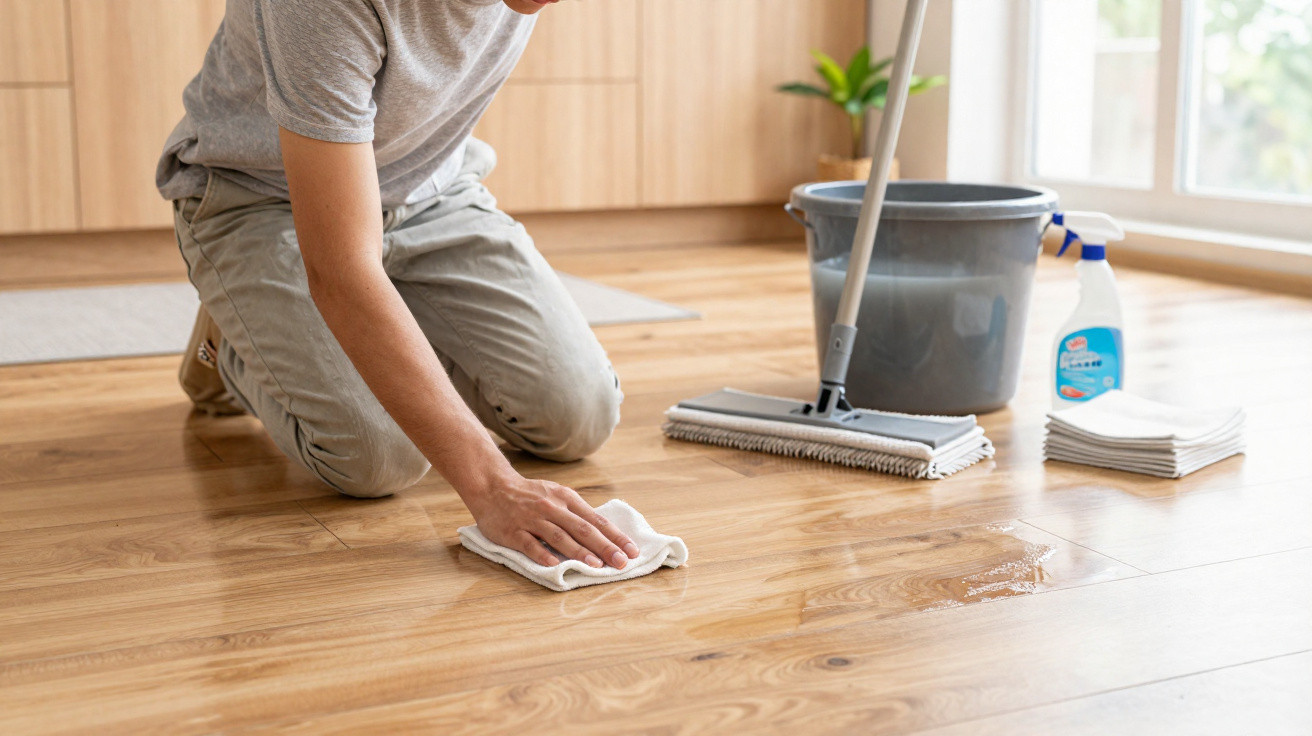
Of course, there are a few pitfalls that many people only discover the hard way. It’s possible to overdo it, and not every floor surface tolerates every oil. If you have oiled wooden floors or delicate natural stone, use a very small amount and test it first in an inconspicuous spot. Citrus oils can be degreasing, which isn’t always a blessing on wood. If you have pets or young children, stick to particularly mild oils and avoid intense blends containing camphor or strong menthol.
A lot of people think: “It’s only a bit of fragrance - what’s the worst that could happen?” Let’s be honest: we’ve all thought that, right up until a supposedly harmless scented candle gave us a headache. Pay attention to your body. If you notice you’re breathing more shallowly while cleaning, or the smell feels “scratchy” in your throat, use less next time or switch oils. Essential oils are concentrated plant power, not a supermarket fragrance spray.
“Since I started adding a drop of lavender to the cleaning bucket, the bedroom doesn’t just feel clean - it genuinely feels calm. It’s a small trick that’s changed my evenings.” – Anna, 38, nurse
To make it easier to get started, here’s a short list of simple, everyday combinations that many people find pleasant:
- Lemon in kitchen and hallway water - feels fresh, light and “clean”
- Lavender in mop water for the bedroom - supports a calm atmosphere
- Sweet orange in the living room - brings warmth and a gentle “end of the day” feeling
- Eucalyptus in the bathroom - crisp, cool, almost like a quick spa visit
- Tea tree in a very small amount during cold season - gives a sense of “fresher air”
When cleaning starts to smell like self-care instead of obligation
At first glance, it almost seems silly that one small drop of scent can take up so much space in everyday life. And yet we all know that moment when you open a door and immediately feel more comfortable, without being able to explain why. Essential oils in the cleaning bucket work on exactly that quiet, hard-to-grab level. They don’t do anything loudly dramatic; they simply nudge the mood a little towards: “I like being here.”
If you’ve spent years experiencing housework purely as something you must do - especially if you carry a lot of caring responsibilities - you often end up feeling a subtle, ongoing fatigue. The same motions, the same unspoken expectations you put on yourself. Small rituals won’t solve that, but they can add gentle accents. The drop of lavender mixed with the sound of the mop. The citrus note moving through the hallway as you line up shoes. Those are the tiny moments where duty and wellbeing no longer feel like total opposites.
There’s another side effect: rooms tend to stay emotionally “friendlier” for longer when they smell good. You walk into the bathroom the next morning and it feels like someone tidied with care, not just “got it done quickly”. If you work from home a lot, you may notice how strongly scent affects concentration, mood and energy. A light, fresh smell under your feet can be the thing that shifts a day from “I’ll get through somehow” to “I’ll get through well”.
Maybe that’s the strange part: we spend plenty on furniture, décor and organising advice, yet give so little attention to something as basic as the air we’re breathing. A drop of essential oil in the cleaning bucket doesn’t replace thorough cleaning, proper ventilation or keeping things tidy. It simply adds a fine layer of atmosphere on top. You don’t need to make it spiritual. You can view it very plainly: a small trick, a tiny effort, noticeably more comfort. And sometimes a lever that small is enough for a home to feel not just clean - but a little more like home.
| Key point | Detail | Benefit for the reader |
|---|---|---|
| One drop in the cleaning bucket is enough | 2–3 drops per about 5 litres of water, depending on how intense the oil is | Easy to do, with minimal cost or effort |
| Scent influences mood | Smells are directly linked to emotions and memories | Better room atmosphere, more wellbeing while cleaning |
| Choose oils intentionally | Lemon, lavender, orange, eucalyptus depending on room and desired effect | Create the right mood on purpose: fresh, calming or energising |
FAQ:
- Can I use any essential oil in the cleaning bucket? No, not every oil suits every surface or every household. Citrus oils can be problematic on delicate floors, and very intense oils should only be used in small amounts in homes with children or pets.
- How many drops of essential oil should I use at most? For a normal bucket, 2–3 drops are usually enough. If the scent feels too faint, increase gradually rather than adding far too much at once.
- Does essential oil replace my usual cleaning product? No. The oil is mainly there for scent and atmosphere, not for the actual cleaning performance. A mild, neutral detergent should remain the base.
- Can essential oils trigger allergies? Yes - particularly for sensitive people or those with asthma, irritation can occur. When in doubt, start small, ventilate well, and reduce or stop immediately if you notice symptoms.
- How long does the scent last after cleaning? That depends on room size, ventilation and the oil used. Typically, a gentle scent remains noticeable for a few hours up to half a day, without overpowering the room.

Comments
No comments yet. Be the first to comment!
Leave a Comment