
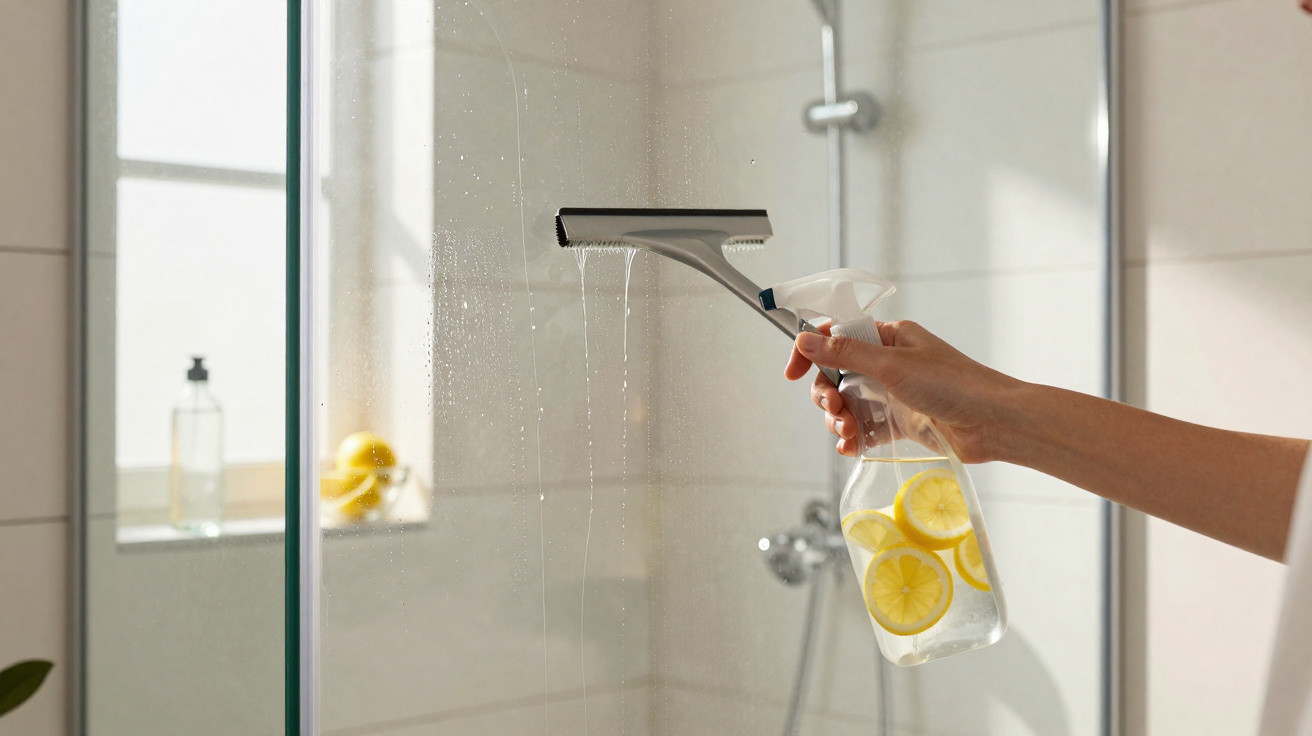
Keeping a glass shower screen looking truly spotless can feel like something that only happens in TV adverts. You shower, mineral-rich water dries on the glass, soap residue builds up, and those little droplets leave marks… and before you know it the screen looks cloudy, white-stained and dull. Even so, there’s no need to reach straight for pricey or ultra-harsh products: with a simple routine, a few easy tips, and items most people already have at home, you can look after it for very little.
How do you make a homemade mix to clean a glass shower screen?
Plenty of people want a practical, low-cost way to keep the shower screen under control day to day. A straightforward homemade blend pairs a mild acid to tackle limescale, washing-up liquid to break down grease and soap scum, and a little fragrance to leave the bathroom smelling fresher.
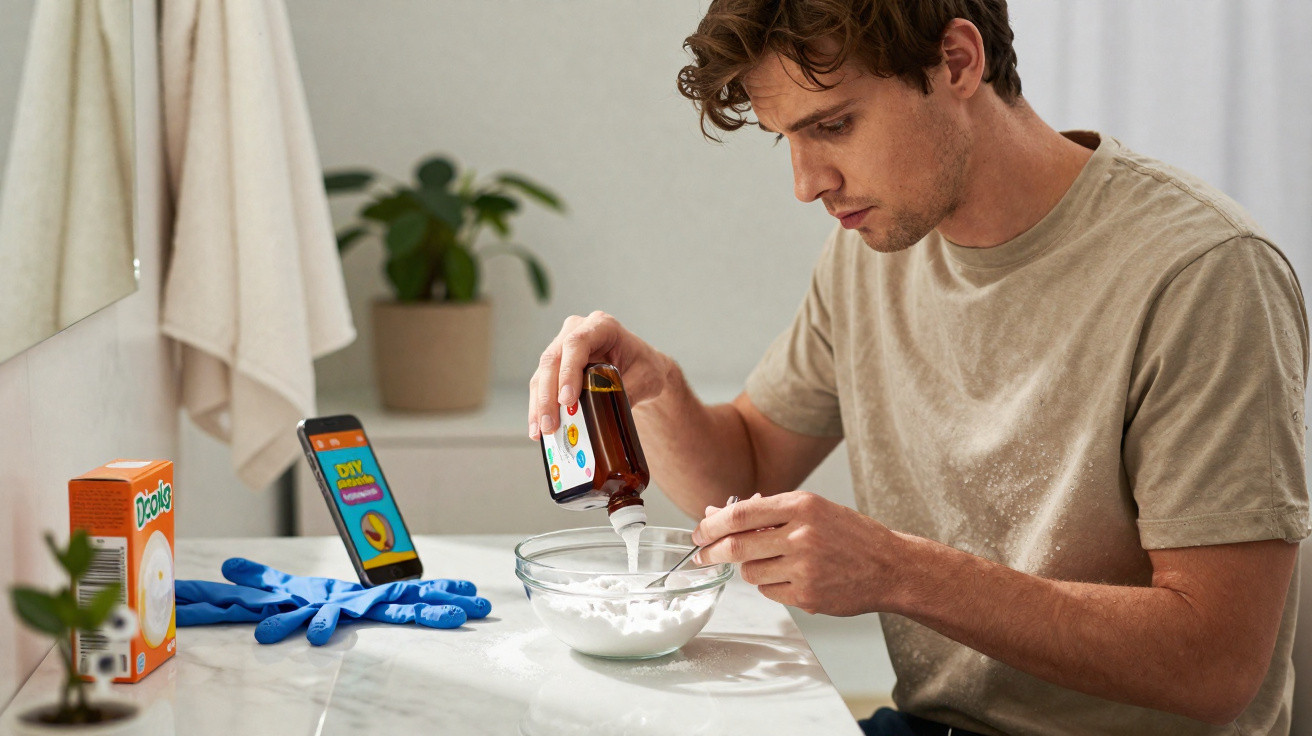
To make a DIY shower-screen cleaner, just combine basic ingredients that are likely already in your kitchen cupboard:
- 240 ml of white vinegar (or another mild acid you already have at home);
- 240 ml of mild, neutral washing-up liquid;
- a few drops of essential oil, such as mint, orange, or another citrus;
- warm water to top up the spray bottle.
How do you apply the solution to the glass shower screen step by step?
The mixture matters, but the way you use it can be just as important for the end result. With a simple routine, you can fit the clean into a few minutes-ideally while the bathroom is still steamy and damp, such as straight after a shower.
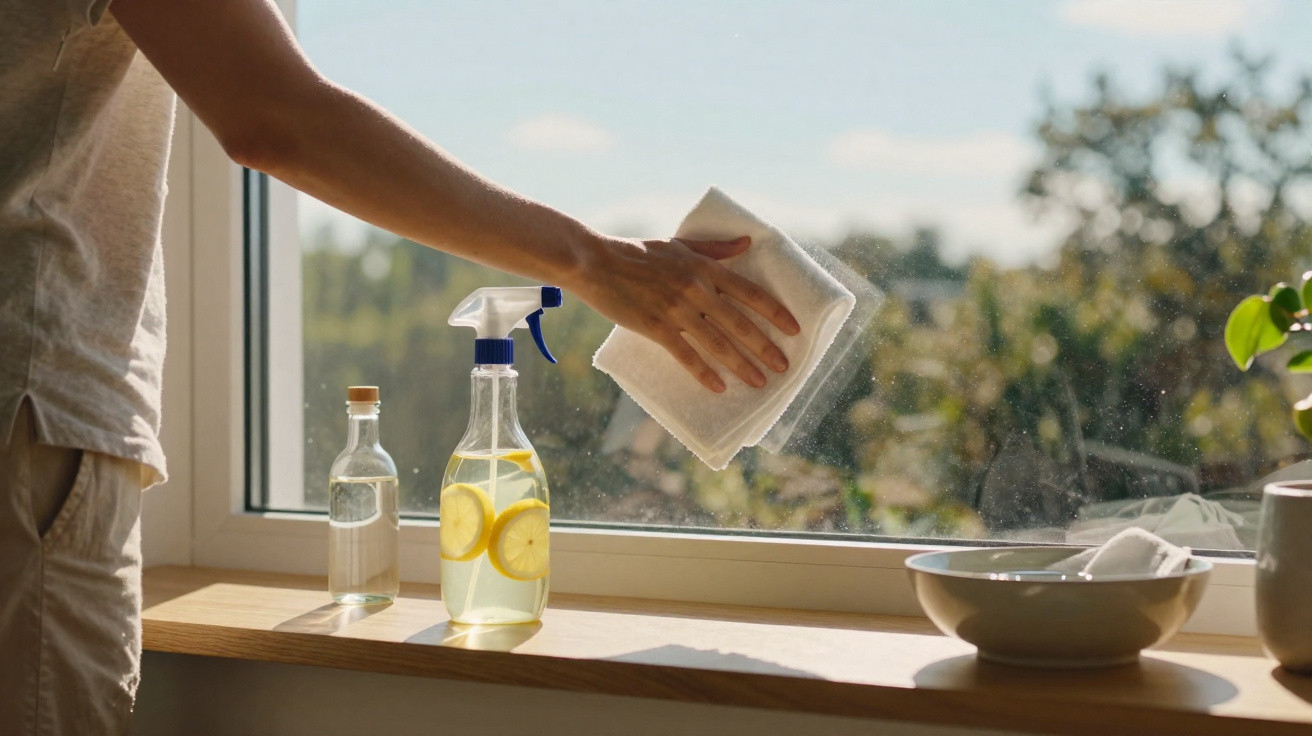
Pour the vinegar, washing-up liquid and essential oil into a spray bottle, then top up with warm water, leaving a little space so you can shake it. Before each use, give it a gentle shake to recombine everything, then spray the solution over the entire inside and outside of the shower screen, paying extra attention to the whitest, most cloudy areas. Leave it to work for 15 to 30 minutes, then wipe lightly with a soft sponge or a damp cloth and rinse thoroughly with warm water, steering clear of abrasive pads that could scratch the glass.
What’s the difference between using vinegar or citric acid on the shower screen?
Cleaning a shower screen with vinegar is very common, but its strong smell can be unpleasant in small, poorly ventilated bathrooms. In those situations, citric-acid-based products can be a gentler-smelling alternative, and they also help lift limescale and water marks.
When deciding what to use, consider what you already have at home, how strong the scent is, and how the product behaves with your particular glass and finishes. Always test on a discreet spot first, keep the room well ventilated, never mix any acid with chlorine-based cleaners, and avoid applying it directly to delicate metal trims to reduce the risk of corrosion.
What daily habits help keep a glass shower screen clean?
Alongside a more thorough clean, a few quick habits can make a big difference in preventing heavy build-up and stubborn stains. They cut down the work next time and help the glass keep that “just cleaned” shine for longer.
Running a rubber squeegee over the glass straight after showering, drying it with a microfibre cloth or towel, and leaving the shower door slightly open so air can circulate all help. It’s also worth avoiding very oily products directly on the glass, and doing a more complete clean at least once a week-especially in a busy bathroom-so looking after the shower screen stays quick and routine, without drama or a major scrub-down.
Comments
No comments yet. Be the first to comment!
Leave a Comment