
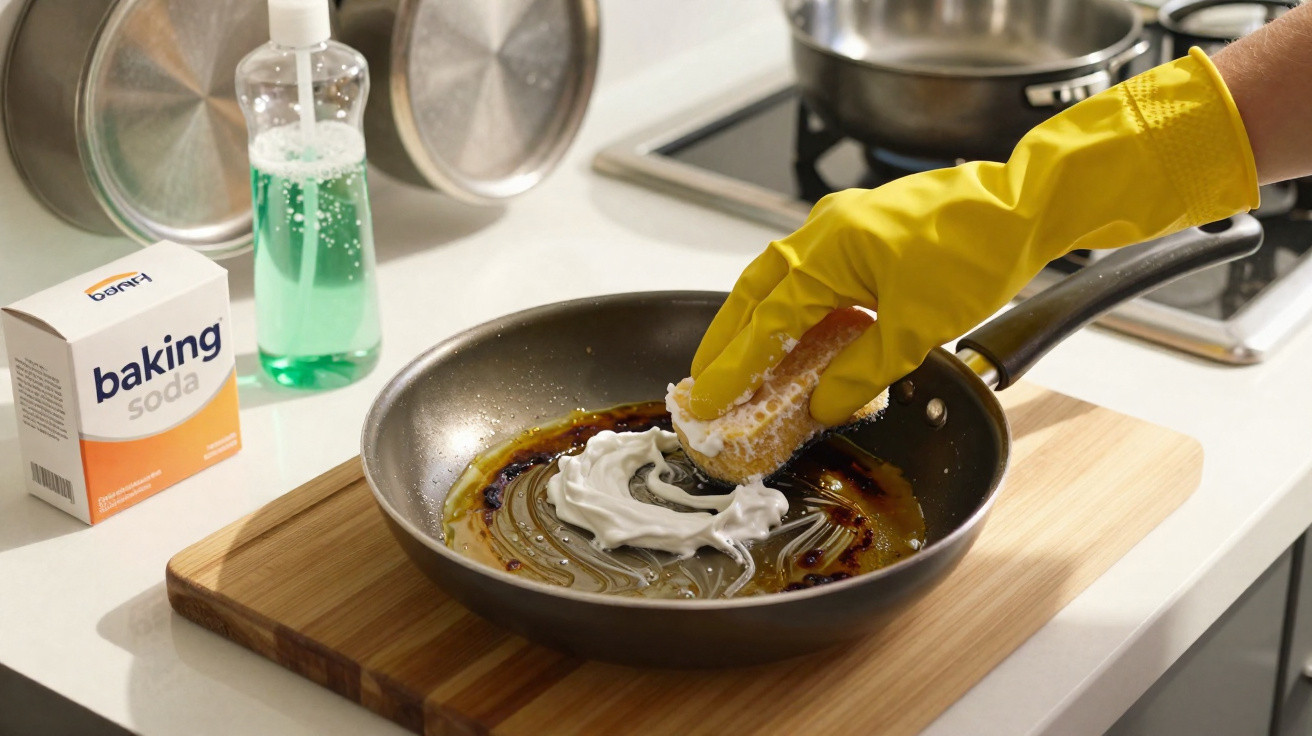
A dark, grimy build-up on the outside base of cookware is a common headache. Over time, burnt-on grease forms a tough layer that clings stubbornly. A few straightforward applications can bring back the original shine without extreme physical effort.
How do you remove yellowed grease from a frying pan?
Day-to-day cooking exposes your pans to high heat and leftover refined oils. When these residues burn repeatedly, they turn into a hardened crust that ordinary washing-up liquid cannot break down. This yellowed grime calls for a mixture with strong degreasing power.
Rather than scraping aggressively at the surface, mixing a thick paste changes how the dirt grips the metal. The blend pairs the alkaline action of bicarbonate of soda with a mild scouring cleanser, helping lift residue without damaging the pan’s structure.
Related read: How do you remove water marks and burnt-on stains from stainless-steel pans?
Home techniques can restore the original shine and shift dark crusts without hard scrubbing or the risk of scratching.
Why use a bicarbonate-of-soda and washing-up-liquid paste?
When combined, these two ingredients create a gentle chemical reaction that softens embedded fatty deposits. The washing-up liquid coats oil molecules, while the powder’s fine grains provide light mechanical abrasion, loosening residue with surprising efficiency.
This approach greatly reduces the need to scrub the underside of a pan for ages. By letting the paste sit over the whole affected area, the cleaning process becomes far more manageable and is kinder to the cook’s hands during routine chores.
Below is a video from the YouTube channel Home Recipes Simple Tips that explores the points covered here in more detail:
What is the ideal time to leave it on to soften the crust?
To make sure the ingredients work properly on carbonised grease, time is the key factor. Leaving the product on the base of the frying pan allows the rigid dirt to start releasing in a gradual, steady way.
The recommended resting time is exactly twenty minutes to ensure it softens fully. After this period, the thicker crust loses its grip on the metal surface, making the final wash easy with a standard soft sponge.
Essential cleaning kit
Materials needed
Gather these simple items before you start:
- Bicarbonate of soda to act on the carbonised crust;
- Mild washing-up liquid to boost the degreasing effect;
- A soft sponge to finish rinsing without scratching.
How do you clean the bottom of a frying pan without using steel wool?
Steel wool can leave deep grooves that ruin the pan’s visual finish. Using the homemade paste shields the outer layer from harsh abrasion, delivering effective cleaning without scratching the metal.
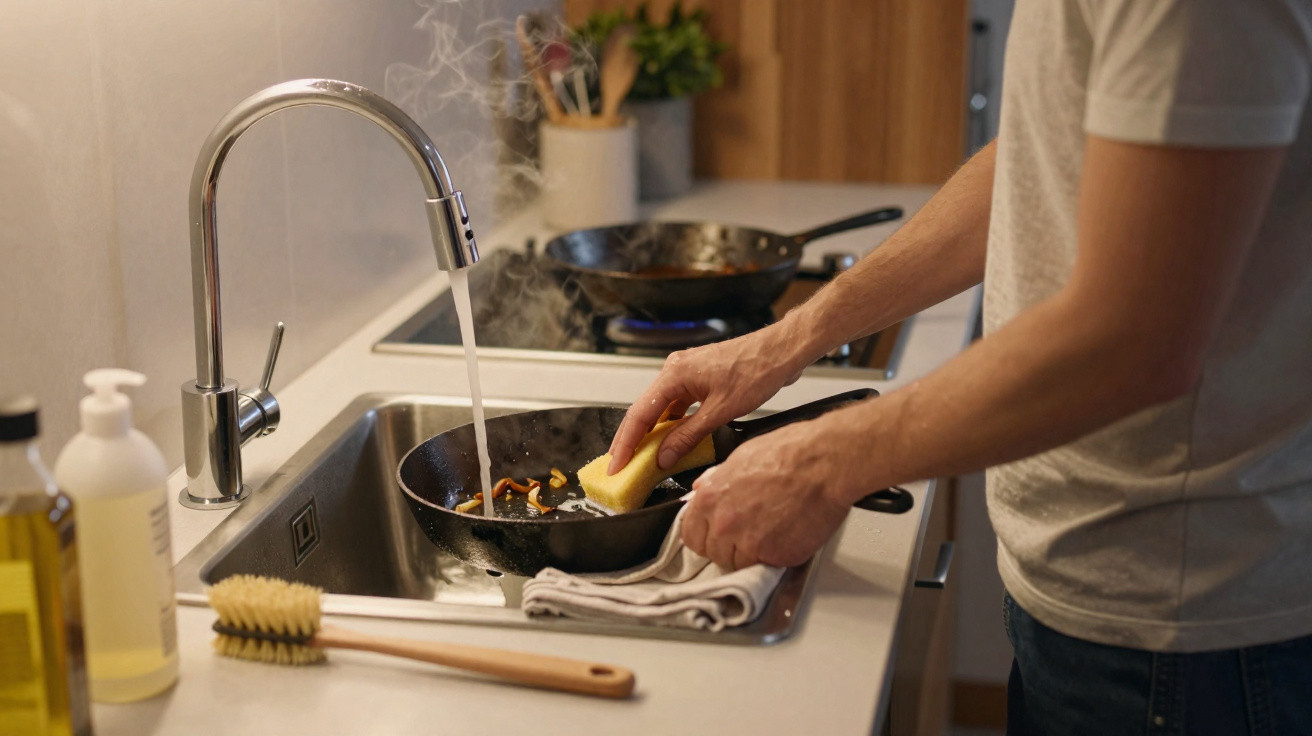
Once the grime has softened, the soft side of a kitchen sponge is usually enough. This technique helps stainless steel or aluminium cookware look newer for longer and extends the durability of your kitchen equipment.
Follow these key recommendations to clean the underside safely:
- Use warm water to rinse away softened residue more easily;
- Spread the paste so it covers the entire area of burnt-on crust evenly;
- Dry the utensil completely with a clean cloth once the dirt has been removed.
How can you prevent carbonised grease building up on pans?
Keeping to a cleaning routine straight after use helps stop stubborn residue from setting. Washing the outside base once the item is cold prevents oils from drying out completely, which reduces the formation of future burnt layers.
Also, keeping the hob temperature under control helps avoid overheating the outer sides. This simple daily care keeps the kitchen organised and prevents hard-to-remove dirt from accumulating on frying pans.
Comments
No comments yet. Be the first to comment!
Leave a Comment