
You crack open the fridge, still half asleep, looking for the milk. Before you even spot it, the smell lands first: three-day-old curry, a forgotten half onion, and a cluster of unloved takeaway tubs lurking at the back. You shut the door, then open it again - as though attempt number two might somehow be less offensive.
Wiping the shelves takes the edge off, leaving the door open barely helps, and those supermarket “fridge fresheners” feel like spraying perfume to mask body odour rather than dealing with the real issue.
There is, however, a tiny, almost laughably simple thing that fixes it quietly. And there’s a good chance it’s already in your kitchen cupboard.
Why your fridge smells… even when it looks clean
Most people assume a smelly fridge must mean spills, sticky shelves, and visible grime. In reality, the strongest odours usually come from vapour rather than mess you can see. Microscopic particles from cheese, fish, onions, sauces, and fruit float through the cold air, then settle onto every surface inside.
You scrub the glass, bin the questionable plastic tub, and feel proud of yourself for about ten minutes. Then the faint, persistent odour returns the following day - not quite disgusting, just noticeable enough to make your yoghurt taste a little like yesterday’s garlic.
Imagine a friend popping round. You offer a drink, open the fridge, and a wave of “something” slips out. You both act as if nothing happened. They keep smiling. You grab the bottle a bit too quickly, close the door a bit too fast, and immediately switch topics.
A 2023 household survey in Europe found that unpleasant fridge smells rank among the top three reasons people feel “embarrassed” about their kitchen when guests come over. Not the piled-up washing-up. Not the crumbs on the worktop. The fridge.
What’s happening is chemistry rather than “dirt”. Odours are simply volatile molecules hanging in the air. Certain foods - especially sulphur-rich ones such as eggs, cruciferous vegetables, and fish - give off compounds that latch onto plastic, rubber door seals, and even the fridge’s insulation.
Routine cleaning can remove the sources, but it won’t catch every odour molecule that’s already spread and clung to surfaces. That’s why you need something inside the fridge that does more than cover the smell: it has to react with those molecules, trapping or neutralising them gradually.
The quiet power of a simple bowl of baking soda
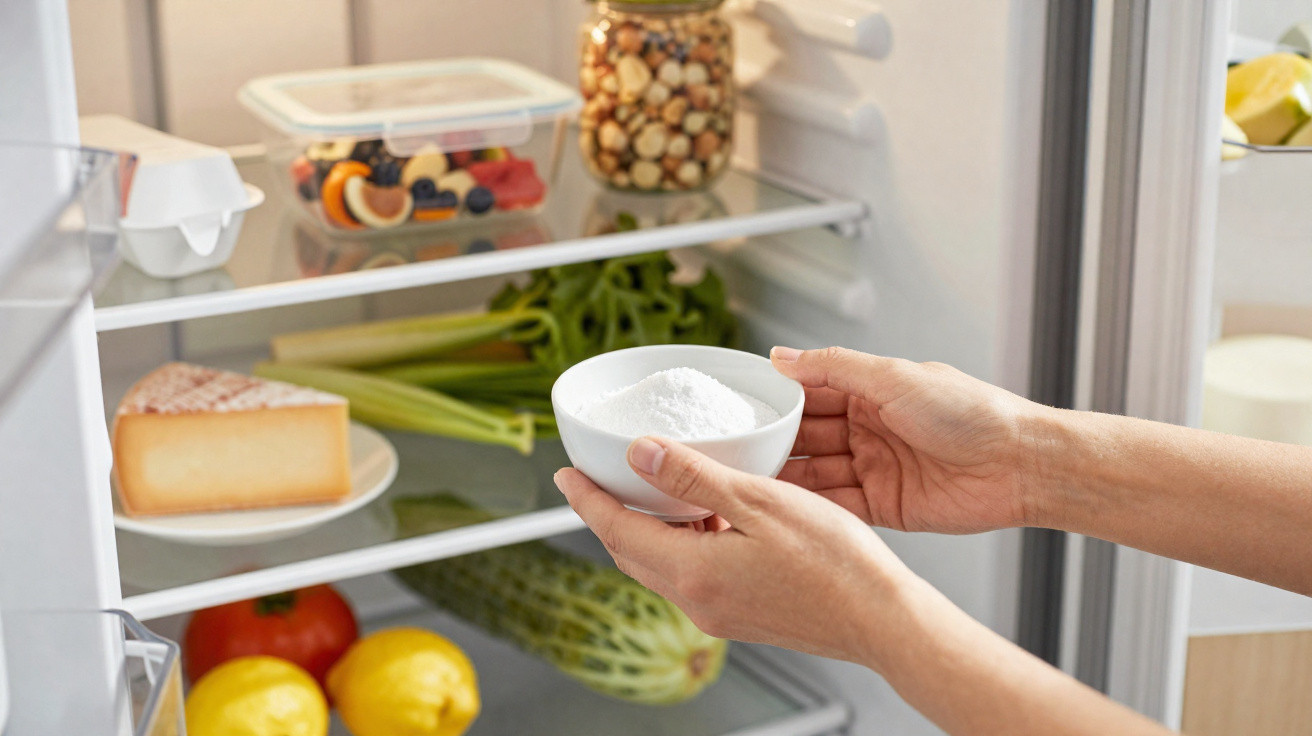
The move that works surprisingly well is this: grab a small, shallow bowl, tip in baking soda, and place it on a middle shelf in the fridge. No lid, no gadgets - just a broad layer of powder exposed to the cold air.
Baking soda (sodium bicarbonate) behaves a bit like a sponge for acidic, and some basic, odour molecules. As air circulates, those compounds collide with the crystals and get neutralised, rather than lingering around your salad drawer for days.
Many people who say they “tried baking soda” once simply shoved an unopened box at the back and forgot about it. Then, when nothing changed much, they decided it didn’t work.
The key is surface area. It’s the same principle as drying clothes: a sheet screwed into a ball stays damp, but spread out on a line it dries quickly. Baking soda works in the same way. When it’s poured into a wide bowl, far more of it is in contact with the air - and the deodorising effect increases dramatically. That’s when you go from “a bit less bad” to almost no smell at all.
Chemically, plenty of fridge odours are mildly acidic - from souring milk, ageing fruit, and sauces oxidising. Baking soda is gently alkaline, so when those airborne acids touch it, they react and become much less smelly (or turn into neutral compounds).
The fridge’s cold, humid environment helps keep the powder slightly active, particularly as temperatures shift whenever the door is opened. Rather than battling odours with lemon slices, coffee grounds, or scented gels that just add yet another smell, baking soda quietly cancels the problem at the source. That’s why, despite all the trendy hacks online, a simple bowl of baking soda still wins in real life.
How to set it up so it actually works (and keeps working)
Begin with a quick reset. Wipe the fridge with warm water and a drop of washing-up liquid, then dry the shelves. You don’t need an hours-long deep clean - just deal with spills and anything obviously causing trouble.
Fill a small bowl or ramekin with at least about 60 g of baking soda. Set it on a middle or upper shelf (not in the door), where airflow is better. Leave it uncovered and let it sit there doing its job.
This is where most people get caught out: baking soda does eventually reach a “used up” stage. It won’t fail overnight, but over the weeks it becomes saturated with trapped molecules and loses effectiveness.
Realistically, no one keeps on top of this daily. But if you replace the bowl every 1–2 months - or sooner after an especially “smelly” stretch (fish dinners, meal-prep marathons, lots of leftovers) - the fridge stays consistently neutral. No perfume. No strange mash-up of scents. Just… nothing.
“Once I started using an open bowl of baking soda and swapping it every month, my fridge stopped smelling like ‘old restaurant’ and started smelling like… cold air,” laughs Ana, a busy mom of three who batch-cooks every Sunday.
- Choose a wide, shallow container
More exposed surface means more contact with odour molecules and faster neutralising. - Keep it away from strong-smelling uncovered foods
You want it absorbing what’s in the air - not turning into a clumpy paste stuck to your cheese. - Replace it on schedule
Every 30–60 days, or after a major spill or a power cut. - Date-label the bowl
A small piece of masking tape helps you stay honest and prevents months-old powder lingering. - Don’t cook with the “old” baking soda
Living with a fresh fridge changes more than the smell
When your fridge smells neutral, something subtle happens: you trust your food again. You stop assuming the chicken has turned simply because the air smells odd, and you rely on real cues instead - colour, texture, and actual use-by dates.
You also tend to eat what you already have. When opening the door doesn’t come with a whiff of “ugh”, leftovers feel like options rather than punishment. That usually means less waste, fewer guilty bin-dumps, and more deliberate cooking.
| Key point | Detail | Value for the reader |
|---|---|---|
| Open bowl of baking soda | A wide, uncovered surface on a central shelf | Maximises odour neutralisation without gadgets |
| Regular replacement | Swap every 1–2 months or after intense smells | Keeps the deodorising effect strong over time |
| Simple cleaning + soda | Quick wipe of shelves, then let soda handle the rest | Easy routine that actually sticks in real life |
FAQ:
- Question 1
Can I just leave the baking soda in the cardboard box?
Yes, but it won’t be as effective. The opening is small, so less air reaches the powder. For persistent odours, tip it into a shallow bowl and leave it fully exposed.- Question 2
How long does a bowl of baking soda last in the fridge?
Typically 30–60 days. If you often cook strong-smelling foods such as fish, garlic, or cabbage, changing it monthly helps keep the fridge consistently neutral.- Question 3
Is baking soda safe to use near food?
Yes. Baking soda is food-safe. Just don’t sprinkle it onto food unless a recipe calls for it, and don’t bake or cook with the powder that’s been sitting in the fridge absorbing odours.- Question 4
What if my fridge still smells even with baking soda?
There’s likely a hidden source - a leak, liquid under a drawer, or something spoiled at the back. Clean those areas first, dry everything properly, then put in a fresh bowl of soda.- Question 5
Are there any alternatives if I don’t have baking soda?
Activated charcoal or coffee grounds can work in the short term, but they often introduce their own scent. For a neutral, food-safe, low-cost option, baking soda is still the most dependable long-term choice.




Comments
No comments yet. Be the first to comment!
Leave a Comment