
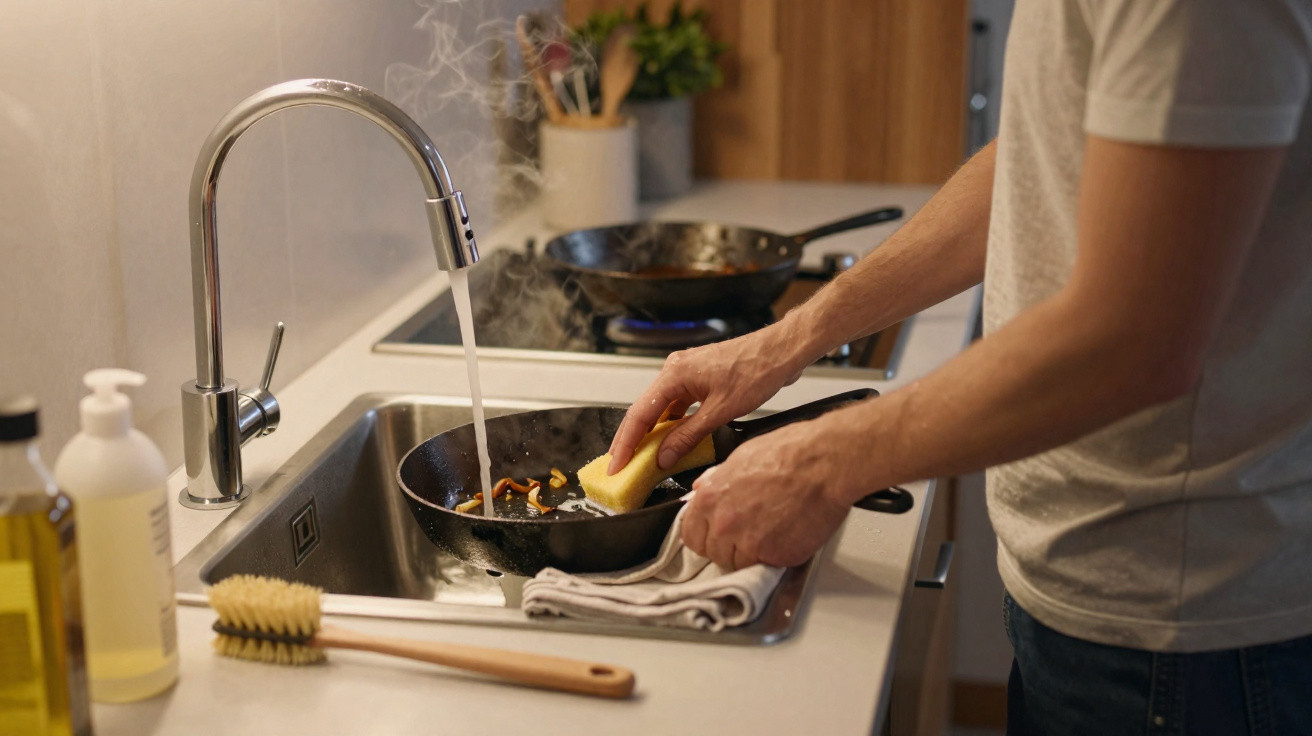
The pan is still giving off heat when the worry kicks in.
You’re stood at the sink, looking at a layer of caramelised onions fused to cast iron like glue. Your hand reaches for the washing-up liquid, and a familiar warning echoes in your head from half the internet: “Never use soap! You’ll ruin the seasoning!”
You pause and picture last week’s steak and that flawless sear. You remember how much time it took to build that smooth, shiny black finish. You also remember the grim tales: pans turning rusty and grey, then getting shoved to the back of a cupboard after one “wrong” wash.
The water keeps running. The pan keeps cooling. You’re caught between cleanliness and folklore, unsure what still counts as fact in the cast iron world. There’s only one way to settle this small kitchen standoff.
The messy truth about “never washing” cast iron
Anyone who loves cast iron seems to have a sink-side anecdote. One person proudly claims their pan hasn’t seen soap in ten years. Someone else admits they’ve put theirs in the dishwasher “when it’s really bad” and, somehow, it’s still going.
The truth sits somewhere between those extremes. Cast iron itself can take a beating, but seasoning is easy to damage if you treat it badly. That deep black patina that helps food release isn’t mysterious at all. It’s simply very thin layers of oil that have been heated repeatedly until they transform into a protective coating.
That coating is tougher than many people assume. A small amount of soap won’t wipe it out in a single wash. The real problems come from heavy-handed scrubbing with harsh pads, leaving the pan soaking in water, or rinsing it and then letting it air-dry on the rack.
If you ask around, you’ll hear a familiar sequence. Someone makes a tomato-heavy pasta sauce, leaves the pan in the sink overnight “to soak”, and then forgets about it. In the morning the surprise arrives: orange rust speckles, dull grey areas, and a once-even black sheen that now looks patchy and defeated.
They conclude they’ve ruined it. The pan gets hidden away, loaded with guilt. Sometimes it ends up in the bin. That feels particularly bleak when it’s a family pan-one that sat on a gas hob for decades in a parent’s or grandparent’s kitchen.
Then there’s the hygiene side of the debate. A 2020 kitchen habits survey in the UK found that an unexpectedly large number of people do nothing more than wipe cast iron with a paper towel, even after cooking meat. If the pan regularly reaches very high heat, that can be workable. It feels far less convincing when last night’s chicken was fried over a low flame and received only the lightest wipe.
Beneath the myths is a straightforward explanation. Seasoning is chemistry, not superstition. When oils are heated beyond their smoke point, they polymerise and form a hard layer-almost plastic-like-that bonds tightly to the iron. It holds up well, but it isn’t invincible. Abrasive tools can scrape it. Water left sitting can creep underneath. Prolonged, soapy soaking can slowly thin out weaker spots.
Because people are afraid of harming that surface, some end up treating cast iron as if it’s cursed. The funny part is that a properly seasoned pan benefits from being used and then cleaned. It improves through repetition: cook, wash, dry, and lightly oil. Overthinking and neglect tend to do more harm than a small squirt of washing-up liquid ever could.
The safe way to clean cast iron without wrecking seasoning
The most reliable approach begins when the pan is still warm-no longer blazing hot, but warm enough to handle with a tea towel. Add a splash of hot water. You don’t need to fill it up; just enough to cover the cooking surface and loosen anything stuck on.
Use a soft sponge, a non-scratch scrubber, or a firm brush. If the meal was especially oily or heavily seasoned, add a tiny drop of mild washing-up liquid. Scrub in small circles, targeting the residue rather than scouring the entire pan like you’re cleaning a bathroom tile.
Rinse it promptly under hot water. Skip the long bath and don’t leave it “soaking while you watch a show”. Cast iron’s quiet opponent is lingering moisture. The aim is clear: get rid of food, keep the seasoning.
This is where plenty of people slip up. They clean it fairly well, then park it on the draining rack with the glasses and plates. An hour later, faint rust freckles show up around the rim. Leave it until morning and those spots multiply.
Do this instead: dry it straight away with a tea towel, inside and out. Then set it on a low hob for two or three minutes. Let the final traces of water evaporate until the pan looks completely dry-almost as if it’s “thirsty”.
Now for the small habit that quietly protects the seasoning. Put on a few drops of a neutral oil-rapeseed, sunflower, or groundnut-and spread it around with folded kitchen paper. This isn’t about making it shiny. You’re aiming for the thinnest film possible: barely visible, with no greasy pools.
“Think of caring for cast iron like polishing shoes,” says one long-time chef I spoke to. “You’re not repainting them every time. You’re just keeping the surface healthy, flexible, ready for the next day.”
This is often where unrealistic advice appears: oil it after every single use, buff it like a show car, and store it with near-surgical care. Let’s be honest: hardly anyone actually does that day after day. That’s not a problem. What matters is a routine that works in real life, not one designed for Instagram.
- Clean it while it’s still warm, not completely cold.
- Don’t soak it for ages or leave it wet on the rack.
- Dry it on the hob, not only with a towel.
- Use a whisper of oil, not a slick.
- If it looks dull or patchy, cook something a bit oily next time.
Living with cast iron, not living in fear of it
Cast iron keeps finding its way back into modern kitchens for a reason, even with all the non-stick options promising effortless cooking. It offers heft, heat retention and a feeling of continuity. A pan that can outlast the person who first seasoned it has a character that no ceramic coating really matches.
You don’t need to be flawless to keep it going. You might scorch a piece of fish, accidentally simmer chilli in it for an hour, or leave it out on the table overnight once in a while. Seasoning can be worn away, but it can also be built back up-slowly, layer after layer.
On a quiet evening, when the kitchen lights are dim and the final plate is stacked, that extra minute with the pan can feel oddly grounding. Wipe, dry, add a touch of oil, and warm it briefly over the flame. It’s still a job, but it’s also a small promise to your future self-and perhaps to whoever ends up cooking with that pan long after you.
| Key point | Detail | Why it helps you |
|---|---|---|
| Clean while warm | Rinse and scrub while the pan is still warm | Less effort, and less chance you’ll need to scrape hard or deal with stuck-on food |
| Active drying | Towel-dry, then heat for a few minutes on the hob | Prevents rust and extends the life of the pan |
| Ultra-thin oil film | A few drops, spread well after each “proper” wash | Supports seasoning without sticking or going rancid |
FAQ:
Can I really use washing-up liquid on cast iron?
Yes. A small amount of mild soap won’t destroy well-established seasoning. The bigger risks are long, soapy soaks and aggressive scrubbing-rather than a quick wash and rinse.What if my cast iron starts to rust after cleaning?
Scrub the rusty spot with a non-metal scrubber or fine steel wool, rinse, dry completely on the hob, then wipe on a thin layer of oil. If the rust is severe you may need to strip it and fully re-season, but light rust is usually simple to sort out.How often should I re-season my pan in the oven?
Only when the surface becomes very patchy, sticky or dull, and food is sticking across the pan. With light maintenance after use, many home cooks go months-or even years-between full oven re-seasoning.Is it safe to cook acidic foods like tomatoes in cast iron?
Yes, from time to time. A well-seasoned pan can cope with tomato sauce or a wine deglaze. If you constantly simmer acidic dishes in it, the seasoning can slowly wear down, so it’s sensible to rotate pans if that’s how you cook most often.Can cast iron go in the dishwasher?
It can physically survive a cycle, but it will very likely come out dull, stripped and possibly rusty. Hand washing is the better option because it protects the seasoning and avoids harsh detergents and prolonged water exposure.




Comments
No comments yet. Be the first to comment!
Leave a Comment