
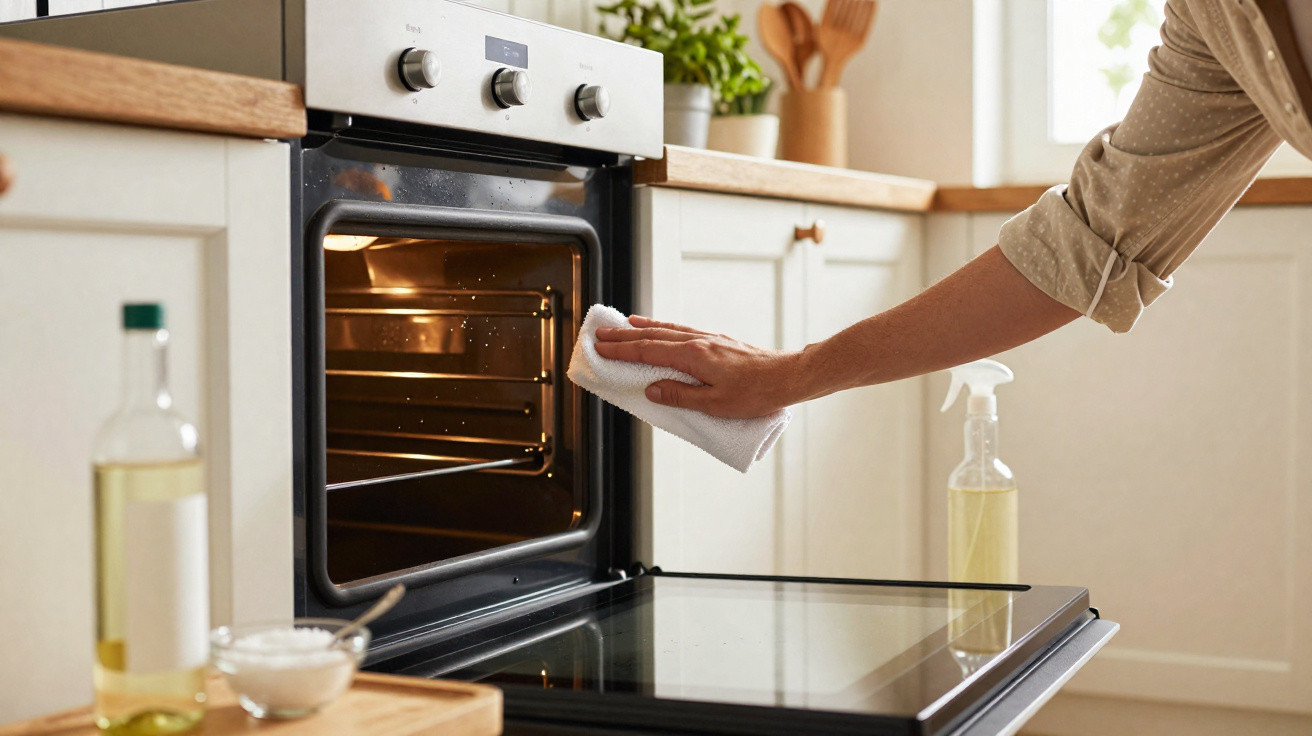
A less stressful, more affordable route to a properly clean oven is right in front of you.
Keeping on top of it helps your oven heat consistently, can cut energy use, and prevents last night’s fish from turning up in today’s pie. You can dodge aggressive chemicals and hours of scrubbing. A simple, low-tech approach works in an everyday kitchen, not just a showroom.
Why oven upkeep matters
A hard-working oven turns out lasagnes, roasted root veg, fruit crumbles, and the occasional spill-over. With every heating cycle, thin layers of fat and caramelised sugar bake on and set. They hold on to odours. They also act like insulation on the metal, which can lengthen preheating and make browning patchy. That means wasted time and electricity, plus flavours you never meant to add.
Cleaning little and often safeguards enamel, keeps the door glass clearer, and stops seals from being baked into a crust of residue. You notice the difference when a tray of biscuits cooks evenly again.
The two unexpected ingredients
White vinegar plus fine salt makes a mildly abrasive, odor-taming paste that lifts baked-on grease without scouring enamel.
It sounds almost too straightforward, but the combination is effective for everyday grime. Vinegar helps break through greasy films and takes the edge off lingering smells. Fine salt provides a gentle abrasive. Used together, they shift stubborn sauces and brown marks on the door without heavy fumes or artificial “fresh” scents. It’s inexpensive, keeps well in the cupboard, and takes seconds to mix.
Step-by-step method
- Make the paste. In a small bowl, mix equal parts white vinegar and fine salt. You’re aiming for a spreadable, yoghurt-like consistency. If it’s too thin, add a little more salt; if it’s too thick, loosen it with a splash more vinegar.
- Begin with a cold oven. Warmth shortens the working time and can dry the paste before it has a chance to do its job.
- Spread it on well. Apply with a soft cloth or a non-scratch sponge. Coat the sides, back panel, and the door glass. Steer clear of heating elements, fans, and fragile seals.
- Leave it to work. Give it 15–20 minutes so the acid can loosen grease while the salt helps nudge residue away.
- Use only gentle pressure. Work in small circles over the worst patches. The paste should be doing most of the hard work.
- Rinse and dry. Lift everything off with a damp cloth, then go over it again with clean water. Finish with a dry towel to restore shine, particularly on the glass.
For racks and trays: soak in hot water with a good splash of vinegar and a pinch of salt for 30 minutes, then wipe.
Precautions that keep you safe
Test a discreet spot first, particularly if there are any bare aluminium parts inside the oven. Keep the paste away from gas burners, heating elements and door gaskets. Open a window if you’re sensitive to smells, and wear gloves if your skin is easily irritated.
Never mix vinegar with bleach. That combo releases dangerous fumes.
If your oven is catalytic or pyrolytic, stick to the manufacturer’s guidance. A light hand-clean between self-clean cycles can reduce how often you need to run an energy-hungry programme.
Alternatives when stains fight back
Most everyday build-up will come away with vinegar and salt. If an oven has been through months of roast dinners, use one of the options below occasionally.
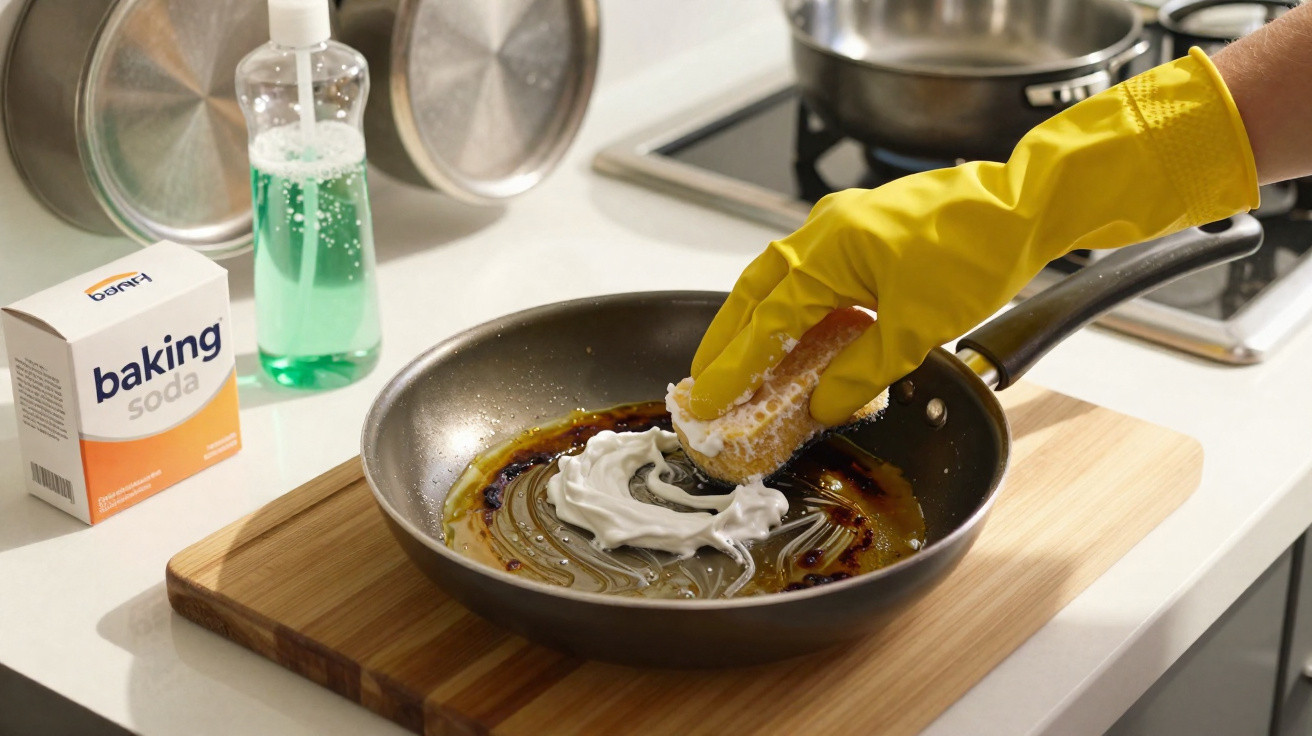
- Bicarbonate of soda paste: Combine three tablespoons of bicarbonate of soda with one tablespoon of water. Spread it on, wait 30 minutes, then mist with vinegar for a mild fizz. Wipe away. Helpful for carbonised patches on the oven floor.
- Concentrated washing-up liquid: A few drops in hot water help emulsify grease for weekly quick cleans that are kinder to enamel.
- Ammonia vapour method: Only for extreme cases. Put a small, heatproof bowl with a little household ammonia on the lower shelf of a cold, switched-off oven, and place a second bowl of very hot water above it. Shut the door for an hour. Ventilate the room thoroughly before opening, and wear gloves. Never mix ammonia with anything else.
- Household pumice stone: Useful on thick steel racks and heavily soiled trays. Avoid glass and enamel, as tiny scratches are permanent.
Quick comparison at a glance
| Method | Best for | Wait time | Notes |
|---|---|---|---|
| Vinegar + salt paste | General grime, door glass haze | 15–20 min | Low odour, easy rinse |
| Baking soda paste | Carbonized floor spots | 30 min | Add vinegar spray to finish |
| Dish soap in hot water | Weekly upkeep | 5–10 min | Gentle on enamel |
| Ammonia vapor | Severe, long-neglected buildup | 60 min | Strong caution and ventilation |
| Pumice stone | Heavy racks and trays | As needed | Avoid glass and enamel |
Why this mix works
Vinegar contains acetic acid, which helps loosen fatty films and starchy residue so it releases without much force. Salt provides micro-level abrasion: the grains are firm enough to shift grime, but (used lightly) not so sharp that they should damage hard enamel. The payoff is a balanced cleaner that rinses away quickly and doesn’t leave a perfumed after-smell.
It also makes financial sense. One bottle of white vinegar and a bag of salt can last for months of kitchen jobs. You avoid a pile of specialist sprays under the sink, and you won’t have competing fragrances fighting with your food.
How often to clean without hating it
Wipe down while the oven is warm rather than hot. After roasting, leave the door slightly open and, once it’s cooled to a safe temperature, give the interior a quick pass with a damp cloth. Fresh splashes lift off before they bake into carbon. Plan a deeper clean every two to four weeks, depending on how often you cook. Covered (tented) bakes tend to splatter less, and a drip tray beneath fatty joints saves effort later. The door glass usually needs the most attention because preheating throws fine oil mist onto it again and again.
If smells still hang around after cleaning, rinse once more with plain water and leave the door ajar for a few minutes. Vinegar helps neutralise odours, but fresh air finishes the job.
Small gains that add up
When heat distribution improves, your timings become more reliable. A clean oven cavity and clear glass also let you check progress without opening the door, which helps maintain temperature and reduces heat loss. Over a month of regular use, cutting down on repeated door-checks and re-stabilising temperatures can save noticeable minutes of cooking time - kinder to both your schedule and your energy bill.
Extra tips many home cooks miss
For convection ovens, only remove the rear cover if your manual says it’s allowed; then, with the oven cold and unplugged, vacuum loose crumbs through the vent slots. Airflow improves when debris is cleared from the fan route. For rubber door seals, stick to plain warm water on a cloth. Strong cleaners can shorten their lifespan and cause heat to leak.
If you entertain often, set a gentle calendar reminder after big cooking weekends. A 20-minute vinegar-and-salt clean is far easier than a once-a-season battle. If you’re renting, take a photo of the oven interior after cleaning - it shows you’ve looked after it and may help with deposit discussions later.
Short on time? Treat the door only. Clean glass instantly improves visibility and makes the whole oven feel fresher.
One more practical point: if you run a pyrolytic cycle, do a quick vinegar-and-salt wipe first to remove loose grease. The self-clean can then ash what’s truly baked on, and you may reduce the length of the high-heat cycle you need. With catalytic liners, keep things gentle; the liners absorb light splashes during everyday cooking, and a soft wipe helps that process.
Nothing under the sink is truly magic, but some combinations earn their keep. Vinegar and salt make the job straightforward, low-cost and surprisingly satisfying. And once the glass is clear again, you can actually watch your crusts brown - which is a big part of the pleasure of cooking at home.


Comments
No comments yet. Be the first to comment!
Leave a Comment