
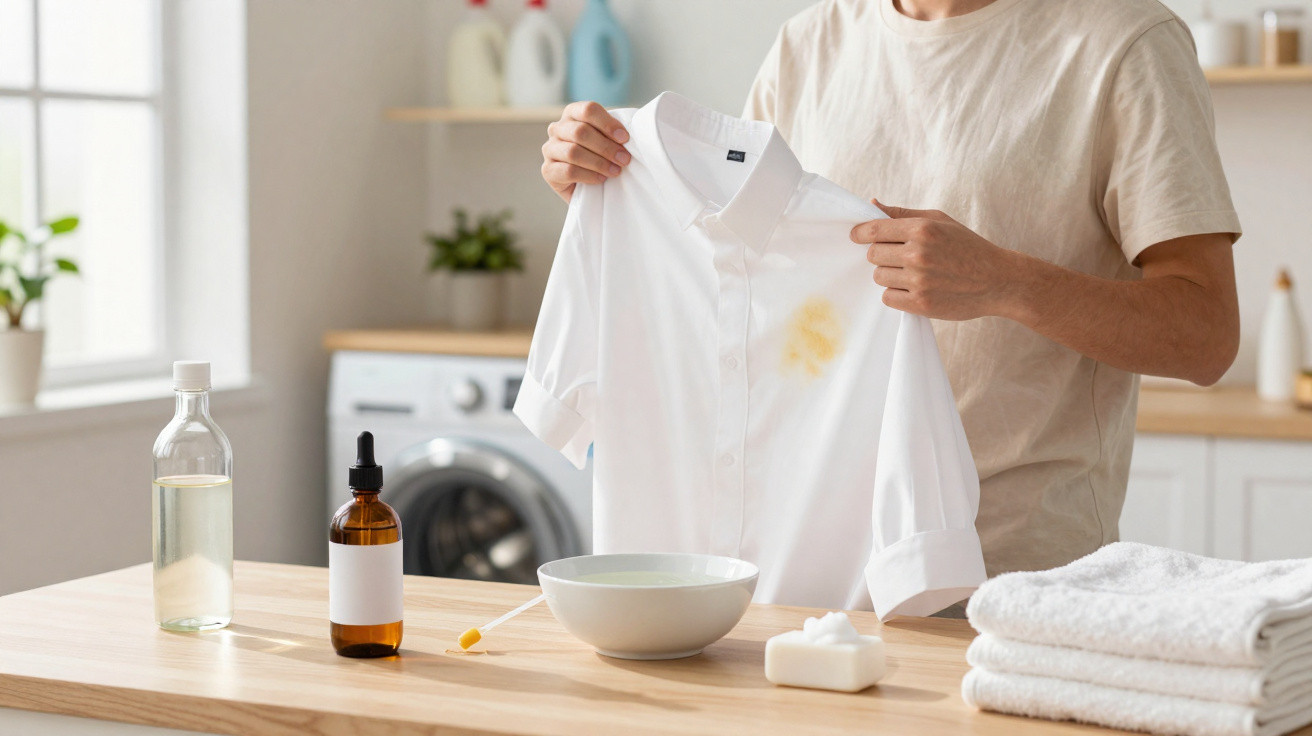
Yellow sweat stains form when body residues, deodorant and natural oils build up and oxidise within the fibres of white clothing. Rather than relying on bleach every time, you can treat the affected area with 10-volume hydrogen peroxide and plain white soap, keeping vinegar for a separate stage of the wash.
Why do sweat stains turn yellow?
Sweat itself is almost colourless, but it can react with skin oils, detergent residue and compounds found in antiperspirants. Over time, this combination works its way into the fabric and darkens, leaving more noticeable marks around underarms, collars and cuffs.
Bleach can lighten certain stains, but frequent use may weaken some fabrics and can even make yellowing from organic residues more pronounced. Before you start cleaning, keep the following in mind:
- Check the garment’s care label.
- Treat the stain before using a tumble dryer or an iron.
- Test on a small, hidden area first.
- Avoid this method on wool, silk and delicate fabrics.
- Do not apply any product to clothing while it is being worn.
How do you use hydrogen peroxide and white soap?
10-volume hydrogen peroxide contains hydrogen peroxide, an oxidising agent that can help break down the compounds responsible for yellowing. Apply the treatment to a dry or slightly damp garment:
- Pour a small amount of hydrogen peroxide onto the stain.
- Gently rub a little plain white soap into the fabric.
- Leave it to work for about 10 to 20 minutes.
- Rinse thoroughly under running water.
- Wash the item as normal, following the care label.
- Check the result before drying the garment.
Why shouldn’t vinegar and hydrogen peroxide be mixed?
White vinegar should not be combined with hydrogen peroxide in the same mixture or container. Together they can produce peracetic acid, which may irritate the eyes, skin and airways. You should also never add bleach to either of these products.
If you want to use vinegar, only do so after fully rinsing out the hydrogen peroxide and soap. A small amount can then be added separately to the rinse cycle, provided the care label allows it. In this context, vinegar helps lift soap residue-it is not a replacement for treating the stain directly.
What precautions help prevent damage to white clothing?
Hydrogen peroxide can affect delicate fibres, prints, embroidery and any coloured sections of a garment. That is why a patch test is still essential, even on white clothing. These precautions lower the risk of marks and wear:
- Use only low-strength hydrogen peroxide.
- Work in a well-ventilated area and wear gloves.
- Don’t allow the product to dry fully on the fabric.
- Avoid scrubbing with stiff brushes.
- Don’t combine different cleaning products.
- Repeat the treatment sparingly rather than leaving it on for longer.
How can you stop yellowing from coming back?
Treat stains as soon as you notice them, because heat from a tumble dryer or iron can set residues into the fibres. It also helps to let deodorant dry before putting on a T-shirt, to wash sweaty items without leaving them in the laundry basket for several days, and not to overuse detergent. Other methods require their own precautions too, such as when removing paint stains without spreading pigment through the fabric.
The safest approach is to keep each stage separate: hydrogen peroxide and white soap to treat the yellowed area, a thorough rinse, and vinegar only as an optional, isolated step. This order helps reduce residue without exposing white clothing to unsuitable chemical mixtures, better preserving the fibres and the garment’s bright appearance.



Comments
No comments yet. Be the first to comment!
Leave a Comment