
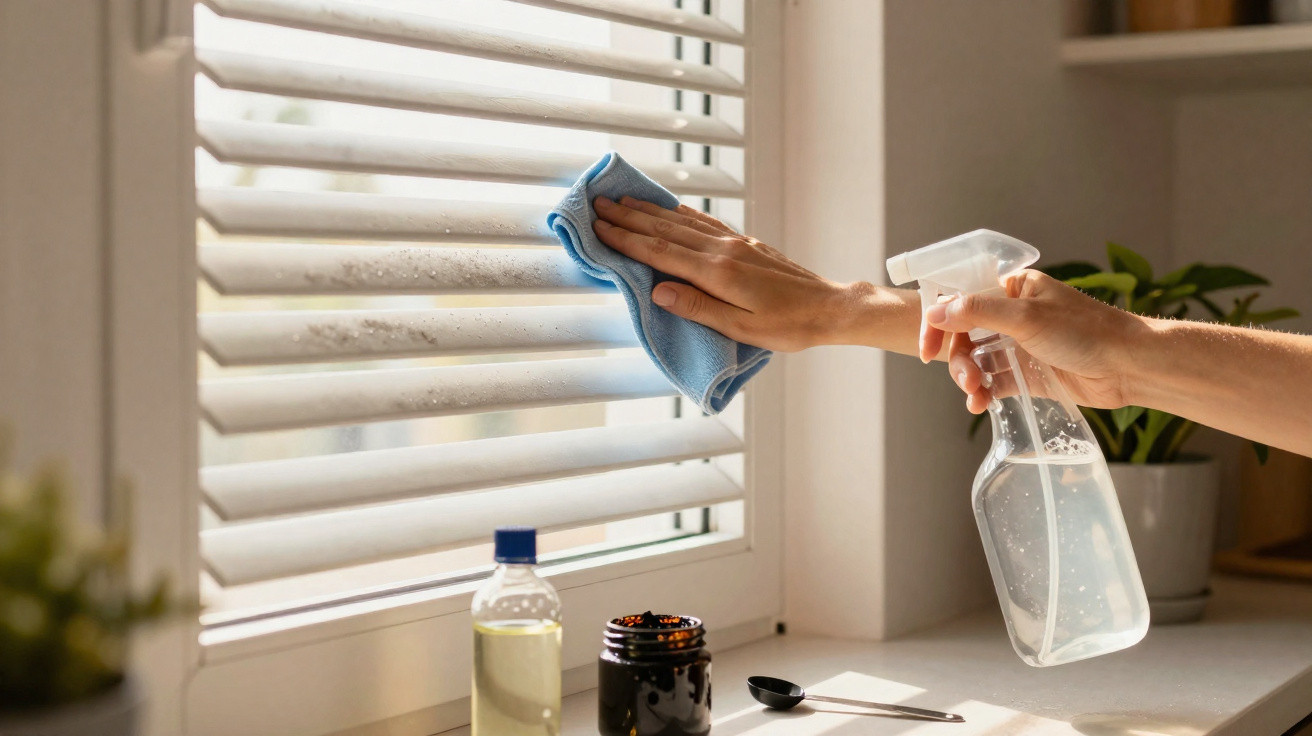
Anyone who has spent hours scrubbing plastic or aluminium roller shutters knows how frustrating the job can be. No sooner are they clean than a heavy downpour leaves dirt lodged in the slats again. A straightforward blend of three everyday ingredients can make a noticeable difference, helping grime take far longer to stick once more.
Why roller shutters get dirty again so quickly
Roller shutters sit outdoors all year round, exposed continuously to rain, wind, fine dust and exhaust fumes. The main culprits include:
- mineral-rich rainwater, which leaves pale, stubborn marks
- tiny particles from traffic and heating systems, which create a dark film
- greasy deposits carried by urban air and released from kitchens
On PVC and aluminium, these contaminants build up layer by layer. Over time, the exterior can look dull and patchy. A quick wipe with water then achieves very little, as dirt has already become caught in fine surface textures.
The real issue, however, often starts after cleaning. Many people use harsh products or abrasive sponges. This leaves tiny scratches and a slightly roughened finish. Those micro-scratches then act like magnets for fresh dirt: every particle can gain a foothold, rainwater lingers, and streaks develop.
“Anyone treating roller shutters with harsh products is unintentionally making them get dirty again even faster.”
Gentle roller shutter cleaning with just three ingredients
A much better approach uses a mild mixture with a slight protective effect, made from items many households already have:
- lukewarm water
- liquid black soap (savon noir)
- clear household vinegar
For a standard bucket, use the following quantities:
- 5 litres of lukewarm water
- 2 tablespoons of liquid black soap
- 1 glass (approximately 200 ml) of clear household vinegar
Each ingredient has a specific role in the bucket. Black soap loosens grease and the dark film of grime without harming the material. Vinegar tackles limescale and water marks. Warm water improves the cleaning action and helps the solution penetrate set-in deposits.
How to apply the mixture correctly
The process is uncomplicated, but a few details determine how effective the protective result will be.
Step 1: Fully lower the roller shutter
First, lower the shutter completely. This makes every slat accessible from outside. If you need to reach the top edge, work from an open window or, for higher shutters, use a secure step ladder.
Step 2: Remove dry dust first
Before wet cleaning, it is worth doing a quick dry pass. Use a feather duster, a soft-bristled hand brush or a microfibre cloth to lift cobwebs, pollen and loose dust. This prevents the particles from being smeared across the surface later.
Step 3: Apply the cleaning solution
Now use the bucket. Dip in a soft cloth or sponge, wring it out lightly so it does not drip, then wipe over the slats from top to bottom. There is no need to apply pressure: let the mixture do the work rather than your muscles.
“The most important trick is to leave the solution on the roller shutter for a few minutes instead of wiping it straight off.”
During this brief contact time, the vinegar breaks down limescale while the black soap surrounds grease and releases it from the surface. Only heavily soiled shutters may need a second pass over particularly dark areas.
Step 4: Rinse gently
Finally, rinse the roller shutter using clean water. You can use either:
- a garden hose with a soft, wide spray
- or a second microfibre cloth dampened with water only
It is best not to use a pressure washer, as its forceful jet can damage seals and push water into the shutter box. Leave the shutter open afterwards until the slats have dried.
How long the protective film lasts
As the shutter dries, the black soap leaves behind a thin, almost invisible coating. This layer slightly smooths the surface and reduces the ability of new dirt particles to adhere. Water droplets run off more easily, carrying dust away and leaving fewer marks behind.
Owners of roller shutters on busy roads often report that the usual black streaks take much longer to reappear. In practice, cleaning frequency can often be cut in half, changing from four cleaning sessions a year to two.
“With two gentle cleans a year, many roller shutters stay visibly fresher for much longer – entirely without a pressure washer.”
Using this mixture in spring and autumn keeps plastic and aluminium surfaces consistently clean without exposing them to chlorine, ammonia or abrasive cleaners.
Common mistakes that undo the effect
Some habits cause more damage to the material than many people realise. The following are particularly problematic:
- cleaners containing chlorine, ammonia or solvents
- rough kitchen sponges or scouring pads
- using a pressure washer at close range on isolated areas
- rubbing dry with old, stiff cotton cloths
These methods scratch the finish, open up joints or force water behind the casing. Even if your slats are already matt and slightly grey, the gentle method will still make a difference: they may not shine as if brand new, but they will look far more even and well cared for.
How often roller shutters should be cleaned
The right cleaning frequency depends greatly on the surroundings. Here is a useful guide:
| Environment | Recommended cleaning |
|---|---|
| quiet residential area, little traffic | 1–2 times a year |
| edge of town, moderate traffic | 2 times a year |
| city centre, main road | 2–3 times a year |
| close to an industrial area or in very dusty conditions | up to 3 times a year |
A regular but not excessive routine is important. Cleaning too often with aggressive products causes more long-term harm than protection.
What makes black soap and vinegar effective
Liquid black soap is generally made from vegetable oils, such as olive or linseed oil. It contains no abrasive particles and does not attack plastics or metals. This also makes it suitable for other delicate surfaces, including window frames, awning cassettes and plastic garden furniture.
Household vinegar is acidic enough to dissolve limescale, yet at this dilution it remains relatively gentle on materials. It should not be used on natural stone without testing first, as acid can cause staining there. For roller shutters made of PVC or coated aluminium, this dilution is generally safe.
Practical examples and useful additions
If you have a covered balcony or terrace, you can prolong the cleaning result by raising the roller shutters slightly in strong winds. This means less dirt-laden rain hits the full surface directly.
For pale roller shutters that have not been maintained for a long time, it is worthwhile doing a first, more thorough clean with the three-ingredient mixture, followed by a second, quicker round a few weeks later. After that, the usual twice-yearly routine is generally enough.
Conveniently, the same mixture can also be used on plastic window frames, PVC exterior doors and many aluminium fittings. This creates a consistent, well-maintained appearance across the whole exterior without needing ten different specialist cleaners in the cupboard.




Comments
No comments yet. Be the first to comment!
Leave a Comment