
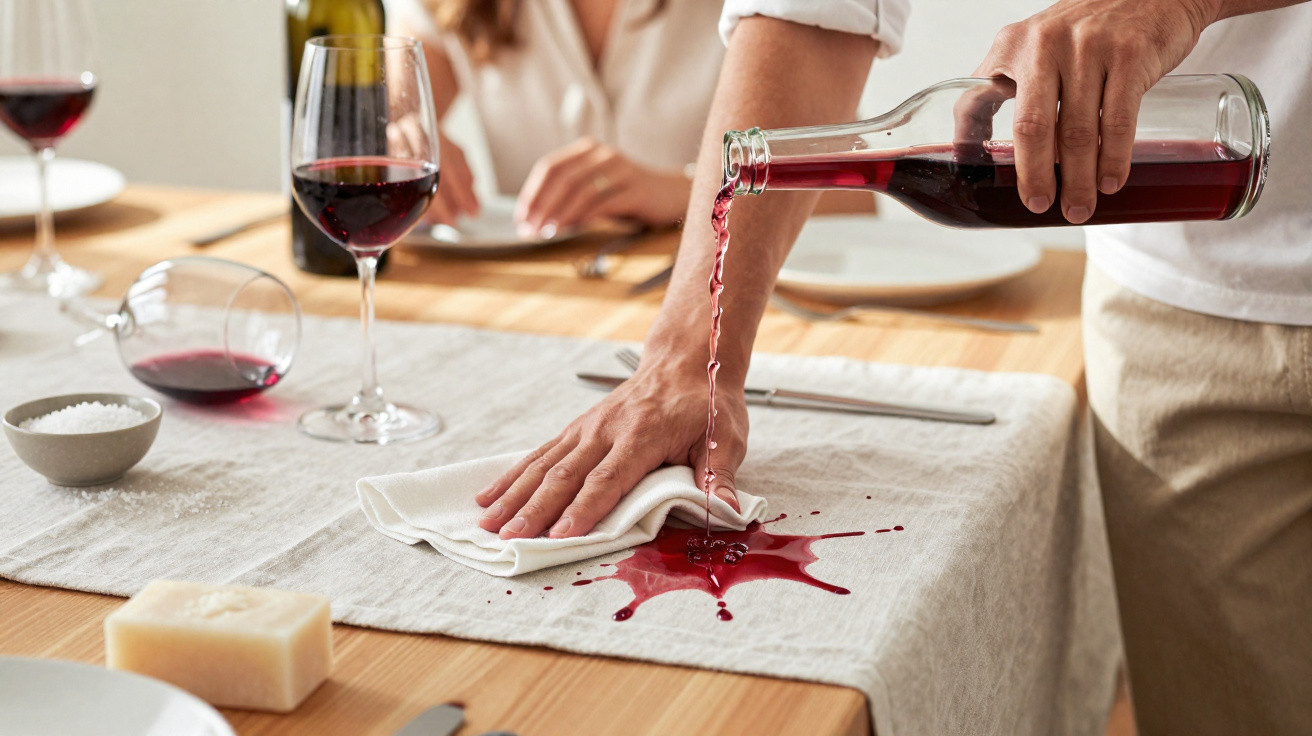
One awkward toast, one overly generous pour, and your favourite white shirt can suddenly resemble a crime scene.
Red wine chaos happens quickly.
Each winter party season revives the same worry: a dropped glass, a sleeve catching a bottle, or a stain that takes centre stage. For years, people have grabbed the salt shaker in the belief that it was the correct response. The habit is comforting and almost customary. However, modern fabric-care specialists say this reflex will not protect your clothes. In fact, it can quietly damage them.
Why salt is a false friend when red wine lands on clothes
The “throw salt on it” approach has been passed down through generations of family meals, but longevity does not make it useful. Salt can appear to absorb the wine, yet it draws out moisture while the pigment remains behind, frequently pushing it further into the fibres.
Instead of lifting the red wine, salt can help fix the stain into the fabric, making it harder to remove later.
With cotton, linen and delicate blends, the salt crystals press into the threads. As the wine dries, its colour attaches more securely. When you later rinse the item, the surface residue may disappear, but a muted purple ring can remain. Plenty of people do not notice this until the following day, once the mark has properly set.
There is a psychological pitfall too. As salt feels like “doing something”, it can lead people to postpone the treatment that is actually needed. They reassure themselves that they will “deal with it tomorrow”. That delay allows tannins and dyes to become fixed, particularly in pale materials.
Textile specialists now class the salt technique alongside other enduring myths: it spreads rapidly, is seldom challenged, and discreetly damages costly shirts, dresses and tablecloths throughout every festive season.
Red wine stain removal: speed, pressure and bubbles
With a red wine spill, speed matters more than any supposed miracle treatment. Those opening minutes determine whether the mark becomes a lasting reminder or an easily forgotten mishap.
Step one: blot rather than rub
Use kitchen roll, a clean cloth or even a tissue. Gently press it onto the stain to take up as much liquid as you can. Start at the outer edge and work towards the middle to prevent the mark from spreading.
Rubbing pushes the wine deeper into the fibres and breaks them. Blotting lifts the liquid without grinding it in.
For heavier fabrics, such as tablecloths, put another absorbent cloth beneath the affected area where possible. This lets the wine move away from the visible side rather than travel further into the weave.
Step two: use cold sparkling water
This is the point at which current advice takes over from old-fashioned myths. Sparkling water, particularly when very cold, works as a mild stain lifter. Its bubbles help release the colour molecules, while the water dilutes the wine.
- Choose plain sparkling water, since sugar or colourings may cause further marks.
- Pour it slowly from a low height, using only enough to saturate the stained patch.
- Blot once more with clean kitchen roll, repeating the pour-and-blot process several times.
The objective is flushing, not scrubbing. Every cycle removes more pigment. With fresh stains, the colour will often visibly lessen as you work.
Step three: wash calmly and coolly
After most of the stain has been removed, wash the garment properly. Select a programme suitable for its material and avoid very hot water at this point.
Heat can fix any remaining red pigment, turning a faint trace into a permanent shadow.
Use ordinary detergent, inspect the stain before drying, and wash again if a visible trace remains. Do not put the garment in a tumble dryer or iron it until you are happy with the result.
How other popular “miracle” methods compare
Red wine marks inspire countless household fixes. Some are useful, others worsen the problem, and several are only suitable for particular materials. This overview separates practical advice from nonsense:
| Method | Does it help? | Risks |
|---|---|---|
| Salt | Takes up some liquid, but often fixes pigment further in | Lingering halos, particularly on pale fabrics |
| White wine on red wine | Has a very limited effect and, at most, slightly dilutes it | Two stains rather than one, plus sticky residue |
| Baking soda paste | May lift pigment if used promptly and rinsed thoroughly | Can leave marks or create roughness on delicate fibres |
| Sparkling water + blotting | Helps release and flush out colour when used quickly | Very few risks where the fabric can tolerate water |
| Commercial stain remover | Works on many textiles when the right product is used | Can fade colour or harm wool, silk or prints |
Home treatments are most successful when adjusted for the material: durable cotton can handle more friction, whereas wool, cashmere and silk need a much lighter touch and less time in contact with water.
Beyond red wine: easy ways to save everyday fabrics
Red wine attracts most of the attention, though winter clothing also has to contend with coffee, gravy, lipstick and other spills. Several simple products can quietly take the place of harsh chemicals for many of these accidents.
Cold water and traditional soap
Simple cold water paired with a classic fatty soap can often outperform complicated formulas. For blood, mud and food marks, run cold water through the reverse side of the fabric, gently work in the soap, then leave it for a few minutes before rinsing.
Cold water slows the chemical bond between pigments or proteins and the fibres, which keeps the stain “mobile” for longer.
This method is particularly effective for sportswear, bedding and ordinary cotton tops. With delicate textiles, rub less and depend more on soaking.
Clay powder for greasy mishaps
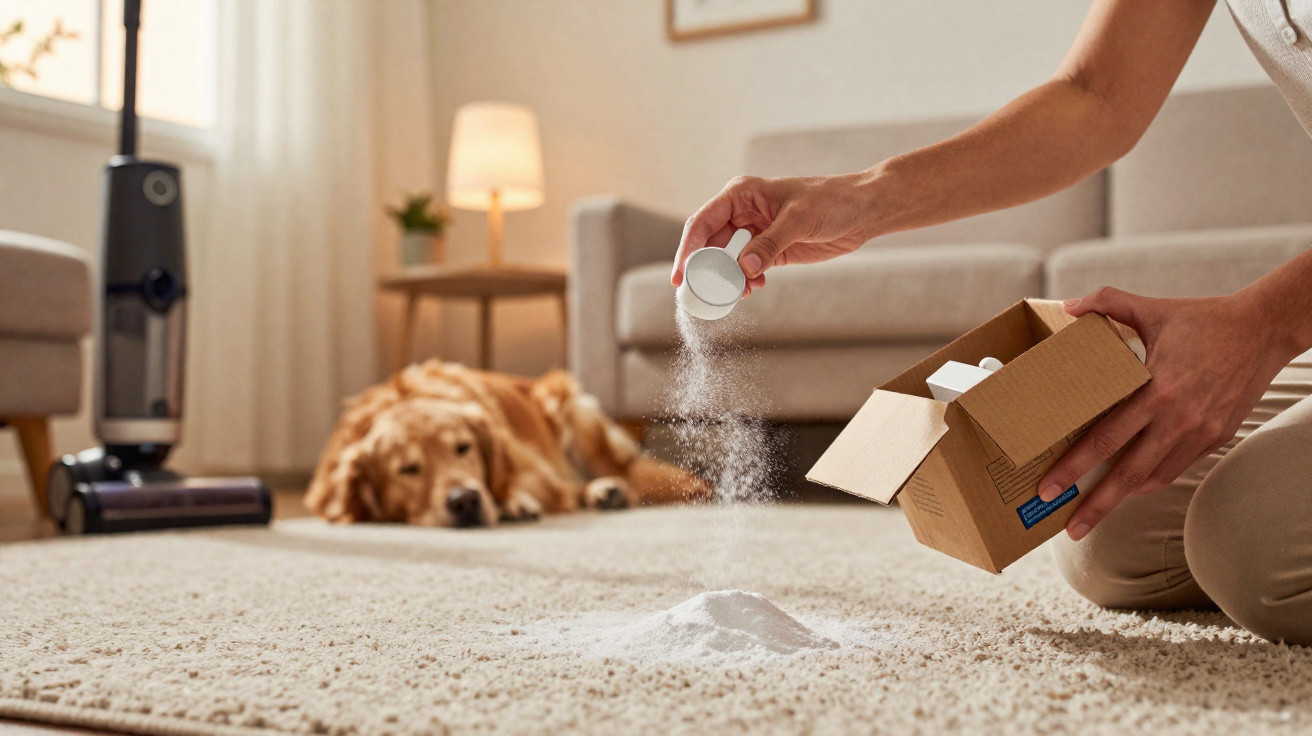
Oil and grease stains act differently from wine stains. They do not spread as rapidly, but they attach deeply to fibres. Natural clay powders, commonly sold as stain removers, work like tiny sponges. Scatter the powder over a fresh oil stain on trousers or a tablecloth, leave it for several hours, then brush it away. It draws oil from the fibres without needing to wet the entire item.
Use white vinegar with care
White vinegar diluted with water can tackle odours and certain faded, persistent marks on light-coloured fabrics. It may freshen musty-smelling towels or help with the faint reminder left after a wine stain.
Always test an unseen area first, particularly on coloured materials. Vinegar is acidic and can gradually weaken some fibres when used too frequently or in a strong concentration.
The timing factor: why the first 15 minutes matter
Red wine contains acids, dyes and tannins. Once it dries, these compounds bind more firmly to fabric. Laboratory testing on textile samples reveals a clear trend: the earlier a stain is treated, the more readily household techniques can remove it.
Within the first quarter of an hour, gentle action can remove most of the pigment. After several hours, even professional cleaners may struggle.
This is why online “miracle” clips can produce such swift, striking results: the stain is new, the fabric is durable, and the lighting conceals slight traces. Everyday life is less forgiving. A shirt left in a laundry basket after a party will not respond like a test sample treated immediately on camera.
Creating a straightforward routine is helpful: blot at once, rinse or flush the area when possible, and make a mental note of the stain so that you do not later put the item straight into a hot wash or tumble dryer.
When to use a professional cleaner - and when to let go
Some cases need more than kitchen-based remedies. Red wine on vintage clothing, suits, silk dresses or wool coats can justify taking the item to a professional cleaner. They have access to solvents, controlled equipment and knowledge of fibre behaviour that most people do not have at home.
For mixed materials of unknown composition, forceful home treatments may cause shrinking, fading or distortion. In these circumstances, blotting the spill to stabilise it and keeping the fabric damp in a bag until you can reach a cleaner may reduce the harm.
There is a psychological aspect as well. Many people keep “ruined” clothes for years through guilt, despite never wearing them again. Realistic expectations about which stains can, and cannot, be reversed make sensible decisions easier: repair items when feasible, and recycle or repurpose them when it is not.
Extra advice for relaxed celebrations and cleaner wardrobes
Red wine stains will always be part of parties, but the anxiety they cause does not have to be. Keeping a small “first aid” kit close to the dining table can alter the atmosphere: a roll of kitchen roll, a bottle of sparkling water and a bar of soap in the bathroom make fast treatment far easier.
Hosts can take a practical approach too. At large gatherings where people are moving around, darker tablecloths or table runners conceal small accidents. Guests fond of white clothing may wish to bring a spare top, especially for work functions or lengthy dinners. Such modest habits ease the stress and prevent one clumsy toast from dominating the whole evening.
Over time, a little stain knowledge is worthwhile. Knowing how tannins, oils and dyes interact with fabric enables people to select more suitable treatments, purchase textiles they can genuinely care for, and keep clothing in use for longer. This means fewer last-minute purchases, reduced textile waste and wardrobes that withstand much more than one festive season of red wine and hazardous toasts.


Comments
No comments yet. Be the first to comment!
Leave a Comment