

The row began with a missing sock. Or perhaps it was because the dishwasher had not been emptied “properly.” By the time the Sunday afternoon light disappeared behind the buildings, the living room felt charged, as though the walls were breathing alongside us. Toys covered the floor, shoes were clustered by the door, and a half-folded laundry basket sat on the sofa like a reproach.
Nobody was truly upset about the sock. Everybody was worn down by the same unseen conflict.
At the centre of that quiet battle was the real issue: who gets to decide what “clean” actually means in this home?
This small cleaning decision quietly controls your entire household
Most households have an unspoken rule that influences nearly everything. It is the invisible choice about who defines the cleaning standards, and whose approach silently becomes “the right way.” Sometimes it is the person most bothered by untidiness; sometimes it is whoever complains most loudly; sometimes it is the parent raised by a spotless mother and a vacuum cleaner brought out precisely at 7 p.m.
That person becomes the unofficial “chief of clean.” Their tolerance for clutter, definition of “dirty”, and urgency about dishes or floors gradually shape everyone else’s day. Once that happens, the rhythm of the whole household begins to revolve around one person’s internal gauge.
Imagine this. Emma likes things orderly. She works from home and cannot concentrate when the kitchen worktop is crowded. Her partner, Leo, genuinely fails to notice crumbs until they are nearly forming a second layer.
By 10 a.m., after preparing the children’s breakfast, Emma has wiped the table twice and loaded the dishwasher “correctly.” She is mentally noting when the floor was last mopped. Leo, who rushed out to work, thinks, “We cleaned yesterday, the place is fine.”
By the evening, resentment is bubbling away in her. He arrives home calm, then immediately feels criticised. Nothing major has happened. There has been no argument, no smashed glass and no big catastrophe. There is simply one unspoken decision: Emma’s cleaning radar sets the standard for everyone.
This difference in standards steadily saps energy. When one person’s definition of “acceptable mess” becomes the norm, everyone else is either falling short of it or disregarding it. That is where the tension sits.
The household rhythm becomes slower because people are silently negotiating against a rule they never accepted. One person feels isolated and overloaded. Someone else feels criticised for “doing it wrong.” The mess is not only on the floor - it is in the expectations.
Behind the dust bunnies lies a straightforward truth that few people want to voice: most couples and families never properly discuss what “clean enough” means.
The missed step: deliberately choosing a shared cleaning standard
There is one straightforward, slightly awkward step that can alter everything. Sit down together and agree on what “clean enough” looks like on an ordinary day.
Not your ideal home, nor the version you would share on Instagram. Think of your real Tuesday at 7 p.m., after work. Choose the essentials: perhaps dishes washed before bed, no shoes in the hallway and the bathroom sink cleaned once daily. Then agree that everything else can be “good enough”.
This small conversation may sound dull. Yet it quietly changes the script about who alone gets to decide how everybody should live. The standard suddenly becomes a shared one rather than something imposed.
A reader shared this true story: Sara and her partner were caught in the same pattern every evening. At 11 p.m., she would be wiping the kitchen worktops while he scrolled on the sofa. She felt deserted; he felt that he could never get it right anyway, so what was the point of trying?
One Sunday, following an especially fraught week, they made coffee and tried a different approach. They each described a “livable” home in three bullet points. His list: clear sink, trash out, no food left on the table. Hers: bed made, toys in baskets, bathroom not gross.
They marked the shared points and built a small joint routine: 15 minutes after dinner, one song on Spotify, with each person doing two tasks. Nothing elaborate. For the first time, though, the “standard of clean” belonged to them both.
Once the standard is mutual, the emotional atmosphere at home shifts. There is less of that persistent, low-level blame running beneath every conversation. The space does not need to be perfect; it simply needs to reflect the plan you selected together.
When a home feels predictable, the day runs more smoothly. Children know where things belong, adults understand what “done for today” means, and the mental burden of continually looking for dust begins to ease. Honestly, nobody manages this every single day. Life gets in the way: you miss an evening, somebody falls ill, you order pizza and go to bed without dealing with the pans.
But the basic expectation is no longer resting on one person’s nervous system. It is a team sport, even when the team occasionally drops the ball.
How to reset your cleaning standard without an argument
Begin with something small and precise. Do not open with, “We need to talk about the mess.” That phrase already sounds like a judgement.
Instead, choose the room that causes the most stress - often the kitchen or entrance hall. Try saying, “I’d love to work out what ‘good enough’ looks like here so we both stop feeling tense about it.” Then ask what must be done every day, and what can wait two or three days.
You are not creating a Pinterest routine. You are outlining a minimum viable rhythm that protects everybody’s sanity. Two or three clear agreements are more useful than a list of 27 “shoulds” that nobody can recall.
A few familiar pitfalls can throw this reset off course. One is weaponised competence: the person who does more cleaning starts saying, “If I don’t do it, it never gets done.” It may be partly true, but it shuts down the possibility of change.
Another pitfall is the unspoken scorecard. You agree to divide tasks, but one person records every mistake or missed job. That makes the cleaning plan an assessment rather than a team effort.
Try treating the system as the issue, rather than the person. “Maybe our evening routine is too heavy,” lands very differently from, “You never help.” If you are the tidier person, lowering your standards slightly can feel frightening. But sometimes that small reduction in perfection increases peace across the whole household by several levels.
“We realized we were fighting over socks and spoons,” a father of three told me, “but really we were just living in two different versions of ‘normal.’ Once we agreed on what normal actually was, the fights almost disappeared.”
- Choose one “anchor” task
Pick the job which, once finished, makes the whole home feel calmer - often washing up or clear worktops. - Identify your “can live with it” zones
Decide where clutter can remain during the week: children’s bedrooms, a chair that collects clothes or the home office. - Create a visible finishing point
Set a time when cleaning for the day is officially over, so nobody is still scrubbing resentfully at midnight. - Swap one small task each week
Rather than making one person the permanent bathroom martyr, rotate roles in a simple cycle. - Plan reset moments, rather than marathons
Ten minutes after dinner or twenty minutes on Saturday morning. Brief bursts maintain the rhythm without taking over your life.
When your home’s “clean enough” finally suits your life
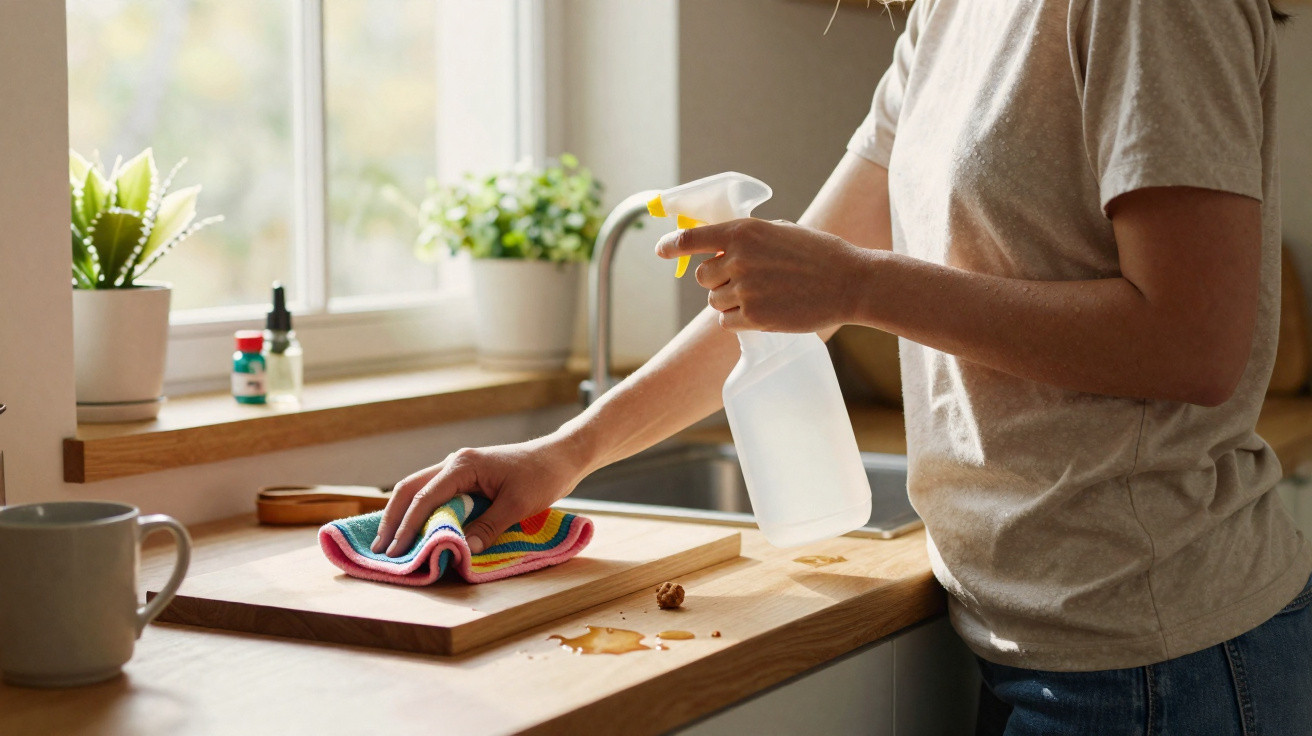
Something subtle changes when the cleaning standard suits the people who actually live within those walls. You no longer feel as if you are failing an invisible test. A child spills something and, rather than hearing an internal alarm, you simply think, “grab a cloth”, and carry on.
The home becomes somewhere that supports daily life, rather than a museum you are constantly failing to maintain. There will still be chaotic mornings, hurried evenings and weeks when the laundry gets the better of you. But beneath it all is a shared agreement, a kind of ground on which everybody stands.
That overlooked decision - who decides what “clean” means - no longer functions as a silent struggle for power and instead becomes a quiet, continuing discussion. That discussion affects who gets to rest, who carries the mental load and who feels at home.
Once you see it, you begin noticing it everywhere: in how guests apologise for the state of their home, in the friend who never sits down, and in your own urge to straighten cushions before you can relax. From there, you can ask the only question that truly matters: does our present idea of “clean” genuinely fit the life we want to live here?
| Key point | Detail | Value for the reader |
|---|---|---|
| Identify who sets the cleaning standard | Recognise whose tolerance for mess currently determines what is “normal” at home | Provides language for invisible tensions and unspoken expectations |
| Create a shared “clean enough” baseline | Agree on several daily essentials while allowing other tasks to remain flexible | Cuts conflict, guilt and the constant mental load of managing the home |
| Design simple, realistic routines | Use brief, predictable cleaning sessions with clear end points | Helps the home run more smoothly without taking over evenings and weekends |
FAQ:
How do I raise this without seeming to blame my partner?
Focus on your feelings rather than their behaviour.
For example: “I feel on edge when the kitchen is chaotic, could we decide together what ‘good enough’ looks like so I’m not silently stressing?”
Approaching it with curiosity instead of accusation keeps the conversation open.What if our standards are completely different?
Begin with what overlaps: the things neither of you likes most, such as smelly rubbish, dirty dishes or sticky floors.
Create your joint baseline around those few points, then test compromises in other areas.
You are aiming for livable, not perfect.How do we include children in this household rhythm?
Give them small, consistent jobs connected to routines they already follow: toys into a basket before screen time, or their plate to the sink after meals.
Keep directions clear and visual.
The aim is involvement, not flawless results.What if I am the only one who cares about cleanliness?
Say that openly: “I notice I care more about this, and it’s making me feel alone.”
Then agree on trade-offs: perhaps you do more tidying while your partner takes responsibility for another area, such as paperwork or cooking.
You still deserve input into the shared baseline.How can I stop cleaning late at night?
Set a firm “cleaning curfew” - for example, 9:30 p.m.
Agree on what must be completed before then, often only dishes and rubbish, and leave everything else until later.
Protecting your rest is also part of caring for the household rhythm.
Comments
No comments yet. Be the first to comment!
Leave a Comment