
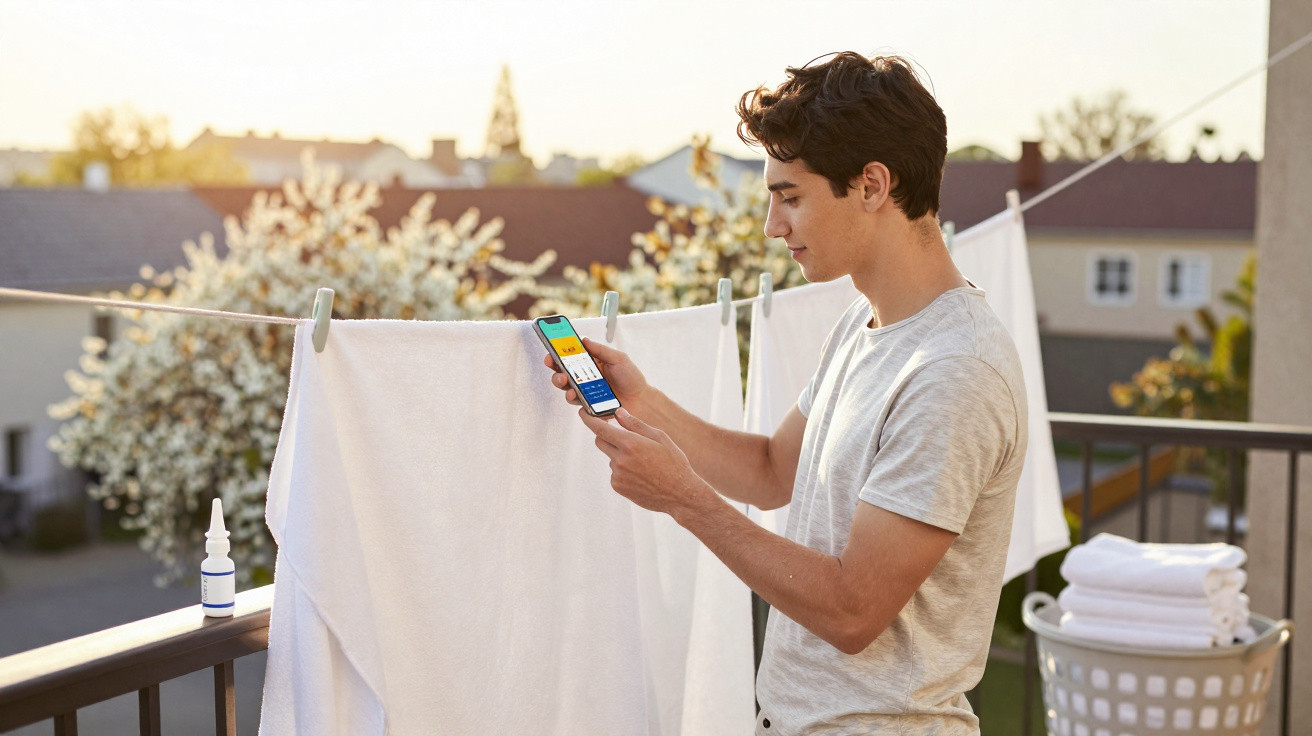
The sun is shining and the air feels fresh – but this is precisely when laundry dried outdoors can become an invisible risk for people with allergies.
Spring encourages many of us to hang bed linen, towels and T-shirts outside again at last. Yet allergists warn that, from the final weeks of winter into early spring, freshly scented sheets often carry something unseen that affects millions of people: pollen. The weather matters, but the time of day is even more important.
Why spring can become a trap for allergy sufferers
Pollen season starts as early as late winter. Early-flowering trees such as yew, alder and cypress come first, followed by birch and other species. Their pollen circulates through the air in large quantities and triggers reactions in many people.
Across Europe, experts estimate that around a quarter of the population experiences hay fever or other pollen-related symptoms. In some areas, the figure rises to one in three people. Common symptoms include:
- sudden bouts of sneezing
- a runny or blocked nose
- itchy, red or watery eyes
- headaches and pronounced tiredness
- in unfavourable cases, coughing and asthmatic symptoms
Sleeping in bed linen carrying pollen effectively extends this exposure throughout the night. The airways do not get a chance to settle, sleep quality declines, and symptoms often continue for the following day.
Critical times: when laundry should not be hung outside
Meteorological services and allergists have observed for years that pollen levels are not evenly distributed throughout the day. Concentrations increase over the course of the morning and, in many areas, peak from late morning until early afternoon.
“Between 10 am and 3 pm in particular, the air is often heavily laden during pollen season – and sensitive laundry should not be left outside during this period.”
Several professional bodies and regional air-quality services therefore advise against drying laundry outdoors within this timeframe, especially in March and April. Anyone prone to asthma, severe pollen allergies or chronic respiratory problems should treat these hours as a red zone.
Why 10 am to 3 pm is especially problematic
This is caused by a combination of plant biology and weather physics:
- As temperatures rise, flowers open and release more pollen.
- Rising air currents carry pollen upwards and across the surrounding area.
- Dry, windy conditions also stir up dust, spreading pollen even further.
A damp towel hanging in the garden at this time acts like a moist net. Fine grains stick to its fibres and remain there until the fabric is brought into the bedroom or placed on the sofa.
How outdoor laundry becomes a pollen trap
Damp fabrics attract particles. This applies not only to pollen, but also to dust and soot. The longer a textile is left outdoors, the more it collects. Although drying in sunshine may feel clean and fresh, it can actually bring part of the outdoor air straight into the home.
“Every T-shirt dried outside in spring can act like a small transporter for allergens – especially when it is hanging out during peak pollen times.”
Once the washing is indoors, these particles gradually come loose from the fibres. Shaking out a duvet, sitting on the sofa or pulling on a T-shirt can repeatedly send pollen back into the air. The bedroom is particularly troublesome: sufferers breathe the same air for hours, worsening their own symptoms.
Advice from allergy organisations
Various allergy and asthma associations recommend several protective measures on high-pollen days:
- Air rooms only briefly during the day, particularly between 10 am and 6 pm, or keep windows closed.
- Do not dry laundry outside when pollen levels are high.
- If drying outdoors cannot be avoided, follow clear timings and suitable conditions.
This guidance is no longer a minor detail; it is now a standard part of many guides for allergy sufferers.
Adapting your laundry routine in spring
For people with allergies or asthma, as well as children and older people, it is worth adjusting the household laundry routine slightly. It requires very little effort but can provide noticeable relief.
Better times to dry laundry on a balcony or in the garden
Anyone who does not want to give up outdoor drying should follow these basic rules:
- Early morning: Hang washing out before 9 am, when pollen concentrations are usually still moderate.
- Late evening: Evening is another option, as the pollen index falls again.
- Avoid dry, windy days: Pollen and dust levels are particularly high in these conditions.
- Shake out the laundry: Give textiles a firm shake outdoors before bringing them inside.
People who use digital tools can consult pollen calendars or apps in many locations. These provide daily forecasts and often hourly readings as well. This makes it possible to plan, at least roughly, for times when exposure is expected to be lower.
When drying indoors is the better choice
For people who are severely affected, a small adjustment is often insufficient. During peak season, specialists then recommend avoiding outdoor drying altogether. A few measures can help prevent problems such as mould:
- Hang laundry in a separate room that can be well ventilated.
- Ventilate briefly and thoroughly instead of leaving windows on tilt continuously.
- If necessary, use a dehumidifier or a condenser tumble dryer.
Anyone who reacts strongly should also shower and wash their hair after spending time outdoors. This reduces the amount of pollen brought into bed in the evening.
Practical everyday tips to reduce household pollen
Laundry is only one part of the picture. People prone to allergies can make everyday life considerably more manageable with a few additional habits:
- Do not leave outer clothing worn outside in the bedroom.
- Clean carpets and upholstered furniture regularly with vacuum cleaners fitted with fine-dust filters.
- Change bed linen slightly more often in spring, around once a week.
- Adapt window ventilation to pollen levels: air rooms in the morning in towns and cities, and in the evening in rural areas.
Anyone unsure whether pollen or house dust mites are the main trigger can arrange a test with an allergist. The results determine which measures should genuinely take priority.
How pollen allergies affect the body
Many people initially view hay fever as irritating but harmless. However, ongoing exposure can place a significant strain on the body. Poor sleep, constant sneezing attacks and persistently inflamed mucous membranes weaken the immune system. Some people also develop asthma over the years.
The difficulty is that the problem is often not caused by major, obvious contact, but by numerous small sources that add up: a little pollen on a jacket, some in the hair and more in the bed linen. Taking action in several areas, including when drying laundry, reduces the overall burden and gives the body a break.
Everyday conclusion: a small change, a big effect
Drying laundry outdoors remains a lovely option: it saves energy, is kinder to the climate and leaves fabrics feeling fresh. However, anyone with a pollen allergy or a sensitive child at home should plan this habit strategically. Simply checking the time and the pollen situation is often enough to stop springtime freedom from becoming a night of relentless sneezing.
Those who consistently avoid the critical hours between 10 am and 3 pm, and prefer indoor drying on high-pollen days, remove one of the allergens’ easiest routes into the home. For many sufferers, this means a few minutes of planning in exchange for far more restful nights.
Comments
No comments yet. Be the first to comment!
Leave a Comment