
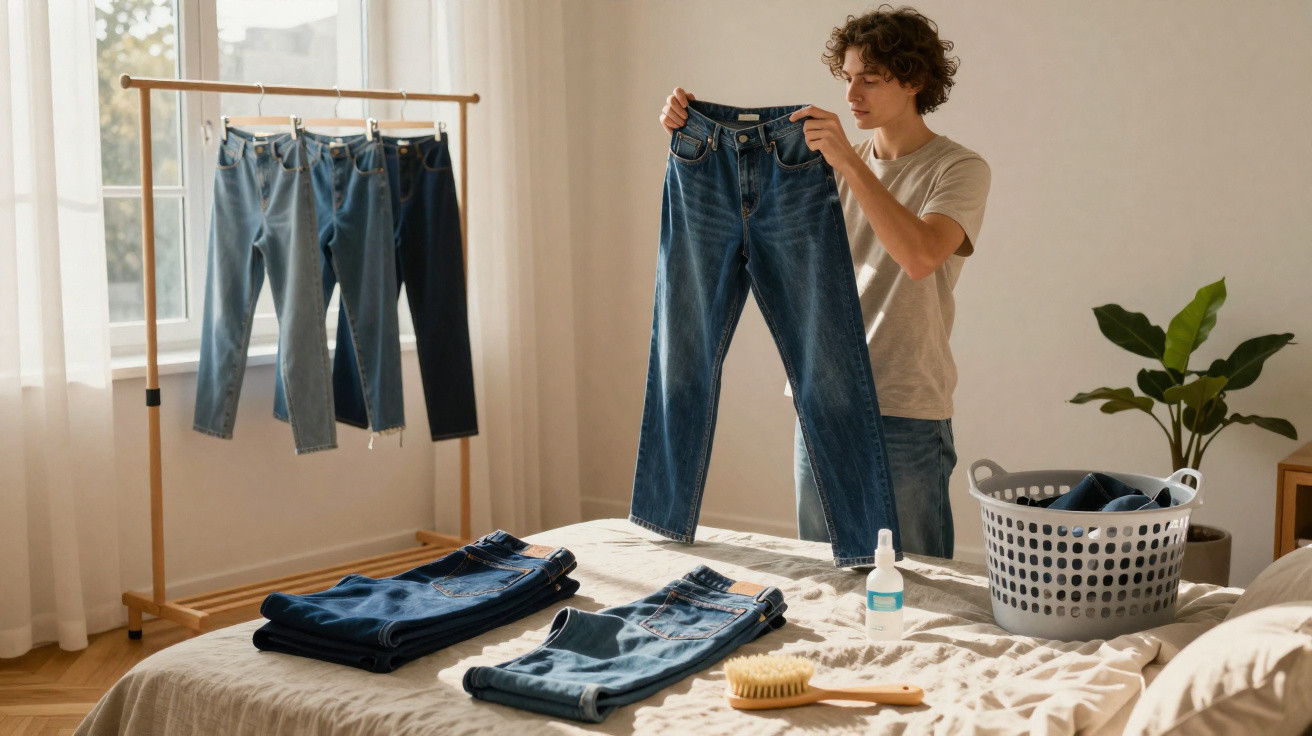
The washing machine door clicks shut and the drum begins to turn, taking in another pair of jeans that scarcely seems dirty. There is a faint coffee mark on a T-shirt, a few socks, a towel added ‘while we’re at it’ – plus those favourite jeans worn for perhaps three hours in the office. A decade ago, nobody would have challenged the routine: wear an item once, then wash it. That was that.
Textile specialists now take a rather different view. They see denim becoming faded, thin and frayed, not through dramatic exploits but through repeated washing cycles. Their message, though it may sound almost rebellious, is simple.
We are washing our jeans to an early death.
Why washing jeans after every wear is quietly ruining them
Ask a textile conservator what damages clothing most quickly, and they are likely to name the same three culprits: water, heat and friction. A washing machine delivers all three repeatedly to fabrics that were not designed to endure that treatment. Denim is durable, certainly, but it is not indestructible.
With each wash, cotton fibres become weaker, the surface is abraded and dye is removed. Colours lose their depth, seams begin to slacken and the once-firm shape becomes soft and limp. Jeans that appear to be ‘worn out from life’ are often simply worn out by the laundry.
Oddly, we tend to handle jeans as though they were underwear, despite the fabric behaving much more like that of a jacket.
Textile scientists have spent years trying to communicate this point. In one well-known case, Levi’s CEO publicly said that he rarely washes his jeans, choosing spot cleaning and airing instead. Denim manufacturers also test garments quietly in laboratories, putting them through simulated hundreds of wash cycles. The findings are unforgiving: after 20 to 30 washes, many pairs of jeans have lost a substantial amount of their initial strength and colour.
A Canadian study into garment lifespans found that regular machine washing reduced denim’s usable life by several years. It was not because the wearer’s body had changed or fashion had moved on; the material itself had deteriorated.
Still, habit – and a slight anxiety about not being sufficiently clean – keeps us pressing the wash button.
Technically, it makes perfect sense that jeans meet their end in the laundry basket. Denim consists of tightly woven cotton yarns dyed around the outer surface rather than all the way through the core. The machine’s agitation scours those outer layers until they are quite literally washed off. The ‘vintage’ finish people value is partly natural ageing and partly damage hastened by detergent and hot water.
When wet, fibres expand; when dry, they shrink again. Repeating that process causes them to lose elasticity, become brittle and eventually break, particularly at pressure points such as the crotch, pockets and knees.
So when experts advise you not to wash your jeans after every wear, they are not trying to be provocative. They are simply explaining the physics at work in your laundry room.
How often to wash jeans, and what to do instead
Most textile professionals offer a notably relaxed guideline: wash jeans approximately every 5 to 10 wears, or even less frequently when they are neither visibly soiled nor smelly. In between washes, the unexpectedly simple answer is air.
Suspend your jeans by their belt loops beside an open window or on a balcony for several hours. Fresh air disperses many everyday odours without harming the fibres. A light spray of fabric freshener on the inside may also help, particularly around the waist and crotch.
For minor marks, gently dab the area with a damp cloth and a small drop of mild soap. There is no need to wash the whole garment.
The major change in mindset is this: jeans do not need to feel ‘fresh from the machine’ to be clean enough for everyday wear. We all know the moment: you smell your jeans, realise they are perfectly fine, yet the automatic response is, ‘Laundry day.’
In truth, hardly anyone follows that routine every day. Most people already wear jeans several times before washing them; they simply do not mention it. The difference is making that choice deliberately and with a little care.
Do not leave jeans in a damp heap, on the floor or inside a closed laundry basket. That is when bacteria and musty odours genuinely develop. Give them air rather than simply giving them soap.
Textile experts also stress that the eventual wash matters just as much as its frequency. The temperature, products and programme make more difference than many people expect. Small changes can readily add months, or even years, to their lifespan.
“Denim is designed to live on your body, not in your washing machine,” says a French textile engineer who works with eco‑responsible brands. “If you wash less, wash colder, and wash gentler, you don’t just save your jeans. You save money, water, and a bit of the planet along the way.”
- Turn jeans inside out before washing.
- Choose cold water or a 30°C ‘delicate’ cycle.
- Avoid the tumble dryer; dry them flat in the air or on a hanger.
- Use only a small amount of mild detergent and never bleach.
- Fold or hang them carefully to prevent permanent creases.
A new relationship with clothes, starting with denim
Once you wash jeans less often, something slightly unexpected happens. You start to notice how they shape themselves around your body, how the cloth retains the memory of your movements and how their colour gradually records your own story rather than merely fading unpredictably. Instead of disposable wardrobe staples, they begin to feel like companions.
You might also start questioning the pattern of the rest of your washing. Does a shirt really require a full cycle after only two hours of wear? Could spot cleaning and airing become standard practice for more clothes in your wardrobe? This is not about being extreme or obsessively ‘eco’; it is about bringing everyday habits into line with reality.
Denim began as workwear and was made to endure. Textile specialists are merely reminding us that durability comes not from the price or the brand, but from how the fabric is treated every week. The washing machine is powerful – perhaps too powerful. Learning to use it less often, and more wisely, means favourite jeans can become lasting parts of our lives rather than short-term visitors.
| Key point | Detail | Value for the reader |
|---|---|---|
| Wash less often | Every 5–10 wears rather than after every day | Jeans last longer, colours remain richer and the fabric retains its shape |
| Use gentle methods | Cold water, delicate cycle, air drying and spot cleaning | Limits fibre damage and reduces shrinkage and thinning |
| Air between wears | Hang by the belt loops near a window or outdoors | Removes odours without washing and saves time, water and money |
FAQ: washing jeans
- How often should I really wash my jeans? Most experts suggest every 5–10 wears, unless the jeans are visibly dirty or truly smell. Rely on your nose and lifestyle rather than habit alone.
- Is it unhygienic to wear jeans several times? For ordinary day-to-day activities, no. Denim is thick and breathable, while most bacteria do not flourish on its dry surface. Smells usually result from sweat trapped in close-fitting areas, and airing helps to reduce this.
- Can freezing jeans kill bacteria? Freezing may temporarily lessen certain odours, but it does not consistently eliminate all bacteria. It is more myth than effective cleaning technique. Spot washing and airing are much more useful.
- What temperature is safest for washing jeans? Cold water or 30°C is best for most denim. Hot water speeds up fading and fibre damage, particularly in stretch jeans containing elastane.
- Why do my jeans fade and thin so fast? Regular washing, aggressive detergents, tumble drying and high temperatures all accelerate wear. Gentler programmes, less detergent and air drying will generally make a clear difference within a few months.
Comments
No comments yet. Be the first to comment!
Leave a Comment