
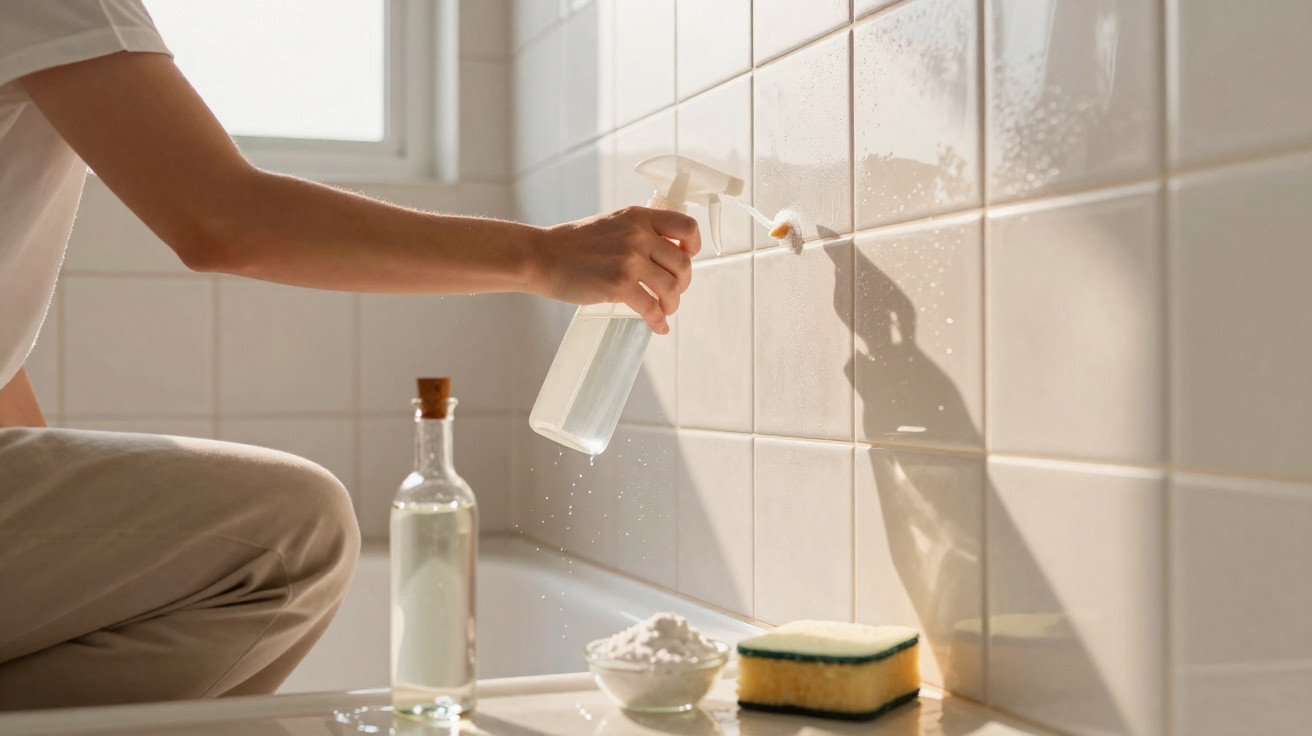
The grout has lost its brightness, while tiles that once felt silky now seem tacky beneath your hand. You may have used expensive, spa-scented sprays, only for the cloudy film to return before the week is out. This is the natural cleaning blend professionals use when stubborn residue refuses to shift.
With steam coating the bathroom mirror and a breakfast programme playing quietly on the radio, I watched a friend mist her tiles with a newly mixed spray. She began carefully, grew frustrated, then scrubbed with the force of someone sanding down furniture. Yet the dull, persistent coating remained firmly in place. She had already finished two shop-bought products promising “hotel shine”, which left her with a headache and a lemony cloud of fragrance that outlasted the cleaning result. Then she followed the advice of an experienced cleaner: a warm homemade solution, a few minutes to let it work, and a gentler brush. The scum came away in sheets. Her grout looked refreshed. That small change transformed the entire room.
Why soap scum sticks - and what breaks it down
Soap scum is deceptive. It leaves a greyish layer over tiles, a milky mist on glass and a resistance beneath your fingertips that ordinary wiping never fully removes. It may look like dirt, but it behaves more like adhesive. That is because it consists of dried soap deposits combined with minerals, baked onto surfaces by heat and time. Skip one clean and the layers begin to build; skip two and they become as hard as set sugar.
A neighbour once assumed his shower screen had been scratched beyond repair. It had not. What he could see was months of scum, built up in layers like varnish. After spraying, waiting and wiping, the lower section cleared in one clean strip, rather like removing a sticker. The upper section needed another treatment. He laughed at the line left by his squeegee because the contrast was visible from the other side of the room. It is the sort of result that makes you want to tackle the rest of the house.
The reasoning behind this mixture is straightforward. Soap scum develops when fatty acids in soap react with hard-water minerals, forming insoluble calcium and magnesium “soap” that grips the surface. Acid helps loosen those minerals. A surfactant - found in dish soap - lifts away oily residue. A mild abrasive smooths down rough areas so the film can release. Hot water softens the whole build-up. Combining a gentle acid, a little surfactant and enough waiting time lets the chemistry do the hard work while you drink your coffee and choose a playlist.
The natural soap scum mix and how to apply it
This is the formula professionals rely on. Warm 1 cup of white vinegar until it feels hot but comfortable to touch. Add it to a spray bottle with 1 cup of water and 1 tablespoon of dish soap - washing-up liquid or detergent, rather than a true soap such as Castile soap. Swirl the bottle gently so it does not foam up. If your water is particularly hard, include a teaspoon of lemon juice or a pinch of citric acid. You will need a soft sponge, a microfibre cloth and a nylon brush for the grout. Run the shower hot for two minutes to steam up the room. Apply the spray from the bottom upwards, then leave it for 10–15 minutes. For especially stubborn corners, put a small amount of baking soda onto a damp sponge and scrub the spot. Rinse thoroughly and wipe dry.
We have all scrubbed too soon or rinsed too quickly, then wondered why the surface still looks the same. Give the mixture time to sit. Allow it to dissolve the bond before you start scrubbing. Use soft tools on glossy tiles. Never apply acids to marble, travertine or limestone; use a mild pH-neutral cleaner for stone instead. Open a window or switch on the extractor fan. Do not combine any product with bleach. Also, avoid overusing the spray: extra product does not create a cleaner finish, only more rinsing. Realistically, no one does this every day.
Professional cleaners have an unspoken rule: allow the solution the time it needs, and it will save you hours.
“Acid loosens the minerals, surfactants lift the film, and time does half the work.”
Keep this quick guide near your cleaning caddy:
- Warm vinegar + water + detergent = a spray that breaks the bond
- Steam first, spray from the bottom up, then wait 10–15 minutes
- Treat rough patches with a small dab of baking soda and spot-scrub
- Rinse thoroughly, then dry to prevent fresh water marks
- Avoid acids on natural stone; use a pH-neutral cleaner instead
Make bathroom shine last with small, realistic habits
You do not need to adopt an entirely new routine, only a lighter one that works during a busy week. Run the extractor fan while showering and leave the door open afterwards, preventing moisture from setting minerals in place like icing. Store a bottle of the mixture and a soft cloth in the bathroom, then lightly spray high-splash areas after the final shower each Sunday. Treat a squeegee like a bookmark: one minute, one pass, then hang it back up. A clean shower is a small peace treaty with your day. Missing a week is not a disaster. The residue will not take over if you keep the vinegar mixture nearby and give it plenty of dwell time. The room will seem brighter, and the first thing you touch each morning will not feel resistant. That modest act of care lasts longer than any fragrance.
| Key point | Detail | Benefit for the reader |
|---|---|---|
| Natural mix formula | 1 cup warm white vinegar + 1 cup water + 1 tbsp washing-up detergent | Simple, inexpensive and effective against mineral-based residue |
| Let it dwell | Spray from the bottom up and wait 10–15 minutes before scrubbing | Less effort, improved results and fewer repeat treatments |
| What to avoid | Do not use acids on natural stone; never mix with bleach | Protects surfaces and keeps the method safe |
FAQ:
- Can I use this on glass shower doors? Yes. Warm vinegar helps lift cloudy residue from glass. Spray it on, wait, wipe with a soft cloth, then rinse and dry to avoid new marks.
- Is it safe for grout? It is suitable in moderation for ceramic or porcelain tiles with cement grout. Do not soak the area for extended periods; use a nylon brush gently and rinse well.
- What about marble or natural stone? Do not use acids. Choose a pH-neutral stone cleaner and a microfibre cloth. In stone showers, drying surfaces after use helps minimise build-up.
- How often should I do this? A light weekly spray and wipe prevents deposits from accumulating. Where scum is heavy, carry out two rounds today before moving to quick weekly maintenance.
- Will the bathroom smell like vinegar? Slightly, and only briefly. Add a few drops of lemon or tea tree to the bottle if preferred. Rinse and ventilate the room, and the smell disappears quickly.



Comments
No comments yet. Be the first to comment!
Leave a Comment