

You take your favourite jumper from the drawer and feel that familiar little pang of disappointment. The neckline has become slightly wider, the shoulders have slumped, and it suddenly looks more like it came from a lost-property box than a cosy, stylish outfit.
You put it on regardless, look in the mirror and quietly blame the poor material, the label, fast fashion or life itself. Yet part of you cannot help wondering whether you might have caused it.
Then, while visiting a friend, you spot her clothes airer. Her garments are not suspended from the shoulders like tiny fabric martyrs. Instead, they are laid flat, or folded over, almost like relaxed sandwiches.
She simply says, “It’s just my trick so they don’t stretch.” You laugh, but the idea stays with you.
The hidden reason your clothes are stretching out
Most of us assume clothes simply get old and stop holding their shape. In fact, much of that stretching happens in the time between taking them out of the washing machine and putting them back in the wardrobe.
Wet fabric weighs more. Whenever we hang a soaked jumper, T-shirt or dress from its shoulders, gravity gets to work quietly. Necklines expand, hips droop and sleeves gain a few unnoticed centimetres.
We tend to blame the detergent or the retailer, while our drying routine is discreetly damaging the pieces we like best. The small, effortless move of reaching for a hanger can matter far more than we realise.
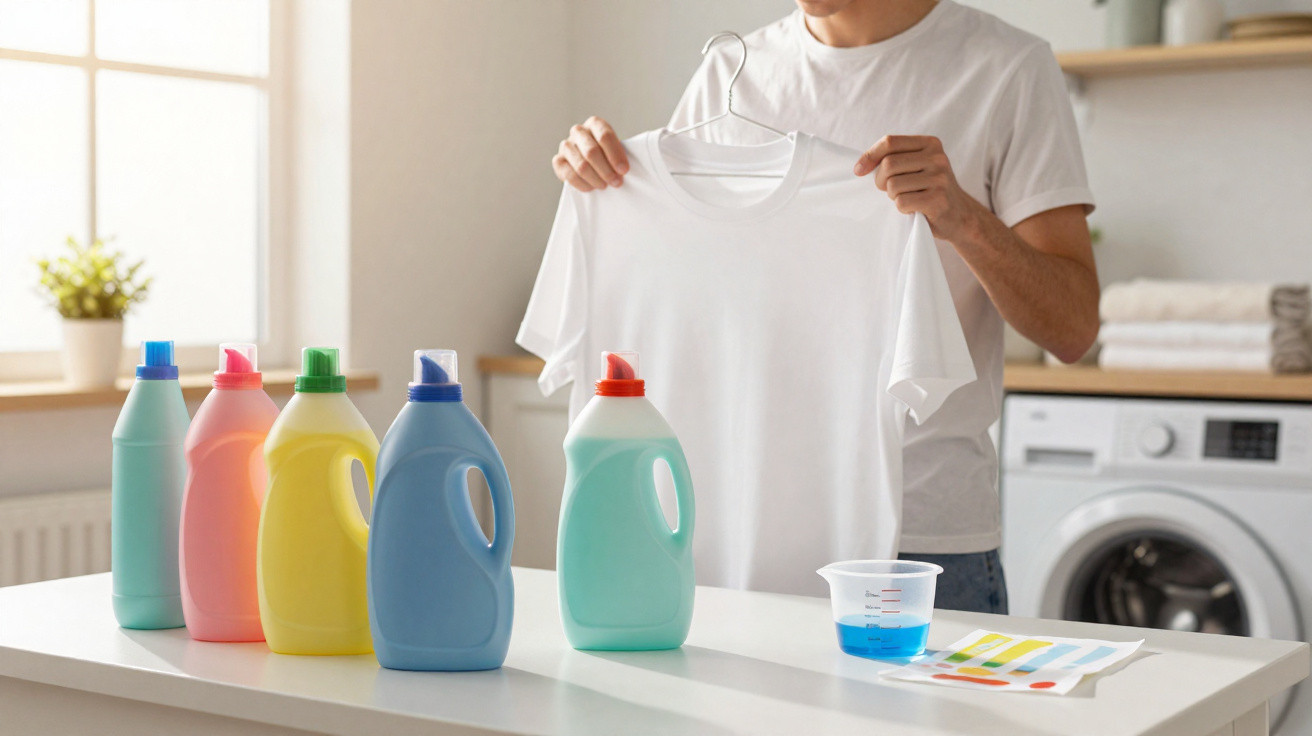
Consider an ordinary cotton T-shirt. It comes out of the machine wet and weighty, and you slide it onto a hanger by the neck, as you have always done.
A few washes later, it becomes obvious: the neckline looks worn out and strangely larger than your head. Its shoulder seams no longer sit on your shoulders. It appears to belong to an older, taller cousin who does not even exist.
Now picture that same T-shirt being lightly reshaped, then placed flat on an airer or folded over a washing line at the waist rather than the shoulders. Several months later, it still fits your body as it did on its first day. Same T-shirt, same wash, but a different drying outcome.
The principle is straightforward: fabric has memory, but it also has limits. Fibres such as cotton, wool and viscose loosen when they are wet.
If that added weight pulls from a single area - the shoulders, neckline or waistband - the fibres stretch and do not completely recover. Elastic fibres such as elastane or spandex can make this even more noticeable because, once overstretched, they lose their ability to spring back.
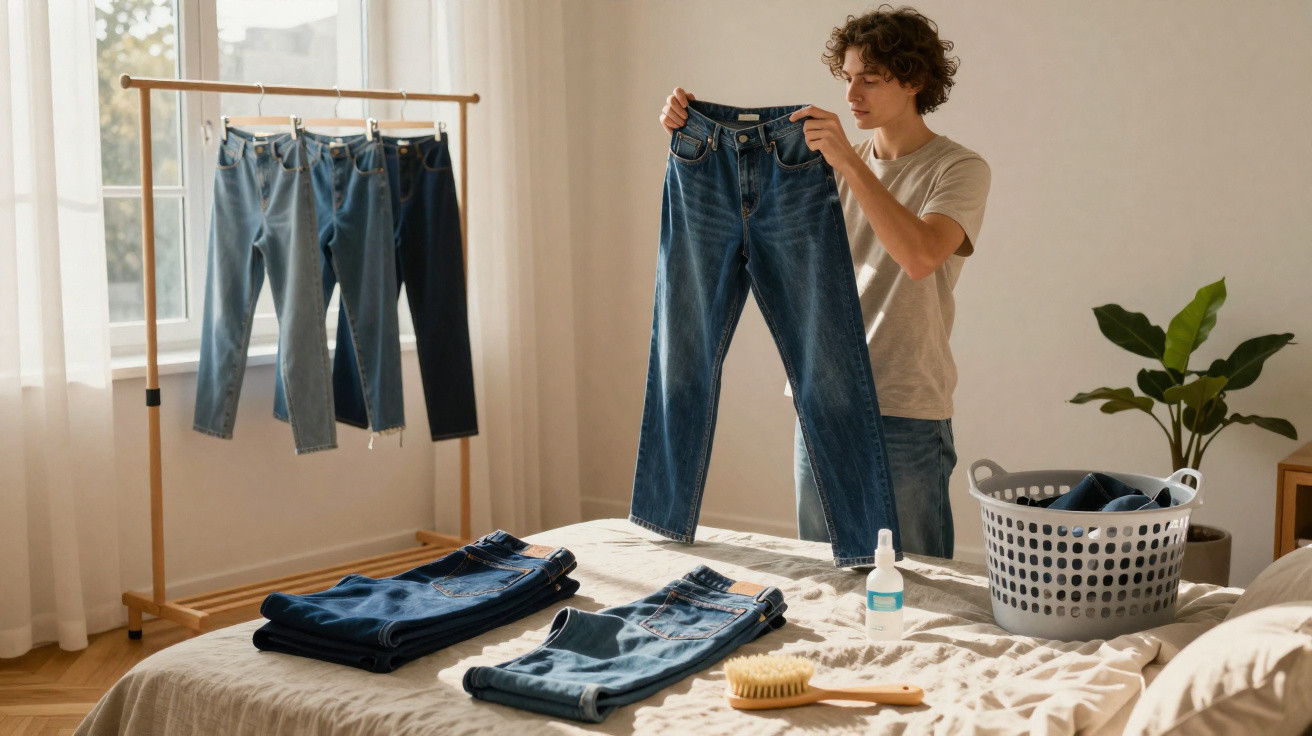
This is why jeans begin to bag at the knees, cardigans become longer and ribbed tops unexpectedly turn into “relaxed fit” garments without your permission. The way clothes dry quietly rewrites their shape, stitch by stitch.
The simple drying trick that saves your favourite clothes
Here is the habit your future self will appreciate: dry garments that are prone to stretching flat, or folded over the line, rather than hanging them by their shoulders.
Once washed, take any item likely to stretch - jumpers, T-shirts, ribbed dresses, knitwear, cardigans and leggings. On a flat surface or drying rack, carefully restore its shape with your hands: straighten the hem, line up the seams and smooth out the sleeves.
Next, either place it flat on the airer or fold it in half across the washing line at the waist or beneath the armpits, allowing the weight to be spread out. Rather than putting strain on the neckline and shoulders, you are distributing the load. That small change in position makes all the difference.
There is a reason this tip seems so obvious, yet is rarely followed. It can appear to require extra time.
You arrive home late, the washing has finished and the laundry basket is waiting. You want to get everything hung up as quickly as you can and carry on with your evening. Honestly, no one does this perfectly every day.
Still, the difference between a jumper lasting one season and one that makes it through five winters often comes down to this 20-second choice. The error is believing that your clothes will adjust to your habits. More often, your habits are quietly damaging them.
“Once I stopped hanging my sweaters by the shoulders, I realized they weren’t ‘bad quality’ at all,” says Emma, 32, who used to replace her knits every autumn. “They were just exhausted from how I dried them.”
- Lay knits flat on an airer or clean towel, reshaping them while they remain damp.
- Fold T-shirts and dresses over the line at the waist or beneath the armpits, rather than suspending them from the neckline.
- Use padded or wide hangers for clothes that are already dry only, never for wet garments.
- Do not overcrowd the airer, so every item can dry without being tugged or twisted.
- Turn heavier garments inside out to protect their surface as they dry in a more stable shape.
Changing a tiny habit, changing the life of your clothes
Once you notice it, it is impossible to ignore. A row of jumpers hanging sadly from their shoulders suddenly seems rather cruel.
The understated benefit of this method is that it does not require you to purchase anything or follow a 14-step routine. You only need to use your hands differently for a few seconds. In return, your clothes remain closer to their original shape, size and feel.
Perhaps you begin with one garment: the black knitwear piece you adore or the perfect white T-shirt you always choose. You dry it flat, wait for it to dry and then wear it. This time, you notice that it has not lengthened, widened or let you down.
You may then wonder how many items could have been saved if someone had shared this advice earlier. The next time you empty the washing machine, you will probably examine each garment more carefully and ask a different question: where will the weight pull?
| Key point | Detail | Value for the reader |
|---|---|---|
| Dry clothes flat or folded | Spreads the weight of wet fabric instead of pulling it from the shoulders or neckline | Prevents stretching, sagging and misshapen garments over time |
| Reshape while damp | Carefully align seams, smooth hems and establish the natural shape on the airer | Helps garments “remember” their intended fit and length |
| Avoid hanging wet items by the shoulders | Particularly important for knits, T-shirts, dresses and anything containing stretch fibres | Prolongs the life of favourite clothes and reduces replacement costs |
FAQ: Drying clothes flat or folded
- Question 1: Does this trick really work on cheap fast-fashion clothes?
- Answer 1: Yes, inexpensive items often stretch even more quickly, so drying them flat or folded can significantly slow distortion and keep them wearable for longer.
- Question 2: Do I have to dry absolutely everything flat?
- Answer 2: No, concentrate on items that are more vulnerable: knitwear, stretchy fabrics, T-shirts, dresses and heavy tops. Towels, bed linen and ordinary sweatshirts can usually be dried on the line.
- Question 3: What if I don’t have space for a big drying rack?
- Answer 3: You can make do with the back of a chair, a small folding airer or even a clean table covered with a towel. Give priority to your most delicate or favourite garments.
- Question 4: Can I still use the dryer sometimes?
- Answer 4: Yes, but keep the dryer for robust items such as towels, underwear and sportswear. Leave knitwear and delicate tops out of it to prevent stretching and fibre fatigue.
- Question 5: How do I know if a piece needs flat drying?
- Answer 5: If it feels heavy while wet, contains stretch fibres or has already started to lose shape at the neck, shoulders or knees, it is a good candidate for this method.




Comments
No comments yet. Be the first to comment!
Leave a Comment