
It builds up in quiet layers, much like the coffee mark left in a mug you were certain had been washed properly. That is precisely why a five-step Sunday ritual-requiring little effort but well timed-can refresh the whole room and make the days ahead easier.
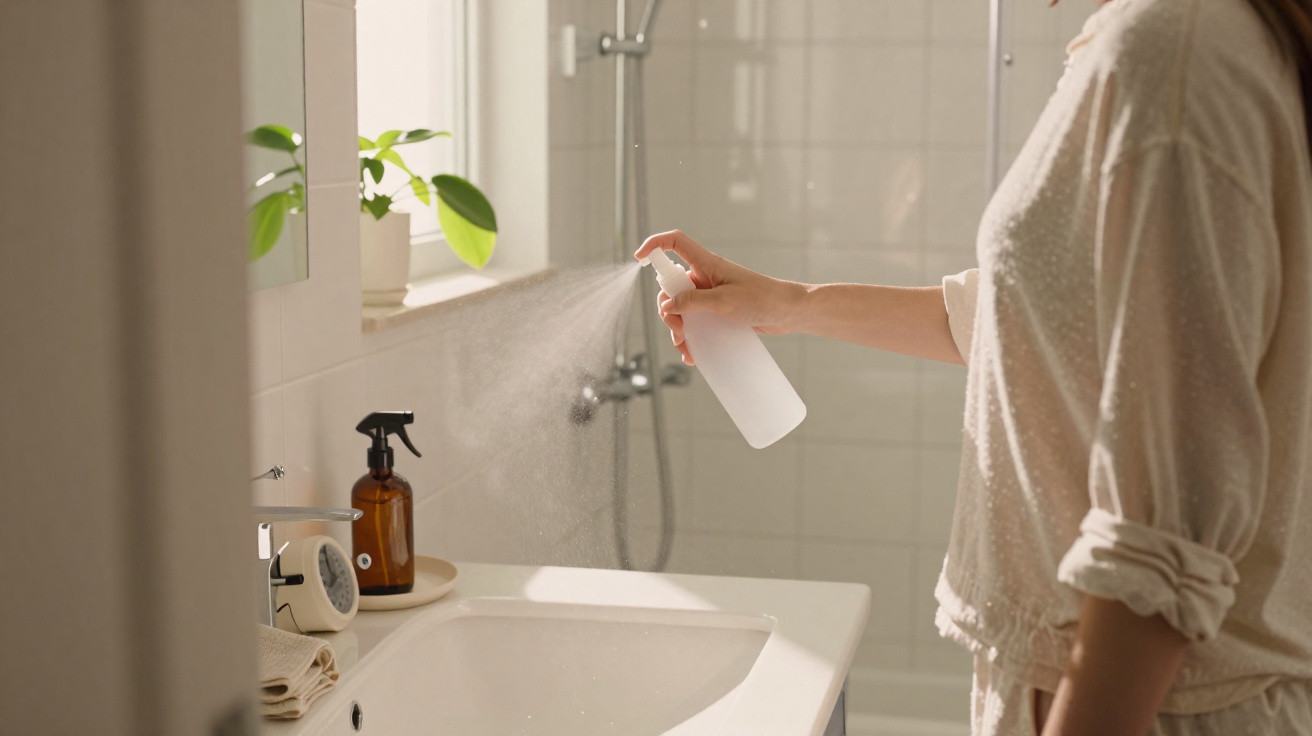
On Sunday morning, the home is quiet. The kettle clicks into life, the radio plays softly, and the bathroom door closes with the gentle sound that signals rising steam. Before long, the mirrors mist over, the atmosphere becomes warm and soft, and droplets cover every tile like a small promise. Spray on a straightforward solution, place two tablets in the toilet bowl, then step away for a few minutes that feel unexpectedly yours. On your return, one swift wipe with a microfibre cloth and an unhurried sweep of the squeegee can take the room from “used” to “hotel” before your toast has cooled. There is no need to scrub.
Why a 15-minute Sunday ritual is better than a heroic deep clean
Bathroom dirt rarely arrives all at once; it accumulates gradually. Soap residue, minerals, and tiny traces of skin and shampoo cling together, settling into grout pores and the finest scratches in fittings. Leave it for one week and it will usually still lift easily. Leave it for a month and it becomes baked on.
Most people do not require a professional cleaner’s arm strength; they simply need a smarter order of operations. Timing matters most: heat first, then dwell time, then glide. Steam helps loosen the build-up, a gentle cleaner breaks its bonds, and a dry cloth finishes the task. Rather than battling grime, you are disrupting it.
I saw a neighbour replace her “major cleaning day” with a 15-minute Sunday reset, and she never went back. By Wednesday, her tiles no longer retained that pale, lingering haze. Her fittings stayed bright, not because she scrubbed harder, but because the residue never reached a second week in which to set. She still jokes that the real breakthrough was understanding that the cleaner-not her elbow-does the hard work when it has warmth and time.
The simple bathroom routine that keeps tiles and fixtures fresh
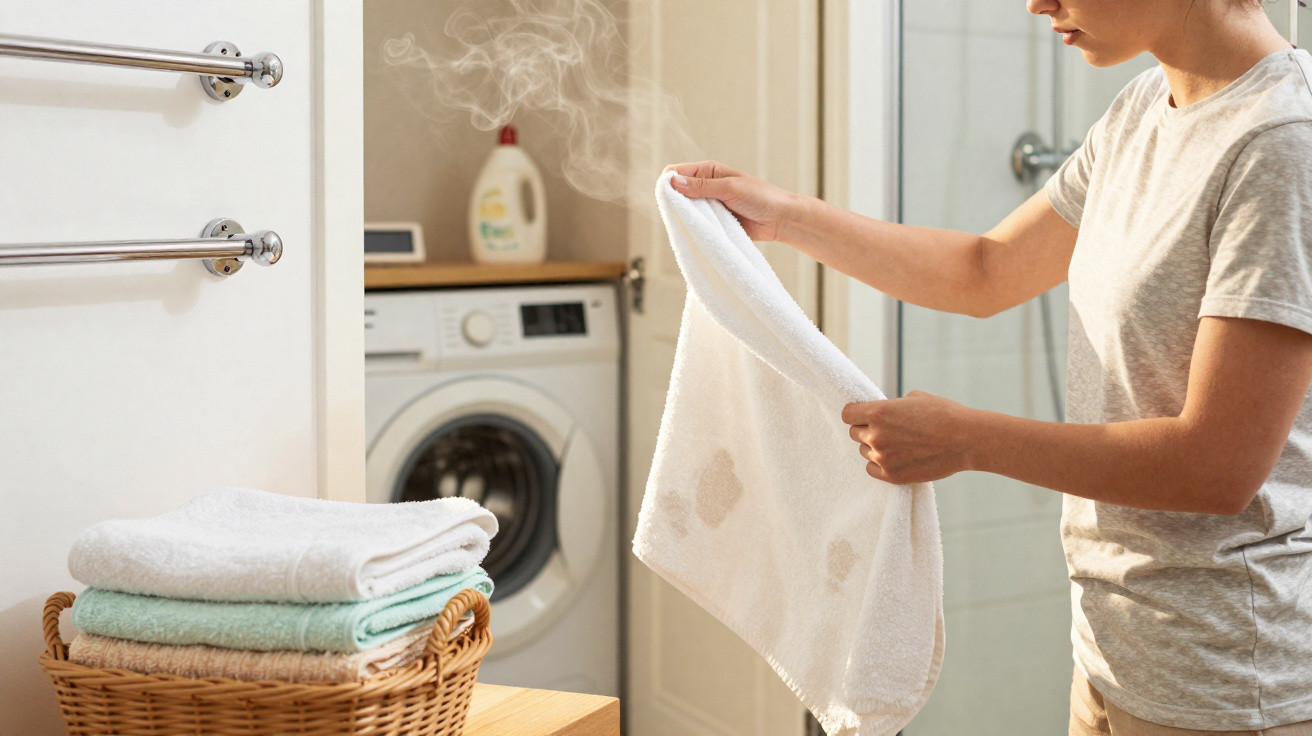
Run the shower hot, then shut the door for 5–7 minutes. As the bathroom fills with steam, put the bath mats and microfibre cloths in the wash with a scoop of oxygen booster. Turn off the water, then spray the tiles, glass and metal surfaces using a 1:1 blend of warm water and white vinegar, with a small drop of washing-up liquid, in a 500 ml bottle. Where you have marble or another natural stone, replace the vinegar with a pH-neutral cleaner that is safe for stone. Put two denture-cleaning tablets into the toilet bowl and leave everything for 10 minutes. Let the cleaner sit while the steam does the heavy lifting. Come back, squeegee the walls and glass, wipe the fittings with a soft cloth, brush the bowl briefly, and flush. Finished.
A few sensible boundaries will prevent wasted time and trouble. Avoid vinegar on natural stone and all acid-sensitive finishes; choose a stone-safe spray instead. Do not use abrasive pads on chrome or coated glass-stick to microfibre. For awkward areas, spray the cloth rather than the surface to prevent overspray reaching woodwork or paint. Keep air moving, too: leave the door ajar or turn on the extractor fan once you have finished, allowing surfaces to dry quickly. Honestly, no one truly manages this every day.
“The trick isn’t scrubbing harder; it’s letting time and temperature work for you.”
- Mix ratio: 1:1 warm water and white vinegar + 1 tsp mild washing-up liquid per 500 ml bottle; use pH-neutral cleaner only on stone.
- Timing: 5–7 minutes of steam, 10 minutes of dwell time, and 3–5 minutes to wipe and squeegee.
- Tools: two microfibre cloths (one damp and one dry), a squeegee, gentle spray and denture tablets for the bowl.
- Micro-habit cue: begin the steam while making coffee or putting on a song; wipe when the chorus begins.
What changes when the work becomes this light
Once cleaning becomes a ritual, it no longer feels like a chore and turns into upkeep you scarcely register. Link it to an existing activity-making coffee, ringing your sister or putting on a Sunday playlist-and it starts to happen automatically. Everyone knows the feeling of a week slipping away, only for the bathroom to expose it by Thursday; this routine keeps that story private.
The quickest gains are often the smallest ones. Drape a dry cloth over the shower rail so it remains in view. Hang the squeegee somewhere reachable with wet hands. Keep the spray in a clearly labelled bottle that is almost pleasant to look at. If the bathroom is shared, let one person handle “steam and spray” while another takes “squeegee and buff”-it is easy enough to divide without complaints.
The underlying truth is simple: shine is about timing. Heat softens residue. Gentle chemistry releases its grip. Drying prevents marks before they appear. You are not pursuing stains; you are preventing them from becoming established. A week later, you may find that the tiles still appear brighter on Friday-and start wondering which other parts of your home could be just as straightforward.
This is not magic; it is rhythm. A warm bathroom, a lingering mist and a wipe that feels more like closing a book than scrubbing a floor. When your week is already busy, a 15-minute Sunday ritual is a kind choice for your future self. The steam is pleasant, the room smells clean without making a fuss, and the effect lasts just long enough to make the following Sunday simple as well. You will begin to spot the details: no chalky marks on the tap, no cloudy film on the glass, and grout that stays true in colour-and those little details accumulate. Some routines demand that you become someone else; this one works with who you already are. What might Monday look like if your bathroom quietly played its part?
| Key point | Detail | Benefit for the reader |
|---|---|---|
| Steam–dwell–glide sequence | Warm the room, leave the cleaner for 10 minutes, then wipe and squeegee | Less effort, greater shine and fewer streaks |
| The right cleaner for each surface | Vinegar mix for ceramic/porcelain; pH-neutral cleaner for natural stone | Protects finishes while lifting film |
| Habit stacking | Combine the routine with coffee, music or a call | Makes consistency quick and effortless |
FAQ:
- Can I use the vinegar mix on marble or natural stone? No. Acid can etch natural stone. Choose a pH-neutral, stone-safe cleaner for marble, limestone or travertine; the same steam–dwell–glide routine will still be effective.
- What if Sunday is not the right day for me? Choose any weekly anchor habit-starting the laundry, meal preparation or a favourite programme. The benefit comes from regularity, rather than the name of the day.
- Will all that steam cause mould? Steam loosens the film, after which you dry the room. Run the extractor fan or leave the door slightly open for 20–30 minutes afterwards. Moisture that clears promptly does not feed mould.
- Hard water is ruining my shine. Are there any adjustments? Change the spray to a citric-acid cleaner, or add a teaspoon of citric acid powder to your bottle for ceramic surfaces. Complete the job by buffing fittings dry to prevent spotting.
- Is the routine safe around children and pets? Select mild products, label bottles clearly and store sprays out of reach. Denture tablets belong in the bowl only, never the cistern, and you should flush after the 10-minute soak.



Comments
No comments yet. Be the first to comment!
Leave a Comment